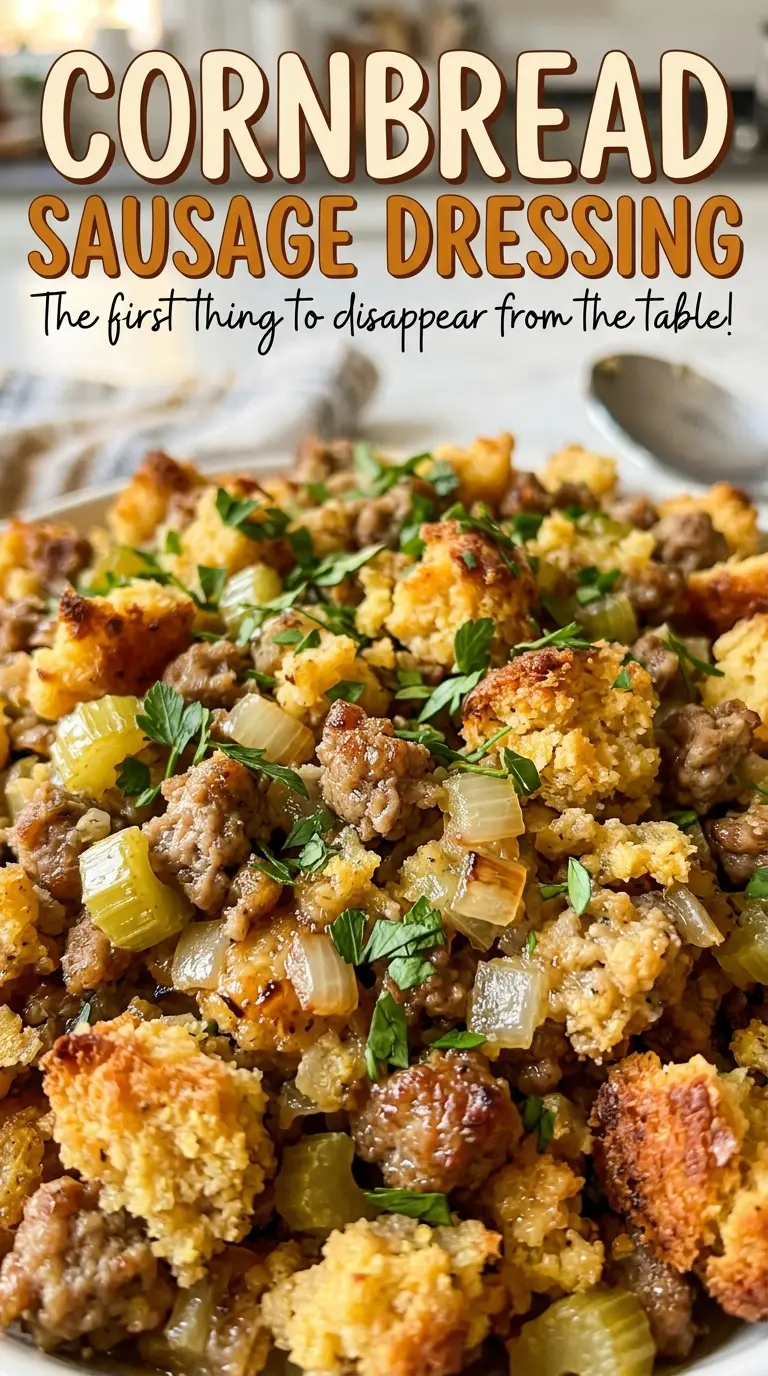
The first smell from the oven is buttery cornbread, followed by the savory sausage and sage warming in the skillet. That’s when this starts feeling like more than a side dish. I make the cornbread from scratch for Cornbread Sausage Dressing, then crumble and dry it before it meets the sausage, onion, celery, and broth. It takes an extra round in the oven, but those dry pieces hold their shape instead of collapsing into a soft, heavy bake.
The cornbread itself is gently sweet, not cake-like, and the pork sausage brings plenty of savory depth. I leave the sausage drippings in the skillet when the vegetables cook; they carry that flavor through the whole pan. Once it’s baked, the top turns golden while the middle stays tender, with little bits of celery and sausage in every scoop.

Kitchen Note
When you fold the cornbread into the broth mixture, aim for moist crumbs that still hold their shape. If you mash as you stir, the dressing loses the little tender pieces that make each bite feel like cornbread.
Save this Cornbread Sausage Dressing for its golden top, tender middle, and savory sausage tucked through every scoop.
Why This Dressing Bakes Covered Before It Gets Its Golden Top
The foil-covered part of the bake gives the eggs time to set and the broth time to warm through the cornbread without letting the surface dry out first. If the whole pan baked uncovered from the start, the exposed crumbs could brown before the center was hot and cohesive. Covering first protects that middle; uncovering at the end lets the top toast and turn golden.
That contrast is what you want: a lightly crisp top over a moist, spoonable center, not a uniformly crunchy pan or a wet one. The dressing also continues to settle during its short rest after baking, so give it that pause before serving. A little patience here makes cleaner scoops and keeps the middle from slumping onto the plate.
Why Yellow Cornmeal, Buttermilk, and Sausage Matter Here
- Yellow cornmeal and all-purpose flour — Cornmeal gives the bread its unmistakable crumb, while flour helps it hold together after crumbling. Standard grocery-store cornmeal works well; a coarse grind makes a noticeably grainier dressing. For a gluten-free version, a cup-for-cup gluten-free baking blend with a binder is the most useful flour swap, though the baked cornbread will be more delicate.
- Buttermilk, eggs, and unsalted butter — Buttermilk brings a gentle tang and keeps the cornbread tender; plain yogurt thinned with milk until pourable is a workable stand-in. Eggs give both the cornbread and the finished dressing structure. Unsalted butter lets you control the cornbread’s seasoning, and an ordinary grocery-store butter is perfectly fine.
- Bulk pork sausage — Sausage seasons the vegetables as it cooks and leaves flavorful drippings behind. Fresh bulk sausage from the meat case is all you need; there’s no benefit to choosing an expensive brand for this dish. Turkey sausage can work in its place, but it tends to leave less fat in the skillet and may need closer attention while the vegetables soften.
- Onion, celery, and dried herbs — The onion and celery bring savory sweetness and a little texture, while rubbed sage and dried thyme give the dressing its familiar herbal warmth. Dried herbs are the right fit here because they disperse evenly through the pan. If you prefer a stronger sage note, replace the thyme with an equal amount of rubbed sage.
- Low-sodium chicken broth — Broth moistens the crumbs and carries the sausage and herb flavors throughout the dish. Low-sodium broth gives you better control because the sausage already contributes salt; a basic store-brand carton works just as well as a pricier one.
The Stages That Keep the Dressing Tender, Not Dense
Bake and Dry the Cornbread Crumbles
Heat the oven to 400°F and coat a 9×13-inch pan with nonstick cooking spray. Whisk the cornmeal, flour, sugar, baking powder, baking soda, and kosher salt in a large bowl; in another bowl, whisk two eggs with the buttermilk and melted butter, then stir the wet mixture into the dry ingredients just until combined. Bake for 20–25 minutes, until golden and a toothpick inserted in the center comes out clean. Cool in the pan for 10 minutes, loosen the edges, turn the bread onto a wire rack, and let it cool completely before crumbling it onto a large rimmed baking sheet.
Set the oven to 300°F and bake the crumbles for 25–35 minutes, stirring once, until they feel dry rather than soft in the middle. If some pieces are still damp, keep drying until the texture is consistent; unevenly dried crumbs soften at different rates later. Remove the baking sheet and raise the oven temperature to 350°F.
Brown the Sausage, Then Soften the Vegetables
Cook the bulk pork sausage in a 12-inch skillet over medium heat for 8–10 minutes, breaking it into small pieces as it browns. It’s ready when no pink remains and it reaches 160°F. Transfer the sausage to a 6-quart mixing bowl, leaving the drippings in the skillet rather than wiping them away.
Add the diced onion and celery to those drippings and cook over medium heat for 5–7 minutes, until softened. Stir in the rubbed sage, dried thyme, and black pepper for 30 seconds; the herbs should smell fragrant, not scorched. Add the vegetables to the bowl with the sausage.
Moisten the Crumbs Without Mashing Them
Whisk the chicken broth with the remaining two eggs in the bowl, then add the dried cornbread and fold gently until everything is evenly moistened. Keep your turns broad and light so the crumbs stay distinct instead of becoming a paste. Let the mixture stand for 10 minutes while you lightly grease the 9×13-inch pan again. During that pause, the dry cornbread takes up the liquid.
Set the Center, Then Brown the Top
Spread the mixture evenly in the prepared pan and cover it tightly with foil. Bake at 350°F for 25 minutes, then uncover and continue baking for 15–20 minutes, until the top is golden and the center reaches 160°F. If the center still looks loose, give it the remaining bake time rather than pulling it early for a darker top. Rest the pan for 10 minutes before serving.
Two Smart Ways to Adapt Cornbread Sausage Dressing
Make the cornbread gluten-free
Replace the all-purpose flour with a cup-for-cup gluten-free baking blend that includes a binder. The dressing keeps its cornbread-and-sausage character, though the cornbread may crumble more easily, so cool it completely before breaking it up.
Give it a stronger sage finish
Use rubbed sage in place of the dried thyme, keeping the swap equal. The flavor shifts toward a more pronounced, earthy sage aroma without changing the sausage, vegetables, or cornbread base.
Storage and Reheating
- Refrigerator: Store covered leftovers for 3–4 days. The top softens in the fridge, while the middle stays tender.
- Freezer: Freeze cooled portions in an airtight container for up to 2 months. Thaw them in the refrigerator before reheating.
- Reheating: Cover a portion with foil and warm it in a 325°F oven with a spoonful of chicken broth until it reaches 165°F. Reheat covered so the cornbread doesn’t dry out before the middle is hot.
Questions That Come Up When Making This Dressing
Cornbread Sausage Dressing
Ingredients
Equipment
Method
- Heat the oven to 400°F and coat a 9x13-inch baking pan with nonstick cooking spray.
- Whisk the yellow cornmeal, all-purpose flour, granulated sugar, baking powder, baking soda, and kosher salt in a large bowl.
- In another bowl, whisk 2 eggs with the buttermilk and melted unsalted butter.
- Stir the wet mixture into the dry ingredients just until combined.
- Pour the batter into the pan and bake for 20–25 minutes, until golden and a toothpick inserted in the center comes out clean.
- Cool the cornbread in the pan for 10 minutes.
- Loosen the edges and turn the cornbread out onto a wire rack to cool completely.
- Crumble the cornbread onto a large rimmed baking sheet.
- Bake at 300°F for 25–35 minutes, stirring once, until dry.
- Remove the baking sheet and raise the oven temperature to 350°F.
- Cook the bulk pork sausage in a 12-inch skillet over medium heat for 8–10 minutes, breaking it into small pieces, until no pink remains and it reaches 160°F.
- Transfer the sausage to a 6-quart mixing bowl, leaving the drippings in the skillet.
- Add the diced yellow onion and celery to the skillet and cook over medium heat for 5–7 minutes, until softened.
- Stir in the rubbed sage, dried thyme, and black pepper for 30 seconds.
- Add the vegetables to the bowl with the sausage.
- Whisk the low-sodium chicken broth with the remaining 2 eggs in the bowl.
- Add the crumbled cornbread and gently fold until evenly moistened.
- Let the mixture stand for 10 minutes while you lightly grease the 9x13-inch pan again with nonstick cooking spray.
- Spread the mixture in the pan and cover tightly with foil.
- Bake at 350°F for 25 minutes.
- Uncover and bake for 15–20 minutes more, until the top is golden and the center reaches 160°F.
- Rest for 10 minutes before serving.