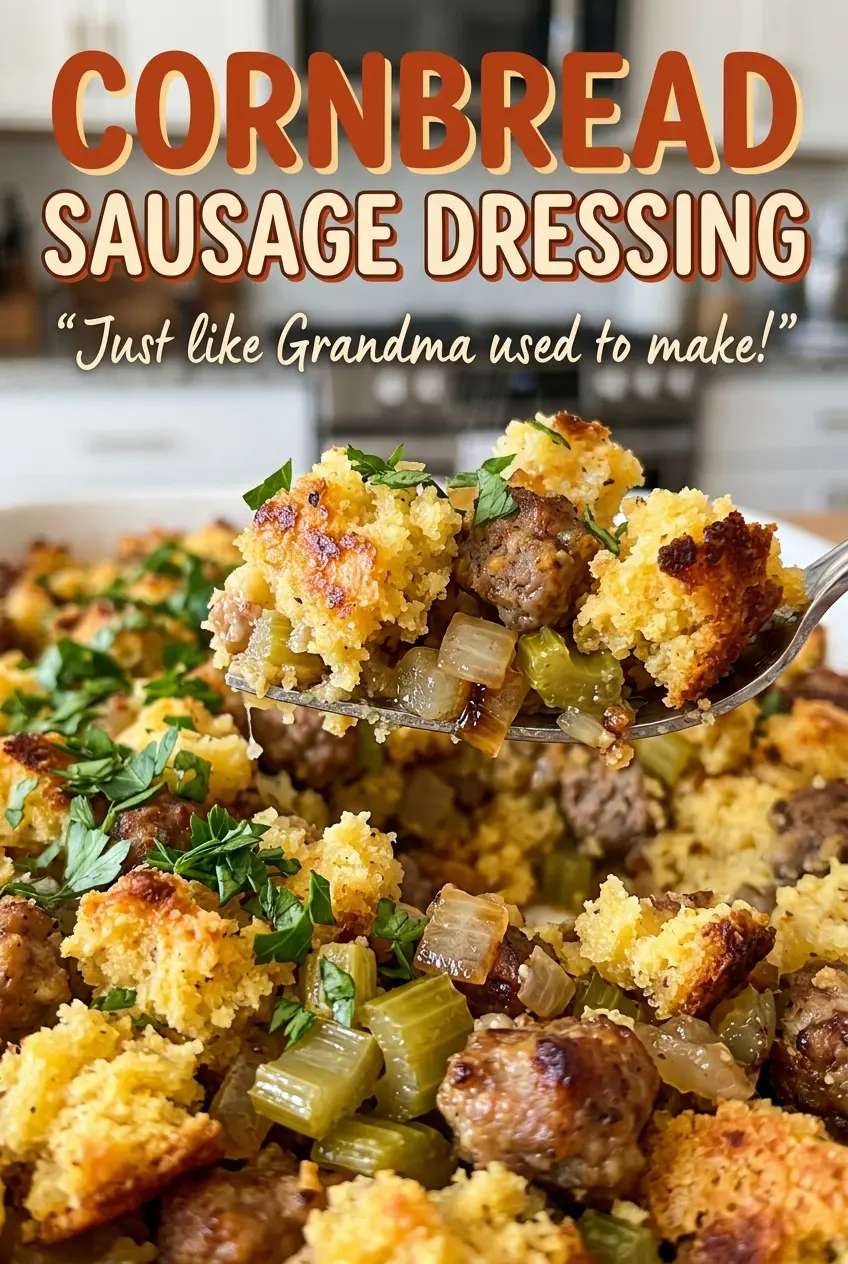
Ingredients
Equipment
Method
Make the cornbread
- Heat the oven to 400°F and coat a 9x13-inch baking pan with nonstick cooking spray.
- Whisk the yellow cornmeal, all-purpose flour, granulated sugar, baking powder, baking soda, and kosher salt in a large bowl.
- In another bowl, whisk 2 eggs with the buttermilk and melted unsalted butter.
- Stir the wet mixture into the dry ingredients just until combined.
- Pour the batter into the pan and bake for 20–25 minutes, until golden and a toothpick inserted in the center comes out clean.
- Cool the cornbread in the pan for 10 minutes.
- Loosen the edges and turn the cornbread out onto a wire rack to cool completely.
- Crumble the cornbread onto a large rimmed baking sheet.
- Bake at 300°F for 25–35 minutes, stirring once, until dry.
- Remove the baking sheet and raise the oven temperature to 350°F.
Assemble and bake the dressing
- Cook the bulk pork sausage in a 12-inch skillet over medium heat for 8–10 minutes, breaking it into small pieces, until no pink remains and it reaches 160°F.
- Transfer the sausage to a 6-quart mixing bowl, leaving the drippings in the skillet.
- Add the diced yellow onion and celery to the skillet and cook over medium heat for 5–7 minutes, until softened.
- Stir in the rubbed sage, dried thyme, and black pepper for 30 seconds.
- Add the vegetables to the bowl with the sausage.
- Whisk the low-sodium chicken broth with the remaining 2 eggs in the bowl.
- Add the crumbled cornbread and gently fold until evenly moistened.
- Let the mixture stand for 10 minutes while you lightly grease the 9x13-inch pan again with nonstick cooking spray.
- Spread the mixture in the pan and cover tightly with foil.
- Bake at 350°F for 25 minutes.
- Uncover and bake for 15–20 minutes more, until the top is golden and the center reaches 160°F.
- Rest for 10 minutes before serving.
Notes
Dry the crumbled cornbread until it feels dry before mixing so the dressing absorbs the broth evenly. Refrigerate leftovers for 3–4 days; freeze for up to 3 months. For a gluten-free variation, replace the all-purpose flour with a cup-for-cup gluten-free flour blend.