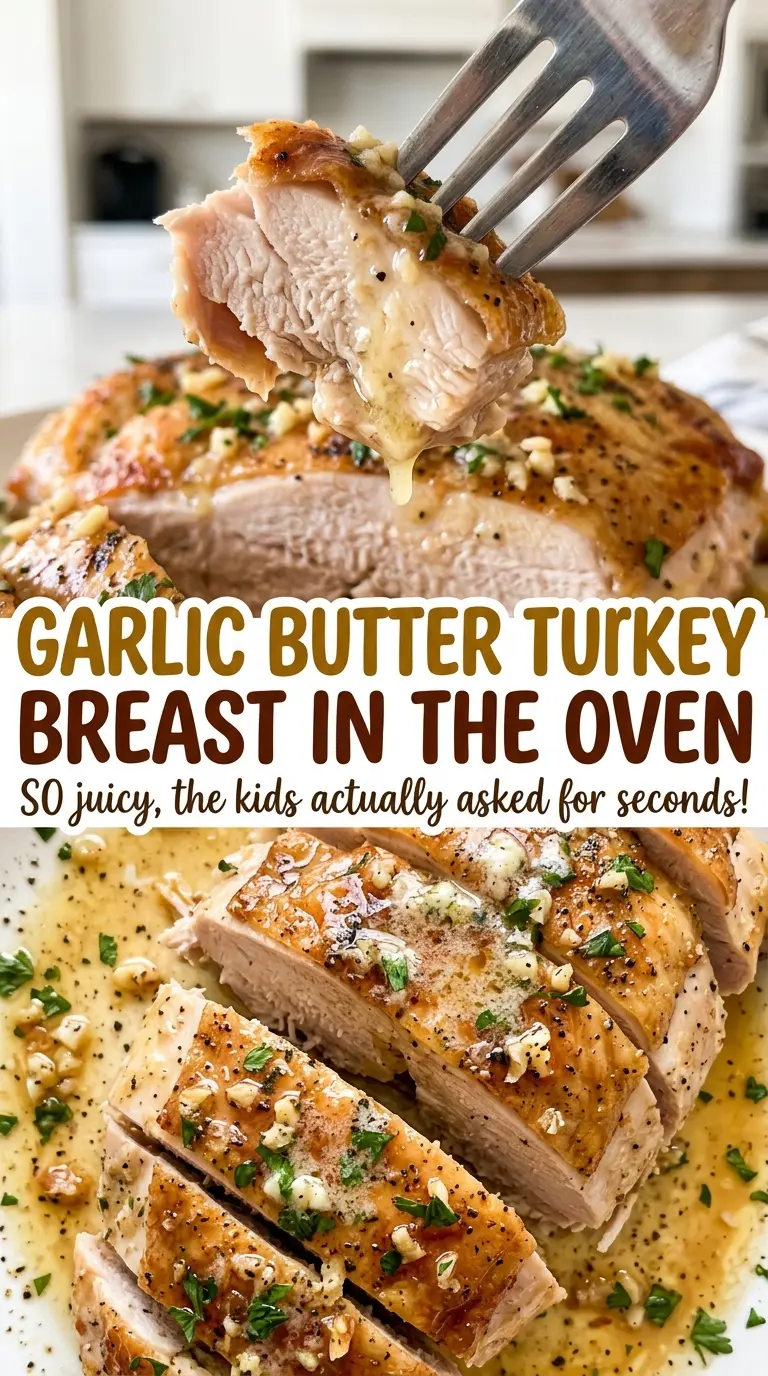
As the garlic butter warms in the oven, the skin turns glossy and the rosemary starts to smell fragrant before the turkey is anywhere near done. That gap between a beautifully browned surface and a cooked center is why I rely on a thermometer, not the color of the skin, for this garlic butter turkey breast. The bone-in breast makes a satisfying centerpiece for six without requiring a whole bird.
Softened butter is easy to work beneath the skin, where it seasons the meat directly, and the rest coats the outside with garlic and herbs. Take your time loosening the skin; a small tear can turn a neat, even layer into a tricky job. Once the turkey is in the oven, the method is straightforward: roast until the thickest part reaches the right temperature, then give it a full rest before carving. The slices come out tender, with savory garlic-herb flavor and browned skin.

Kitchen Note
Loosen the skin a little at a time with your fingers rather than pulling it back in one go. If it catches, ease off and work from another spot; keeping the skin intact makes spreading the butter much easier.
Save this garlic butter turkey breast for a roast with browned skin and garlic-rosemary flavor, sized for six.
Why browned skin can fool you on a bone-in turkey breast
Turkey skin gives you a useful visual cue for browning, but it can’t tell you what’s happening in the thickest part of the breast. The outside is exposed to the oven’s heat while the center takes longer to warm through, so a deep golden color doesn’t mean the meat is ready to carve. A thermometer is the dependable check here.
Where you place it matters, too. Slide the thermometer into the thickest part of the breast and keep the tip clear of the bone. A reading against bone won’t give you the same information as a reading from the meat itself. Check more than one spot if the breast is unevenly shaped, and use the lowest reading to judge doneness. The roasting window gives you a sensible time to start checking, but the bird’s actual temperature—not the clock or the skin—is what determines when it comes out.
This is especially useful with a breast that sits toward the larger end of the size range. Rather than cutting into the meat to check it, use the thermometer and keep the juices inside until the resting period is over.
Why softened butter and fresh herbs make this turkey work
- Bone-in, skin-on turkey breast — The bone-in cut is the one this roasting time is built around, and the skin gives the butter a surface to coat as it browns. Choose a breast that fits comfortably in the roasting pan, and thaw it fully before you start.
- Softened unsalted butter — Butter that yields when pressed blends evenly with the minced garlic and herbs. It should be soft, not melted; liquid butter runs off the bird instead of staying in a spreadable layer. Unsalted butter also lets the kosher salt season the turkey without the salt content varying by butter brand.
- Fresh garlic — Mince the cloves finely so they mix through the butter instead of forming a few large, pungent pieces. Fresh garlic gives the butter its direct savory aroma; garlic powder won’t create the same texture in the coating.
- Fresh rosemary and thyme — Chopped rosemary and thyme leaves bring distinct herbal notes without making the butter heavy. Strip thyme leaves from their stems, and chop the rosemary so it spreads evenly. Fresh herbs are the right choice for the amounts and texture here.
- Kosher salt and black pepper — Kosher salt seasons the meat as well as the skin, while pepper gives the butter a mild bite. A consistent grind helps them distribute through the softened butter rather than landing in concentrated patches.
How to roast the breast without tearing the skin or overcooking it
Set up the roasting pan and oven
Heat the oven to 350°F and set a rack inside a 9×13-inch roasting pan. The rack lifts the turkey above the bottom of the pan so heat can circulate around it. Use a pan large enough to hold the breast without pressing it against the sides. Get this ready before handling the buttered turkey, so it can go straight into the oven once seasoned.
Mix the garlic-herb butter
Stir the softened butter with the minced garlic, chopped rosemary, thyme leaves, kosher salt, and black pepper in a small bowl. Keep mixing until the herbs and seasonings look evenly distributed through the butter. If the butter is cold and firm, it will be harder to spread beneath the skin; if it’s melted, it won’t stay in place as well. A smooth, spreadable mixture is what you’re after.
Dry and season the turkey
Pat the thawed turkey breast dry with paper towels before adding the butter. Gently loosen the skin without tearing it, then work some of the garlic butter underneath and rub the rest over the skin. Spread the butter as evenly as you can instead of leaving a thick mound in one spot. Set the breast skin side up on the rack.
Roast, then let the juices settle
Roast for 1 1/2 to 2 1/4 hours, checking the temperature after 1 1/2 hours. The breast is ready when the thickest part reaches 165°F; keep the thermometer from touching bone. If the skin browns faster than you want, lay foil loosely over it for the remainder of the roasting time. Transfer the turkey to a cutting board, tent it loosely with foil, and rest for 20 minutes before carving.
Three practical ways to adapt the garlic-herb butter
A dairy-free butter coating
For a dairy-free version, use the same amount of softened, unsalted plant-based butter made for baking in place of the dairy butter. Choose a stick-style product rather than a soft tub spread so the garlic and herbs hold together in a spreadable mixture. The flavor will vary by brand, but the rosemary, thyme, and garlic still season the turkey.
A rosemary-only herb butter
Leave out the thyme and keep the rosemary, garlic, butter, salt, and pepper unchanged for a simpler herb flavor. The result leans more piney and direct, without thyme’s softer, earthy note. Chop the rosemary finely so it still distributes through the butter.
A milder, garlic-free butter
Omit the garlic and keep the butter, rosemary, thyme, salt, and pepper. This gives you a quieter herb-roasted turkey without changing the roasting method. The butter will taste less savory and pungent, so this is a good adjustment when you want the herbs to stand out.
Storage and Reheating
- Refrigerator: Refrigerate carved turkey in a covered container for 3 to 4 days. The skin will soften once chilled.
- Freezer: Freeze carved portions in an airtight container for up to 3 months for best quality. Thaw them in the refrigerator before reheating.
- Reheating: Warm slices covered in a 325°F oven until they reach 165°F, or heat them in the microwave in short intervals until hot throughout. Avoid reheating uncovered for too long, which dries the lean breast meat.
Questions that come up when roasting turkey breast
Garlic Butter Turkey Breast in the Oven
Ingredients
Equipment
Method
- Heat the oven to 350°F and set a rack in a 9x13-inch roasting pan.
- Stir the softened butter, minced garlic, chopped fresh rosemary, fresh thyme leaves, kosher salt, and black pepper together in a small bowl.
- Pat the turkey breast dry with paper towels, then gently loosen the skin without tearing it, spread some garlic butter underneath, and rub the rest over the skin.
- Set the turkey breast skin side up on the rack and roast for 1 1/2 to 2 1/4 hours, checking the temperature after 1 1/2 hours; it is done when the thickest part reaches 165°F without the thermometer touching bone. If the skin browns too quickly, loosely cover it with foil.
- Transfer the turkey to a cutting board, tent loosely with foil, and rest for 20 minutes before carving.