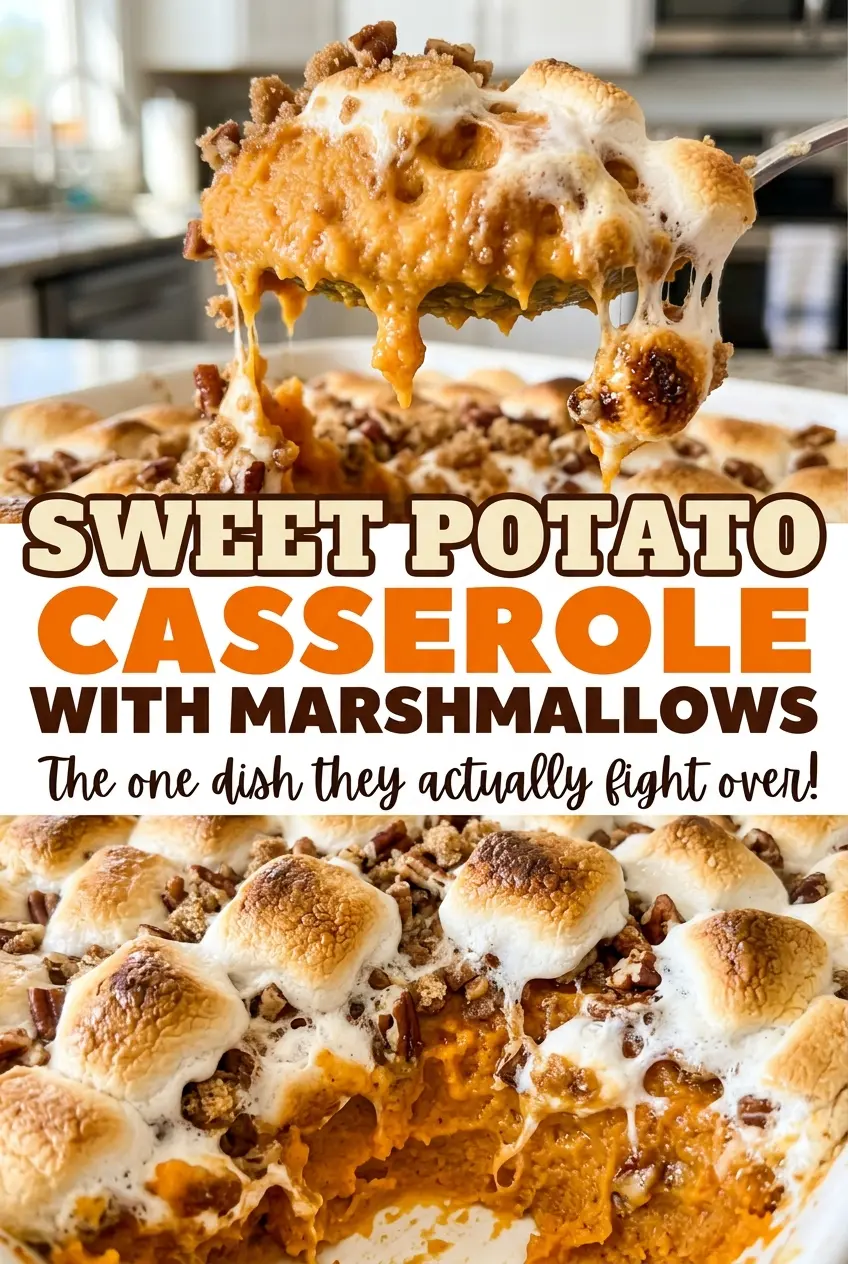
The marshmallows change quickly in the oven: first they puff, then their tops start to turn golden. I keep an eye on that last stretch because the lightly toasted layer is a sweet contrast to the soft filling underneath. This Sweet Potato Casserole with Marshmallows keeps the potatoes at the center, with brown sugar, cinnamon, and vanilla adding warmth rather than covering them up. Eggs help the filling hold together, so each scoop is creamy but not soupy.
I roast the sweet potatoes whole, then mash the flesh with melted butter and the other filling ingredients. Baking the casserole before adding the marshmallows gives the filling time to set without leaving the topping in the oven too long. The result is a smooth, gently spiced base under a pillowy cap that’s puffed and golden at the edges.
Kitchen Note
Let the potatoes cool until they’re easy to handle before peeling. They’ll still be warm enough for the melted butter to mix in smoothly, and you won’t be trying to mash and peel potatoes that are too hot to work with.
Save this Sweet Potato Casserole with Marshmallows for its creamy filling and puffed, golden topping.
Why Roasting the Sweet Potatoes Keeps the Filling From Going Loose
Sweet potatoes bring their own moisture, and roasting them whole lets them soften without sitting in water. That matters here because the filling already gets whole milk and eggs; starting with potatoes that have soaked up cooking water can leave the finished casserole looser than you want. Roasting also concentrates the potatoes’ sweetness, so the brown sugar can stay in the background instead of carrying the whole dish.
Pierce each potato before it goes into the oven so steam can escape, and give the thickest one a fork test before you call them ready. The fork should slide into the center without resistance. If it catches on a firm spot, the potato needs more time; a firm middle is harder to mash evenly and can leave dense pieces through the filling. Lining the baking sheet with foil is useful, too, since it catches any syrupy drips from the potatoes without leaving a baked-on mess on the pan.
What the Sweet Potatoes, Eggs, and Marshmallows Each Bring

- Sweet potatoes — Choose firm potatoes without soft spots. Their natural sweetness and soft flesh are the base of the casserole, so canned sweet potatoes aren’t a like-for-like swap; they’re often packed with syrup and have a different moisture level. Similar-sized potatoes are handy because they’re more likely to finish roasting around the same time.
- Eggs — Lightly beaten eggs bind the mashed potatoes as the filling bakes. They help it hold its shape when scooped, which is different from simply adding more milk for a looser, softer mash. Keep them in the mix if you want a cohesive casserole.
- Butter and whole milk — Butter gives the potatoes richness, while whole milk softens the mash without turning it watery. Unsalted butter lets the kosher salt provide the seasoning. For a dairy-free version, use the specific swaps in the variation cards below; expect a slightly different, less buttery finish.
- Light brown sugar, cinnamon, and vanilla — Together, these round out the sweet potatoes without making the filling taste like dessert. Fresh, fragrant cinnamon and vanilla make a noticeable difference, while dark brown sugar works in place of light brown sugar if you want a deeper molasses note.
- Mini marshmallows — Their small size makes it easier to cover the casserole in an even layer, so the topping puffs across the surface rather than in a few oversized patches. They provide most of the sweetness on top, which is why the filling itself doesn’t need a heavy hand with sugar.
Roast, Mash, and Add the Marshmallows at the Right Time
Roast the potatoes until the centers give easily
Heat the oven to 400°F and line a rimmed baking sheet with foil. Pierce the sweet potatoes several times with a fork, set them on the sheet, and roast for 50 to 65 minutes. Start checking at the shorter end of the range, especially if your potatoes are on the small side. They’re ready when a fork slides into the thickest part without a firm catch.
Cool, peel, and prepare the baking dish
Let the potatoes cool until they’re easy to handle, then peel them and transfer the flesh to a large bowl. Reduce the oven temperature to 350°F while you prepare the casserole. Grease a 9×13-inch baking dish with 1 teaspoon of butter. Taking a moment to remove the skins now keeps them from ending up in the smooth filling.
Mash the filling until evenly combined
Melt the remaining butter, then mash the sweet potato flesh in the bowl. Stir in the melted butter, brown sugar, milk, lightly beaten eggs, vanilla, cinnamon, and salt until the mixture looks evenly combined. Stop once there are no visible streaks of egg or butter; a few soft bits of potato are fine. If the mixture looks uneven, scrape the bottom and sides of the bowl and stir again.
Bake the filling before topping it
Spread the filling evenly into the prepared baking dish and bake it uncovered for 25 to 30 minutes. The center should reach 160°F, so check there rather than judging only by the edges. If the middle still looks loose, keep baking until it reaches that temperature. The marshmallows go on after this stage, not at the beginning.
Toast the marshmallows and let the casserole rest
Scatter the mini marshmallows evenly over the baked filling, then return the dish to the oven for 8 to 10 minutes. Watch for marshmallows that are puffed and golden; they can darken quickly once they start coloring. Let the casserole rest for 10 minutes before serving so the filling settles and scoops more neatly.
Two Useful Ways to Adapt This Sweet Potato Casserole
Make it dairy-free without changing the structure
Replace the unsalted butter with the same amount of unsalted dairy-free butter, use the same amount of unsweetened oat milk in place of whole milk, and choose dairy-free mini marshmallows for the topping. Keep the eggs; this adaptation is dairy-free, not vegan. The filling will be a little less buttery, but it will still bake into a cohesive casserole.
Let the potatoes lead with less brown sugar
Reduce the packed light brown sugar from 1/3 cup to 2 tablespoons for a less-sweet filling. The potatoes and cinnamon come through more clearly, while the marshmallows still make the top sweet. The filling’s texture stays close to the original.
Storage and Reheating
- Refrigerator: Store leftovers covered for 3 to 4 days. The marshmallow topping will soften and turn stickier in the refrigerator.
- Freezer: Freeze portions in an airtight container for up to 2 months for best quality. The filling freezes well, but the marshmallows lose their puff and become softer after thawing.
- Reheating: Thaw frozen portions in the refrigerator, then reheat covered at 350°F until the center reaches 165°F. For one serving, use short microwave bursts; reheating uncovered for too long can make the marshmallow topping tough.
Questions That Come Up When Making Sweet Potato Casserole
Sweet Potato Casserole with Marshmallows
Ingredients
Equipment
Method
- Heat the oven to 400°F.
- Line a rimmed baking sheet with foil.
- Pierce the sweet potatoes several times with a fork.
- Place the sweet potatoes on the baking sheet and roast for 50-65 minutes, until fork-tender.
- Let the potatoes cool until easy to handle.
- Peel the potatoes and transfer the flesh to a large bowl.
- Reduce the oven to 350°F.
- Grease a 9x13-inch baking dish with 1 teaspoon of the butter.
- Melt the remaining butter.
- Mash the potatoes and stir in the melted butter, brown sugar, milk, eggs, vanilla, cinnamon, and salt until evenly combined.
- Spread the filling in the prepared dish.
- Bake uncovered for 25-30 minutes, until the center reaches 160°F.
- Scatter the marshmallows evenly over the top.
- Bake for 8-10 minutes, until puffed and golden.
- Let the casserole rest for 10 minutes before serving.