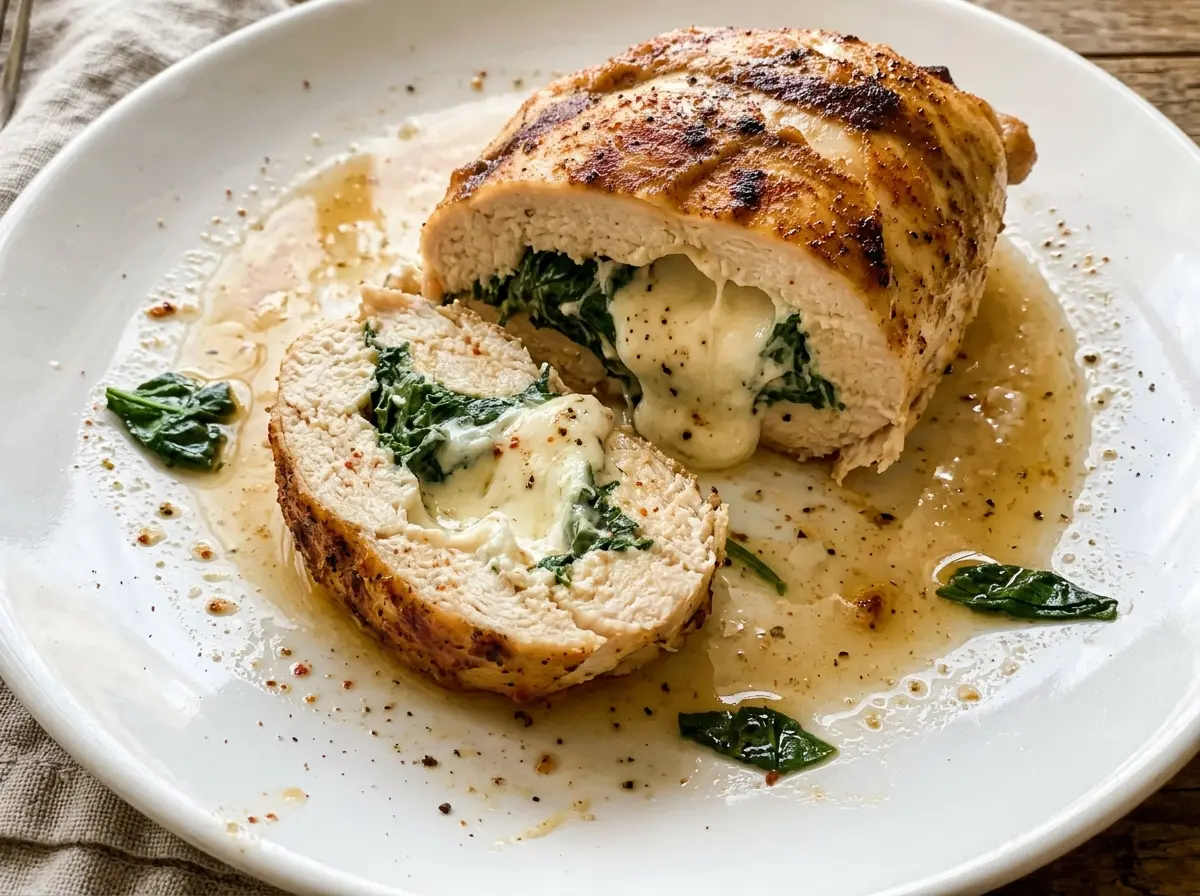
The spinach shrinks fast in the skillet, but it gives off enough moisture to make the filling loose if the pan is still wet. I wait until the bottom looks dry before moving it to a bowl. That small cue makes these stuffed chicken breasts easier to fill and keeps the creamy spinach mixture from running out as they bake.
A pocket cut into the side holds more filling than a slit across the top, and two toothpicks keep the opening closed while the chicken cooks. The cream cheese and mozzarella melt together around the spinach, while paprika gives the outside a warm, savory finish.
Each breast comes out tender with a creamy center, and the short rest gives the filling a moment to settle before you remove the toothpicks. It’s a simple way to turn boneless chicken breasts into a complete, satisfying dinner.
Kitchen Note
Cook the spinach until the skillet is dry, not just until the leaves look wilted. If moisture is left behind, it thins the filling and makes it harder to keep inside the chicken.
Save these stuffed chicken breasts for a dinner with a creamy spinach-and-cheese center and paprika-seasoned edges.
A Side Pocket Holds More Filling Than a Cut Across the Top
It’s easy to reach for a knife and slice down through the top of a chicken breast, but that leaves the filling sitting close to the surface. A pocket cut into the side gives the spinach mixture more room inside the meat. Keeping the cut shallow matters: go all the way through and the filling has an exit route before the cheese has a chance to melt and settle.
Breasts vary in shape, so use the thickest side as your guide and work the knife inward without cutting through the opposite edge. You’re creating a cavity, not splitting the breast into two thin pieces. Leave enough of an opening to spoon the filling in, then close that opening with the toothpicks. The chicken will still cook evenly at the specified temperature, and the filling stays tucked in rather than spreading across the baking dish.
Divide the filling evenly before you start stuffing. That gives every breast a similar amount and makes it easier to close each pocket without forcing the opening wider.
Why Fresh Spinach and Softened Cream Cheese Matter in the Filling

- Fresh baby spinach — Its leaves wilt quickly and blend into the filling without the dense, packed texture frozen spinach can leave. Roughly chopping the leaves makes them easier to stir through the cheeses and portion into the pockets.
- Cream cheese — Softened cream cheese blends smoothly with the spinach instead of breaking into cold lumps. Full-fat cream cheese gives the filling a rich, creamy body; a dairy-free version is possible, though its texture depends on the product.
- Mozzarella — Shredded mozzarella melts into the cream cheese and gives the center a little stretch. Pre-shredded cheese is convenient; freshly shredded mozzarella usually melts more smoothly because it isn’t coated to keep the shreds separate.
- Garlic and butter — Butter carries the garlic’s aroma as it cooks, and the garlic seasons the spinach before it meets the mild cheeses. Mince the cloves finely so no large pieces interrupt the soft filling.
- Paprika — It adds a gentle savory note and colors the outside of the chicken. Use a fresh jar for the clearest aroma; there’s no need for a specialty variety.
Build the Filling First, Then Close Each Breast Before Baking
Wilt the Spinach Until the Skillet Is Dry
Heat the oven to 400°F and lightly grease a 9×13-inch baking dish with 1 teaspoon of the olive oil. Melt the butter in a skillet over medium heat, then cook the minced garlic for 30 seconds. Add the roughly chopped spinach and cook for 2 to 3 minutes, stirring as it wilts. The leaves should be collapsed and the skillet bottom should look dry before you transfer everything to a bowl.
Cool the Greens Before Mixing the Cheeses
Move the spinach mixture to a bowl and let it cool for 5 minutes. Stir in the softened cream cheese and shredded mozzarella until they’re distributed through the greens. If the spinach is still steaming, the cream cheese will soften further and the filling may feel looser while you portion it. Give it the full cooling time so it’s easier to handle.
Cut and Fill the Side Pockets
Cut a pocket into the side of each chicken breast, stopping before the knife reaches the other side. Divide the filling among the pockets instead of packing all of it into the first few. Secure each opening with 2 wooden toothpicks, placing them through the edges so the pocket stays closed. A breast that’s cut through will leak, so take a moment to check that each cavity still has a closed bottom.
Season, Bake, and Rest
Rub the chicken with the remaining 2 teaspoons of olive oil, then season all over with the kosher salt, black pepper, and paprika. Arrange the breasts in the prepared dish and bake for 25 to 35 minutes, until the thickest part of each breast reaches 165°F. The exact time depends on the shape and thickness of the breasts, so check each one rather than relying only on the clock. Rest the chicken for 5 minutes, then remove the toothpicks before serving.
Simple Changes for a Different Filling or a Dairy-Free Dinner
Make the Filling Dairy-Free
Replace the butter, cream cheese, and mozzarella with dairy-free versions of each, keeping the same amounts. The result will still be creamy, though plant-based mozzarella-style shreds often melt less stretchily than dairy mozzarella, and the filling may be less rich.
Skip the Mozzarella for a Denser Center
Leave out the mozzarella and keep the spinach and cream cheese filling. It will be thicker and less stretchy, with a more pronounced cream cheese flavor, but it still works well inside the chicken pockets.
Leave Out the Garlic for a Milder Filling
Omit the garlic and cook the spinach in the butter as usual. The filling will taste softer and less savory, which lets the spinach and creamy cheeses come forward.
Storage and Reheating
- Refrigerator: Store leftover chicken in a covered container for 3 to 4 days. The filling firms as it chills, then softens again when warmed.
- Freezer: It freezes well for up to 3 months. Cool the chicken, wrap each breast tightly, and place the wrapped pieces in a freezer-safe container.
- Reheating: Warm covered in a 325°F oven or in the microwave in short intervals until hot throughout. Avoid prolonged high heat, which can dry out the chicken and make the filling separate.
Questions That Come Up When Making Stuffed Chicken Breast
Stuffed Chicken Breast
Ingredients
Equipment
Method
- Heat the oven to 400°F.
- Lightly grease a 9x13-inch baking dish with 1 teaspoon of the olive oil.
- Melt the butter in a skillet over medium heat.
- Add the garlic and cook for 30 seconds.
- Add the spinach and cook for 2 to 3 minutes, until wilted and the pan is dry.
- Transfer the spinach mixture to a bowl and let it cool for 5 minutes.
- Stir in the cream cheese and mozzarella.
- Cut a pocket into the side of each chicken breast without cutting all the way through.
- Divide the filling among the pockets and secure each opening with 2 toothpicks.
- Rub the chicken with the remaining 2 teaspoons of olive oil.
- Season all over with the salt, pepper, and paprika.
- Arrange the chicken in the prepared dish.
- Bake for 25 to 35 minutes, until the thickest part of each breast reaches 165°F.
- Rest the chicken for 5 minutes.
- Remove the toothpicks before serving.