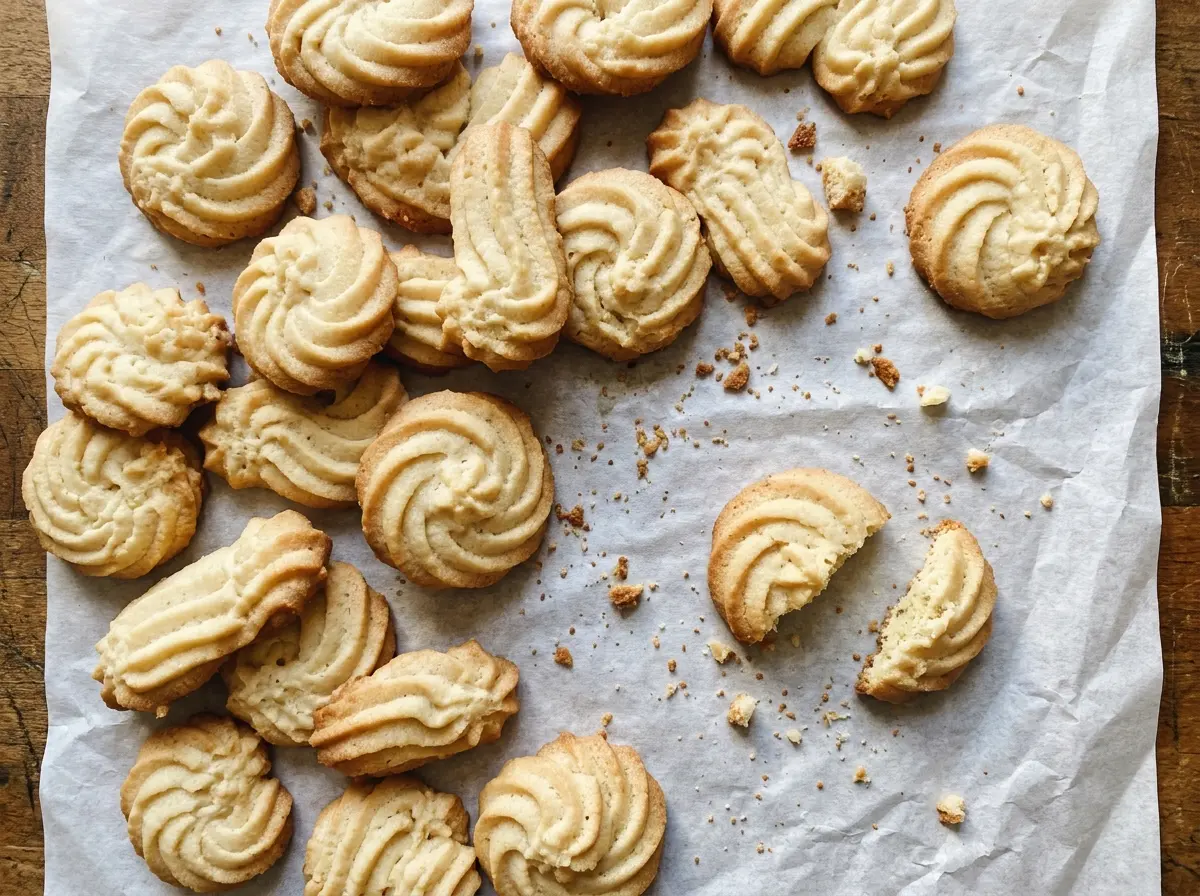
The ridges on a piped butter cookie can look sharp on the tray and blur into a plain round if the dough is too soft. These Italian butter cookies keep their rosette shape with a short chill before baking, and the open-star tip gives each one those crisp-looking grooves.
I beat the softened butter and confectioners’ sugar until the mixture looks lighter and fluffy, rather than stopping as soon as it’s combined. That little bit of air gives the cookies a delicate, tender bite without needing a leavener.
With vanilla and a touch of almond extract, the dough tastes buttery and fragrant without being too sweet. The edges turn lightly golden in the oven, while the centers stay pale and tender.
Kitchen Note
Don’t skip the 15-minute chill after piping. It firms up the ridges before the cookies hit the oven, so the rosettes come out defined instead of blurred.
Save these Italian butter cookies for a bake with crisp-edged, tender-centered rosettes and a lovely hint of almond.
Why These Cookies Need Air Before the Flour Goes In
Butter cookies don’t rely on a chemical leavener to make them light. Here, beating the butter and confectioners’ sugar for 2 to 3 minutes creates the airy base that keeps the finished cookie from feeling dense. Look for a mixture that has turned lighter in color and looks fluffy; a greasy, heavy paste hasn’t had enough time.
Once the egg and extracts go in, beat until the mixture looks smooth before adding the flour. Then switch to low speed and stop as soon as the dough comes together. Mixing flour for too long develops gluten, which can make the cookies tougher and the dough harder to pipe. The goal isn’t a stretchy dough or a perfectly smooth ball; it’s a soft, cohesive dough that passes through a large open-star tip and holds its ridges.
This balance matters because the same dough needs to be both pipeable and sturdy enough to keep its shape. A light hand with the flour stage protects the tender texture, while the chill gives the piped rosettes a chance to firm up before baking.
Why Butter, Egg Temperature, and Flour Decide Whether the Dough Pipes Smoothly

- Unsalted butter — Use butter softened enough to beat smoothly, but not melted or shiny. A standard grocery-store butter works well; the right softened texture matters more here than choosing a specialty brand. Melted butter won’t trap air during creaming and will leave you with a looser dough.
- Confectioners’ sugar — Its fine texture blends evenly into the butter and helps keep the cookies delicate. Granulated sugar won’t dissolve or cream the same way, so it isn’t a like-for-like swap for this piped dough.
- Egg — Bringing it to room temperature helps it blend into the butter mixture without making the batter look lumpy or separated. A cold egg can make the mixture look less smooth, so take it out ahead of mixing.
- Whole milk — It loosens the dough enough to pipe while adding a little richness. Two-percent milk works as a practical substitute, though the dough will have a touch less richness.
- Vanilla and almond extracts — Together, they give the cookies their familiar sweet, bakery-style aroma. Use extracts you enjoy smelling straight from the bottle; the almond is noticeable but stays in the background rather than taking over.
- All-purpose flour — This gives the rosettes enough structure to hold their shape. Spoon flour into the measuring cup and level it rather than packing it down; too much flour can make the dough stubborn to squeeze through the piping tip.
From Fluffy Butter to Golden Edges: The Piping and Baking Cues
Cream the Butter Until It Looks Airy
Beat the softened butter and confectioners’ sugar in a large bowl on medium speed for 2 to 3 minutes. The mixture should look lighter and fluffy, not merely blended into a smooth paste. Starting with butter that’s too cold makes this take longer and leaves firm bits behind. Don’t rush ahead before the mixture has visibly changed.
Blend in the Egg and Extracts
Beat in the room-temperature egg, milk, vanilla extract, and almond extract until the mixture looks smooth. If the mixture appears slightly uneven as the egg first goes in, keep beating until it comes together. A smooth base makes it easier to incorporate the flour evenly. Stop once there are no visible streaks of egg or liquid.
Mix Gently, Then Pipe the Rosettes
Add the flour and fine salt, then mix on low just until the dough comes together. Overmixing at this point can make the cookies less tender and the dough more difficult to pipe. Fit a piping bag with a large open-star tip and pipe 2-inch rosettes onto two large parchment-lined baking sheets, leaving about 1 inch between them. Keep the rosettes similar in size so they bake at the same pace.
Chill, Bake One Sheet, and Let the Cookies Set
Chill the piped cookies for 15 minutes, then heat the oven to 350°F if it isn’t already hot. Bake one sheet at a time for 10 to 12 minutes, watching for lightly golden edges; the tops can remain pale. If the edges are still completely pale, give them another minute and check again. Let the cookies cool on the sheet for 5 minutes before transferring them to a rack, since they’re delicate while hot.
Simple Ways to Change the Flavor or Shape of These Butter Cookies
Make Them Vanilla-Forward
Leave out the almond extract and keep the vanilla. The cookies will taste more simply buttery and vanilla-scented, with no almond note; the dough still pipes and bakes in the same way.
Pipe Ridged Rings Instead of Rosettes
Use the same large open-star tip to pipe small rings rather than coiled rosettes. Keep each ring close to the same size as the original cookies so the batch bakes evenly; the ridged edges remain, but the center has a different shape and texture.
Make a Half Batch
Divide every ingredient in half for a smaller bake, then use the same mixing, piping, chilling, and baking method. The dough will make fewer cookies, and you’ll still want to bake one sheet at a time so the heat circulates evenly around each tray.
Storage and Reheating
- Refrigerator: These don’t need refrigeration. Keep them in an airtight container at room temperature for up to 5 days; refrigeration can make the texture less tender.
- Freezer: Freeze completely cooled baked cookies in an airtight container, with parchment between layers, for up to 2 months. Thaw at room temperature in the closed container to limit condensation.
- Reheating: No reheating is needed; they’re best at room temperature. Avoid microwaving, which can soften the crisp edges and make the butter feel greasy.
Questions That Come Up When Piping Italian Butter Cookies
Italian Butter Cookies
Ingredients
Equipment
Method
- Heat the oven to 350°F.
- Line two large baking sheets with parchment paper.
- Beat the butter and confectioners’ sugar in a large bowl on medium speed for 2 to 3 minutes, until light and fluffy.
- Beat in the egg, milk, vanilla extract, and almond extract until smooth.
- Add the flour and salt, then mix on low just until the dough comes together.
- Pipe the dough through a large open-star tip into 2-inch rosettes on the prepared sheets, spacing them about 1 inch apart.
- Chill the piped cookies for 15 minutes.
- Bake one sheet at a time for 10 to 12 minutes, until the edges are lightly golden.
- Cool the cookies on the sheet for 5 minutes.
- Transfer the cookies to a rack.