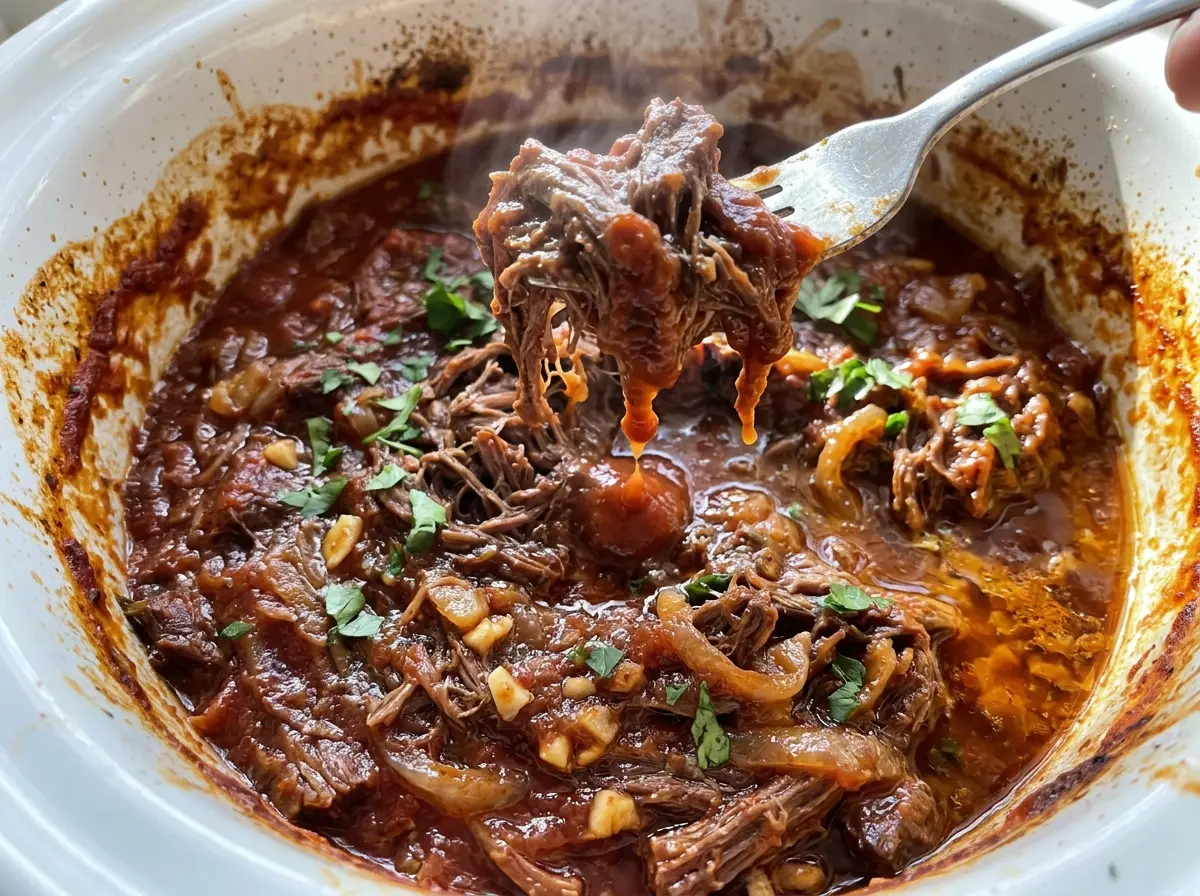
When the slow cooker lid comes off, the chuck should pull apart with a fork, and the sauce should smell like tomatoes, wine, and the browned bits from the skillet. That’s the point where this Slow Cooker Beef Ragu stops feeling like a set-it-and-forget-it dinner and starts tasting like a sauce that’s been tended all afternoon. I brown the beef first, then use the same skillet for the vegetables so those savory browned bits don’t get left behind.
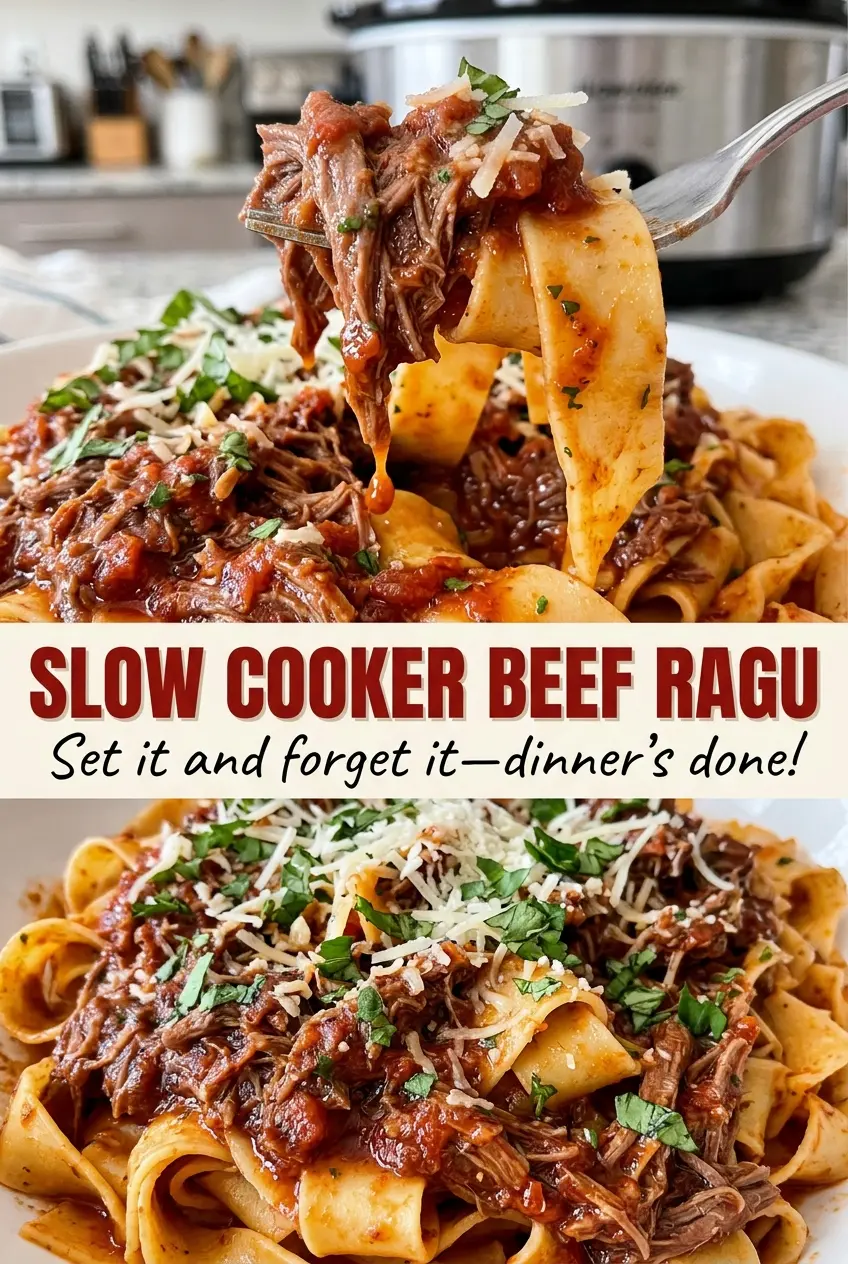
Chuck roast is a good fit for the long, gentle cook: it starts out firm and becomes tender enough to shred into the tomatoes. I keep the pappardelle separate until serving, too. Wide noodles catch plenty of ragu, while cooking them in the slow cooker would leave them soft and swollen. Each forkful has tender beef, a thick tomato sauce, and ribbons of pasta that still hold their shape.
Kitchen Note
Fish out the bay leaf before you shred the beef. Once it’s mixed back into the sauce, it can be hard to spot among all those strands.
Save this Slow Cooker Beef Ragu for a low-effort dinner with tender shredded beef and wide pappardelle ribbons.
Why Browning the Chuck Matters Even in a Slow Cooker
The slow cooker makes the beef tender, but it can’t create the browned, savory flavor you get from a hot skillet. Searing the chuck before it goes into the cooker gives the meat a deeper taste and starts building the base for the sauce. Brown the pieces in batches rather than squeezing them all into the pan; crowded beef releases moisture and steams instead of browning.
Those dark bits stuck to the skillet after the beef and vegetables cook are part of the flavor, not something to wash away. Red wine loosens them when you scrape the pan, and a short simmer takes the raw edge off the wine before it joins the tomatoes. The extra skillet step is brief, but it makes the finished sauce taste fuller and more rounded than a slow cooker full of ingredients stirred together cold.
Chuck also needs enough time for its firm connective tissue to soften. The cook-time range is a guide, not a finish line: a roast that’s still resisting the fork needs more time, even if it has reached the shorter end of the range. Let tenderness guide you, and the beef will shred into the sauce rather than break into chewy chunks.
What the Chuck, Wine, and Wide Pasta Bring to the Ragu
- Beef chuck roast — Chuck has enough connective tissue and marbling to become tender during a long, moist cook. Trim excess surface fat, but don’t choose a very lean roast; it won’t give the sauce the same richness. A standard grocery-store chuck roast works well here.
- Dry red wine — Wine adds acidity and a deep, savory note that balances the crushed tomatoes. Use a dry red you’d be happy to drink; an inexpensive bottle is fine, while sweet wine can make the sauce taste out of balance.
- Crushed tomatoes — Canned crushed tomatoes give the ragu a cohesive sauce without needing to blend anything. A basic can works well, and the texture is more useful here than a premium brand.
- Onion, carrot, celery, and garlic — Finely chopped carrot and celery soften into the sauce rather than leaving large, firm pieces. Fresh garlic brings a sharper aroma than jarred garlic, but the vegetables don’t need to be perfectly uniform.
- Tomato paste — Cooking it briefly with the vegetables takes away its raw, tinny taste and concentrates its tomato flavor. Stir it around the skillet so it doesn’t sit in one spot and scorch.
- Pappardelle — The broad ribbons give the thick sauce plenty of surface to cling to. Freshly grated Parmesan melts more readily over the hot pasta than pre-shredded cheese, though a budget wedge is perfectly good.
Build the Skillet Base Before the Slow Cooker Takes Over
Brown the Chuck in Manageable Batches
Season the beef all over with kosher salt and black pepper. Heat the olive oil in a 12-inch skillet over medium-high heat, then brown the three pieces in batches for 3 to 4 minutes per side. Look for deep brown patches on the surface, not just gray meat; if the pan is crowded, give each piece more room before continuing. Transfer the browned beef to a 6-quart slow cooker.
Soften the Vegetables and Deglaze the Pan
Add the chopped onion, finely chopped carrot, and celery to the same skillet and cook for 4 minutes, stirring. They should start to soften while picking up the browned bits left by the beef. Stir in the garlic and tomato paste and cook for 1 minute, then pour in the red wine and scrape the skillet well. Simmer for 2 minutes before transferring the mixture to the slow cooker.
Slow-Cook Until the Beef Yields Easily
Stir the crushed tomatoes, beef broth, and dried oregano into the slow cooker, then add the bay leaf. Cover and cook on LOW for 8 to 9 hours or HIGH for 4 to 5 hours, until the beef is fork-tender and reaches at least 190°F. If the meat still feels firm when you press it with a fork, it isn’t ready to shred yet. Remove and discard the bay leaf, shred the beef with two forks, and stir it back into the sauce.
Boil the Pappardelle Just Before Serving
Bring the water to a boil in an 8-quart pot, then stir in the kosher salt and pappardelle. Cook according to the package directions until al dente; check a ribbon near the end of the suggested time so it doesn’t turn soft. Drain the pasta and divide it among bowls. Spoon the ragu over the top and finish with freshly grated Parmesan.
Easy Swaps for Wine, Pasta, and Dietary Needs
Make the Ragu Without Wine
Replace the red wine with the same amount of beef broth. The sauce will lose some of the wine’s acidity and depth, but it will still have a savory tomato base. Scrape the browned bits from the skillet as the broth simmers.
Use Gluten-Free Pappardelle
Swap in gluten-free pappardelle and cook it separately according to its package directions. Gluten-free noodles can soften faster, so start checking for an al dente bite at the early end of the cooking time. The ragu itself doesn’t need to change.
Trade Pappardelle for Rigatoni
Rigatoni is a sturdy option if wide ribbons aren’t available. Its ridges and hollow centers catch the shredded beef and sauce, though the dish will feel less silky than it does with pappardelle. Boil it separately until al dente before serving.
Storage and Reheating
- Refrigerator: Keep leftover ragu and pasta in separate airtight containers for 3 to 4 days. The noodles soften as they sit in sauce.
- Freezer: Freeze the ragu, without pasta, in airtight freezer-safe containers for up to 3 months. Thaw it in the refrigerator; cooked pasta doesn’t keep its texture as well after freezing.
- Reheating: Warm the ragu on the stovetop over medium-low heat, stirring, until it reaches 165°F. Reheat pasta separately or boil a fresh batch; reheating noodles in the sauce can make them mushy.
Questions That Come Up When Making Beef Ragu
Slow Cooker Beef Ragu
Ingredients
Equipment
Method
- Season the beef all over with 1 1/2 teaspoons kosher salt and the black pepper.
- Heat the olive oil in a 12-inch skillet over medium-high heat and brown the beef in batches for 3 to 4 minutes per side.
- Transfer the beef to a 6-quart slow cooker.
- Add the onion, carrot, and celery to the skillet and cook for 4 minutes, stirring.
- Add the garlic and tomato paste and cook for 1 minute.
- Pour in the red wine and scrape up the browned bits.
- Simmer for 2 minutes.
- Transfer the mixture to the slow cooker and stir in the crushed tomatoes, beef broth, and oregano.
- Add the bay leaf.
- Cover and cook on LOW for 8 to 9 hours or HIGH for 4 to 5 hours, until the beef is fork-tender and reaches at least 190°F.
- Remove and discard the bay leaf.
- Shred the beef with two forks and stir it back into the sauce.
- Bring the water to a boil in an 8-quart pot.
- Stir in 1 tablespoon kosher salt and the pappardelle, and cook according to the package directions until al dente.
- Drain the pasta.
- Serve the ragu over the pasta and top with Parmesan.