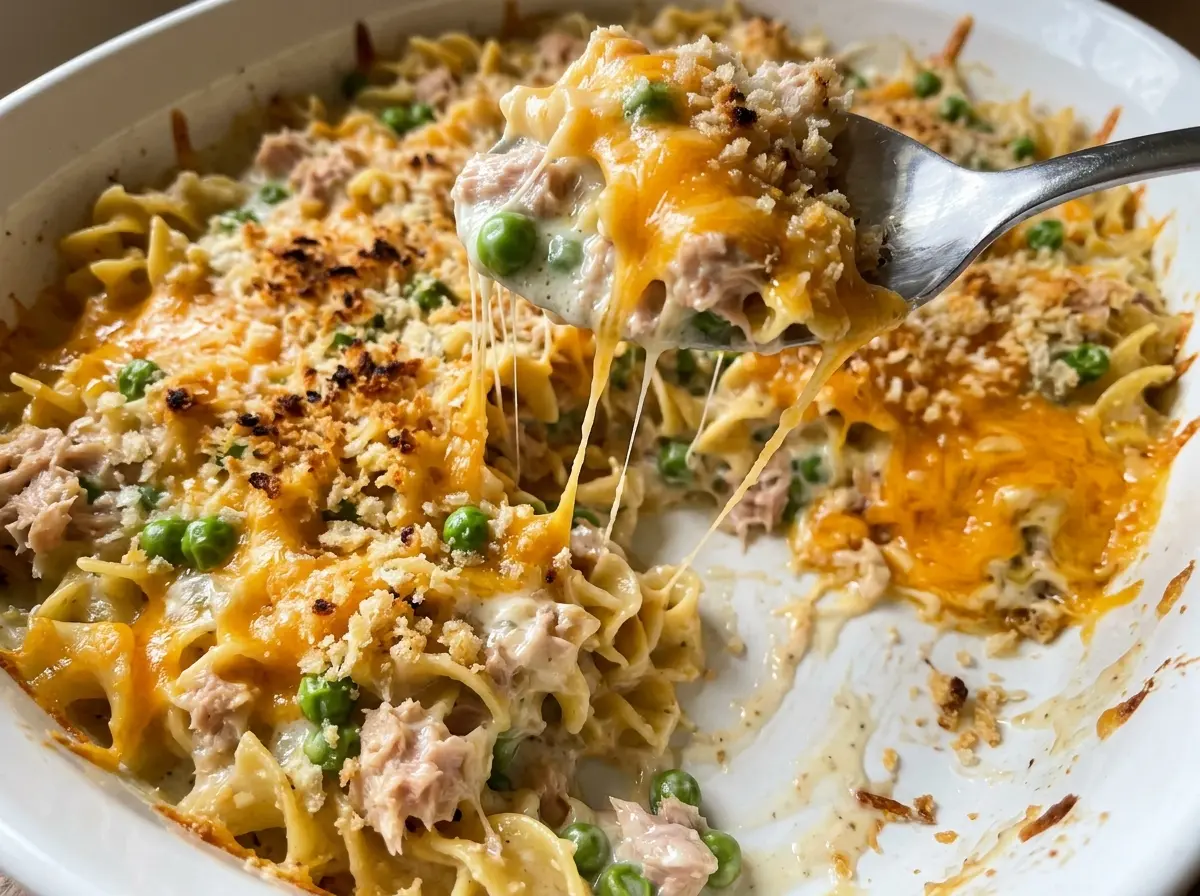
When the casserole comes out of the oven, the panko is golden while little bubbles break around the edges. That’s the cue I watch for with tuna casserole: the top has toasted, and the creamy mixture underneath is hot. The first scoop is soft and rich, with peas tucked between the noodles and just enough crunch on top to keep each bite interesting.
I make this version with familiar pantry ingredients, but I’m careful not to cook the noodles past just tender before they go into the oven. They’ll spend another 20 to 25 minutes baking, and starting with noodles that are already soft can leave them mushy. The butter-coated panko adds a crisp finish without turning the casserole into a heavy blanket of crumbs. It’s a cozy, scoopable bake with a savory mushroom-and-cheddar sauce.
Kitchen Note
Give the casserole its full five-minute rest before serving. It comes out bubbling and a little loose, then settles enough to scoop without the noodles sliding apart.
Save this tuna casserole for a night when you want creamy noodles, flaky tuna, and a crisp golden panko top.
Why the Noodles Should Be Just Tender Before They Go Into the Oven
It’s easy to think the noodles need to be fully soft before they meet the sauce, but this casserole has another stretch of cooking in the oven. Noodles that are already quite soft can lose their shape as they bake and become pasty when you scoop the finished dish. Starting with noodles that still have a little structure gives them room to finish cooking in the creamy mixture.
Use the package directions as your timing guide, and drain the noodles as soon as they’re just tender. The sauce coats them in the baking dish, so they don’t need to sit in the pot until they’re softer than you’d want in a bowl of pasta. This small timing choice makes a noticeable difference: the noodles stay distinct, and the finished casserole holds together without feeling gummy.
What the Mushroom Soup, Tuna, and Panko Each Bring
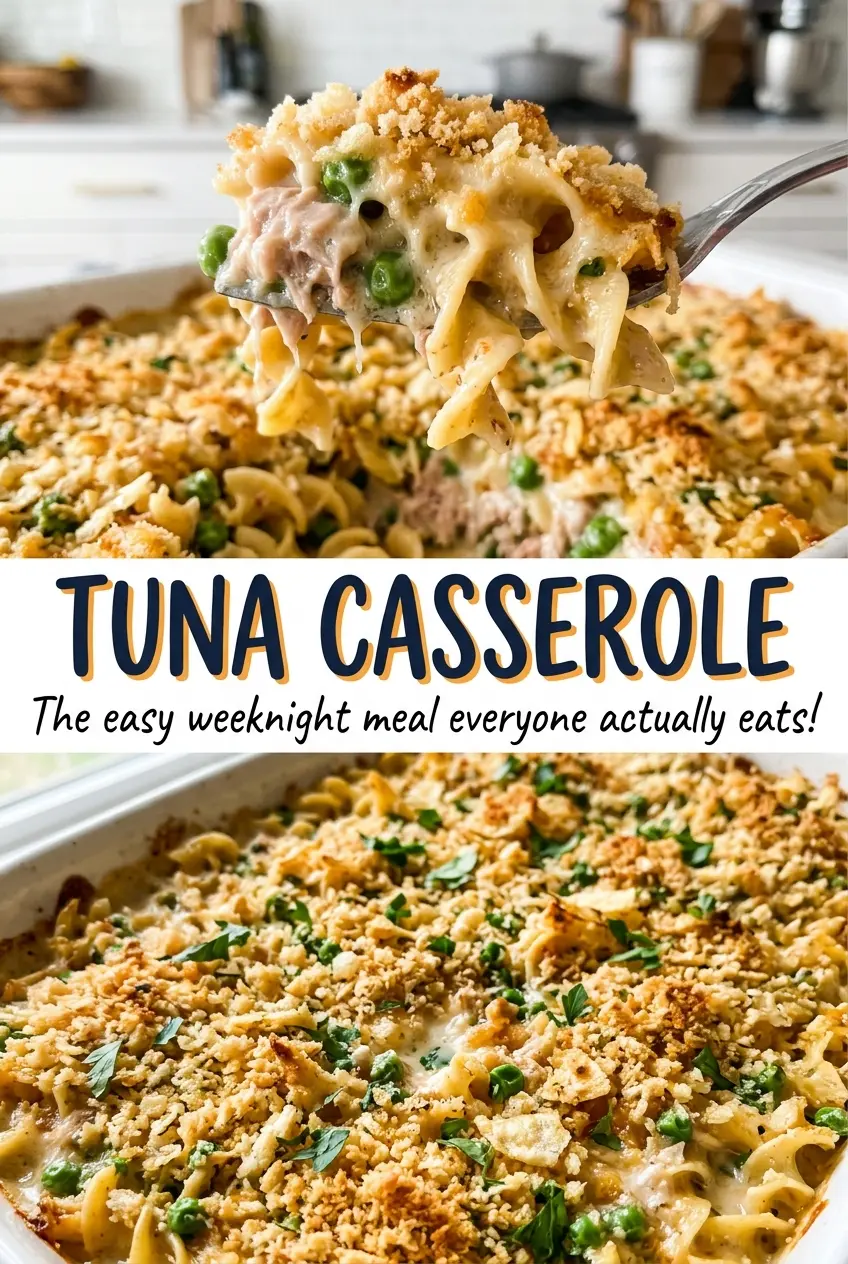
- Condensed cream of mushroom soup and whole milk — The soup provides the casserole’s savory, thick base; milk loosens it enough to coat the noodles. Standard condensed soup works well here, and cream of celery soup is a straightforward swap if you want to skip the mushroom flavor. Keep the condensed soup condensed rather than using a ready-to-serve soup, which would make the mixture too loose.
- Tuna — Canned tuna gives the casserole its flaky, savory center. Drain it well and break it into flakes before stirring it into the sauce, so you don’t end up with dense chunks in a few bites. Tuna packed in water is a lighter choice; oil-packed tuna works too, though the casserole will taste richer.
- Frozen peas and sharp cheddar — Frozen peas are convenient and hold their shape as the casserole bakes. Sharp cheddar gives the creamy base a more pronounced cheese flavor than mild cheddar. For a gentler taste, mild cheddar works; Monterey Jack makes a softer, milder swap.
- Panko and unsalted butter — Panko’s larger, airy crumbs make a crisper lid than fine breadcrumbs. The butter helps the crumbs toast evenly. If panko isn’t available, regular breadcrumbs work, but expect a finer, denser topping.
- Wide egg noodles — Their broad shape catches the sauce and gives each scoop a substantial bite. Another short pasta shape can stand in, but use the same dry weight and cook it until just tender according to its package.
From Tender Noodles to a Bubbling, Golden Top
Cook the Noodles Without Softening Them Too Much
Bring a large pot of water to a boil, then cook the egg noodles according to the package directions until just tender. Start checking near the end of the package’s cooking range; the noodles should bend easily but still feel intact. Drain them promptly so they don’t keep softening in hot water. Don’t rinse them, since the recipe needs the drained noodles ready to fold into the sauce.
Stir Together the Creamy Tuna Base
In a large bowl, stir the condensed cream of mushroom soup and milk until they’re combined. Mix in the drained, flaked tuna, frozen peas, shredded cheddar, onion powder, and black pepper. Break up any large tuna pieces as you stir, but don’t mash the fish into a paste. The mixture should look thick and evenly dotted with peas and tuna.
Fold the Noodles In and Prepare the Crumb Topping
Add the drained noodles to the bowl and fold until they’re coated, taking care not to crush them. Spread the mixture in a greased 9×13-inch baking dish so it sits in an even layer. In a separate bowl, stir the panko with the melted butter until the crumbs are evenly coated. Scatter the topping across the casserole rather than piling it in the middle, so it can brown across the surface.
Bake Until the Edges Bubble
Heat the oven to 375°F and bake the assembled casserole for 20 to 25 minutes. Look for a golden topping and bubbling around the edges; those are the cues that the center is hot and the top has toasted. If the edges are bubbling but the panko still looks pale, give it a little more time in the oven. Let it rest before you scoop and serve.
Easy Swaps for a Different Tuna Casserole
Trade the Mushroom Soup for Cream of Celery
Use two 10.5-ounce cans of condensed cream of celery soup in place of the mushroom soup. The sauce stays creamy, with a lighter celery note and no mushroom flavor.
Make It Gluten-Free
Use 12 ounces of gluten-free wide noodles, two 10.5-ounce cans of gluten-free condensed cream of mushroom soup, and gluten-free panko. Cook the noodles according to their package until just tender; different gluten-free pastas can soften at different rates. The casserole keeps its creamy, crunchy contrast, though the noodles may have a slightly different texture.
Use Pepper Jack for a Little Heat
Replace the sharp cheddar with the same amount of shredded pepper Jack. It melts into the sauce and brings a gentle chile warmth, while the casserole loses some of cheddar’s tang.
Storage and Reheating
- Refrigerator: Store leftovers covered or in an airtight container for 3 to 4 days. The panko softens as it sits.
- Freezer: Freeze cooled portions in airtight containers for up to 2 months. Thaw overnight in the refrigerator; the topping will be softer after freezing.
- Reheating: Reheat covered in a 350°F oven until the center reaches 165°F, uncovering near the end to help the topping crisp. Microwaving is quicker, but leaves the panko soft.
Questions That Come Up When Making Tuna Casserole
Tuna Casserole
Ingredients
Equipment
Method
- Heat the oven to 375°F.
- Grease a 9x13-inch baking dish.
- Cook the egg noodles in a large pot of boiling water according to the package directions until just tender.
- Drain the noodles.
- In a large bowl, stir together the cream of mushroom soup, milk, tuna, peas, cheddar, onion powder, and black pepper.
- Fold in the drained noodles.
- Spread the mixture in the prepared baking dish.
- Stir the panko and melted butter together until the crumbs are evenly coated.
- Sprinkle the panko mixture evenly over the casserole.
- Bake for 20 to 25 minutes, until the topping is golden and the casserole is bubbling around the edges.
- Let the casserole rest for 5 minutes before serving.