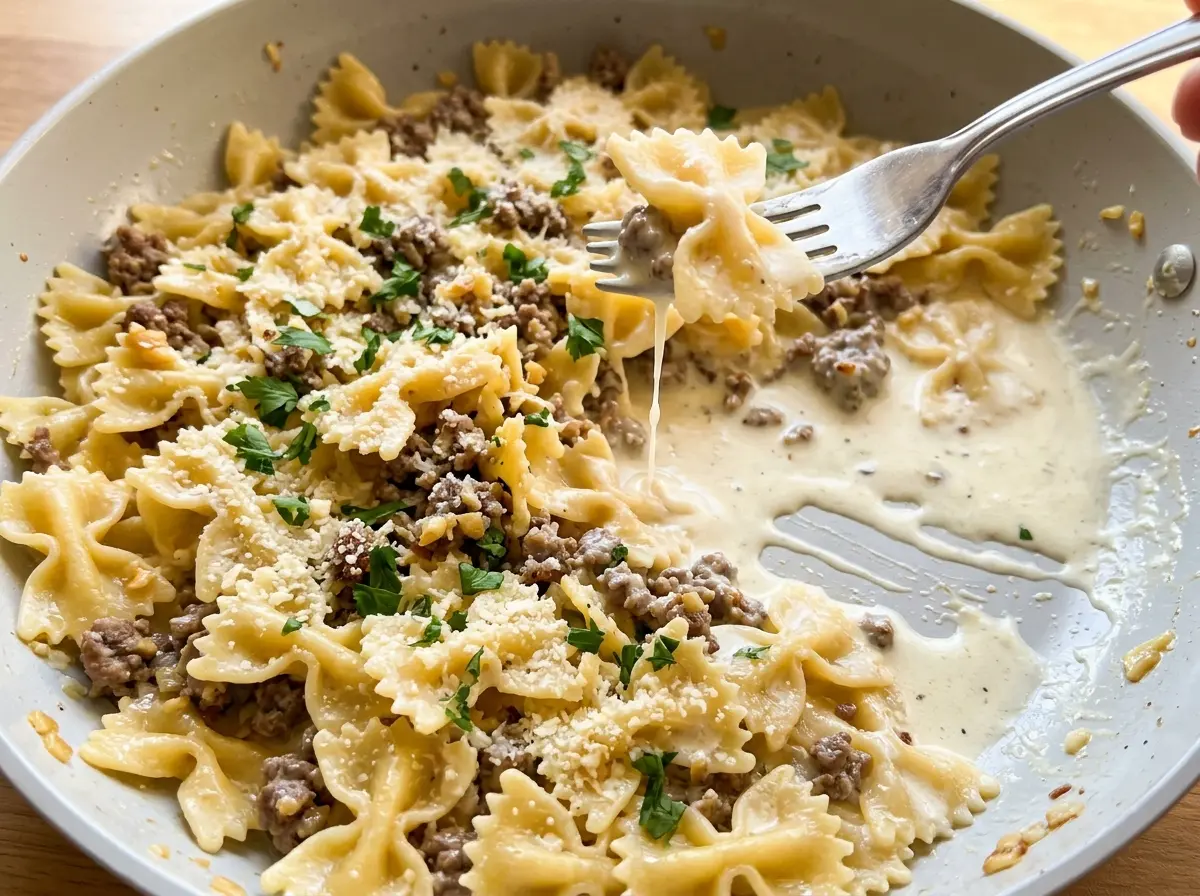
The sauce can look a little loose when it first meets the bowties, then turn silky as everything gets tossed together. That’s the moment I like about this garlic Parmesan bowtie pasta with ground beef: a pound of beef and a few pantry staples become a full skillet of creamy pasta without a separate, fussy sauce routine.
Farfalle gives the sauce plenty to catch on. The pinched centers stay a bit firmer than the broad edges, so each forkful has a pleasing mix of tender pasta and hearty beef. I keep the sauce savory rather than overly rich by building it with beef broth and cream, then letting Parmesan bring the salty, nutty finish.
Kitchen Note
I never pour all the reserved pasta water in at once. Toss in a little, check how the sauce clings, and add more only if it still looks thick or patchy; the pasta keeps absorbing sauce as you finish.
Save this garlic Parmesan bowtie pasta with ground beef for a cozy skillet dinner with a creamy sauce that clings to every bowtie.
Why This Beef Sauce Needs a Flour Base Before the Parmesan Goes In
A broth-and-cream sauce can taste good in the pan but slide right off the pasta if it stays too thin. Flour gives the liquid body, so it coats the bowties instead of collecting underneath them. It also helps the cream and beef broth feel like one sauce rather than two separate ingredients.
Parmesan brings its own richness, but it isn’t a thickener you can rely on by itself. Cheese added to a loose, hot liquid can clump before it has a chance to melt evenly. Building a lightly thickened base first gives the cheese a smoother landing, while the beef adds savory flavor back into the sauce. The result should be creamy and spoonable, not paste-like or soupy.
What the Bowties, Beef, and Parmesan Each Bring to the Skillet
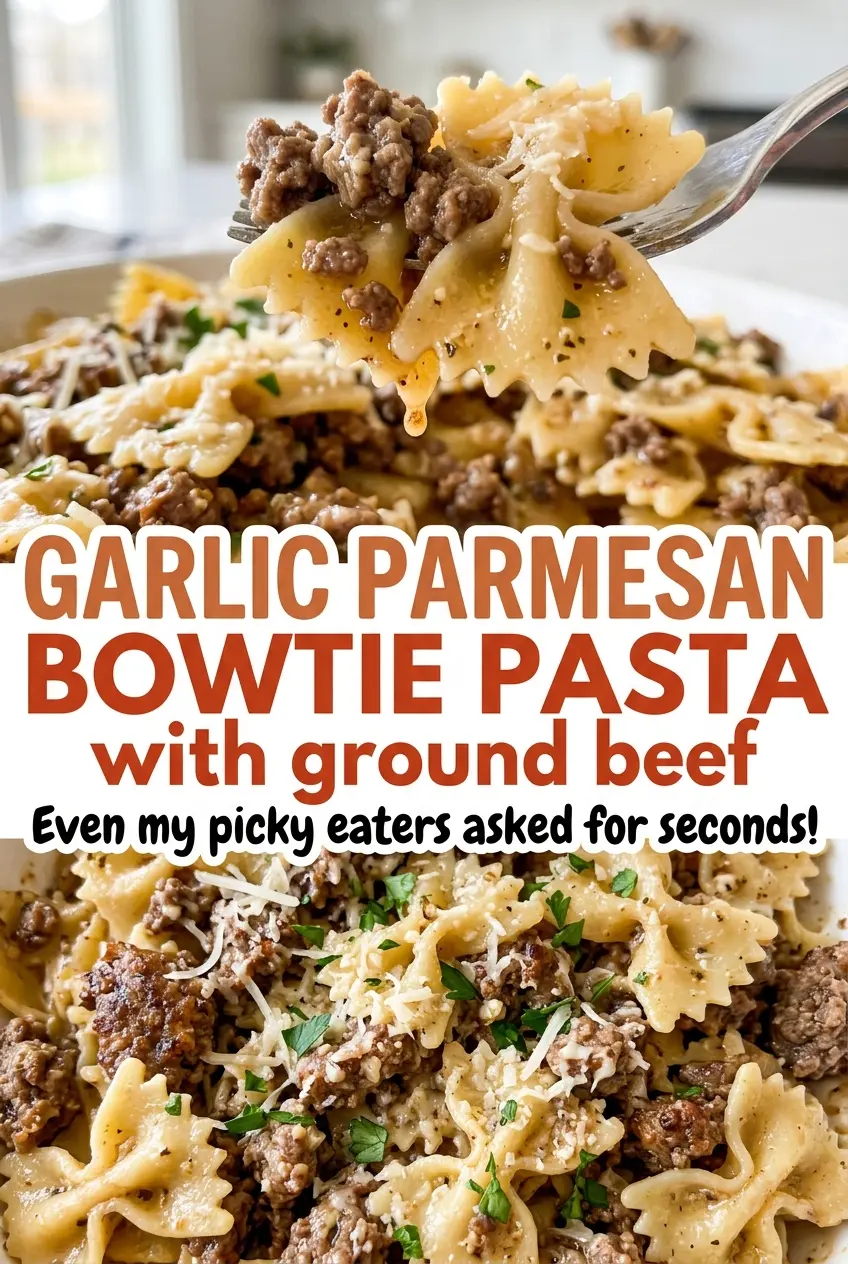
- Bowtie pasta: Farfalle’s pinched center and broad edges give the sauce different places to cling. Use a sturdy brand that holds its shape during boiling; the package timing is a helpful guide, but the bite matters more than the clock.
- Ground beef: The 85% lean beef gives the sauce a beefy base while leaving some fat behind for browning. Breaking it into small pieces helps it mix through the pasta rather than landing in a few large clumps.
- Garlic: Freshly minced garlic gives the butter sauce its fragrant backbone. Mince it evenly so the small pieces cook at the same pace; large chunks can taste sharp while tiny bits brown quickly.
- Butter, flour, broth, and cream: Butter carries the garlic, flour builds body, and the broth keeps the sauce savory rather than heavy. Low-sodium broth leaves more room for the Parmesan’s saltiness, while heavy cream gives the sauce its lush texture.
- Parmesan: Freshly grated Parmesan melts into the sauce more smoothly than coarse shreds. A wedge you grate at home is worth choosing here; the cheese is the final seasoning as well as the finish.
Building the Sauce and Tossing Until It Clings
Cook the Farfalle to a Firm Bite
Bring 4 quarts of water to a boil in a 6-quart pot, stir in the kosher salt and bowtie pasta, and cook for 11–13 minutes or according to the package directions until al dente. The edges should be tender, but the pinched centers should still have a little chew. Before draining, reserve 1 cup of pasta water. That starchy water is useful at the end, so set it aside where you can reach it.
Brown the Beef Without Crowding It
While the pasta cooks, brown the ground beef with the black pepper in a 12-inch skillet over medium-high heat for 6–8 minutes. Break it into small pieces as it cooks, and look for no pink remaining; the beef should reach 160°F. If it sits in large clumps, the sauce won’t distribute as evenly. Drain the excess grease, then transfer the beef to a plate.
Make a Smooth Broth-and-Cream Base
Melt the butter in the same skillet over medium heat, then add the minced garlic and cook for 30 seconds. Stir in the flour and cook for 1 minute so it loses its raw, dusty taste. Gradually whisk in the beef broth and heavy cream; pouring them in steadily helps prevent lumps. Bring the sauce to a simmer and cook for 3–5 minutes, stirring, until it’s slightly thickened.
Melt in the Parmesan and Return the Beef
Reduce the heat to low before stirring in the Parmesan. Give it time to melt into the sauce rather than turning the burner up to speed things along; high heat can leave the cheese grainy. Once the sauce looks smooth, return the beef to the skillet and stir until each piece is coated. Keep the heat gentle as the beef warms through.
Finish the Pasta in the Sauce
Return the drained pasta to the pot, add the sauce, and toss over low heat for 1–2 minutes. The bowties should look glossy, with sauce tucked into their folds. If the sauce seems too tight, add reserved pasta water a little at a time and keep tossing. Stop when the sauce clings to the pasta rather than pooling at the bottom.
Three Easy Swaps That Change the Bowl Without Losing the Creamy Sauce
Make It Gluten-Free
Use gluten-free farfalle and replace the all-purpose flour with the same amount of a cup-for-cup gluten-free flour blend. Cook the pasta by its package directions and check the sauce as it simmers; different blends can thicken at slightly different speeds. The sauce stays creamy, though the pasta may have a softer bite.
Use Half-and-Half for a Lighter Sauce
Replace the heavy cream with the same amount of half-and-half. The finished sauce will be less rich and a little lighter, but the flour still gives it enough body to coat the pasta. Keep the sauce at a gentle simmer rather than boiling it hard.
Trade Parmesan for Pecorino Romano
Use the same amount of freshly grated Pecorino Romano for a sharper, saltier finish. It melts into the sauce in the same way, but its stronger taste stands out more against the cream. Taste before adding any extra salt.
Storage and Reheating
- Refrigerator: Refrigerate leftovers within 2 hours and keep them covered for 3–4 days. The pasta will absorb some sauce as it sits.
- Freezer: Freeze in an airtight container for up to 2 months. Thaw overnight in the refrigerator; the cream sauce may separate slightly and the pasta will be softer.
- Reheating: Warm gently in a skillet over low heat with a small splash of beef broth, stirring until the leftovers reach 165°F. High heat can make the sauce separate before the center is hot.
Questions That Come Up While Making This Beefy Bowtie Pasta
Garlic Parmesan Bowtie Pasta with Ground Beef
Ingredients
Equipment
Method
- Bring the water to a boil in a 6-quart pot, stir in the salt and pasta, and cook for 11–13 minutes or according to the package directions until al dente. Reserve 1 cup of pasta water, then drain the pasta.
- While the pasta cooks, brown the ground beef and black pepper in a 12-inch skillet over medium-high heat for 6–8 minutes, breaking it into small pieces, until no pink remains and it reaches 160°F. Drain excess grease and transfer the beef to a plate.
- Melt the butter in the same skillet over medium heat, add the garlic, and cook for 30 seconds; stir in the flour and cook for 1 minute. Gradually whisk in the beef broth and heavy cream, bring to a simmer, and cook for 3–5 minutes, stirring, until slightly thickened.
- Reduce the heat to low, stir in the Parmesan until melted, then return the beef to the skillet and stir to coat.
- Return the drained pasta to the pot, add the sauce, and toss over low heat for 1–2 minutes. Add reserved pasta water a little at a time as needed until the sauce clings to the pasta.