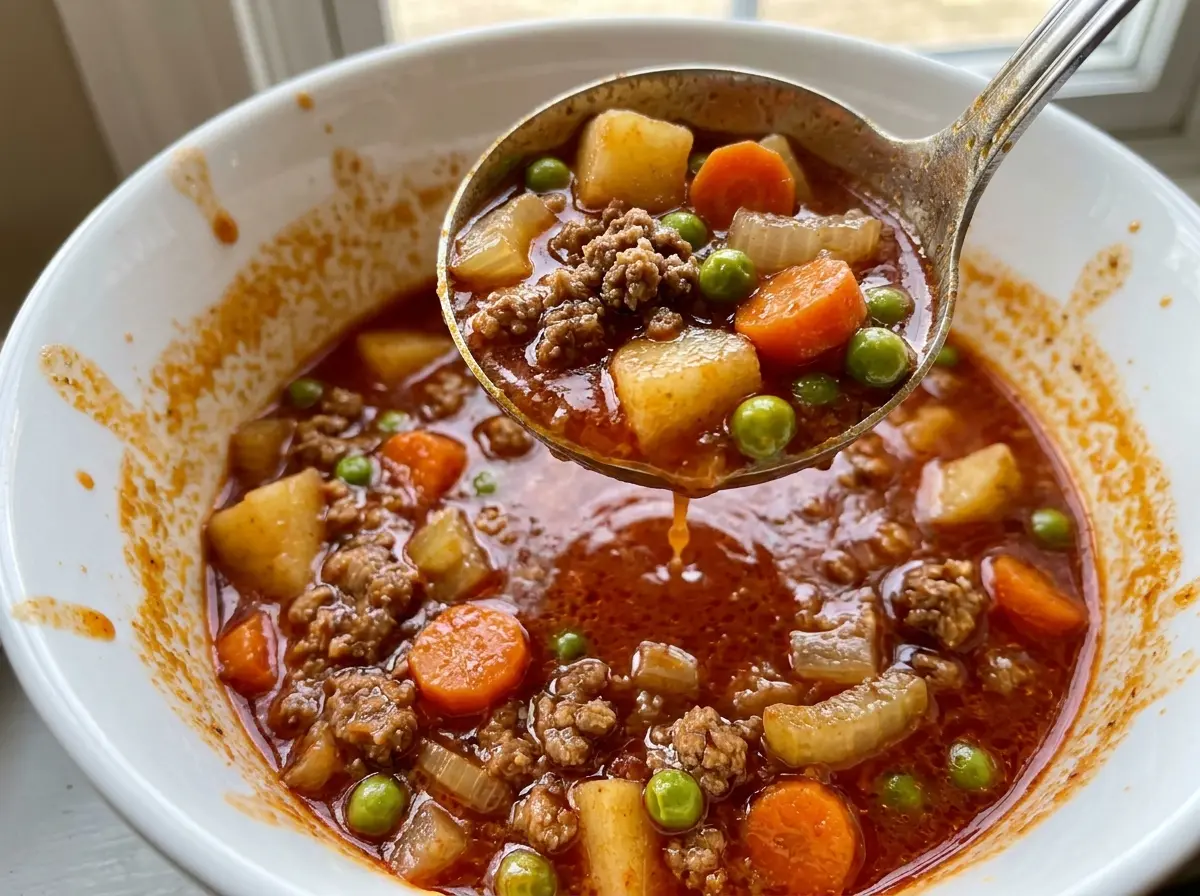
The broth should cling lightly to the spoon, not sit thin and watery around the potatoes. That balance is what I look for in hamburger stew: browned ground beef, tender vegetables, and enough body to make each bowl feel like a full meal. This version serves six from one Dutch oven, and the potatoes simmer right in the beefy tomato broth.
I use Yukon Gold potatoes because they turn tender while holding their shape, and I cut them into even cubes so they finish alongside the carrots. The flour gets stirred through the browned beef and vegetables before any liquid goes in; that gives it a chance to coat everything instead of clumping in the broth. A final handful of peas goes in near the end, leaving them bright and pleasantly tender. The result is a hearty, spoonable stew with distinct vegetables in every bowl.
Kitchen Note
The peas need only a short finish in the hot stew. Stir them in near the end and keep the pot uncovered; they warm through without turning soft and dull.
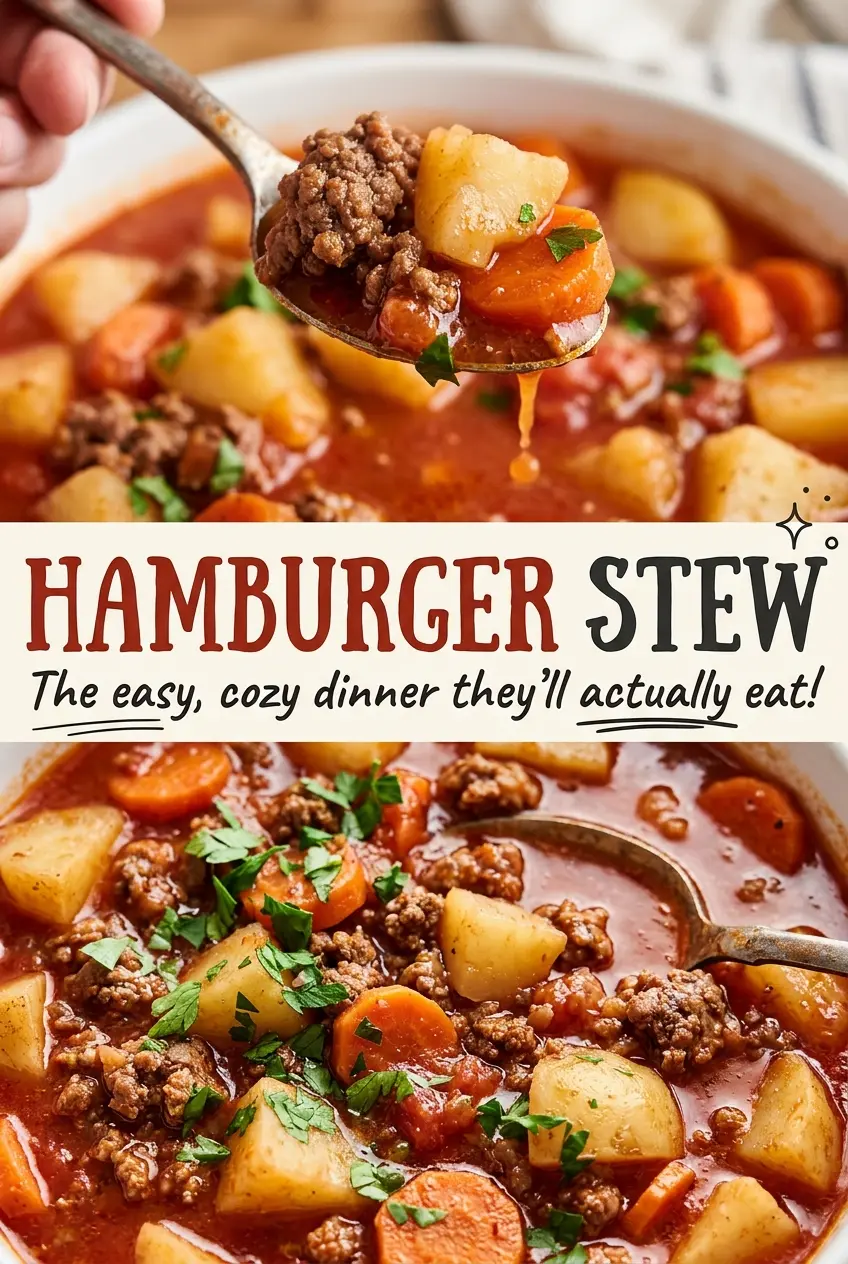
Save this Hamburger Stew for a one-pot supper with browned beef, tender Yukon Gold potatoes, and peas stirred in at the end.
Why the One-Inch Potato Cut Matters in Hamburger Stew
In a stew, potato size affects more than how long dinner takes. Small pieces can soften enough to break apart while the carrots are still firm; oversized chunks may look tender outside but stay dense in the middle. Cutting the Yukon Golds into even one-inch cubes gives them a better chance of becoming tender at the same time as the sliced carrots.
That balance also protects the texture of the broth. Yukon Golds are creamy, but they hold their shape better than a floury potato when simmered in liquid. As they cook, a little starch naturally meets the broth, helping the stew feel substantial without turning the pot into mashed potatoes. Keep the pieces close in size, and use tenderness—not a vigorous boil—as your cue. The covered, low simmer lets the vegetables cook steadily while the beef and tomato flavors mingle.
Why Yukon Golds Hold Their Shape in This Beefy Broth
- Ground beef — The 85% lean blend gives the broth a rounded beef flavor without leaving the stew overly greasy. A standard grocery-store package works well; there’s no need to seek out a specialty grind. Brown it thoroughly and drain excess fat before building the vegetables into the pot.
- Yukon Gold potatoes — Their creamy centers and sturdy shape suit a long simmer. Choose firm potatoes without soft spots, then cut them evenly so they cook at a similar rate. A more floury potato won’t hold its cubes as neatly in the broth.
- Onion, carrots, celery, and garlic — These make the savory vegetable base, with the onion softening before the garlic goes in. Fresh garlic matters most for its aroma; mince it shortly before cooking so it doesn’t sit cut and lose its punch. Keep the carrot slices consistent for even cooking.
- Flour, dried thyme, and black pepper — The flour helps give the broth body, while thyme brings an earthy note that suits beef and tomatoes. Dried thyme is a good fit here because it can simmer with the stew. Stir the seasonings through the beef and vegetables before adding broth so they’re distributed through the pot.
- Beef broth, diced tomatoes, and Worcestershire sauce — Together they make a savory, lightly tangy cooking liquid. A reliable everyday beef broth is enough; the browned beef and Worcestershire bring plenty of depth. Canned diced tomatoes are convenient because their pieces stay distinct in the finished stew.
- Frozen peas — They’re added at the finish, so their sweetness gives the long-simmered broth a fresh note. Keep them frozen until you stir them into the pot; there’s no need to thaw them first.
Build the Stew in Stages for Tender Vegetables and a Full-Bodied Broth
Brown the Beef and Drain the Excess
Set a 6-quart Dutch oven over medium-high heat and cook the ground beef for 6 to 8 minutes, breaking it into small pieces as it browns. Look for browned meat throughout rather than large gray clumps, and cook until it reaches 160°F. Drain excess fat before adding the vegetables; leaving too much behind can make the broth greasy.
Soften the Vegetables Before Adding Garlic
Add the chopped onion, sliced carrots, and chopped celery, then cook for 5 minutes, stirring occasionally. The onion should begin to soften, while the carrots and celery still hold their shape. Stir in the minced garlic and cook for 30 seconds. Garlic can scorch quickly, so keep it moving and don’t let it sit against the hot pot.
Coat Everything Before the Broth Goes In
Sprinkle the flour, kosher salt, black pepper, and dried thyme over the beef and vegetables. Stir until the flour is spread over the mixture and no dry patches remain. Add the beef broth, diced tomatoes, Worcestershire sauce, bay leaf, and potato cubes, scraping the bottom of the Dutch oven as you stir. Bring the pot to a boil, then cover it and simmer over low heat for 20 to 25 minutes, until the potatoes and carrots are tender.
Finish with Peas and Remove the Bay Leaf
Once the potatoes and carrots are tender, stir in the frozen peas. Simmer uncovered for 3 to 5 minutes, just until the peas are heated through. Check the bottom of the pot with your spoon as you stir so the thickening broth doesn’t catch. Remove the bay leaf before serving.
Simple Ways to Change the Texture or Make Hamburger Stew Gluten-Free
Make the broth thicker and more rustic
When the vegetables are tender, press a few potato cubes against the inside of the pot and stir them back into the broth. The softened potato thickens the stew without changing its savory flavor, though you’ll lose some of the neat potato cubes in each bowl.
Use a measure-for-measure gluten-free flour blend
Replace the all-purpose flour with a measure-for-measure gluten-free flour blend, then stir it through the beef and vegetables just as you would the original flour. The blend thickens the broth while keeping the rest of the stew unchanged; its finished texture may be a little less silky than the wheat-flour version.
Storage and Reheating
- Refrigerator: Store cooled stew in an airtight container for 3 to 4 days. The potatoes soften a little as they sit and absorb broth.
- Freezer: Freeze in airtight containers for up to 3 months. Thaw overnight in the refrigerator; the potatoes may be softer after freezing, but the stew remains hearty.
- Reheating: Warm it on the stovetop over medium-low heat, stirring occasionally, until it reaches 165°F. If the stew has thickened in the refrigerator, loosen it with a small splash of beef broth; avoid boiling it hard, which can break up the potatoes.
Questions That Come Up When Making Hamburger Stew
Hamburger Stew
Ingredients
Equipment
Method
- In a 6-quart Dutch oven over medium-high heat, cook the ground beef for 6 to 8 minutes, breaking it into small pieces, until browned and it reaches 160°F. Drain excess fat.
- Add the onion, carrots, and celery and cook for 5 minutes, stirring occasionally, until the onion begins to soften.
- Stir in the garlic and cook for 30 seconds.
- Sprinkle in the flour, salt, pepper, and thyme and stir until the beef and vegetables are evenly coated.
- Stir in the beef broth, diced tomatoes, Worcestershire sauce, bay leaf, and potatoes, scraping the bottom of the pot.
- Bring to a boil, then cover and simmer over low heat for 20 to 25 minutes, until the potatoes and carrots are tender.
- Stir in the frozen peas and simmer uncovered for 3 to 5 minutes, until heated through.
- Remove the bay leaf before serving.