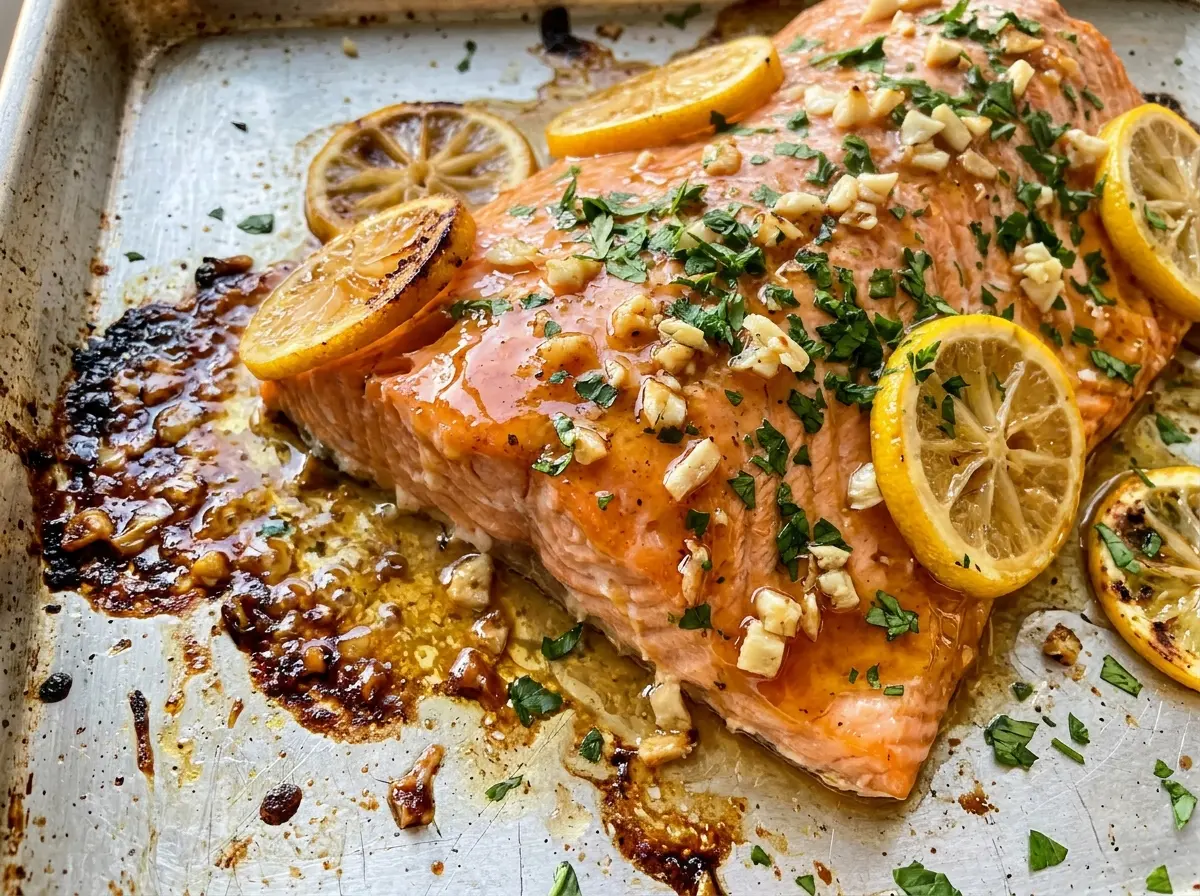
The asparagus starts to soften on the hot sheet pan before the salmon ever touches it. Then the fish goes in the middle, the spears move to the sides, and a quick brush of honey-lemon glaze gives the salmon a shiny, tangy top. That staggered start is what makes this sheet pan honey lemon salmon work as one meal instead of a race to finish two different things.
I whisk the glaze while the oven heats, using fresh lemon juice for brightness and finely grated zest for a sharper citrus aroma. Dijon and garlic keep the honey from tasting one-note sweet, and the salmon gets the glaze only after it’s on the pan. The result is tender asparagus alongside salmon with a sweet-tart coating that clings to the fish.
Kitchen Note
Give the salmon its full three-minute rest right on the pan. Moving the portions while they’re piping hot makes them more likely to flake apart when you lift them.
Save this sheet pan honey lemon salmon for a dinner with glossy glazed fish and tender asparagus—all roasted on one pan.
Why the Asparagus Goes Into the Oven Before the Salmon
Salmon and asparagus don’t need the same amount of oven time. The asparagus gets a short head start so it has time to turn tender while the fish cooks through. Put both on the pan at once and the salmon would have to stay in longer for the spears to catch up, which can leave the fish dry.
The first roast also gives the asparagus a chance to start cooking before it shares the pan with the salmon. When the fish goes in, the spears move to the sides and the salmon sits skin-side down in the center. That layout keeps the vegetables in a single layer and gives you room to brush glaze over the tops and sides of each portion.
Use a large rimmed pan rather than crowding everything onto a smaller one. Packed asparagus won’t sit in the single layer the method needs, and a crowded pan makes it harder to get the fish centered. This little bit of space is what helps the meal finish together instead of leaving you with crisp salmon and stubbornly firm stalks.
Fresh Lemon, Honey, and Salmon Do the Heavy Lifting

- Fresh lemon juice and zest — The juice brings acidity to balance the honey, while the zest adds aromatic lemon flavor without adding more liquid. Fresh lemon matters here because bottled juice can stand in for the juice in a pinch, but it can’t replace the zest. Finely grate the zest so it blends into the glaze instead of leaving large strips.
- Honey — Honey gives the glaze its sweetness and helps it cling to the fish when brushed on. Use the honey you keep in your pantry; there’s no need for a specialty variety. Whisk until it’s evenly blended with the lemon and mustard so one portion doesn’t get a thicker, sweeter coating than another.
- Garlic — Finely grated garlic disperses through the glaze more evenly than a rough chop. A small grater gives you fine pieces that stick to the salmon rather than sliding off in large chunks. The fresh clove has a sharper, more savory bite than dried garlic would.
- Dijon mustard — Dijon rounds out the sweet-and-sour glaze with a gentle savory tang and helps the ingredients come together. A smooth, inexpensive Dijon works well; a coarse mustard would leave a noticeably different texture. For a gluten-free version, choose gluten-free Dijon mustard.
- Skin-on salmon — The skin gives each portion a clear side to place against the pan and helps the fish hold together as you move it. Cut the salmon into four equal portions so they cook on a similar schedule. No special grade is needed; even portions matter more than an expensive label.
- Asparagus — Trim away the woody ends before roasting, and spread the spears into one layer after tossing them with oil and seasoning. Fresh, firm spears are easiest to arrange evenly. Their thickness affects how quickly they become tender, so keep the spears together in a single layer rather than piling them up.
The Staggered Roast, From First Sizzle to Tender Salmon
Heat the Pan and Whisk the Glaze
Heat the oven to 400°F and line a large rimmed 13×18-inch sheet pan with parchment paper. In a small bowl, whisk together 2 tablespoons honey, 1 tablespoon fresh lemon juice, 1 teaspoon finely grated lemon zest, 1 finely grated garlic clove, 1 teaspoon Dijon mustard, and 1/4 teaspoon kosher salt. Keep whisking until the honey loosens and the mixture looks smooth. The remaining salt goes on the asparagus, not into the glaze.
Give the Asparagus Its Head Start
Arrange 1 pound of asparagus on the prepared pan, drizzle with 1 tablespoon olive oil, then add 1/2 teaspoon freshly ground black pepper and the remaining 1/4 teaspoon kosher salt. Toss the spears on the pan until coated, then spread them into a single layer. Roast for 5–7 minutes. They won’t be fully tender yet; this first roast is only the start of their cooking time.
Make Space for the Salmon
Push the asparagus to the sides of the pan, leaving the center open. Set 1 1/2 pounds of skin-on salmon, cut into 4 equal portions, in the center with the skin facing down. Brush the tops and sides with the honey-lemon glaze so the exposed fish is coated. Keep the glaze on the salmon rather than pouring it over the asparagus.
Bake Until the Center Reaches 145°F
Bake for 10–14 minutes, until the thickest part of the salmon reaches 145°F and the asparagus is tender. Start checking the fish toward the early end of that window, since portion thickness affects how quickly it cooks. Use a thermometer in the thickest section instead of judging doneness by the color of the glaze. If the asparagus is tender and the salmon has reached its temperature, the pan is ready to come out.
Rest the Portions on the Pan
Leave the salmon on the sheet pan for 3 minutes before serving. The brief pause gives the portions a chance to settle after baking, and you won’t need to transfer hot fish to another dish just to rest it. Lift each piece carefully from the parchment when you’re ready to serve.
Two Small Changes for Different Needs
Make the glaze gluten-free
Use gluten-free Dijon mustard in place of regular Dijon and keep the rest of the glaze the same. The honey, lemon, and garlic still give you the same sweet-tangy coating, with no change to the roasting method.
Leave out the garlic for a cleaner lemon taste
Skip the grated garlic and whisk the remaining glaze ingredients together. The salmon will still have honey, lemon, and Dijon in every bite, but the finish will taste brighter and less savory.
Storage and Reheating
- Refrigerator: Refrigerate the salmon and asparagus in an airtight container within 2 hours, at 40°F or colder, and eat within 3–4 days. The asparagus softens and the salmon firms up as it chills.
- Freezer: Freeze portions in an airtight freezer-safe container for up to 2–3 months. The salmon holds up, though the asparagus loses some of its fresh texture; thaw overnight in the refrigerator.
- Reheating: Cover and microwave at 50% power in short bursts until the center reaches 165°F. Long stretches on high heat dry the salmon before it warms evenly.
Questions That Come Up While This Salmon Bakes
Sheet Pan Honey Lemon Salmon
Ingredients
Equipment
Method
- Heat the oven to 400°F.
- Line a large rimmed 13x18-inch sheet pan with parchment paper.
- Whisk the honey, lemon juice, lemon zest, garlic, Dijon, and 1/4 teaspoon of the salt in a small bowl.
- Arrange the asparagus on the prepared pan.
- Drizzle the asparagus with olive oil, and sprinkle with the pepper and remaining 1/4 teaspoon salt.
- Toss to coat and spread in a single layer.
- Roast for 5–7 minutes.
- Push the asparagus to the sides of the pan.
- Place the salmon skin-side down in the center.
- Brush the tops and sides with the honey-lemon glaze.
- Bake for 10–14 minutes, until the thickest part of the salmon reaches 145°F and the asparagus is tender.
- Rest the salmon on the pan for 3 minutes before serving.