The top of a quick bread can look ready while the center is still setting, so I trust the toothpick more than the crust. For this Sweet Eggnog Bread, a few moist crumbs on the tester mean it’s time to come out; a clean toothpick can mean the loaf has baked longer than it needs to.
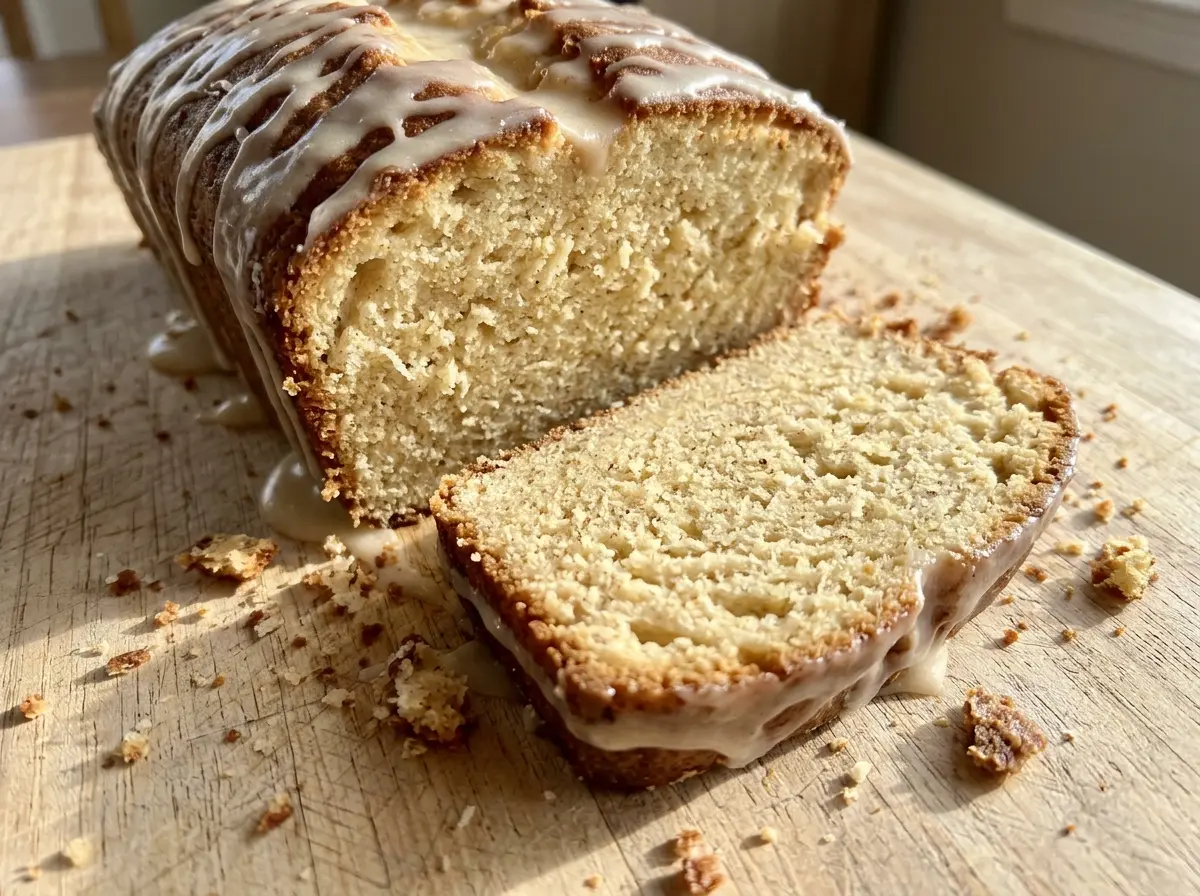
Eggnog gives the loaf its familiar creamy, spiced flavor, but this is still a tender sliceable bread, not a custard. I cream softened butter and sugar first, then add the eggnog in portions with the flour mixture so the batter comes together without getting worked into a tough crumb. Once cooled, each slice is soft, lightly nutmeg-scented, and sweet enough to enjoy on its own.
Kitchen Note
Room-temperature eggs blend into creamed butter much more smoothly than cold ones. If the eggs are still chilly, the butter can look lumpy after you add them, so I set the eggs out before I start.
Save Sweet Eggnog Bread for a cozy bake with a soft crumb and gentle nutmeg warmth in every slice.
Why Eggnog Bread Stays Tender Instead of Baking Up Like Custard
Eggnog is rich and eggy, so it’s easy to expect a dense, custardy loaf. The texture here comes from a different balance: butter and sugar are creamed together, while flour and baking powder give the batter enough structure to bake into a sliceable quick bread. The eggnog adds moisture and its distinctive flavor, but it doesn’t turn the loaf into a baked custard.
That balance depends on how the ingredients meet. Adding the dry mixture and eggnog in alternating portions helps them disperse through the batter without asking you to beat a large amount of flour at once. Once the flour is incorporated, stop mixing. A smooth, fully beaten batter might look reassuring, but extra mixing can make the finished bread firm instead of tender.
The loaf also continues to settle as it cools. Letting it rest in the pan before turning it out gives the sides a chance to firm up, while cooling it completely on a rack keeps the bottom from sitting in trapped steam. Those small details preserve the soft crumb that makes this bread pleasant to slice.
What Each Ingredient Contributes to This Eggnog Loaf
- All-purpose flour — It provides the structure that makes this a loaf you can cut into neat slices. Fluff the flour before measuring, then spoon it into the cup and level it rather than packing it down; too much flour can leave the crumb dry.
- Baking powder — This is the leavener that helps the batter rise. Fresh baking powder gives a more dependable lift, so replace an old container if it has been open for a long time.
- Unsalted butter and granulated sugar — Softened butter can trap air as it’s beaten with sugar, helping the loaf bake up lighter. Unsalted butter also lets the measured salt stay in control; use butter that’s soft enough to press but not melted.
- Eggs — They bind the batter and contribute richness. Room-temperature eggs are especially helpful when they’re going into creamed butter, because they’re less likely to make the mixture look separated.
- Eggnog — It supplies both liquid and the characteristic eggnog taste. Use eggnog whose flavor you enjoy on its own; a strongly flavored variety will be noticeable in the finished loaf. Bring it to room temperature before mixing.
- Ground nutmeg — Nutmeg gives the bread its warm, familiar edge without overwhelming the eggnog. Ground nutmeg is convenient and disperses well when whisked with the flour. Ground cinnamon can replace it in the same amount for a sweeter, less distinctive spice note.
- Vanilla extract — Vanilla rounds out the eggnog and butter flavors. Pure or imitation vanilla both work here, so there’s no need to use a special bottle for this bake.
Mixing and Baking the Loaf Without Toughening It
Whisk the dry ingredients evenly
Heat the oven to 350°F and coat a 9×5-inch loaf pan with nonstick cooking spray. Whisk the flour, baking powder, salt, and nutmeg together in a medium bowl until the spice is distributed throughout. Break up any small clumps as you whisk, since pockets of baking powder or nutmeg won’t disappear once they’re in the batter.
Cream the butter and sugar
Beat the softened butter and granulated sugar in a large bowl with a mixer on medium speed for about 2 minutes. The mixture should look lighter and fluffy rather than oily or tightly packed. Scrape the bowl if butter is collecting along the sides, so it’s incorporated before the eggs go in.
Add the eggs, then alternate the flour and eggnog
Beat in the eggs one at a time, then mix in the vanilla. Add the flour mixture in three portions, alternating with the eggnog in two portions, and keep the mixer on low. Stop as soon as the batter comes together and you no longer see dry flour; streaks of flour need mixing, but a little extra beating after they disappear doesn’t help.
Bake until the center gives the right cue
Scrape the batter into the prepared pan and bake for 50 to 60 minutes. Check the center with a toothpick: it should come out with a few moist crumbs, not wet batter and not completely clean. Cool the bread in the pan for 10 minutes, then turn it out onto a wire rack and let it cool completely before slicing.
Three Easy Ways to Change the Flavor or Make It Dairy-Free
Use brown sugar for a deeper, softer loaf
Replace the granulated sugar with an equal volume of packed light brown sugar. The loaf will have a deeper caramel note and a slightly more moist crumb, with less of the clean sweetness of the original.
Make a dairy-free version with plant-based swaps
Use a dairy-free baking stick in place of the butter and the same amount of dairy-free eggnog in place of the regular eggnog. Choose products intended for baking and bring both to room temperature; the flavor may be a little less rich, but the loaf will still have a tender crumb.
Give the loaf an almond note
Replace the vanilla with 1/2 teaspoon almond extract. Almond extract is more assertive than vanilla, so using less keeps it from overpowering the eggnog and nutmeg.
Storage and Reheating
- Refrigerator: Wrap the cooled loaf tightly and refrigerate for up to 4 days. The crumb will feel firmer when chilled.
- Freezer: Wrap the whole cooled loaf or individual slices tightly and freeze for up to 2 months. Thaw while wrapped to help keep the bread from drying out.
- Reheating: Warm individual slices briefly in the microwave. Use short bursts, since heating too long can dry the edges before the center is warm.
Questions That Come Up When Baking Eggnog Bread
Sweet Eggnog Bread
Ingredients
Equipment
Method
- Heat the oven to 350°F and coat a 9x5-inch loaf pan with nonstick cooking spray.
- Whisk the flour, baking powder, salt, and nutmeg in a medium bowl.
- Beat the butter and sugar in a large bowl with a mixer on medium speed until light and fluffy, about 2 minutes.
- Beat in the eggs one at a time, then mix in the vanilla.
- Add the flour mixture in three portions, alternating with the eggnog in two portions, and mix on low speed just until combined.
- Scrape the batter into the prepared pan and bake for 50 to 60 minutes, until a toothpick inserted in the center comes out with a few moist crumbs.
- Cool the bread in the pan for 10 minutes, then turn it out onto a wire rack and cool completely.