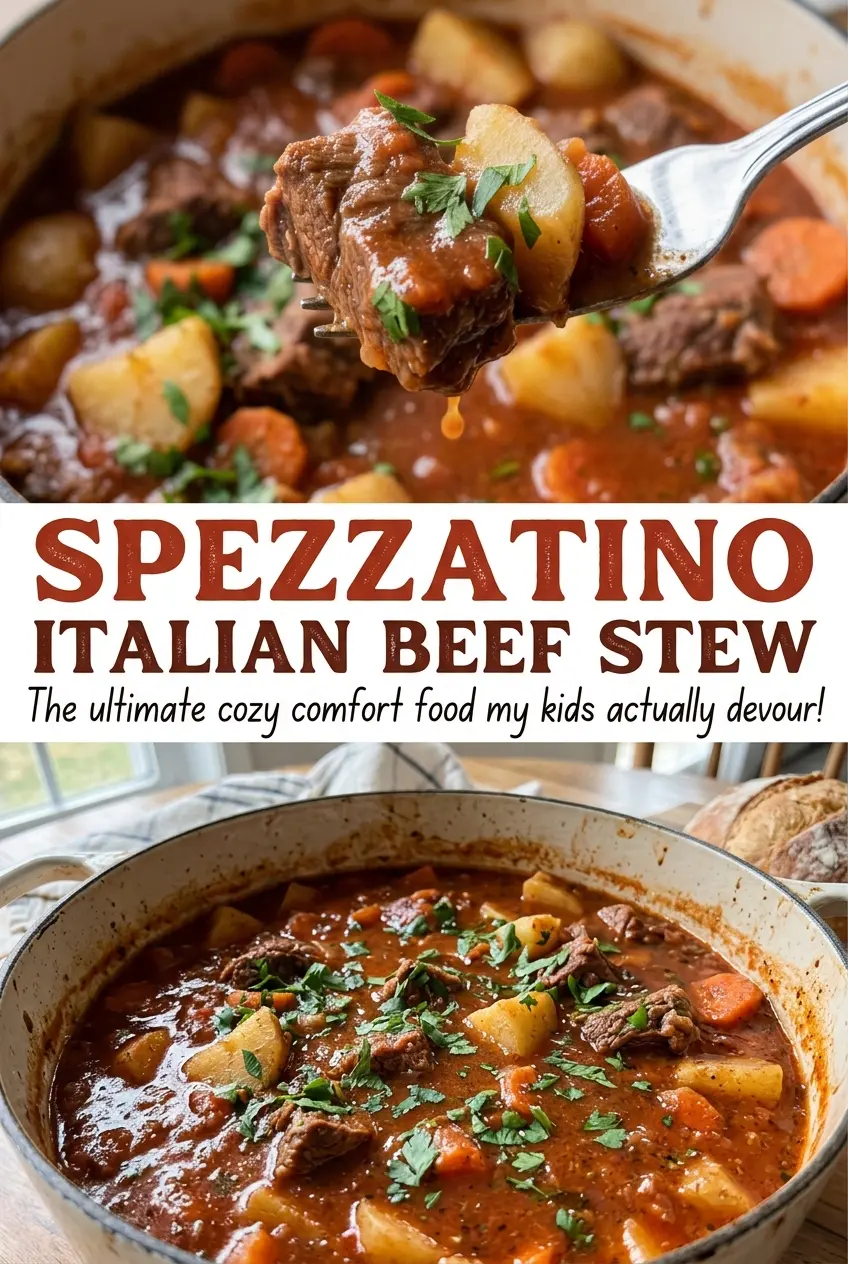
The beef gives off a little moisture as it hits the hot Dutch oven, and for a moment it looks more like it’s steaming than browning. Give each batch room and let the pan do its work; those dark, browned bits become the start of the sauce. That’s the part I pay attention to when I make spezzatino Italian beef stew, because a good sear brings a deeper, beefier taste to every spoonful.
The vegetables go in later, not at the beginning with the beef. Carrots and potatoes need less time in the pot, and adding them for the final stretch helps them turn tender without losing their shape while the chuck finishes braising. Red wine, tomatoes, rosemary, and thyme round out the broth, while parsley stirred in at the end gives the stew a fresh finish. The result is a hearty pot of fork-tender beef, soft potatoes, and a savory tomato-wine broth.
Kitchen Note
Pat the beef dry before it goes into the pot, and brown it in batches instead of piling it all in at once. A crowded pan traps moisture, so the cubes turn gray before they have a chance to develop those flavorful brown edges.
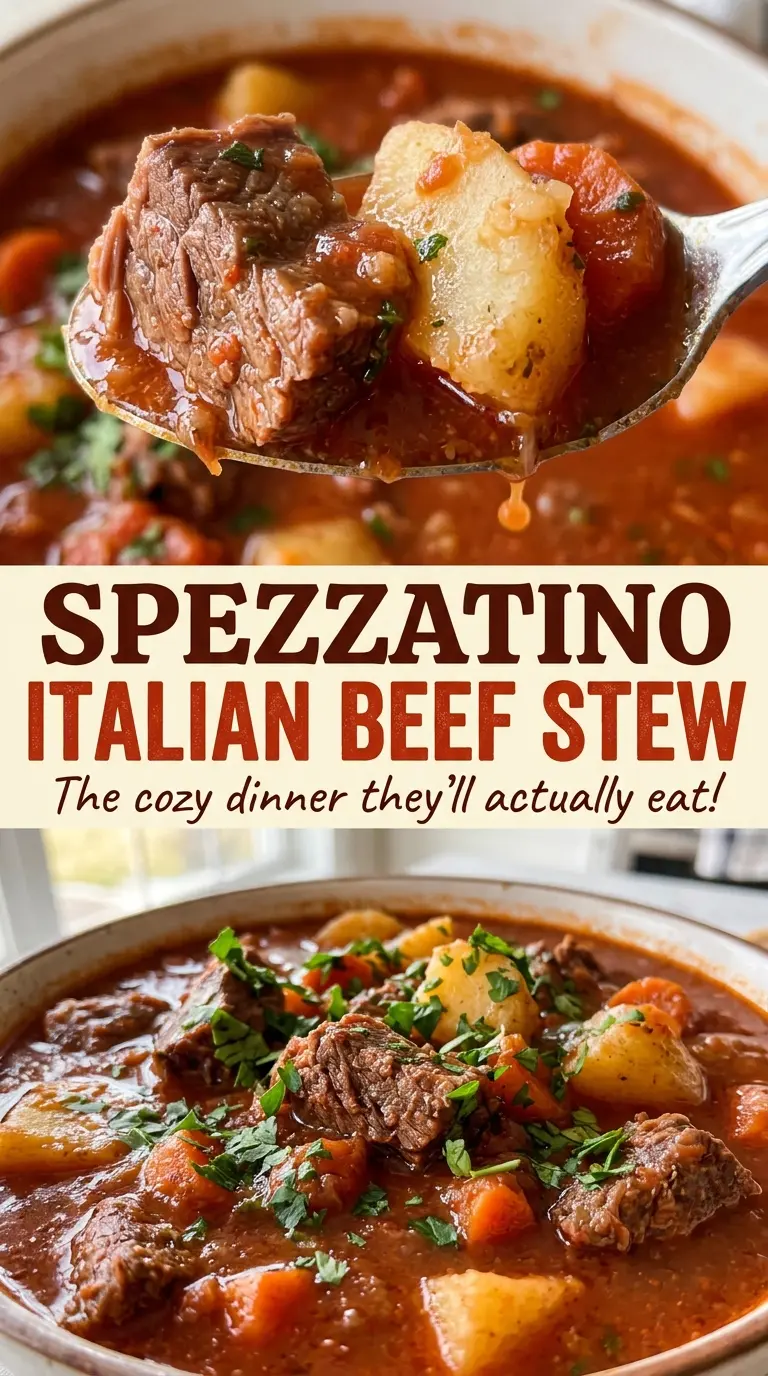
Save this spezzatino Italian beef stew for a slow-simmered dinner with tender chuck, potatoes, and a rich tomato-wine broth.
Why the Carrots and Potatoes Go in After the Beef
Chuck needs a long, gentle braise to become tender, but carrots and potatoes don’t need to spend that entire time in the pot. Adding them after the beef has cooked for an hour gives the meat a head start, then lets the vegetables soften alongside it during the final stretch. That timing matters most with the potatoes: too much simmering can leave their edges breaking down before the beef is ready.
Keep the pieces fairly uniform so they finish at about the same time. The carrots are cut into 1-inch pieces, and the Yukon Gold potatoes into 1½-inch pieces; those sizes hold up well through the covered simmer. At the end, use the recipe’s two doneness cues together: the beef should yield easily to a fork, and a knife should slide into the potatoes without resistance. If one is still firm, the stew isn’t at its finish point yet.
What the Chuck, Wine, and Yukon Golds Bring to This Stew
- Beef chuck — Chuck has enough connective tissue to soften during the covered simmer and give the broth body. Keep the cubes close to the specified size so they cook at a similar pace; a leaner cut won’t give the same tender, braised texture. There isn’t a direct swap among the other ingredients in this stew.
- Dry red wine — Wine brings acidity and a deeper, more rounded taste to the tomato broth. Use a dry red you’d be comfortable drinking; there’s no need to choose an expensive bottle. If you’d rather leave it out, low-sodium beef broth is the most practical replacement, though the stew will taste less wine-rich.
- Yukon Gold potatoes — Their creamy interior and shape-holding texture suit a long simmer. Keep the pieces large enough to stand up to the braise, and use potatoes that are firm rather than sprouting or soft. Replacing them with carrots would change the balance and leave out the stew’s starchy, hearty element.
- Diced tomatoes and tomato paste — The paste adds concentrated tomato flavor before the liquid goes in; the canned tomatoes bring both tomato pieces and their juices to the broth. Any standard canned diced tomatoes work here. Stir the paste with the garlic for its brief cooking time so it blends into the base instead of sitting in a concentrated lump.
- Rosemary, thyme, and bay leaves — These dried herbs season the long-cooked broth without needing a separate herb bundle. Dried rosemary and thyme are convenient pantry choices for this method, and the bay leaves are removed before serving. Fresh parsley has a different job: it goes in at the end, where its bright, clean taste stays noticeable.
- Low-sodium beef broth — It supports the beef and tomato flavors without making the stew overly salty as it simmers. Low-sodium broth also leaves room for the kosher salt used to season the meat. The lower-sodium option is especially useful if your broth brand tastes assertive.
Build the Browned Base Before the Covered Braise
Brown the Chuck in Batches
Pat the beef dry, season all sides with kosher salt and black pepper, then heat the olive oil in a 5- to 6-quart Dutch oven over medium-high heat. Brown the beef in batches, turning the cubes so several sides develop color; the total browning time is 10–15 minutes. Move the browned pieces to a plate while you work. Don’t rush to turn them constantly: give each side time against the hot pot to take on color.
Soften the Onion and Start the Tomato Base
Add the chopped onion to the pot and cook it over medium heat for 5 minutes, stirring occasionally. It should soften as it picks up some of the browned flavor left behind by the beef. Stir in the minced garlic and tomato paste, then cook for 1 minute. Keep the garlic moving with the paste so it doesn’t scorch against the bottom.
Deglaze with Wine and Return the Beef
Pour in the dry red wine and scrape the bottom of the pot to loosen the browned bits. Let the wine simmer for 2–3 minutes before stirring in the beef broth, diced tomatoes, rosemary, thyme, and bay leaves. Return the beef and any juices from the plate, then bring everything to a gentle simmer. Cover the Dutch oven and cook over low heat for 1 hour.
Simmer the Vegetables Until Fork-Tender
Stir in the carrots and potatoes, cover the pot again, and simmer for 45–60 minutes. The beef is ready when it’s fork-tender, and the potatoes should be easily pierced with a knife. Remove the bay leaves, stir in the chopped fresh parsley, and take the pot off the heat. Let the stew rest for 10 minutes before serving so the bubbling settles and the broth can come together.
Three Practical Ways to Adjust This Pot of Spezzatino
Make It Without Red Wine
Replace the wine with an equal amount of low-sodium beef broth. The base will still be savory and tomato-rich, but it will have less acidity and depth than the wine version. Keep the deglazing step: scrape the browned bits up as the broth heats.
Let Rosemary Lead
For a simpler herb character, leave out the dried thyme and keep the rosemary and bay leaves. The stew will taste more distinctly piney and less layered, while still fitting the tomato-and-beef base. Keep the bay leaves in during the simmer and remove them before serving.
Keep the Pot Gluten-Free
This stew doesn’t rely on flour for thickening. For a gluten-free version, omit the wine and use low-sodium beef broth in its place, choosing broth labeled gluten-free. The result keeps the beef-and-tomato character, with a milder, less wine-forward broth.
Storage and Reheating
- Refrigerator: Refrigerate leftovers within 2 hours and keep them in a covered container for 3–4 days. The potatoes soften further as they sit.
- Freezer: Freeze in airtight containers for up to 2–3 months. The beef freezes well, though Yukon Gold potatoes may become softer or a little grainy after thawing.
- Reheating: Warm gently in a covered saucepan over low heat, stirring now and then, until the stew reaches 165°F. Avoid a hard boil; vigorous reheating can break the potatoes apart.
Questions That Come Up While Making Spezzatino
Spezzatino Italian Beef Stew
Ingredients
Equipment
Method
- Pat the beef dry.
- Season the beef on all sides with the salt and pepper.
- Heat the olive oil in a 5- to 6-quart Dutch oven over medium-high heat.
- Brown the beef in batches for 10–15 minutes total, turning to brown several sides, then transfer it to a plate.
- Add the onion to the pot and cook over medium heat for 5 minutes, stirring occasionally.
- Stir in the garlic and tomato paste and cook for 1 minute.
- Pour in the red wine and scrape up the browned bits from the bottom of the pot.
- Simmer for 2–3 minutes.
- Stir in the broth, diced tomatoes, rosemary, thyme, and bay leaves.
- Return the beef and any juices to the pot and bring to a gentle simmer.
- Cover and cook over low heat for 1 hour.
- Stir in the carrots and potatoes.
- Cover and simmer for 45–60 minutes, until the beef is fork-tender and the potatoes are easily pierced with a knife.
- Remove the bay leaves.
- Stir in the parsley.
- Let the stew rest off the heat for 10 minutes before serving.