The beef sizzles as soon as it hits the hot oil, but if it goes into the pot damp, it steams instead of developing those dark, savory edges. I learned to lift each piece out of the marinade and pat it dry before searing; that little pause gives Jamaican beef stew its deeper color and a much fuller base.
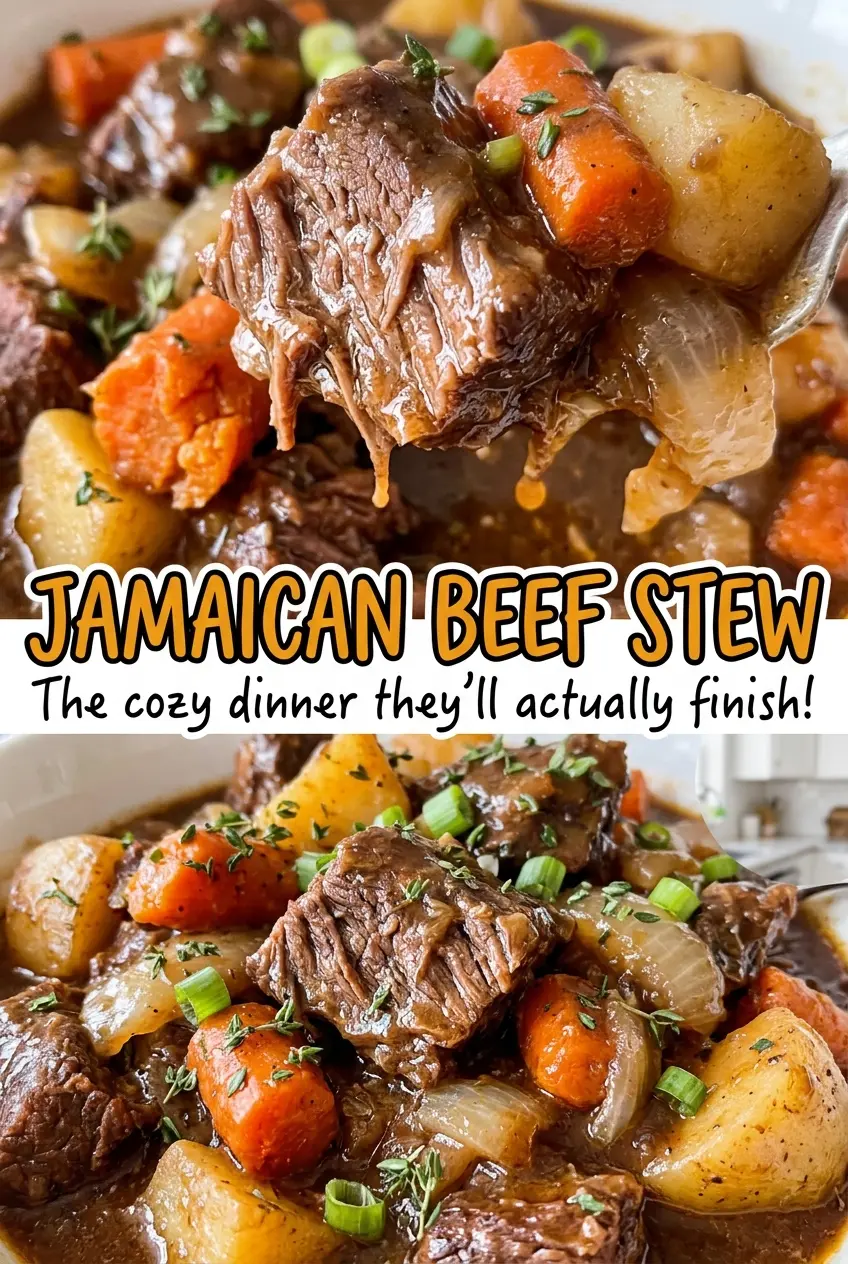
The marinade does more than season the meat. Its garlic, scallions, onion, thyme, and allspice go into the pot after the beef is browned, where they cook with ketchup and pick up the browned bits from the bottom. A whole Scotch bonnet gives the stew its distinctive warmth without being chopped through the broth, and the chuck turns tender during the slow simmer. The finished pot is rich with beef, soft vegetables, and a broth that begs to be spooned over every bite.
Kitchen Note
I add the potatoes and carrots only after the beef has had its first hour and 15 minutes to simmer. Give the vegetables at least 30 minutes before checking them; the chunks should be tender but still hold their shape when the beef is fork-tender.
Save this Jamaican beef stew for its tender chuck, allspice-scented broth, and Scotch bonnet warmth.
Why the Marinade Belongs in the Pot, Not Down the Sink
Once the beef comes out, that bowl still holds the seasoning that makes this stew taste layered rather than simply beefy. The thyme, garlic, scallions, onion, allspice, soy sauce, and browning sauce have been sitting against the meat for hours. They don’t need to be strained away. I reserve the marinade and aromatics, then cook them with the remaining onion and ketchup so their flavor becomes the foundation of the broth.
There’s a useful order to that move: sear the beef first, then lower the heat before adding the reserved mixture. The onion softens and the aromatics cook through while the ketchup boils steadily for three minutes. Stir as it cooks, scraping the bottom of the Dutch oven so the browned residue from the beef joins the base instead of staying stuck to the pot.
The result isn’t a thick gravy or a sharply acidic tomato sauce. The ketchup adds a rounded note, while the beef broth loosens the seasoning into a stew. Keeping the marinade also means the flavor you built during the rest carries into the liquid instead of stopping at the surface of the meat.
What Chuck, Allspice, and a Whole Scotch Bonnet Bring to the Pot
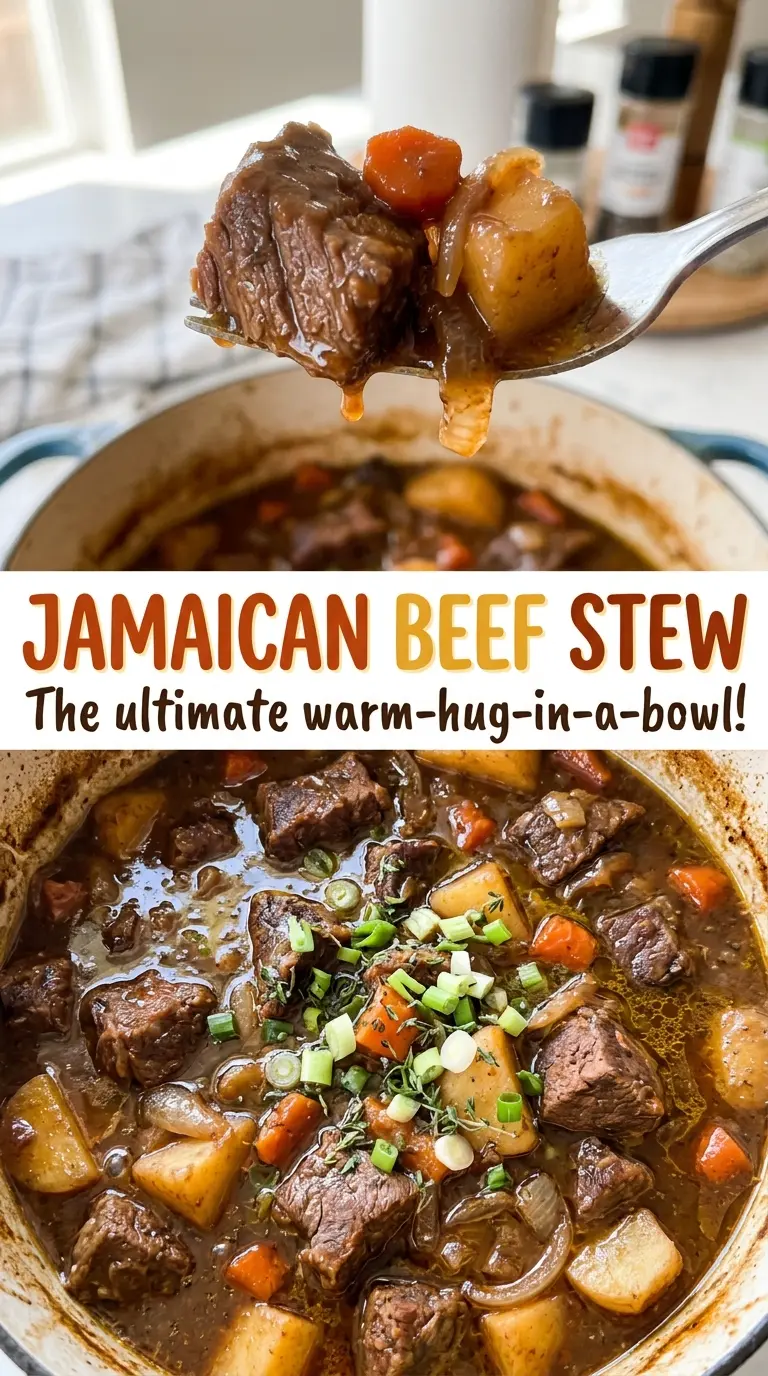
- Beef chuck — Its connective tissue suits a long, gentle braise and gives the broth body as the cubes turn tender. Choose evenly cut pieces so they cook at a similar pace; the 1 1/2-inch size also keeps the beef substantial after simmering.
- Browning sauce — This gives the pot its deep brown color and a distinctive seasoned note. It’s a small but defining part of the stew, so leaving it out changes both the appearance and taste rather than simply making the broth lighter.
- Soy sauce and low-sodium beef broth — Soy sauce adds a savory, salty layer to the marinade. Low-sodium broth gives you a more balanced base alongside the soy sauce and kosher salt; regular broth can make the finished stew taste saltier.
- Ground allspice and fresh thyme — Allspice brings the warm, unmistakable spice note, while thyme keeps the seasoning aromatic rather than sweet. Fresh thyme sprigs are easy to lift out at the end, and dividing them lets the flavor build at more than one point in the cooking.
- Scotch bonnet — Leaving it whole allows it to season the stew without chopping its heat directly into the broth. Handle it gently so it stays intact, then remove it before serving.
- Yukon Gold potatoes and carrots — Yukon Golds soften while holding their shape better than a potato that breaks down quickly. Cut the potatoes and carrots to the specified sizes so the vegetables become tender during the final simmer without disappearing into the broth.
- Garlic, scallions, and yellow onion — These aromatics give the marinade and stew base their savory backbone. The onion is divided between the marinade and the pot, which adds flavor at both stages instead of asking one addition to do all the work.
The Sear, the Steady Simmer, and the Right Time for Vegetables
Marinating the Beef and Saving the Aromatics
Combine the beef with the browning sauce, soy sauce, salt, pepper, allspice, two thyme sprigs, garlic, scallions, half the onion, and the whole stemmed Scotch bonnet. Cover and refrigerate for at least 2 hours and up to 12 hours. When it’s time to cook, lift out the beef and let excess marinade drip back into the bowl, then set the pepper aside and reserve the marinade and aromatics.
Drying and Browning in Batches
Pat the beef dry with paper towels before it meets the oil; wet surfaces won’t brown as well. Heat the canola oil in a 6-quart Dutch oven over medium-high heat, then brown the beef in batches for 3 to 4 minutes per side. Give each batch room in the pot, and move the browned pieces to a plate so the next batch can sear rather than crowd against them.
Cooking the Seasoned Base
Reduce the heat to medium and add the remaining onion along with the reserved marinade and its aromatics. Stir in the ketchup and cook at a steady boil for 3 minutes, stirring so the mixture doesn’t catch on the bottom. The onion should begin to soften, and the smell will shift from raw garlic and soy to a more rounded, savory base.
Simmering Until the Beef and Vegetables Turn Tender
Return the beef and any juices on the plate to the Dutch oven, then add the broth, remaining thyme sprigs, and whole Scotch bonnet. Bring the pot to a boil, cover it, reduce the heat to low, and simmer for 1 hour and 15 minutes. Stir in the potatoes and carrots, cover again, and simmer for 30 to 45 minutes, until the beef is fork-tender and the vegetables are tender; remove the thyme stems and pepper before serving.
Two Useful Ways to Adapt Jamaican Beef Stew
A Milder Pot Without the Scotch Bonnet
Leave the Scotch bonnet out if you want the allspice and thyme to lead without its heat. The stew will still have the savory marinade and browned beef base, but it won’t have the pepper’s warm finish.
A Lower-Starch Version Without Potatoes
Omit the Yukon Gold potatoes and keep the carrots for a less starchy bowl. The broth will have less body and the stew won’t be as filling, but the beef and its seasoning remain the focus.
Storage and Reheating
- Refrigerator: Store in a covered container for 3 to 4 days. The broth may thicken as it chills, and the potatoes soften a little.
- Freezer: Freeze cooled portions in airtight containers for up to 2 to 3 months. The potatoes may be softer after thawing, but the stew freezes well overall.
- Reheating: Warm gently in a covered saucepan over low heat, stirring now and then, until the stew reaches 165°F. Avoid a hard boil, which can break up the potatoes and make the beef seem drier.
Questions That Come Up When Making Jamaican Beef Stew
Jamaican Beef Stew
Ingredients
Equipment
Method
- In a large bowl, combine the beef with the browning sauce, soy sauce, salt, black pepper, allspice, 2 sprigs of thyme, garlic, scallions, half the onion, and the whole scotch bonnet.
- Cover and refrigerate for at least 2 hours or up to 12 hours.
- Lift the beef from the marinade, letting excess liquid drip back into the bowl, and reserve the marinade and aromatics.
- Set the pepper aside, then pat the beef dry with paper towels.
- Heat the oil in a 6-quart Dutch oven over medium-high heat.
- Brown the beef in batches for 3 to 4 minutes per side, transferring each batch to a plate.
- Reduce the heat to medium and add the remaining onion and reserved marinade with its aromatics.
- Stir in the ketchup and cook at a steady boil for 3 minutes.
- Return the beef and any accumulated juices to the pot, and add the broth, remaining 2 sprigs of thyme, and scotch bonnet.
- Bring to a boil, cover, reduce the heat to low, and simmer for 1 hour and 15 minutes.
- Stir in the potatoes and carrots, cover, and simmer for 30 to 45 minutes, until the beef is fork-tender and the vegetables are tender.
- Remove the thyme stems and scotch bonnet before serving.