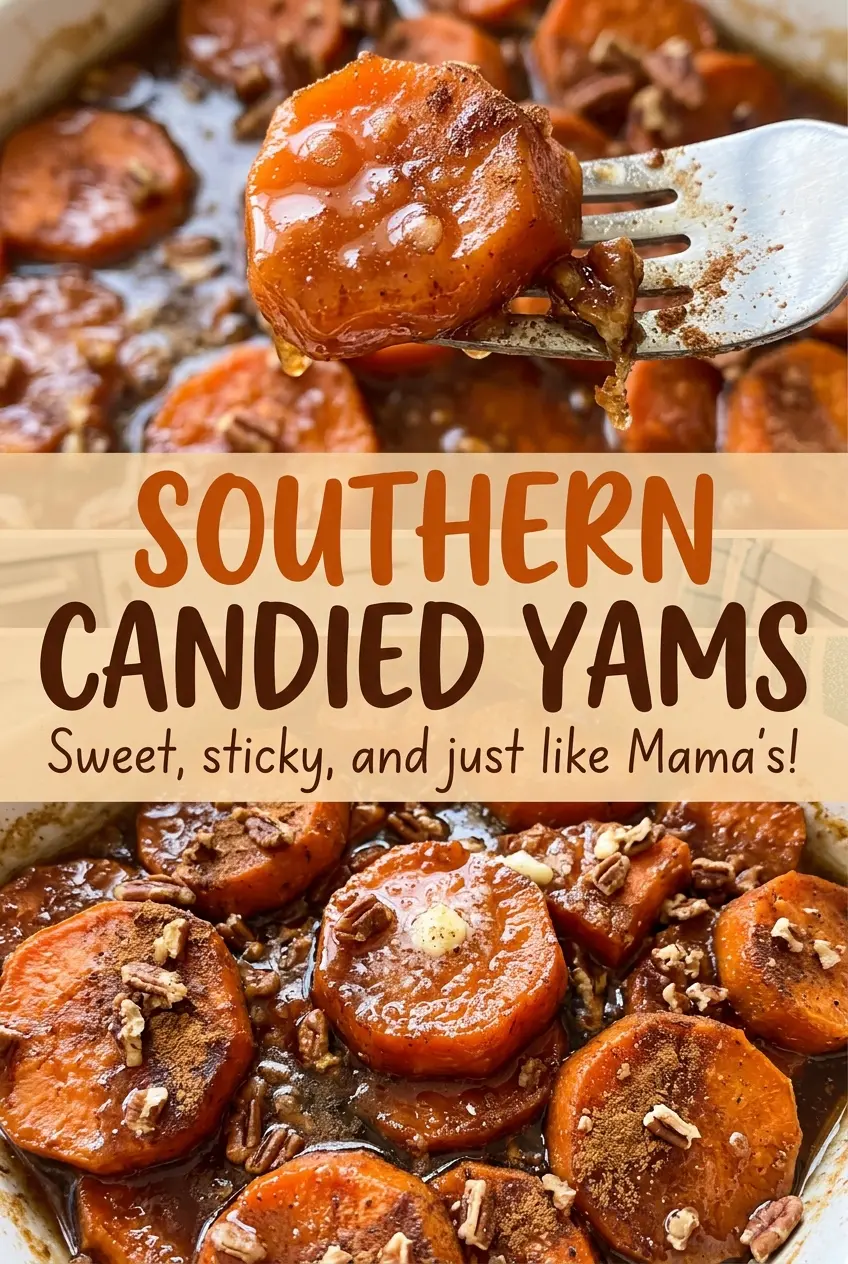
When the foil comes off, the sweet potatoes are tender but the syrup still looks loose, and that’s exactly when I spoon it back over the top. After the uncovered bake, it bubbles around the edges and clings to the rounds instead of disappearing into the pan. These Southern Candied Yams are made with orange-fleshed sweet potatoes, though the name is the one you’ll often see for this Southern side dish.
I keep the rounds thick enough to hold their shape and let the butter, brown sugar, and granulated sugar make a glossy cinnamon syrup around them. A little nutmeg gives the sweetness a warm edge, while vanilla goes in after the saucepan leaves the heat. The result is soft, buttery sweet potato with syrup in every layer, ready to share from one baking dish.
Kitchen Note
Cut the sweet potatoes into even 1/2-inch rounds. Thinner pieces soften sooner and can lose their shape while thicker ones take longer to become tender.
Save these Southern Candied Yams for a table that needs a buttery cinnamon-sugar side, with tender sweet potato rounds and bubbling syrup.
Why Candied Yams Need Both a Foil Cover and an Open-Faced Finish
The two-part bake handles two different jobs. At first, the tightly covered dish traps heat and moisture around the sweet potatoes, giving the rounds time to soften without the exposed edges drying out. If you leave the foil off from the beginning, the syrup is exposed to the oven for the whole bake while the potatoes are still firm.
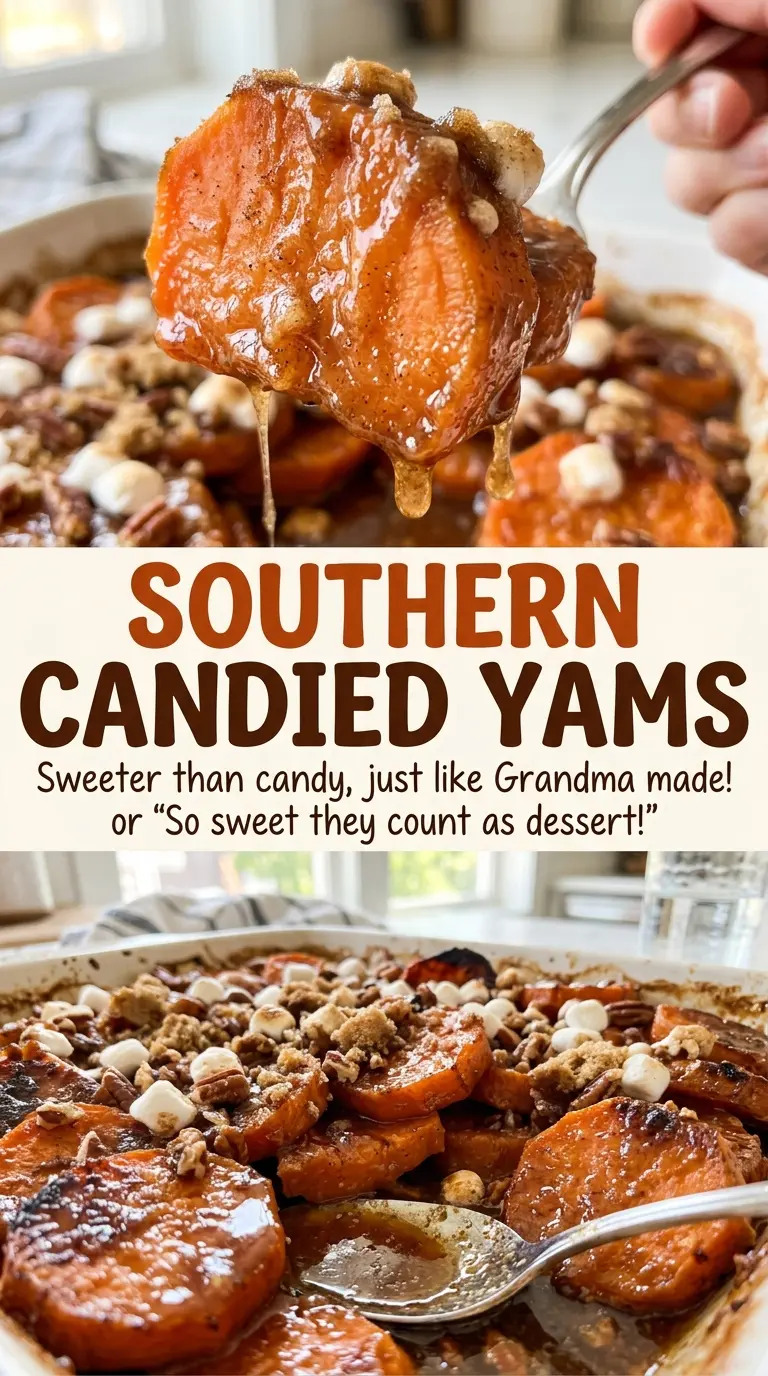
Once the potatoes have had that covered time, uncover the dish and spoon the syrup over them. The open bake lets the sauce bubble around the rounds and gives it time to cling more closely to their surfaces. You’re not looking for a brittle candy coating; this is a spoonable syrup that gathers in the bottom of the dish and glosses the sweet potatoes. That distinction helps set expectations: the finished yams should be tender and coated, not dry or crisp.
There’s also a reason to baste rather than just leave the pan alone. The rounds sit in syrup at the bottom, while their tops are more exposed; spooning the liquid over them brings the same buttery sweetness across the dish. Use care when you lift the foil because the trapped steam is hot.
The Sweet Potato and Sugar Choices That Shape the Syrup
- Orange-fleshed sweet potatoes — Choose firm potatoes without soft spots, since they need to keep their shape through a long bake. The recipe uses sweet potatoes, not canned yams; fresh roots give you control over the thickness and texture of each round.
- Unsalted butter — It makes the syrup taste rich and lets the kosher salt stay measured separately. For the best buttery flavor, use a fresh stick of butter; salted butter makes it harder to control the seasoning.
- Light brown and granulated sugars — The brown sugar brings a deeper caramel-like sweetness, while granulated sugar keeps the syrup from tasting only of molasses. Packed brown sugar gives a consistent measure, and there’s no need to use a specialty brand.
- Cinnamon, nutmeg, and vanilla — Ground spices distribute through the syrup more evenly than whole spices would here. Fresh, fragrant spices are worth using if yours have been open a long time; vanilla stirred in off the heat keeps its aroma from getting lost in the saucepan.
- Water — It helps the sugars dissolve into a smooth syrup before baking. Don’t leave it out: the mixture needs that liquid to come together in the saucepan rather than turning into a dry sugar paste.
From Even Potato Rounds to a Glossy, Bubbling Pan
Layer the Sweet Potatoes Without Packing Them Down
Heat the oven to 375°F and lightly grease a 9×13-inch baking dish. Arrange the peeled sweet potato rounds in an even layer, overlapping them slightly where needed to fit. Keep them spread across the dish rather than pressing them into a tight stack. An even arrangement gives the syrup room to run between the pieces.
Stir the Syrup Until the Sugars Dissolve
Melt the butter in a small saucepan over medium heat, then stir in both sugars, the water, cinnamon, nutmeg, and kosher salt. Keep stirring for about 2 minutes, until the mixture looks smooth and the sugars have dissolved; grainy syrup at this point needs more stirring, not a higher burner. Take the pan off the heat before adding the vanilla. Pour the syrup evenly over the sweet potatoes so the rounds don’t start with dry patches.
Use the Covered Bake to Soften the Centers
Cover the baking dish tightly with foil and bake for 30 minutes. A snug cover holds in steam while the sweet potatoes begin to turn tender. When you uncover the dish, carefully spoon the hot syrup over the rounds. Lift the foil away from your face and hands so the trapped steam doesn’t catch you.
Uncover, Baste, and Let the Syrup Settle
Bake uncovered for another 25 to 35 minutes, basting once halfway through. Look for very tender sweet potatoes and syrup bubbling in the dish; a knife should pass through a round without a firm, crunchy center. Rest the pan for 10 minutes before serving. The syrup is extremely hot straight from the oven, and a short rest makes it easier to spoon with the potatoes.
Two Ingredient Changes That Actually Work in Candied Yams
Make the Syrup Dairy-Free
Replace the unsalted butter with the same amount of unsalted, stick-style plant-based butter. It melts into the sugar syrup and keeps the dish dairy-free, though the finished sauce won’t have quite the same buttery dairy flavor. Stick-style baking butter is a better fit than a soft tub spread, which can contain more water.
Use Dark Brown Sugar for a Deeper Note
Swap the light brown sugar for dark brown sugar in the same amount. Its stronger molasses taste makes the syrup darker and more robust, so the sweet potatoes come across less delicately sweet. Keep the granulated sugar in place to preserve the balance of the sauce.
Storage and Reheating
- Refrigerator: Store cooled leftovers in a covered container for 3 to 4 days. The syrup thickens when cold and loosens again as it warms.
- Freezer: Freeze portions with their syrup in an airtight container for up to 2 months. Thaw overnight in the refrigerator; the sweet potatoes may be softer after thawing.
- Reheating: Warm covered in a 325°F oven until heated through, spooning syrup over the rounds before serving. Don’t reheat uncovered for a long stretch, or the syrup can reduce too far and the edges may dry out.
Questions That Come Up Before the Pan Goes in the Oven
Southern Candied Yams
Ingredients
Equipment
Method
- Heat the oven to 375°F and lightly grease a 9x13-inch baking dish.
- Arrange the sweet potato rounds in an even layer in the prepared dish, overlapping them slightly as needed.
- Melt the butter in a small saucepan over medium heat, then stir in the brown sugar, granulated sugar, water, cinnamon, nutmeg, and salt until the sugars dissolve and the mixture is smooth, about 2 minutes.
- Remove the saucepan from the heat and stir in the vanilla, then pour the syrup evenly over the sweet potatoes.
- Cover the dish tightly with foil and bake for 30 minutes, then uncover and carefully spoon the syrup over the potatoes.
- Bake uncovered for another 25 to 35 minutes, basting once halfway through, until the sweet potatoes are very tender and the syrup is bubbling; let rest for 10 minutes before serving.