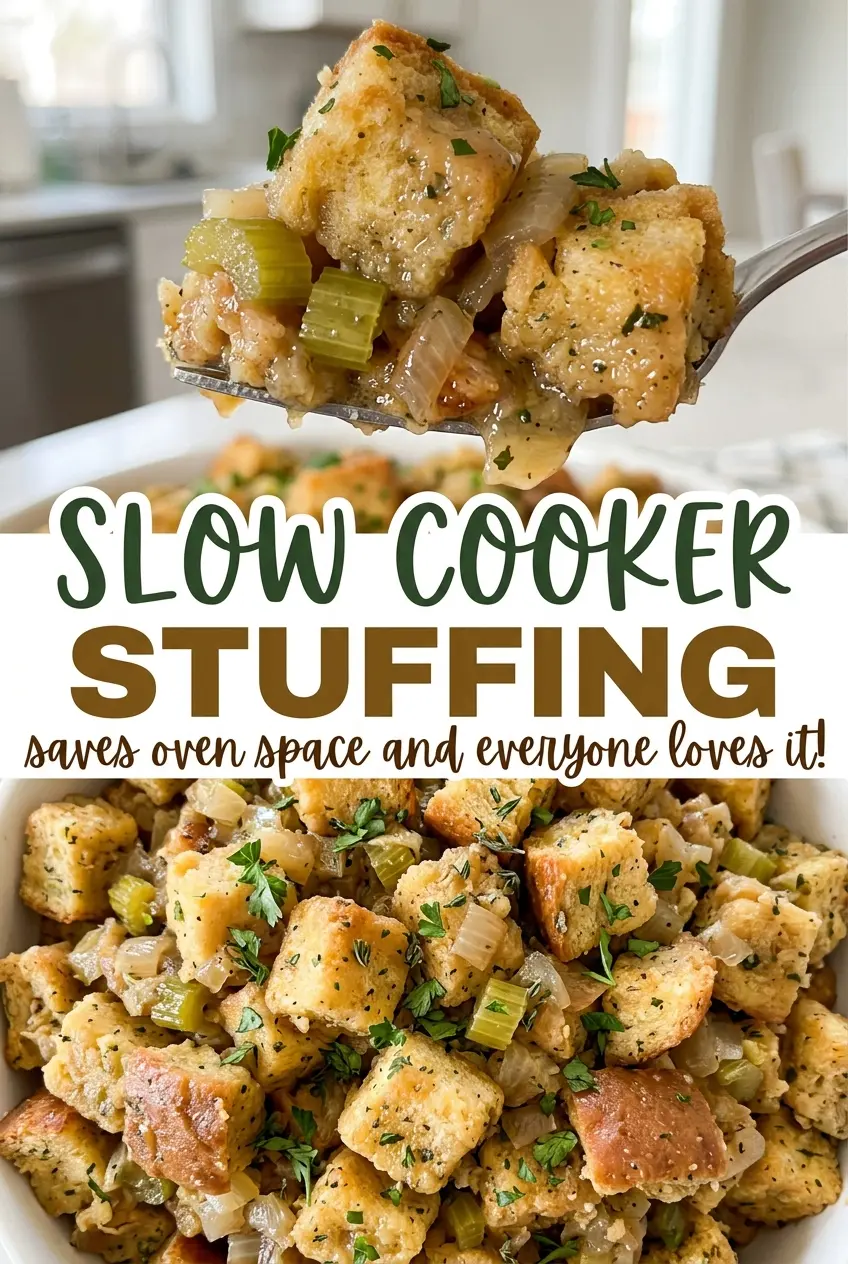
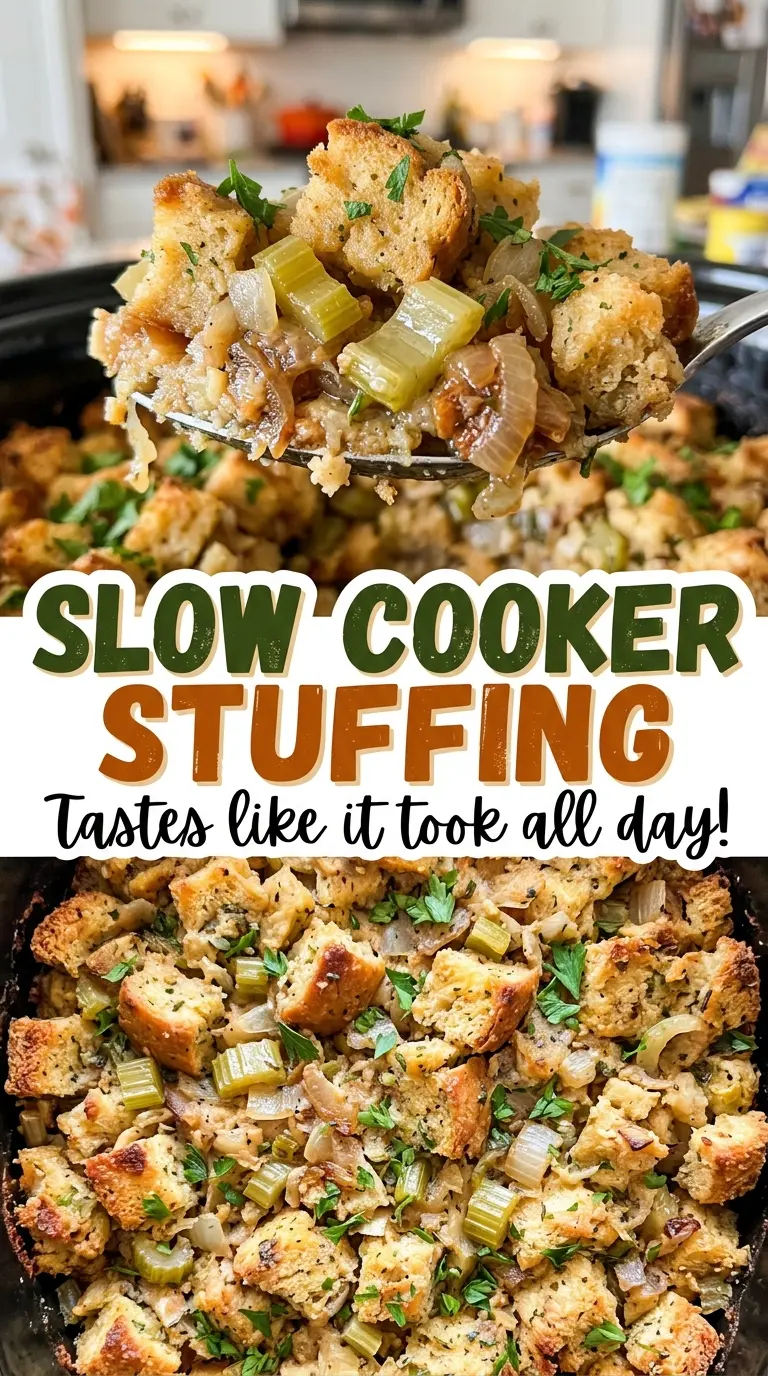
Butter foams in the skillet while the onion and celery soften, and the kitchen starts to smell like the savory center of a holiday meal. I used to think stuffing needed to bake in the oven to turn out right, but this slow cooker version gets the bread tender and well seasoned while leaving the oven free. These slow cooker stuffing scoops are soft throughout, with the herbs worked into every bite.
The bread cubes need to be dried and unseasoned, so they can absorb the broth without bringing extra flavor or moisture of their own. I cook the onion and celery in butter first, then toss them with the herbs before adding the broth and eggs. That little bit of skillet time softens the vegetables and wakes up the dried seasonings. Once everything is evenly moistened, the slow cooker does the steady work, and the stuffing comes out savory, fragrant, and easy to serve.
Kitchen Note
Give the stuffing its full 10-minute rest after you turn off the slow cooker and take off the lid. The pause lets steam escape and the egg-bound bread settle, so it’s easier to lift out in generous scoops.
Save this Slow Cooker Stuffing for a hands-off side dish with tender bread, soft vegetables, and a savory herb-and-butter base.
Why Slow Cooker Stuffing Stays Tender Instead of Toasty
A slow cooker holds in moisture, which is what makes this stuffing soft and cohesive from the middle to the edges. It won’t develop the dry, crisp top you’d expect from an oven-baked pan, so don’t judge it by browning. The goal here is bread that has absorbed the seasoned broth and egg mixture, with the vegetables softened into the crumb.
The order of mixing helps that texture stay even. Butter-softened onion and celery get tossed with the bread before the broth mixture goes in, so those aromatics don’t collect in one spot. Then the liquid is added across the bowl and tossed through rather than poured into a single pocket. If some bread is left dry while other cubes sit in a puddle, the finished stuffing will have uneven bites. Take a moment to turn the mixture from the bottom of the bowl before transferring it to the cooker; even moisture matters more here than a browned surface.
The Bread, Broth, and Eggs That Set the Texture
- Dried unseasoned bread cubes — These are the structure of the dish. Dried cubes take up the broth without bringing in extra salt or seasoning, and unseasoned bread lets the poultry seasoning and sage stay in balance. Check that the cubes are dry and fairly consistent in size; very fresh, soft bread absorbs liquid differently and can turn dense.
- Unsalted butter — Butter carries the onion and celery as they soften and gives the stuffing its rounded, savory base. Unsalted butter keeps the added kosher salt in control. If you only have salted butter, the finished dish will taste saltier, so the unsalted version is the more predictable choice.
- Onion and celery — Finely chopping both lets them soften in the skillet before they meet the bread. You don’t need specialty produce here; firm celery and a fresh yellow onion are enough. Larger pieces can stay firmer in the finished stuffing, so take the time to chop them small.
- Fresh parsley, poultry seasoning, and dried sage — The parsley gives the mixture a fresh herbal note, while the dried seasonings provide the familiar savory flavor. Dried herbs lose strength as they sit in the cupboard, so use seasonings that still smell fragrant when you open the jar. Poultry seasoning already brings its own blend, which is why the separate sage adds depth rather than replacing it.
- Low-sodium chicken broth and eggs — Low-sodium broth lets the herbs and salt stay clear instead of making the bread overly salty. The eggs help the moistened cubes hold together after cooking. Whisk them into the broth before pouring, rather than adding them directly to the bread mixture.
Build the Stuffing in the Skillet, Then Let the Cooker Finish
Grease the Crock and Set Out the Bread
Grease the inside of a 6-quart slow cooker, including the sides, then put the dried bread cubes in a large bowl. The bowl needs enough room for tossing once the vegetables and liquid are added. Greasing first means you won’t have to stop with a full bowl of stuffing in your hands. Keep the bread ready nearby while you soften the aromatics.
Soften the Onion and Celery in Butter
Melt the butter in a 12-inch skillet over medium heat, then stir in the finely chopped onion and celery. Cook for 8 to 10 minutes, stirring occasionally, until both vegetables have softened. They should look relaxed and slightly translucent, not browned or crisp. If the pan starts to color the vegetables quickly, lower the heat so they have time to soften evenly.
Coat the Bread with the Seasonings
Stir the parsley, poultry seasoning, sage, kosher salt, and black pepper into the skillet. Scrape the whole mixture over the bread cubes, including the buttery bits clinging to the pan, and toss to combine. The seasonings should be spread through the bowl rather than sitting in one herb-heavy patch. Toss from the bottom, where heavier vegetables can settle.
Add the Egg Mixture and Slow-Cook
Whisk the chicken broth and eggs together in a medium bowl, pour them over the bread, and toss until evenly moistened. Transfer the mixture to the prepared slow cooker, cover, and cook on LOW for 4 to 5 hours or HIGH for 2 to 3 hours, until the center reaches 160°F. Check the center rather than judging by the edges alone. Turn off the cooker and remove the lid when it’s ready, then let the stuffing rest for 10 minutes before serving.
Two Practical Ways to Adapt This Slow Cooker Stuffing
Make It Vegetarian with Vegetable Broth
Replace the chicken broth with the same amount of low-sodium vegetable broth. The stuffing will have a milder, less poultry-forward savory flavor, while the onion, celery, butter, and herbs still give it a full base. It contains eggs and butter, so this change makes it vegetarian, not vegan.
Give It a More Sage-Forward Flavor
For a stronger sage note, increase the dried sage slightly and reduce the poultry seasoning by the same small amount. This keeps the overall seasoning from becoming too assertive while shifting the flavor toward sage. The onion, celery, parsley, and bread remain the same, so the texture doesn’t change.
Storage and Reheating
- Refrigerator: Refrigerate leftovers within 2 hours in a covered container and use within 3 to 4 days. The bread will soften further as it sits.
- Freezer: Freeze cooled portions in an airtight container for up to 1 month for the best texture. Thaw overnight in the refrigerator; the cubes may be softer after freezing.
- Reheating: Reheat covered in the microwave or oven until the center reaches 165°F. Keep it covered as it warms so the edges don’t dry out before the middle is hot.
Questions That Come Up When Making Slow Cooker Stuffing
Slow Cooker Stuffing
Ingredients
Equipment
Method
- Grease the inside of a 6-quart slow cooker.
- Place the bread cubes in a large bowl.
- Melt the butter in a 12-inch skillet over medium heat.
- Add the onion and celery and cook for 8 to 10 minutes, stirring occasionally, until softened.
- Stir the parsley, poultry seasoning, sage, salt, and pepper into the skillet.
- Scrape the mixture over the bread cubes and toss to combine.
- Whisk the broth and eggs in a medium bowl.
- Pour the broth mixture over the bread mixture and toss until evenly moistened.
- Transfer the mixture to the slow cooker.
- Cover and cook on LOW for 4 to 5 hours or HIGH for 2 to 3 hours, until the center reaches 160°F.
- Turn off the slow cooker and remove the lid.
- Let the stuffing rest for 10 minutes before serving.