The skillet is where this stew first starts to smell like dinner: beef browning in batches, followed by onion softening in the same pan. I scrape up the browned bits with broth so their savory flavor doesn’t get left behind. That little bit of stovetop work gives this Slow Cooker Beef Stew with Butternut Squash a deeper, fuller broth than a stew made by adding everything straight to the slow cooker.
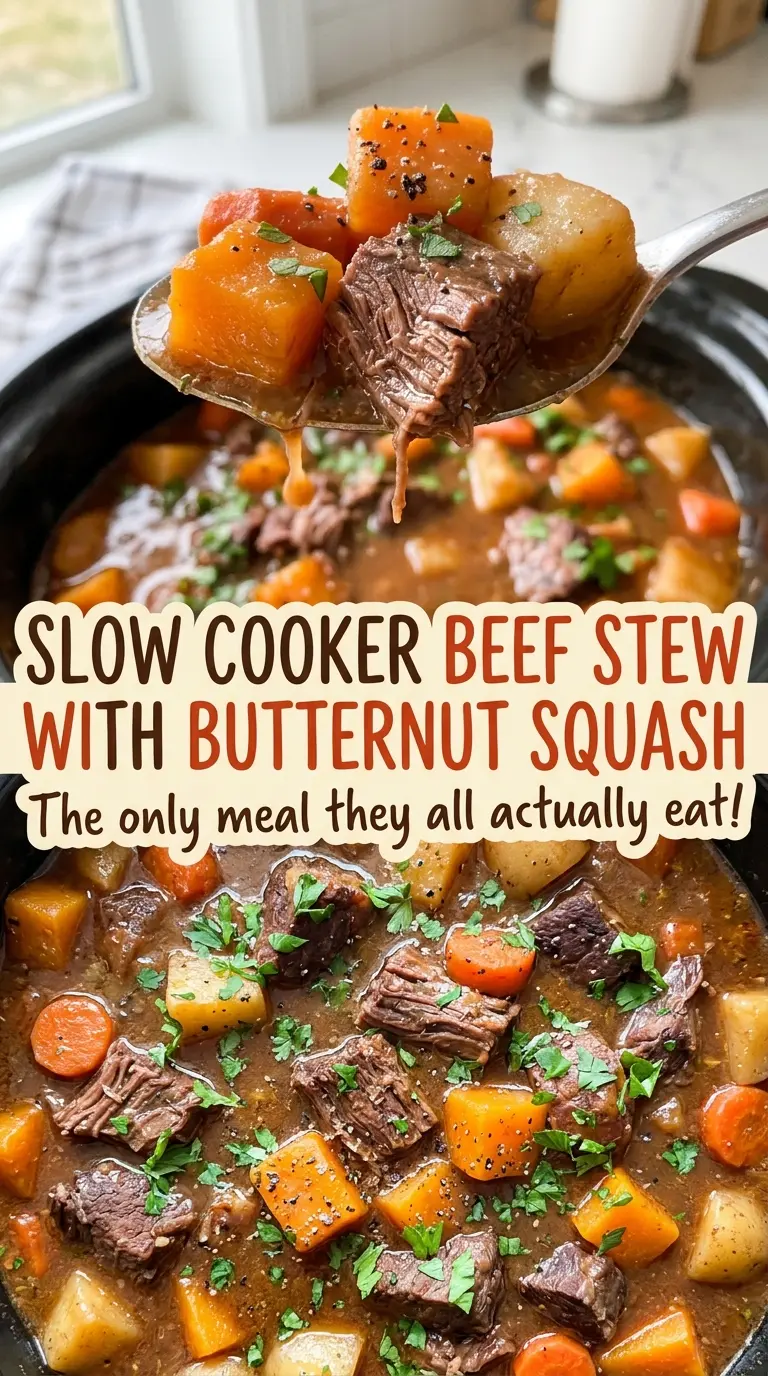
I use chuck because its texture suits a long, gentle cook, and cut the vegetables into pieces that feel substantial on a spoon. The finished stew has tender beef, potatoes and carrots that still hold their shape, and butternut squash that softens into the broth without disappearing. It’s a hearty, savory bowl with just enough sweetness from the squash.

Kitchen Note
This batch is sized for a 6-quart slow cooker. That gives the beef and vegetables room to sit under the lid without crowding the insert.
Save this slow cooker beef stew with butternut squash for tender beef, a savory broth, and vegetables that hold their shape.
Why the Butternut Squash Goes In After the First Cook
Potatoes and carrots can spend the full first stretch in the slow cooker and still keep their shape. Butternut squash softens faster. Give it the same long cook and its edges are more likely to collapse into the broth before the beef is ready.
Adding the squash later gives the beef time to turn fork-tender while the squash gets its own shorter cooking window. The difference shows up in the bowl: you get distinct pieces of squash alongside the potatoes and carrots, with a few soft edges lending sweetness to the broth. Cut the vegetables into even pieces, too. Pieces that are close in size cook more predictably than a mix of small scraps and large chunks.
This timing also makes it easier to judge the finish. The stew is ready when the beef yields easily to a fork and the vegetables are tender, not just when the slow cooker reaches a particular hour on the clock.
What Gives This Stew Its Body and Savory Depth
- Beef chuck — Chuck has enough connective tissue to become tender during a long, moist cook. Choose pieces with some marbling; the slow cooker does the work, so an expensive steak cut isn’t needed.
- All-purpose flour — The light coating clings to the beef and helps give the broth body as everything cooks. An inexpensive bag works well here; an even coating matters more than a specialty brand.
- Onion, garlic, and tomato paste — These build the savory base in the skillet before the beef and vegetables go into the cooker. Regular yellow onion and standard tomato paste are all you need; cooking the paste briefly takes away its raw, sharp edge.
- Beef broth and Worcestershire sauce — Broth carries the stew’s flavor, while Worcestershire adds a tangy, savory note. A good-quality boxed broth is convenient and works well; its salt level varies by brand.
- Dried thyme and bay leaf — Dried thyme holds up during the long cook, and the bay leaf gives the broth a gentle herbal background. The bay leaf comes out before serving, so it’s easy to spot and remove.
- Yukon gold potatoes, carrots, and butternut squash — Yukon gold potatoes hold together well, carrots add sweetness, and squash brings a softer texture. Fresh whole squash takes a little more peeling and seeding; peeled, seeded squash is a practical shortcut.
Build the Stew in the Skillet, Then Let the Slow Cooker Finish
Coat and Brown the Chuck
Toss the beef with the flour, kosher salt, and black pepper in a large bowl until the pieces are evenly coated. Heat the vegetable oil in a large skillet over medium-high heat, then brown the beef in batches, turning the pieces so several sides get color. Don’t crowd the skillet; beef packed tightly together gives off moisture and steams instead of browning. Transfer each batch to a plate as it’s ready.
Soften the Onion and Deglaze the Pan
Add the chopped onion to the skillet and cook until softened, about 4 minutes. Stir in the minced garlic and tomato paste and cook for 1 minute, stirring so the paste doesn’t sit in one spot. Pour in 1/2 cup of the beef broth and scrape the browned bits from the bottom of the skillet. Stir in the Worcestershire sauce, dried thyme, and bay leaf.
Layer the Potatoes, Carrots, and Beef
Put the potatoes and carrots in the slow cooker first, then add the browned beef. Pour the skillet mixture over the top, followed by the remaining 2 1/2 cups of beef broth. Spreading the vegetables across the bottom gives them contact with the cooking liquid, while the beef sits above them. Cover the cooker before starting the first stretch.
Add the Squash for the Finish
Cook covered on LOW for 5 1/2 to 6 hours or on HIGH for 3 to 3 1/2 hours. Stir in the butternut squash, cover again, and cook for 1 1/2 to 2 hours on LOW or 1 to 1 1/2 hours on HIGH. Check that the beef is fork-tender and the vegetables are tender; if the beef still feels firm, it needs more time. Remove and discard the bay leaf before serving.
Two Useful Ways to Adapt This Beef Stew
Make It Gluten-Free
Replace the all-purpose flour with a one-to-one gluten-free flour blend in the same quantity, and use gluten-free Worcestershire sauce. The coating still helps give the broth body, though the texture can vary a little between flour blends.
Use Russet Potatoes for a Thicker, Softer Stew
Swap the Yukon gold potatoes for russets and cut them into the same 1-inch pieces. Russets soften and release more starch during the long cook, so the broth turns thicker and cloudier, and the potato edges won’t stay as distinct.
Storage and Reheating
- Refrigerator: Store leftovers in a covered container for 3 to 4 days. The potatoes and squash soften a little as they sit in the broth.
- Freezer: Freeze in airtight portions for up to 2 to 3 months. The stew is safe to freeze, though the potatoes and squash may be softer after thawing.
- Reheating: Warm on the stovetop over medium-low heat, stirring occasionally, until the stew reaches 165°F. Avoid a hard boil, which can break up the vegetables.
Questions That Come Up When Making This Slow Cooker Stew
Slow Cooker Beef Stew with Butternut Squash
Ingredients
Equipment
Method
- In a large bowl, toss the beef with the flour, salt, and pepper until evenly coated.
- Heat the oil in a large skillet over medium-high heat.
- Brown the beef in batches, turning the pieces so they brown on multiple sides, and transfer them to a plate.
- Add the onion to the skillet and cook until softened, about 4 minutes.
- Stir in the garlic and tomato paste and cook for 1 minute.
- Pour in 1/2 cup of the broth and scrape up the browned bits.
- Stir in the Worcestershire sauce, thyme, and bay leaf.
- Put the potatoes and carrots in a 6-quart slow cooker, add the beef, and pour the skillet mixture and remaining 2 1/2 cups broth over the top.
- Cover and cook on LOW for 5 1/2 to 6 hours or HIGH for 3 to 3 1/2 hours.
- Stir in the squash, cover, and cook for 1 1/2 to 2 hours on LOW or 1 to 1 1/2 hours on HIGH, until the beef is fork-tender and the vegetables are tender.
- Remove and discard the bay leaf before serving.