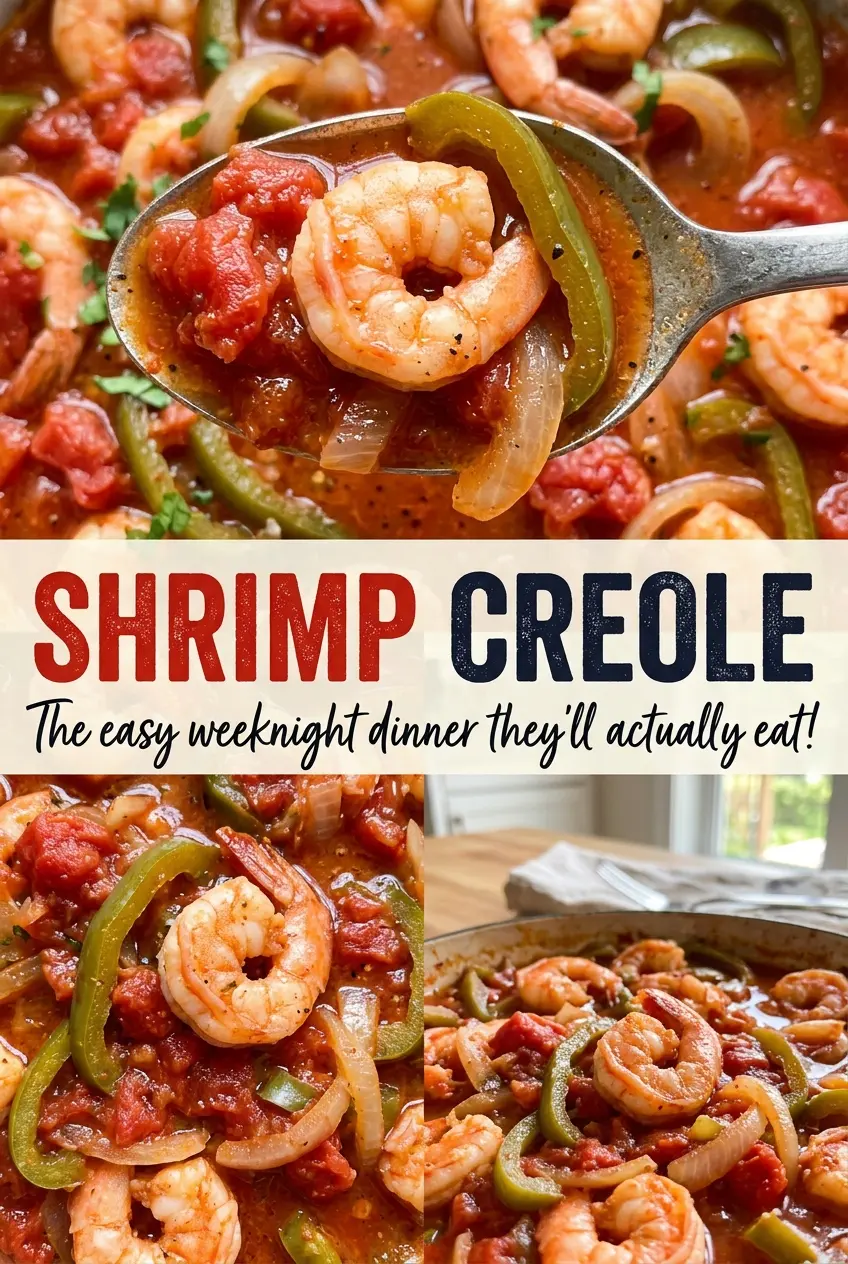
As the diced tomatoes simmer, their sharp, bright smell settles into something deeper, and the onion, bell pepper, and celery soften into the sauce instead of staying crisp. That’s the point where this Shrimp Creole starts to feel like more than a quick skillet supper. Spoon it over long-grain rice and you get a bowl with plenty of tomato-rich sauce around each bite of shrimp.
I cook the rice first, then let the sauce take its time before the shrimp goes in. That order keeps the rice ready to serve and gives the tomatoes room to thicken without leaving the shrimp to simmer too long. The finished sauce should cling lightly to the vegetables and rice, while the shrimp stay tender and juicy.
Kitchen Note
Leave the rice covered while it rests off the heat. That quiet 10-minute rest lets the grains finish steaming without drying out, and the rice will be ready while the Creole sauce simmers.
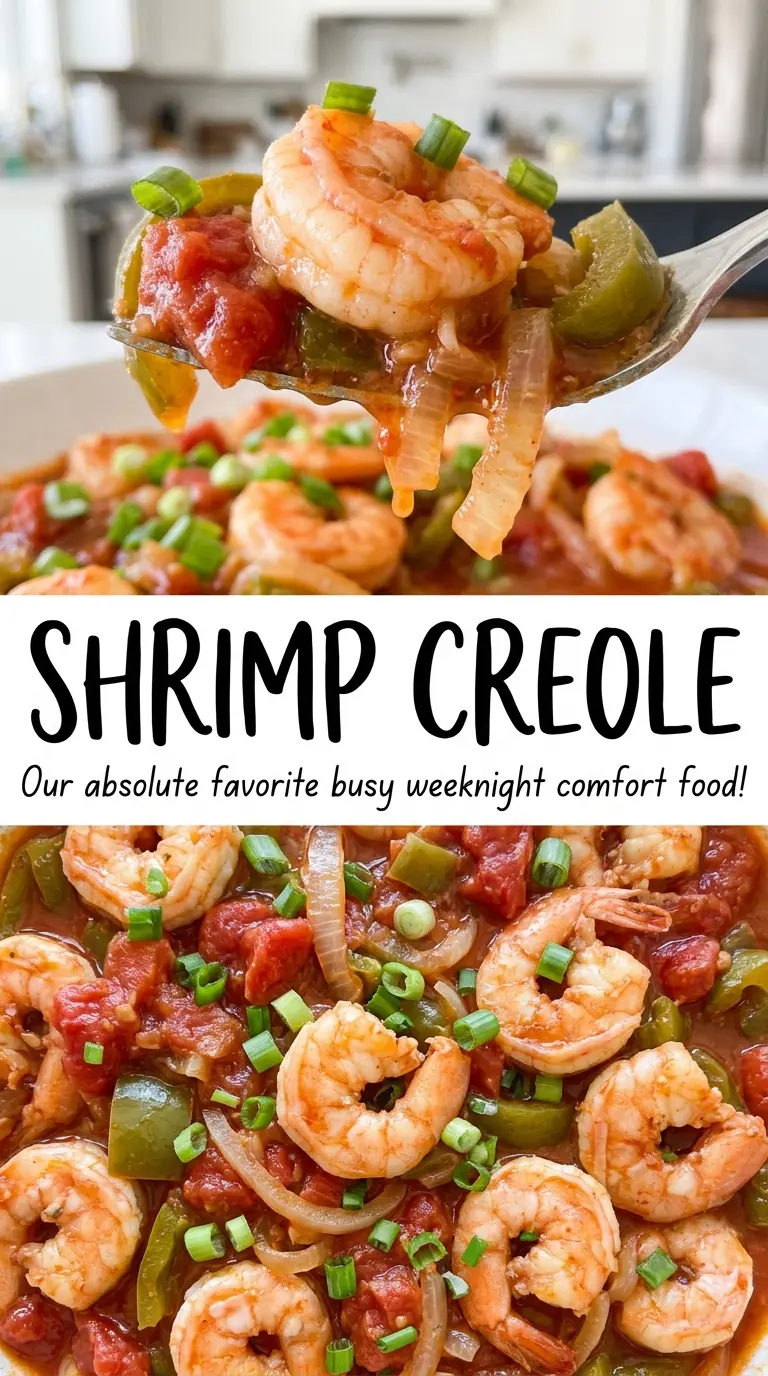
Save this Shrimp Creole for a cozy skillet dinner with tender shrimp and a thick, tomato-rich sauce over rice.
Why the sauce needs to thicken before the shrimp goes in
Shrimp cooks quickly, while a tomato sauce needs a little time to lose its watery edge. If the shrimp simmered through the whole reduction, it would be exposed to heat long after the sauce had reached the right consistency. I let the vegetables, tomatoes, and broth become a finished sauce first, then add the shrimp for just the final few minutes.
The flour and tomato paste each help in a different way. The flour cooks briefly in the skillet before the liquids go in, so it can blend into the base instead of leaving little lumps in the finished sauce. Tomato paste adds concentrated tomato flavor and helps give the sauce body. Then the uncovered simmer lets excess liquid evaporate while the flavors settle together. Stir now and then so the bottom doesn’t catch, and judge the sauce by how it coats the vegetables rather than by how vigorously it bubbles.
This order also makes it easier to cook the shrimp accurately. Once the sauce is thickened and the bay leaf is out, the shrimp can cook directly in the skillet without needing extra time for the sauce to reduce around them. It’s a small bit of sequencing that protects the texture of the shrimp and keeps the rice from getting lost under a thin pool of tomato liquid.
What the tomato base, vegetables, and shrimp each bring
- Long-grain white rice — Its separate, tender grains give the thick sauce somewhere to land without turning the whole bowl sticky. Use long-grain white rice for the stated water and cooking time; another type may need a different ratio or schedule.
- Onion, green bell pepper, and celery — Finely chopping these vegetables helps them soften evenly and become part of the sauce rather than large crunchy pieces. They don’t need to be an expensive specialty; fresh vegetables that are firm and clean are what matter.
- Garlic — Fresh minced garlic gives the base a clear, savory aroma. It cooks briefly, so have it ready before it goes into the hot skillet rather than chopping it while the other vegetables cook.
- All-purpose flour and tomato paste — Flour helps the sauce thicken, while tomato paste deepens its tomato character. Use ordinary all-purpose flour and standard tomato paste; there’s no need for a specialty brand.
- Diced tomatoes with their juices — The can’s liquid is part of the sauce, not something to drain away. A regular can is a dependable choice because its tomatoes and juices provide a consistent base.
- Low-sodium chicken broth and Worcestershire sauce — The broth loosens the tomato mixture, and Worcestershire brings a savory note beneath the tomatoes. Low-sodium broth leaves more control over the seasoning from the kosher salt.
- Large raw shrimp — Peeled and deveined shrimp are easy to add straight to the skillet and cook evenly in the short finishing stage. Choose raw shrimp rather than cooked shrimp, which would be exposed to too much heat in the same cooking window.
- Thyme, paprika, cayenne, and bay leaf — Dried thyme and paprika round out the tomato base, cayenne brings the heat, and the bay leaf adds a subtle background note as the sauce simmers. Remove the bay leaf before the shrimp goes in.
Build the rice and sauce in the right order
Start the long-grain rice
Combine the rice, water, and kosher salt in a 3-quart saucepan and bring it to a boil over medium-high heat. Once it boils, cover the saucepan, lower the heat, and cook for 15 minutes. Take it off the heat and leave it covered for 10 minutes; lifting the lid during that rest lets steam escape. Keep the rice covered while you finish the skillet.
Soften the vegetables before adding garlic
Heat the vegetable oil in a 12-inch skillet over medium heat, then add the finely chopped onion, green bell pepper, and celery. Cook for 6 to 8 minutes, stirring occasionally, until the vegetables have softened. Add the minced garlic and cook for 30 seconds; it should smell fragrant, not browned. Stir in the flour and cook for 1 minute so it’s incorporated into the vegetables.
Simmer the tomato sauce uncovered
Stir in the tomato paste, diced tomatoes with their juices, chicken broth, Worcestershire sauce, bay leaf, dried thyme, paprika, cayenne, kosher salt, and black pepper. Bring the mixture to a simmer, then lower the heat to medium-low. Cook uncovered for 15 to 20 minutes, stirring occasionally, until the sauce has thickened. Lift out the bay leaf before adding the shrimp.
Cook the shrimp just to the finish
Stir the large raw shrimp into the thickened sauce and cook for 3 to 5 minutes. Look for shrimp that have turned opaque, and check the thickest part for 145°F. If a few shrimp are larger than the rest, check those first rather than relying only on the smallest pieces. Serve the shrimp Creole over the rice.
Three ways to adjust the bowl without losing its Creole character
Make a gentler, cayenne-free sauce
Leave out the cayenne for a milder bowl. The tomato, thyme, paprika, and Worcestershire still give the sauce plenty of savory character, just without the extra chile heat.
Turn up the cayenne heat
For a hotter skillet, use more cayenne than the standard amount. Increase it gradually so the pepper’s heat doesn’t take over the tomato and vegetable base.
Make it a lower-carb bowl
Skip the rice and serve the shrimp and sauce on their own. The dish becomes more like a tomato-rich shrimp stew, with less starch to soak up the sauce.
Storage and Reheating
- Refrigerator: Refrigerate the shrimp Creole and rice within 2 hours, in separate airtight containers, and use within 3 to 4 days. The shrimp may firm up and the rice may dry as it chills.
- Freezer: Freeze the sauce and rice separately in airtight freezer containers for up to 2 months. The shrimp can become a little firmer after freezing and thawing.
- Reheating: Warm the sauce gently in a skillet over low heat, stirring, until it reaches 165°F. Reheat the rice separately with a small splash of water and keep it covered; high heat can dry out the rice before the sauce is warm.
Questions that come up while making Shrimp Creole
Shrimp Creole
Ingredients
Equipment
Method
- Combine the rice, water, and salt in a 3-quart saucepan.
- Bring to a boil over medium-high heat.
- Cover, reduce the heat to low, and cook for 15 minutes.
- Remove from the heat and let stand, covered, for 10 minutes.
- Heat the vegetable oil in a 12-inch skillet over medium heat.
- Add the onion, bell pepper, and celery and cook for 6 to 8 minutes, stirring occasionally, until softened.
- Add the garlic and cook for 30 seconds.
- Stir in the flour and cook for 1 minute.
- Stir in the tomato paste, diced tomatoes with their juices, chicken broth, Worcestershire sauce, bay leaf, thyme, paprika, cayenne, salt, and black pepper.
- Bring the sauce to a simmer.
- Reduce the heat to medium-low and cook uncovered for 15 to 20 minutes, stirring occasionally, until thickened.
- Remove the bay leaf.
- Stir in the shrimp and cook for 3 to 5 minutes, until opaque and 145°F in the thickest part.
- Serve the shrimp Creole over the rice.