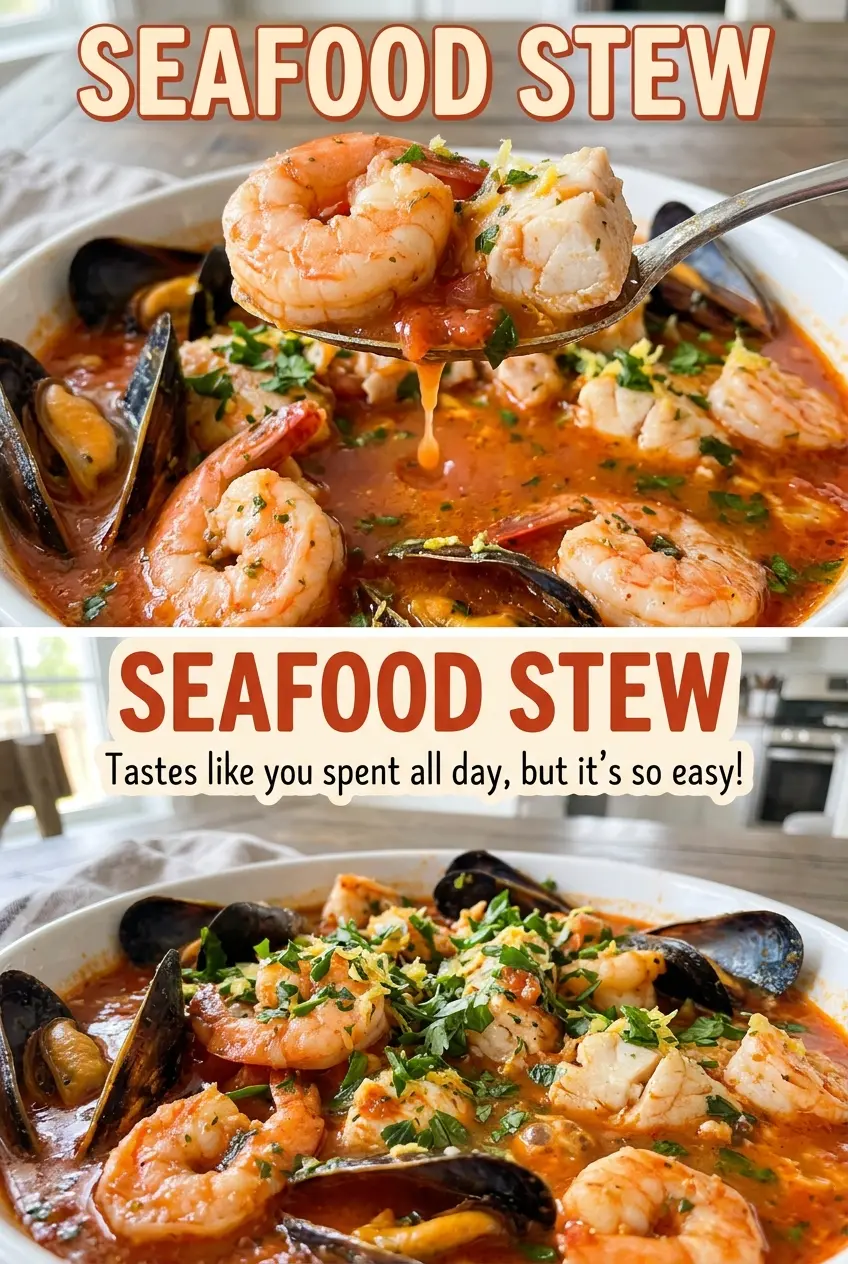
The broth starts bright with tomatoes, but it’s the softened onion, fennel, and red bell pepper underneath that makes it taste rounded instead of sharp. I let those vegetables take their time in the Dutch oven, then give the seafood stock and crushed tomatoes a quiet simmer before any fish or shellfish goes in. That order matters in this seafood stew: the broth gets a chance to settle, while the seafood stays tender.
I add the fish and mussels first, then the shrimp a few minutes later. It’s a small timing difference, but it keeps the shrimp from turning tough while the mussels open and the fish cooks through. A little lemon juice and fresh parsley stirred in at the end lift the tomato broth without covering up the seafood. Each bowl is hearty, savory, and full of distinct pieces of fish and shellfish.
Kitchen Note
I have the fish, mussels, and shrimp ready before I start adding seafood to the pot. They go in at different times, and having each one prepped lets me keep the cooking moving without leaving the shrimp in too long.
Save this seafood stew for a night when you want tender fish, open mussels, and shrimp in a tomato-fennel broth.
Fennel Keeps the Tomato Broth from Tasting One-Note
Crushed tomatoes and seafood stock make a flavorful base, but tomatoes can dominate if they’re the only strong notes in the pot. Fennel gives this stew a gentle anise edge, while onion and red bell pepper soften into the background and round it out. Together, those vegetables build more depth than a quick tomato-and-stock simmer would on its own.
Give the diced vegetables the full 6 to 8 minutes over medium heat, stirring occasionally, until they’ve softened. They don’t need to brown; the goal is tender vegetables that have started to lose their raw crunch. Then the garlic and red pepper flakes get just 30 seconds before the wine goes in. That short cook keeps the garlic fragrant rather than browned, and the wine has time to simmer before the tomatoes and stock join the pot. The result is a broth with a savory, slightly sweet foundation and enough tomato brightness to stand up to the seafood.
Why the Fish, Shellfish, and Broth Need Different Choices
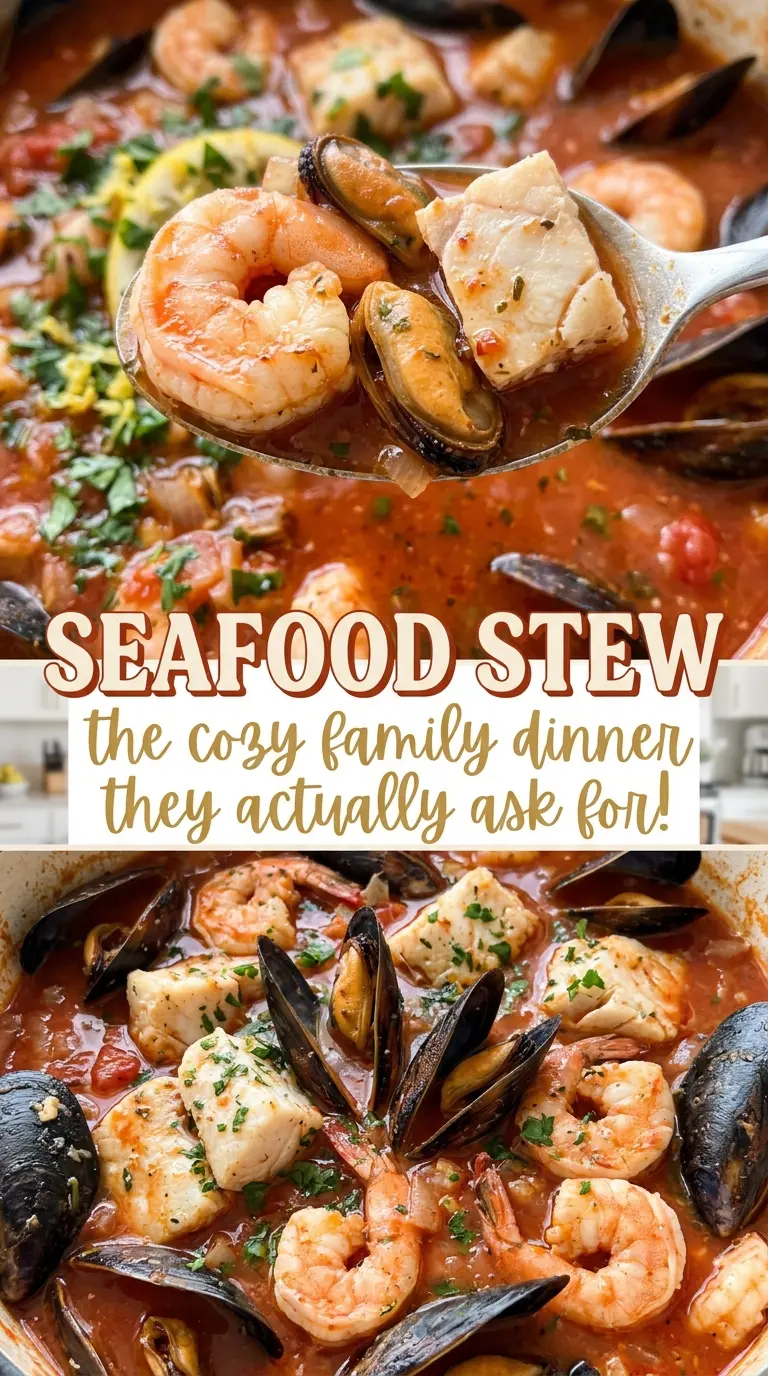
- Fennel and the other vegetables — Fresh fennel gives the broth its distinct, lightly anise-like note; celery can stand in if you can’t find fennel, though the stew will taste less aromatic. Dice the vegetables so they soften evenly.
- Dry white wine — It adds a little acidity and depth before the tomatoes go in. If you’re cooking without wine, replace it with seafood stock; the broth will be rounder and less bright.
- Crushed tomatoes and seafood stock — Crushed tomatoes make a cohesive broth without needing to blend it, and seafood stock keeps the base aligned with the fish and shellfish. If seafood stock isn’t available, fish stock is the closest swap; vegetable stock makes a milder-tasting base.
- Firm white fish — Cod holds together well in the simmering broth. Haddock is a useful alternative with a similarly delicate texture; cut it into 1-inch pieces so it cooks at a similar pace.
- Mussels and shrimp — Scrub and debeard the mussels before cooking, and use peeled, deveined shrimp to keep prep simple. Large shrimp are less likely to overcook in the short finishing simmer than smaller ones.
- Parsley and lemon — Fresh parsley gives the finished stew a clean herbal note, and lemon juice brightens the broth. Flat-leaf parsley works in place of curly parsley without changing the method.
Building the Broth Before the Seafood Goes In
Soften the Aromatic Vegetables
Warm the olive oil in a 5- to 6-quart Dutch oven over medium heat. Add the onion, fennel, red bell pepper, kosher salt, and black pepper, then cook for 6 to 8 minutes, stirring occasionally, until the vegetables have softened. Keep the heat at medium; if the garlic goes in while the vegetables are still firm, it can brown before the rest of the base is ready. Stir in the minced garlic and red pepper flakes for 30 seconds.
Simmer the Wine and Tomato Base
Pour in the dry white wine and let it simmer for 2 minutes. Add the crushed tomatoes, seafood stock, dried oregano, and bay leaf, then bring the pot to a simmer. Cook uncovered for 20 minutes so the broth has time to come together before the seafood is added. Keep it at a steady simmer rather than a hard boil.
Add the Fish and Mussels First
Remove and discard the bay leaf, then add the 1-inch pieces of fish and the scrubbed, debearded mussels. Cover the Dutch oven and simmer for 4 minutes. This first stretch gives the fish and mussels a head start before the shrimp joins them. Keep the lid on so the covered pot holds a steady simmer.
Finish with Shrimp, Parsley, and Lemon
Add the shrimp, cover the pot again, and simmer for 3 to 5 minutes. The shrimp should be opaque, the mussels should have opened, and the fish should reach 145°F; discard any mussels that remain closed. If the shrimp still look translucent, give them a little more time rather than turning the heat up to a boil. Stir in the chopped fresh parsley and lemon juice, then serve hot.
Easy Changes That Still Let the Seafood Shine
Use Haddock Instead of Cod
Swap in the same amount of haddock, cut into 1-inch pieces. It stays tender in the tomato broth and keeps the stew’s mild, clean seafood taste.
Make the Broth Without Wine
Use seafood stock in place of the dry white wine. The broth will have less acidity and a softer finish, but the tomatoes, fennel, and seafood stock still give it plenty of savory character.
Make It Gluten-Free
Choose gluten-free seafood stock in place of standard seafood stock. The swap keeps the broth’s seafood-forward taste and doesn’t change how the stew cooks.
Storage and Reheating
- Refrigerator: Refrigerate leftovers promptly and eat within 3 to 4 days. The fish will soften as it sits in the broth.
- Freezer: Freeze in an airtight container for up to 2 months for best quality. The seafood may be softer after thawing, but the stew will still be good to eat.
- Reheating: Warm gently on the stovetop, stirring carefully, until the leftovers reach 165°F. Avoid a hard boil, which can make the fish break apart and the shrimp turn rubbery.
Questions That Come Up When Making Seafood Stew
Seafood Stew
Ingredients
Equipment
Method
- Heat the olive oil in a 5- to 6-quart Dutch oven over medium heat.
- Add the onion, fennel, bell pepper, salt, and black pepper and cook for 6 to 8 minutes, stirring occasionally, until softened.
- Stir in the garlic and red pepper flakes and cook for 30 seconds.
- Pour in the wine and simmer for 2 minutes.
- Add the crushed tomatoes, seafood stock, oregano, and bay leaf, bring to a simmer, and cook uncovered for 20 minutes.
- Remove and discard the bay leaf.
- Add the fish and mussels, cover, and simmer for 4 minutes.
- Add the shrimp, cover, and simmer for 3 to 5 minutes, until the shrimp are opaque, the mussels have opened, and the fish reaches 145°F.
- Discard any mussels that remain closed.
- Stir in the parsley and lemon juice, then serve hot.