The stock should be steaming when it meets the rice, not bubbling away on the stove. I learned that keeping it warm makes the cooking feel calmer: the skillet stays at a steady simmer, and the rice doesn’t have to recover from a splash of cold liquid. That’s one small detail that helps this seafood paella cook evenly.
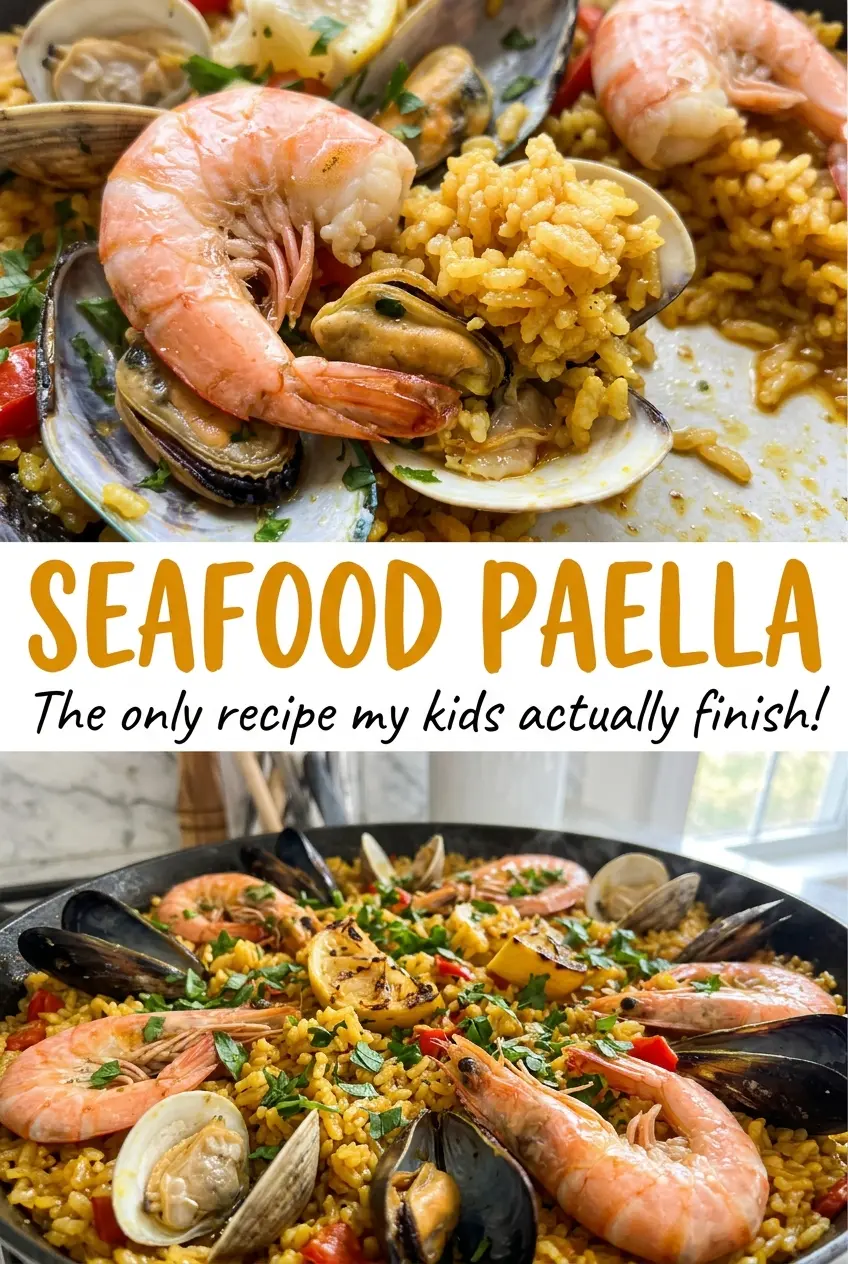
Bomba rice gets a brief coating in the tomato mixture before the stock goes in, then it simmers uncovered without stirring. I keep the seafood out of the pan until the rice has had time to cook on its own; adding each kind in stages gives the mussels, shrimp, and cod the time they need without crowding the skillet from the start. Finish with lemon wedges and bring the pan to the table while the rice is tender and the mussels have opened.
Kitchen Note
Keep the seafood stock warm while you build the tomato base. When it goes into the skillet steaming, the rice can return to a simmer quickly instead of sitting in lukewarm liquid.
Save this saffron seafood paella for a dinner when you want tender rice, sweet mussels, and shrimp and cod cooked right in the pan.
Why This Paella Simmer Isn’t Stirred Like Risotto
Stirring feels like the natural way to keep rice from sticking, but it changes what happens in this skillet. Once the stock comes to a boil and the heat is lowered, leave the rice alone for its uncovered simmer. Bomba rice absorbs the seasoned liquid while it cooks; frequent stirring releases more surface starch and pushes the dish toward a softer, creamier texture.
The wide 12-inch skillet also gives the rice a broad, even layer, which helps it cook at the same pace across the pan. A deep pot would hold the ingredients, but it wouldn’t give the rice the same shallow spread. Keep the simmer steady rather than aggressive, and resist the urge to lift the rice around while it cooks. You’ll add the seafood in stages near the end, so the rice can get a head start before the more delicate ingredients go in.
There’s no need to chase a browned crust or stir in extra liquid if the rice is cooking as expected. Watch the pan and use the texture cues: the grains should be tender by the end, and the seafood should be cooked through when you remove the skillet from the heat.
Why Bomba Rice and Seafood Stock Matter in This Pan
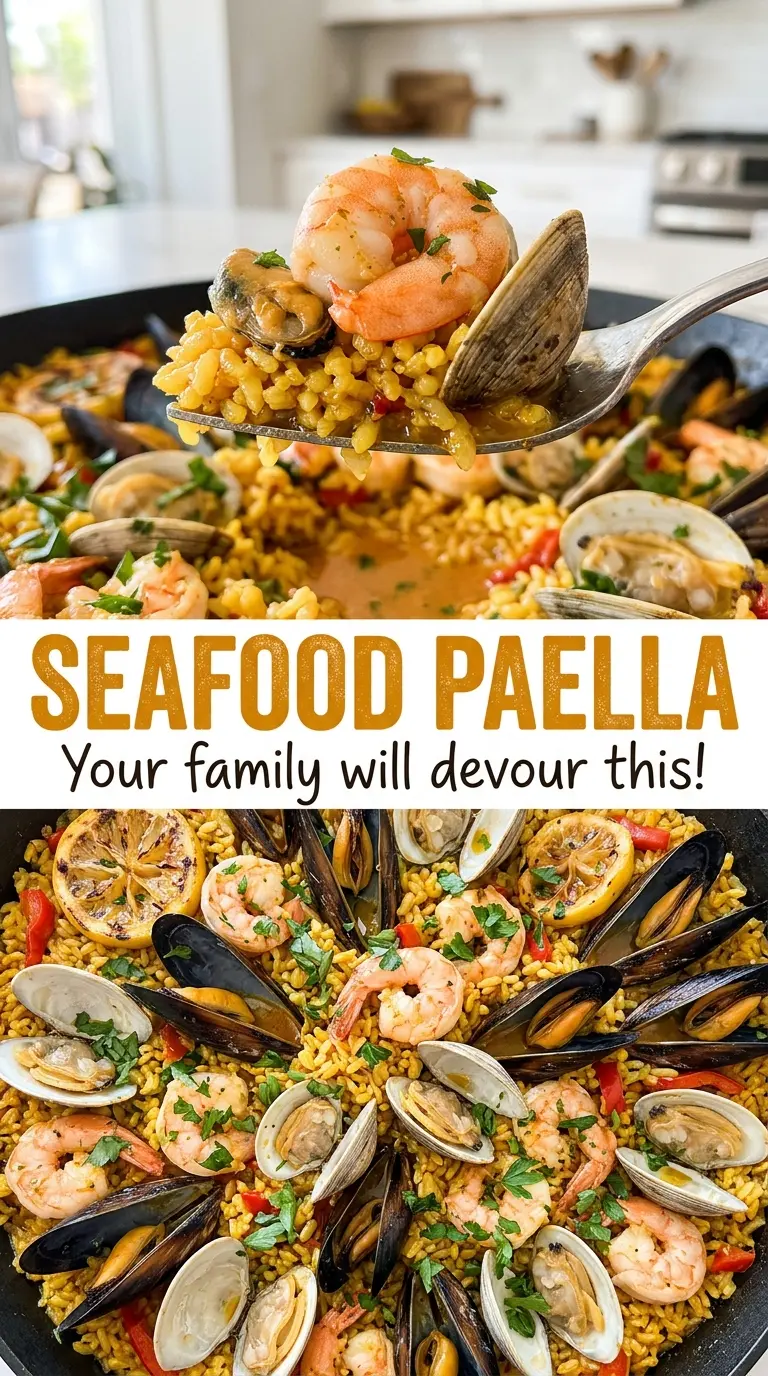
- Spanish bomba rice — Its ability to absorb flavorful liquid while holding its shape makes it a good fit for this uncovered, no-stir simmer. Long-grain rice won’t give the same texture or absorb liquid in the same way, so there isn’t a reliable direct swap that keeps this method unchanged.
- Seafood stock and saffron — The stock carries the seasoning through the rice, while crumbled saffron gives the liquid its color and a gentle, distinctive aroma. A good low-sodium stock lets you control the salt in the skillet. Keep the stock warm rather than adding it cold.
- Mussels, shrimp, and cod — Use mussels with intact shells, large shrimp that are peeled and deveined, and cod cut into even 1-inch pieces. Those sizes help the seafood cook in the short finishing stages. The mussels bring their own briny taste to the rice as they open.
- Crushed tomatoes, paprika, and aromatics — Onion and bell pepper soften into the base, while the garlic, sweet paprika, and tomatoes deepen it before the rice goes in. Let the tomato mixture thicken instead of rushing straight to the stock; watery tomato can leave the base loose.
- Lemon — Serve the wedges at the table so each person can add a fresh squeeze to the finished seafood and rice. The recipe already has plenty of character from the stock and saffron, so there’s no need to add extra seasoning at the end.
The Staged Cooking That Keeps the Seafood Tender
Warm the Stock and Check the Mussels
Discard mussels with cracked shells, and tap any mussels that are open; set aside those that don’t close. Put the seafood stock in a 2-quart saucepan over medium heat until it’s steaming, which takes about 5 minutes. Stir in the crumbled saffron and keep the stock warm. Starting with clean, sorted seafood makes the later stages easier to manage.
Soften the Vegetables and Thicken the Tomato Base
Heat the olive oil in a 12-inch skillet over medium heat, then cook the finely chopped onion and red bell pepper for 5 to 7 minutes, until softened. Stir in the garlic, crushed tomatoes, and sweet paprika. Give that mixture 3 to 4 minutes to cook down; it should look thicker, not watery. If liquid is still pooling around the vegetables, let the base finish thickening before adding the rice.
Coat the Rice and Let It Simmer Undisturbed
Stir the bomba rice into the tomato mixture for 1 minute so the grains are coated. Pour in the warm saffron stock, stir in the salt, and bring the skillet to a boil. Reduce the heat to medium-low and simmer uncovered for 12 minutes without stirring. Keep an eye on the heat so the rice simmers steadily instead of boiling hard.
Add the Seafood in Stages, Then Rest
Nestle the mussels into the rice and simmer uncovered for 3 minutes. Arrange the shrimp and cod over the rice and cook uncovered for 6 to 8 minutes, until the rice is tender, the shrimp are opaque and firm, and the cod flakes easily and reaches 145°F. The mussels should have opened; discard any that remain closed. Take the skillet off the heat and let the paella rest for 5 minutes before serving with lemon wedges.
Two Seafood Swaps That Keep the Paella in Balance
Leave Out the Shrimp for a Mussel-and-Cod Paella
Skip the shrimp and keep the mussels and cod. Add the mussels at their usual stage, then arrange the cod over the rice when the shrimp and cod would normally go in; cook until the cod flakes easily and reaches 145°F. You’ll get a more focused mix of briny mussels and mild white fish.
Make It with Mussels and Shrimp, No Cod
Leave out the cod and keep the mussels and shrimp. Follow the mussel stage, then add the shrimp at the usual seafood-finishing point and cook until opaque and firm. With no cod pieces in the pan, the seafood has a lighter, less substantial bite.
Storage and Reheating
- Refrigerator: Refrigerate leftovers within 2 hours in a shallow, covered container and eat within 3 to 4 days. The rice firms up, and the seafood may be less tender after chilling.
- Freezer: Freeze leftovers in an airtight container for up to 2 months. The rice will soften after thawing, and mussels and shrimp may lose some tenderness.
- Reheating: Reheat a portion covered in the microwave, stirring once, until steaming throughout and 165°F. Avoid prolonged reheating; it can make the seafood tough.
Questions That Come Up When Cooking Seafood Paella
Seafood Paella
Ingredients
Equipment
Method
- Discard any mussels with cracked shells or ones that do not close when tapped.
- Set the mussels aside with the shrimp and cod.
- Heat the seafood stock in a 2-quart saucepan over medium heat until steaming, about 5 minutes, then stir in the saffron and keep warm.
- Heat the olive oil in a 12-inch skillet over medium heat, then add the onion and bell pepper and cook for 5 to 7 minutes, until softened.
- Stir in the garlic, crushed tomatoes, and paprika and cook for 3 to 4 minutes, until the tomato mixture thickens.
- Add the rice and stir for 1 minute to coat it in the tomato mixture.
- Pour in the warm stock and stir in the salt, then bring to a boil.
- Reduce the heat to medium-low and simmer uncovered for 12 minutes without stirring.
- Nestle the mussels into the rice and simmer uncovered for 3 minutes.
- Arrange the shrimp and cod over the rice and cook uncovered for 6 to 8 minutes, until the rice is tender, the shrimp are opaque and firm, the cod reaches 145°F and flakes easily, and the mussels have opened.
- Discard any mussels that remain closed.
- Remove the skillet from the heat and let the paella rest for 5 minutes.
- Serve with the lemon wedges.