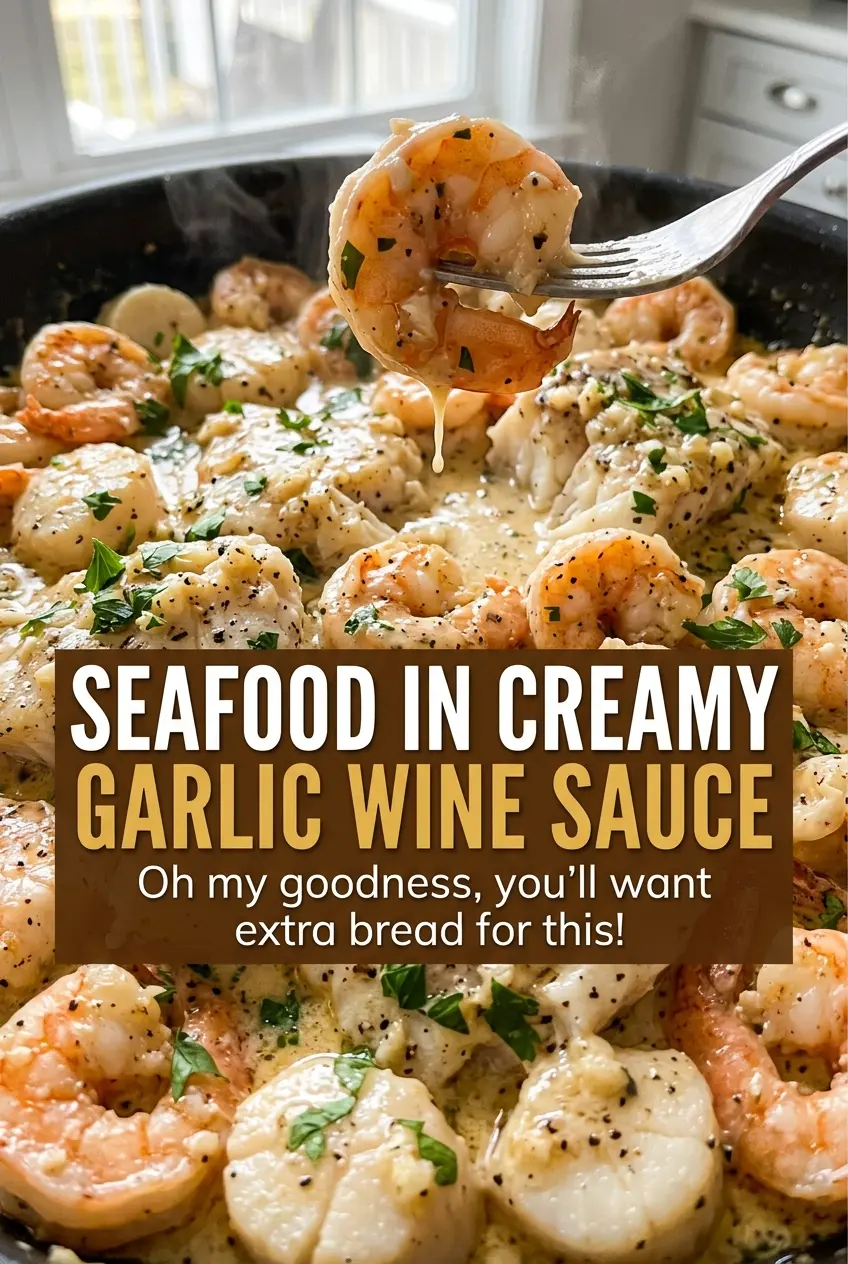
When scallops and shrimp go into the skillet, you’ll notice the shrimp curl while the scallops are still building a golden crust. Cooking them in separate turns gives each one room to sear instead of steaming in the pan. That’s the small bit of timing that makes Seafood in Creamy Garlic Wine Sauce feel like a composed dinner rather than a pile of seafood in cream.
After the seafood comes out, the same skillet becomes the start of the sauce. Shallot and garlic soften in butter, then white wine loosens the browned bits left behind. The cream simmers until it clings lightly to a spoon, and lemon and parsley go in at the end for a clean, bright finish. You get tender seafood tucked into a silky garlic sauce, with every browned bit from the pan worked in.
Kitchen Note
Take the skillet off the heat before stirring in the lemon juice and parsley. The lemon stays bright, and the parsley keeps its fresh, green flavor instead of cooking down into the cream.
Save Seafood in Creamy Garlic Wine Sauce for a dinner that turns seared scallops and shrimp into a silky, lemon-finished skillet meal.
The Wine Has to Reduce Before the Cream Goes In
Wine does more here than add a little acidity. It lifts the browned seafood bits from the skillet and gives them a chance to mingle with the shallot and garlic before the cream softens everything. Reducing the wine by about half concentrates that savory base, so the finished sauce tastes rounded rather than thin and wine-forward.
If the cream goes in while the wine is still plentiful, the sauce has more liquid to cook off and the wine’s sharper aroma can linger. Give the wine its own simmer first, scraping the skillet as it bubbles. A dry white wine keeps the sauce balanced; a sweet wine pushes it in a sugary direction that doesn’t suit the seafood. This short reduction is what lets the rich cream taste full without burying the scallops and shrimp.
The Ingredients That Keep a Cream Sauce From Feeling Heavy
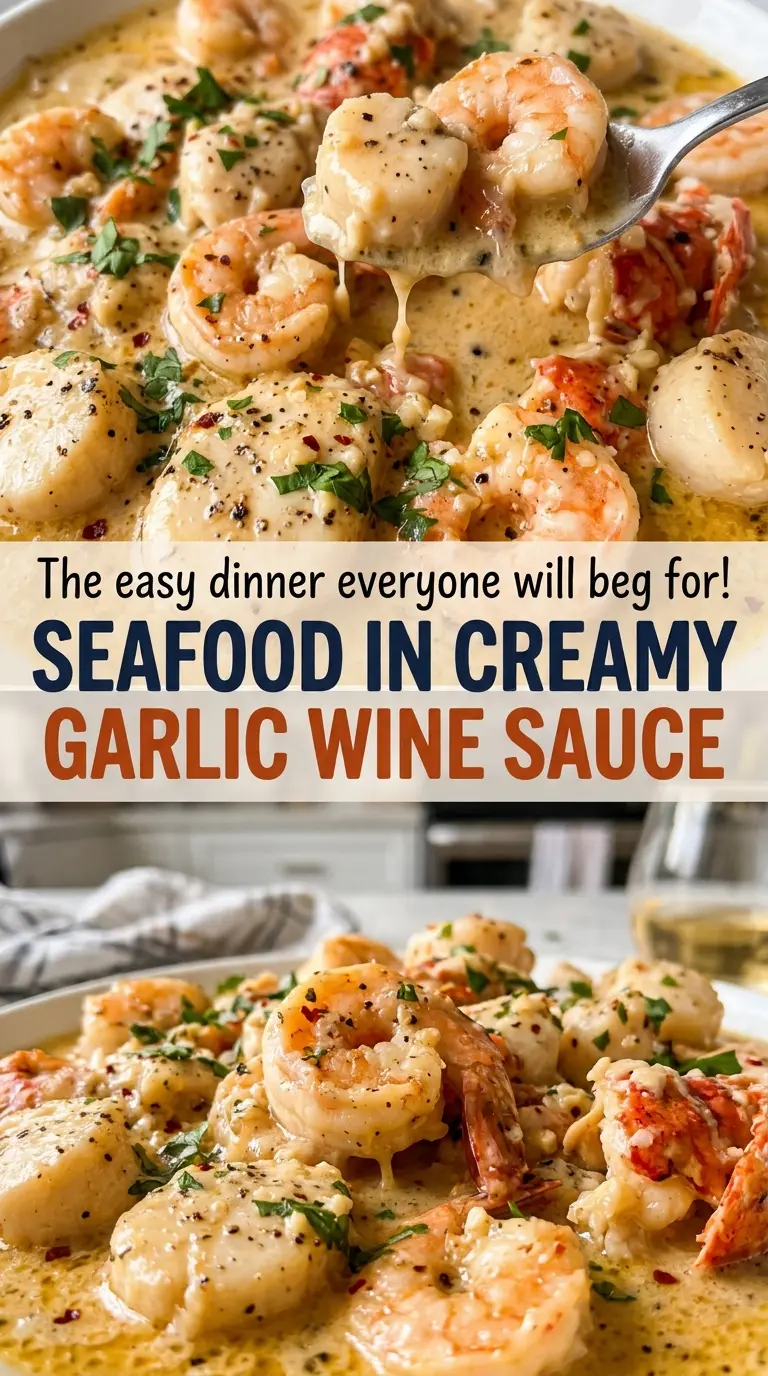
- Large sea scallops — Their size gives you room for a browned outside and a tender center. Fresh or frozen scallops both work; if buying frozen, choose large sea scallops rather than small bay scallops, which cook too quickly for the same searing window. Remove the side muscle and pat them dry before they meet the pan.
- Large shrimp — Shrimp in the 16-to-20-per-pound size range stay substantial beside the scallops and are easier to time. Smaller shrimp cook faster, so they’re less forgiving in this skillet. Peeled and deveined shrimp save prep time; pat them dry so they sear instead of releasing excess moisture.
- Dry white wine — A basic dry white wine is enough; there’s no need to use an expensive bottle. Dry vermouth is a useful stand-in and gives the sauce a slightly more herbal edge. Avoid sweet wine, which can make the creamy sauce taste cloying.
- Heavy cream and butter — Heavy cream gives the sauce body and helps it coat the seafood, while butter carries the shallot and garlic. For a dairy-free version, use a plain, unsweetened plant-based cooking cream and vegan butter; the sauce will be less traditionally buttery, but it stays creamy.
- Shallot and garlic — Shallot gives the base a softer, sweeter onion note than a regular onion. Mince both finely so they soften quickly without leaving large pieces in the sauce. Fresh garlic has a cleaner flavor than garlic powder in this short-cooked sauce.
- Lemon juice and fresh parsley — These finish the sauce with brightness after the cream simmers. Fresh lemon juice has a livelier taste than bottled, while fresh parsley brings a clean green note; dried parsley won’t give the same fresh finish.
How to Sear the Seafood Before Building the Sauce
Dry and Sear the Scallops
Pat the scallops and shrimp dry, then season them evenly with kosher salt and black pepper. Heat 1 tablespoon olive oil in a 12-inch skillet over medium-high heat until it shimmers. Set the scallops in a single layer and cook them for 2 to 3 minutes per side, until golden and opaque. Transfer them to a plate; avoid shifting them around while they sear, since that interrupts the browning.
Cook the Shrimp on Its Own
Add the remaining olive oil to the same skillet and arrange the shrimp in a single layer. Cook for 1 to 2 minutes per side, until opaque and curled, then move them to the plate with the scallops. Shrimp finish faster than scallops, so watch for the curl and opaque color rather than waiting for them to tighten into small rings. Keep the seafood and any juices on the plate for the finish.
Soften the Aromatics and Reduce the Wine
Lower the heat to medium and melt the butter in the skillet. Add the minced shallot and cook for 2 to 3 minutes, until softened, then stir in the garlic for 30 seconds. Pour in the wine and scrape the browned bits from the bottom of the pan as it simmers. After 3 to 5 minutes, it should be reduced by about half.
Simmer the Cream and Finish Gently
Stir in the heavy cream and let it simmer gently for 4 to 6 minutes, until it lightly coats a spoon. Keep the heat gentle rather than letting the sauce boil hard. Return the scallops, shrimp, and their accumulated juices to the skillet, then simmer for 1 to 2 minutes, just until heated through. Take the skillet off the heat and stir in the lemon juice and chopped parsley.
Three Simple Ways to Adapt the Skillet
Make It All Shrimp
Replace the scallops with another pound of large shrimp. Sear the shrimp in uncrowded, single-layer batches so they still brown instead of steaming, using the same 1 to 2 minutes per side and looking for opaque, curled pieces. The sauce stays the same, but the dish has a sweeter, more uniform seafood bite.
Let Scallops Take the Lead
Use another pound of large sea scallops in place of the shrimp, searing them in single-layer batches. Give each batch 2 to 3 minutes per side, until golden and opaque, before moving on to the sauce. The result is richer and more focused on the sweet, firm scallops.
Make the Sauce Dairy-Free
Swap the butter for vegan butter and use plain, unsweetened plant-based cooking cream in place of heavy cream. Choose a product intended for hot sauces, not a sweetened coffee creamer. The sauce will taste a little less buttery, so keep the lemon and parsley finish to give it lift.
Storage and Reheating
- Refrigerator: Store leftovers in an airtight container for up to 2 days. The sauce will thicken as it chills, and the seafood will be firmer after reheating.
- Freezer: This dish doesn’t freeze well. The cream sauce can separate on thawing, and scallops and shrimp lose their tender texture.
- Reheating: Warm leftovers gently in a skillet over low heat, stirring carefully until heated through. Avoid high heat or a hard simmer, which can make the seafood rubbery and cause the sauce to split.
Questions That Come Up While Making This Seafood Skillet
Seafood in Creamy Garlic Wine Sauce
Ingredients
Equipment
Method
- Pat the scallops and shrimp dry.
- Season them evenly with the salt and pepper.
- Heat 1 tablespoon of the olive oil in a 12-inch skillet over medium-high heat until shimmering.
- Add the scallops in a single layer and cook for 2 to 3 minutes per side, until golden and opaque.
- Transfer the scallops to a plate.
- Add the remaining 1 tablespoon olive oil to the skillet.
- Add the shrimp in a single layer and cook for 1 to 2 minutes per side, until opaque and curled.
- Transfer the shrimp to the plate.
- Reduce the heat to medium and melt the butter in the skillet.
- Add the shallot and cook for 2 to 3 minutes, until softened.
- Stir in the garlic and cook for 30 seconds.
- Pour in the wine, scraping up the browned bits from the skillet.
- Simmer for 3 to 5 minutes, until reduced by about half.
- Stir in the heavy cream and simmer gently for 4 to 6 minutes, until the sauce lightly coats a spoon.
- Return the scallops, shrimp, and any accumulated juices to the skillet.
- Simmer gently for 1 to 2 minutes, until heated through.
- Remove from the heat and stir in the lemon juice and parsley.