The flour and oil change slowly at first, then the roux starts to smell toasted and deepen from tan to the color of milk chocolate. Keep whisking; a few minutes of attention here gives seafood gumbo its earthy backbone and keeps the flour from tasting raw. I make this pot in a 6-quart Dutch oven, where there’s room for the vegetables, stock, and seafood without crowding the pan.
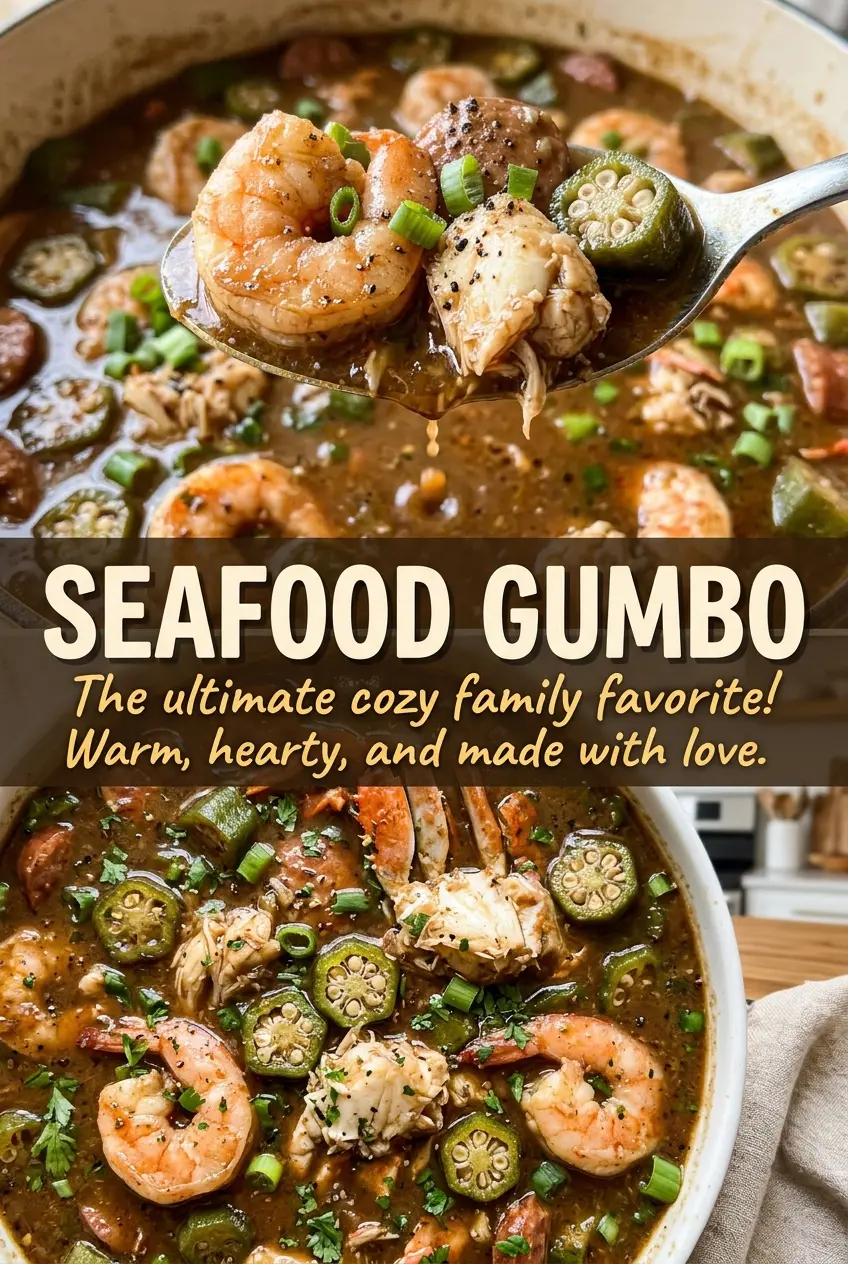
Okra helps give the broth body, while the roux brings a deeper, toasted flavor. I add the shrimp and oysters near the end so they have just enough time to cook, then fold in the crabmeat gently to keep its pieces intact. With a separate pot of long-grain rice ready to catch the broth, this seafood gumbo makes a generous meal for eight, full of tender seafood and a dark, savory base.
Kitchen Note
I stir the filé powder in only after the Dutch oven is off the heat. It blends into the hot gumbo without cooking it further, so the broth stays smooth instead of turning stringy.
Save this seafood gumbo for a night when you want a deep-brown roux, tender shrimp and oysters, and crab folded in at the finish.
Why the Roux Needs to Reach Milk-Chocolate Brown
A roux does two jobs in this gumbo: it thickens the broth and gives it the toasted, nutty flavor that makes the base taste like more than seasoned stock. Cook it only until pale and it will still help thicken, but the finished pot won’t have the same deep, rounded taste. The milk-chocolate color is a useful target because it tells you the flour has had time to toast without taking the roux all the way to burnt.
That color takes patience, not higher heat. Medium-low heat gives the flour and oil time to darken evenly while you whisk, and the steady motion keeps flour from settling against the bottom of the Dutch oven. The roux can go from richly browned to scorched if left unattended, so stay by the stove and watch both its color and smell. When it looks like milk chocolate and smells toasted, move straight to the vegetables; they cool the pan and bring the cooking forward into the gumbo’s savory base.
What Gives This Gumbo Its Body, Seafood Flavor, and Balance
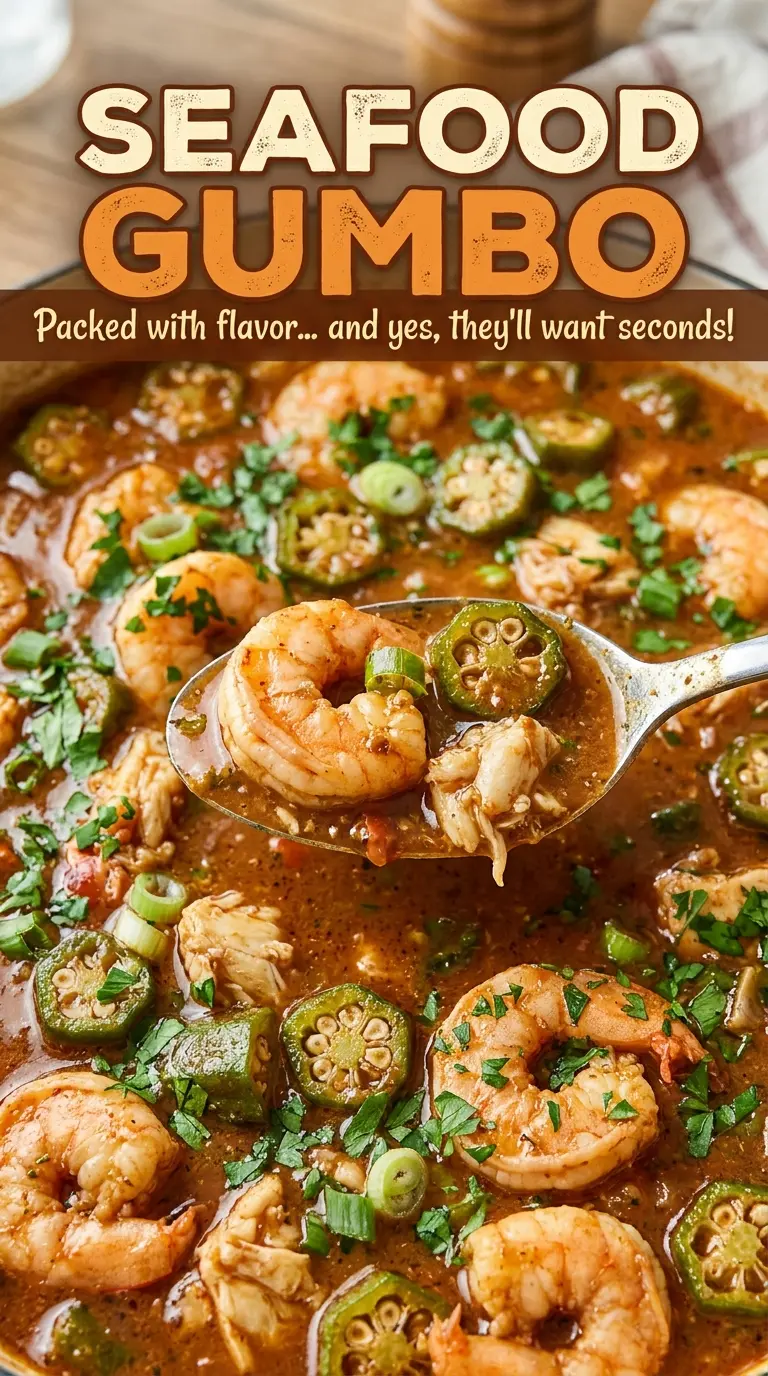
- Vegetable oil and all-purpose flour — These make the roux, so the flour needs to be whisked smoothly into the oil before it browns. Vegetable oil works well for the long cooking because it can handle the steady heat. There isn’t a direct swap that keeps the same roux and texture; changing the fat or flour changes how the base behaves.
- Frozen sliced okra — Thawing and draining it before it goes into the pot keeps extra water from diluting the broth. Okra contributes its own characteristic body as it cooks, so leaving it out makes a thinner gumbo rather than an identical one.
- Low-sodium seafood stock — Stock is the main liquid and carries the seafood flavor through the whole pot. Choosing low-sodium stock leaves room for the measured kosher salt; a regular salted stock can make the finished broth saltier than intended.
- Shrimp, oysters, and lump crabmeat — The three seafoods bring different textures: shrimp stay springy, oysters soften and curl, and crab adds delicate flakes. Pick through the crab for shells before it reaches the pot, and handle it gently so those larger pieces don’t break apart.
- Filé powder — This is a finishing ingredient, not another seasoning to simmer from the start. Stirring it in once the pot is off the heat preserves the texture of the finished broth.
- Long-grain white rice — Cooking it separately keeps the grains distinct instead of letting them absorb the gumbo’s broth as it simmers. Long-grain white rice also follows the water ratio and covered cooking time used here.
Build the Roux First, Then Give the Seafood a Short Finish
Whisk the Roux to a Deep Brown
In a 6-quart Dutch oven over medium-low heat, whisk the vegetable oil and flour constantly for 20 to 30 minutes. Keep the whisk moving across the bottom and into the corners, where flour can catch first. The roux should turn deep brown like milk chocolate and smell toasted, not acrid. If you see black flecks or smell burning, the roux has scorched; don’t try to hide that flavor in the gumbo.
Soften the Vegetables and Build the Broth
Carefully stir in the diced onion, green bell pepper, celery, and thawed, drained okra. Cook for 7 to 10 minutes, stirring, until the vegetables soften; the mixture will look thick and the roux will coat them. Stir in the minced garlic and cook for 30 seconds, just until fragrant. Gradually whisk in the seafood stock so it combines smoothly with the roux, then add the bay leaves, thyme, salt, black pepper, cayenne, and Worcestershire sauce.
Simmer the Gumbo While the Rice Cooks
Bring the gumbo to a gentle simmer, then leave it uncovered for 25 minutes, stirring occasionally. You’re looking for a steady, quiet simmer rather than a hard boil, which can make the broth reduce too quickly. While it simmers, bring the water to a boil in a 2-quart saucepan, stir in the rice, reduce the heat to low, cover, and cook for 15 minutes. Take the saucepan off the heat and leave the rice covered for 10 minutes before fluffing it with a fork.
Add the Seafood in Two Stages
Stir in the peeled and deveined shrimp and drained oysters, then simmer gently for 3 to 5 minutes. The shrimp should turn opaque, the oysters should curl at the edges, and both should reach 145°F. Fold in the lump crabmeat gently and simmer for 1 to 2 minutes, just until heated through. Take the Dutch oven off the heat, stir in the filé powder, and spoon the gumbo over the rice.
Small Changes That Shift the Pot Without Losing Its Character
Leave Out the Oysters
For a pot without oysters, omit them and keep the shrimp and crabmeat. The broth will have less of the oysters’ briny flavor and you’ll lose their soft, curled texture, but the roux, okra, and seafood stock still make a full-bodied gumbo.
Make a Milder Pot
Leave out the cayenne pepper for a gentler heat level while keeping the other seasonings in place. The gumbo will still have savory depth from the browned roux, thyme, and Worcestershire sauce, but it won’t have cayenne’s lingering warmth.
Make It Without Okra
Omit the okra if you don’t want its distinctive texture. The broth will be less thick, since the okra contributes body along with the roux, but the rest of the gumbo can be prepared the same way.
Storage and Reheating
- Refrigerator: Refrigerate leftovers in airtight containers for 3 to 4 days. The gumbo will thicken as it chills, and the seafood may soften slightly.
- Freezer: The gumbo freezes well for up to 2 to 3 months. Freeze it without the rice for the best texture, then cook fresh rice when you’re ready to serve.
- Reheating: Warm the gumbo gently in a saucepan, stirring occasionally, until steaming hot. Avoid a hard boil, which can toughen the seafood; reheat rice separately so it doesn’t soak up the broth.
Questions That Come Up When Making Seafood Gumbo
Seafood Gumbo
Ingredients
Equipment
Method
- In a 6-quart Dutch oven over medium-low heat, whisk the vegetable oil and all-purpose flour constantly for 20 to 30 minutes, until the roux is deep brown like milk chocolate.
- Carefully stir in the yellow onion, green bell pepper, celery, and okra, and cook for 7 to 10 minutes, until the vegetables soften.
- Stir in the garlic and cook for 30 seconds.
- Gradually whisk in the seafood stock.
- Stir in the bay leaves, dried thyme, kosher salt, black pepper, cayenne pepper, and Worcestershire sauce, then bring the gumbo to a gentle simmer.
- Simmer uncovered for 25 minutes, stirring occasionally; while it simmers, cook the rice.
- In a 2-quart saucepan, bring the water to a boil, stir in the long-grain white rice, reduce the heat to low, cover, and cook for 15 minutes.
- Remove the saucepan from the heat and let the rice rest, covered, for 10 minutes, then fluff it with a fork.
- Stir in the shrimp and oysters and simmer gently for 3 to 5 minutes, until the shrimp are opaque, the oysters curl at the edges, and both reach 145°F.
- Gently fold in the crabmeat and simmer for 1 to 2 minutes, until heated through.
- Remove the Dutch oven from the heat and stir in the filé powder.
- Spoon the gumbo over the rice.