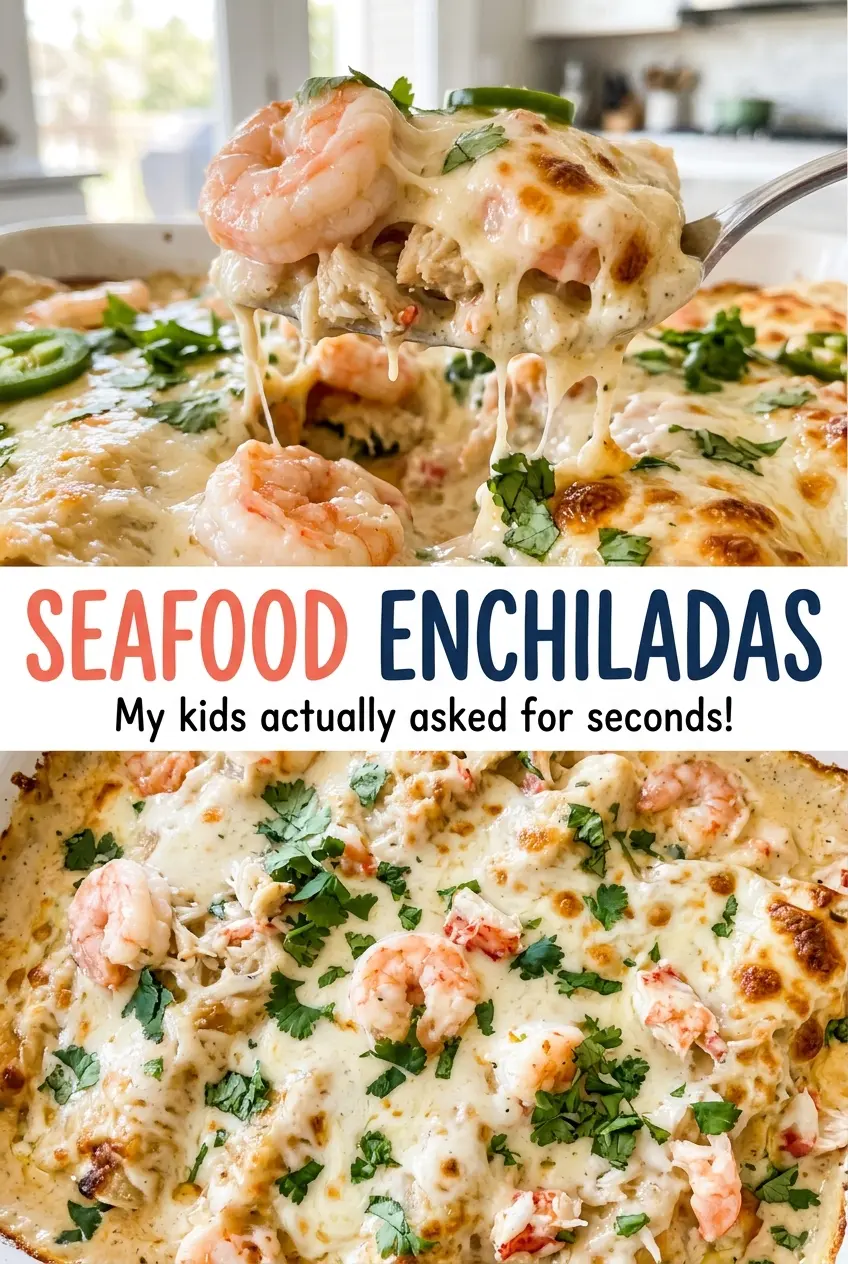
When the sauce starts bubbling around the edges, the cheese has melted, and the tortillas are still holding their shape, dinner is close. The first time I made seafood enchiladas, I worried the filling would be too delicate to roll neatly. The trick is to chop the cooked shrimp into bite-size pieces and fold it gently with the crab, vegetables, and cheese, so every tortilla gets a little of everything without turning the mixture to mush.
These seafood enchiladas pair that tender filling with a creamy green chile sauce built from a quick butter-and-flour roux. I take the pan off the heat before whisking in the sour cream; it keeps the sauce smooth and gives it a cool tang that works beautifully with the sweet seafood. A brief rest after baking helps everything settle before you serve them, with the cheese melted across the top and sauce tucked around each tortilla.
Kitchen Note
Wrap the tortillas in a damp paper towel and microwave them for 30 seconds. They’ll bend around the filling much more easily, so you’re less likely to split one while rolling.
Save these seafood enchiladas for a cozy dinner with tender shrimp and crab under a creamy green chile sauce.
Why the seafood filling needs a light hand
Shrimp and crab are tender before they ever go into the tortillas. If you stir them as vigorously as a hearty bean or chicken filling, the crab breaks down and the shrimp pieces lose their shape. You want a mixture that stays distinct: bite-size shrimp, soft flakes of crab, and just enough cheese to help everything hold together.
Moisture matters just as much as mixing. Patting the raw shrimp dry gives it a chance to cook in the skillet instead of releasing extra water, and picking through the crab keeps stray shell pieces out of the filling. Once the seafood is cooked and chopped, fold it with the vegetables and cheese rather than beating the mixture together. That gentle texture carries through the bake, so the tortillas slice cleanly instead of squeezing out a wet filling.
What gives the sauce its creamy chile balance

- Butter and flour — Cooking them together creates the base that thickens the broth into a sauce that clings to the enchiladas. Store-brand butter and flour work well here; whisk the flour into the melted butter until smooth before adding liquid.
- Chicken broth — Low-sodium broth lets the sour cream, chiles, and seafood stay in balance without the sauce becoming too salty. A flavorful carton is worth choosing, but there’s no need for a premium brand.
- Sour cream — It brings the sauce its tang and creamy body. Full-fat sour cream gives the most dependable texture; add it after removing the saucepan from the heat rather than boiling it into the broth.
- Diced green chiles and cumin — The chiles bring a mild green chile flavor, while cumin adds warmth without taking over the seafood. Use the canned diced chiles straight from the can; no extra preparation is needed.
- Raw shrimp and lump crabmeat — Medium shrimp cook quickly and give the filling its firm, juicy bites. Lump crab contributes larger, delicate pieces, so pick through it carefully for shell fragments and fold it in gently.
- Monterey Jack — This mild cheese melts smoothly into the filling and across the top without overpowering the seafood. Shredding it yourself gives a particularly even melt, though packaged shredded Monterey Jack is convenient.
- Flour tortillas — Their soft, flexible texture makes them easy to roll around the filling. Choose tortillas that feel pliable rather than dry at the edges, then warm them as described below before filling.
Build the sauce and filling before rolling
Start with a smooth broth-thickened sauce
Melt the butter in a medium saucepan over medium heat, whisk in the flour, and cook for 1 minute. Add the chicken broth gradually while whisking so the flour disperses instead of forming lumps. Bring the mixture to a simmer and cook for 3 to 4 minutes, whisking until it thickens. Take the pan off the heat before whisking in the sour cream, diced green chiles, cumin, and salt.
Cook the vegetables, then the shrimp
Heat the vegetable oil in a 12-inch skillet over medium heat and cook the diced onion and green bell pepper for 4 to 5 minutes, until softened. Stir in the garlic for 30 seconds; it should smell fragrant, not browned. Add the shrimp and cook for 2 to 3 minutes, turning once, until opaque and 145°F. Transfer it to a cutting board and chop it into bite-size pieces.
Fold the filling and roll the tortillas
Combine the chopped shrimp, crabmeat, cooked vegetables, and 1 cup of Monterey Jack in a medium bowl. Stir gently, stopping once the ingredients are evenly mixed so the crab stays in pieces. Heat the oven to 350°F and lightly grease a 9×13-inch baking dish. Divide the filling among the warmed tortillas, roll them up, and arrange them seam-side down in the dish.
Bake until the edges bubble
Pour the sauce evenly over the rolled tortillas, then scatter the remaining cheese across the top. Bake for 15 to 20 minutes, until the sauce bubbles around the edges and the cheese has melted. If the center of the dish still looks cool, give it time to heat through rather than judging only by the top cheese. Let the enchiladas rest for 5 minutes before serving so the filling settles.
Three thoughtful swaps for these seafood enchiladas
Use gluten-free tortillas
For a gluten-free version, replace the flour tortillas with pliable 8-inch gluten-free tortillas. They can be less stretchy, so warm them gently and roll without pulling; the filling and sauce stay the same, though the tortilla texture may be a little firmer.
Make the filling all shrimp
Replace the crab with an equal weight of additional peeled, deveined raw shrimp. Cook the extra shrimp in batches if needed so the skillet isn’t crowded; you’ll get a firmer, more distinctly shrimp-forward filling without the sweet, flaky contrast of crab.
Trade Monterey Jack for pepper Jack
Use the same amount of shredded pepper Jack in place of Monterey Jack for a gentle kick throughout the filling and topping. It melts in much the same way, but brings more heat, so the mild chile-and-seafood flavors won’t be quite as delicate.
Storage and Reheating
- Refrigerator: Refrigerate leftovers in a covered container within 2 hours and eat them within 3 to 4 days. The tortillas soften as they sit under the sauce.
- Freezer: Freeze portions in an airtight, freezer-safe container for up to 2 months for best quality. The creamy sauce may separate a little after thawing, but it will still taste good.
- Reheating: Reheat covered in a 350°F oven until hot throughout, or microwave an individual portion covered in short intervals. Heat leftovers to 165°F, and avoid leaving them uncovered in the oven, where the tortilla edges can dry out.
Questions that come up when making seafood enchiladas
Seafood Enchiladas
Ingredients
Equipment
Method
- Melt the butter in a medium saucepan over medium heat.
- Whisk in the flour.
- Cook for 1 minute.
- Gradually whisk in the broth.
- Bring the mixture to a simmer.
- Cook for 3 to 4 minutes, whisking, until thickened.
- Remove the saucepan from the heat.
- Whisk in the sour cream, green chiles, cumin, and salt.
- Heat the oil in a 12-inch skillet over medium heat.
- Add the onion and bell pepper.
- Cook for 4 to 5 minutes until softened.
- Stir in the garlic.
- Cook for 30 seconds.
- Add the shrimp.
- Cook for 2 to 3 minutes, turning once, until opaque and 145°F.
- Transfer the shrimp to a cutting board.
- Chop the shrimp into bite-size pieces.
- Stir the chopped shrimp, crabmeat, cooked vegetables, and 1 cup of the cheese together in a medium bowl.
- Heat the oven to 350°F.
- Lightly grease a 9x13-inch baking dish.
- Wrap the tortillas in a damp paper towel.
- Microwave for 30 seconds to make them pliable.
- Divide the seafood mixture among the tortillas.
- Roll up the tortillas.
- Place them seam-side down in the baking dish.
- Pour the sauce evenly over the enchiladas.
- Sprinkle with the remaining 1 cup cheese.
- Bake for 15 to 20 minutes, until the sauce bubbles around the edges and the cheese is melted.
- Let the enchiladas rest for 5 minutes before serving.