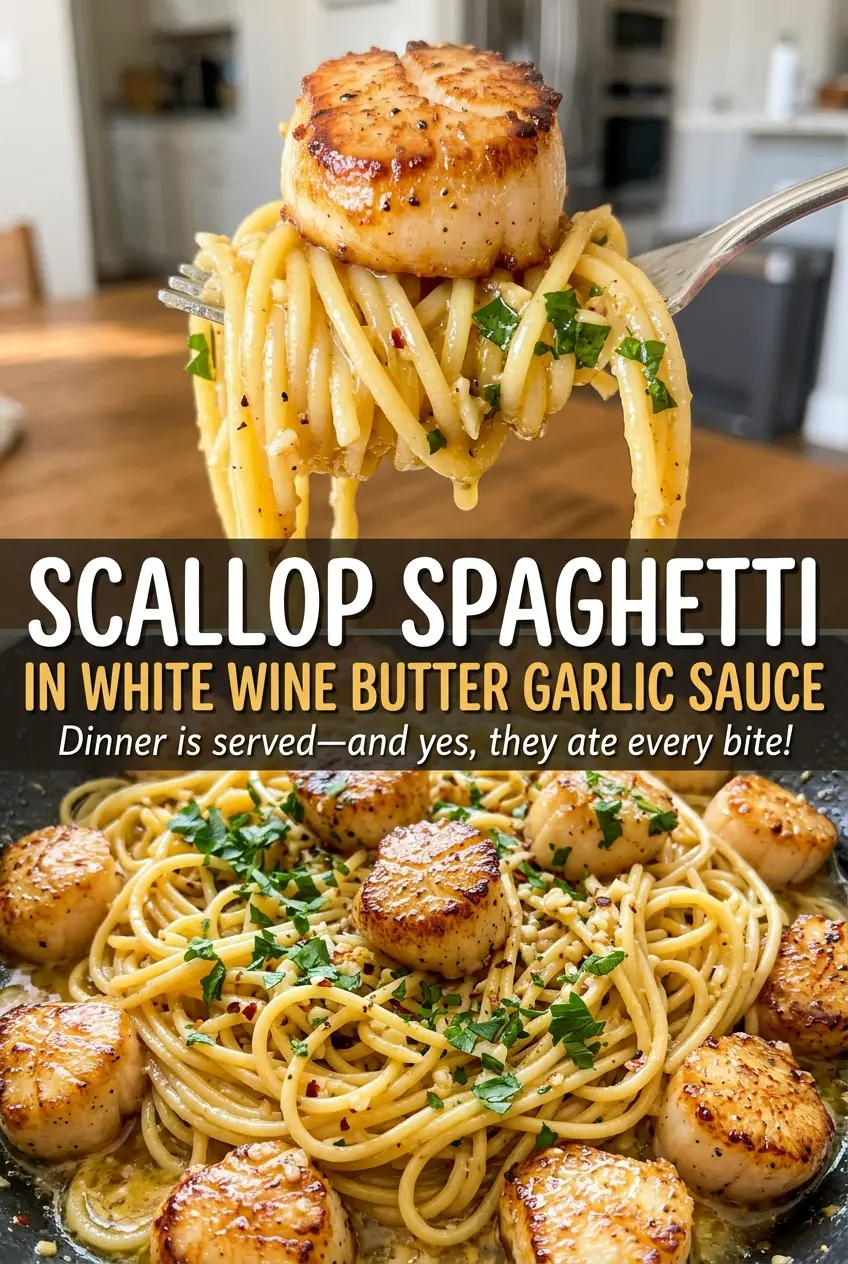
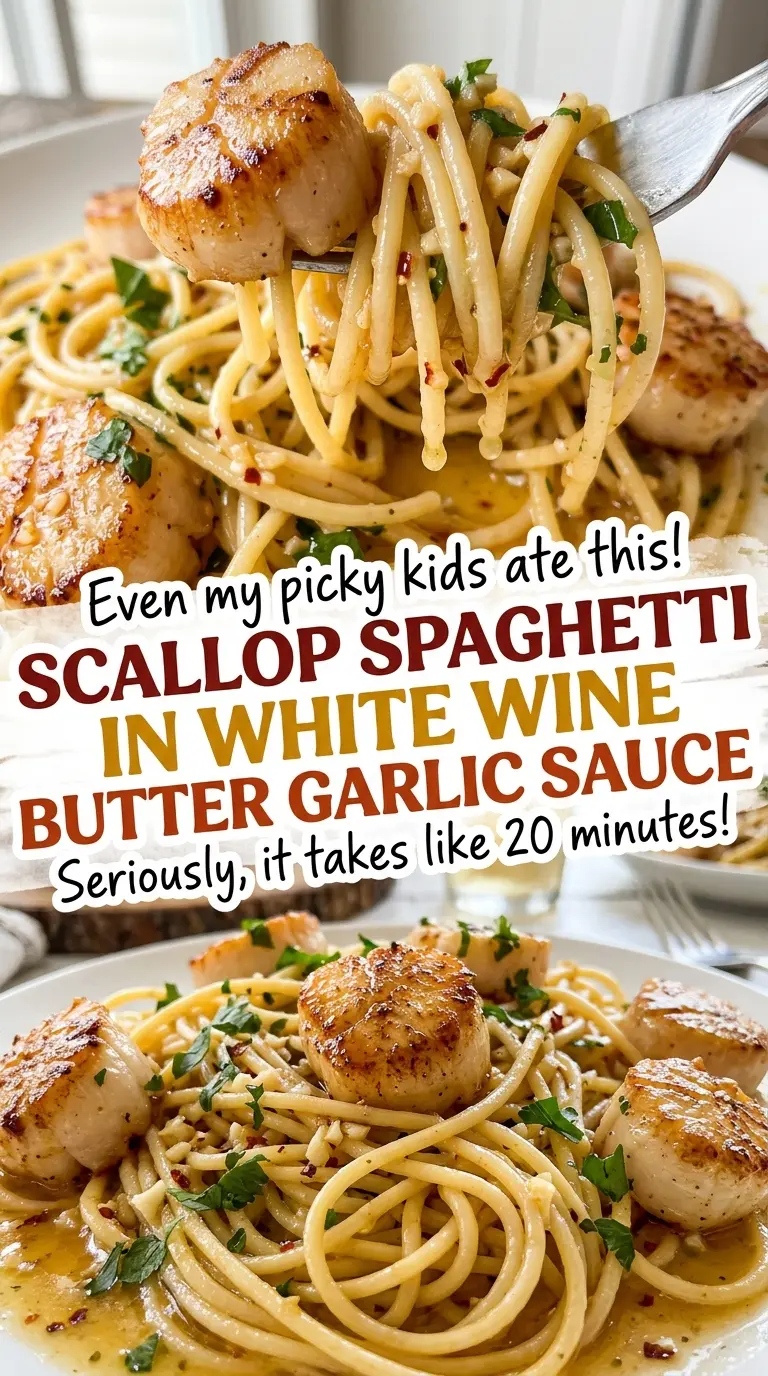
The first time I tried to sear too many scallops at once, the pan went quiet and they steamed instead of browning. Now I cook them in two batches, with room around each one, and get the golden edges that make this Scallop Spaghetti in White Wine Butter Garlic Sauce worth making. The centers stay tender, and the browned bits left behind turn into the start of the sauce.
Dry white wine loosens those savory bits, while butter and a little starchy pasta water help the sauce cling to every strand. I finish with lemon juice and parsley off the heat, so the sauce tastes bright rather than heavy. It’s a restaurant-style plate built from a short list of ingredients, with the scallops and silky noodles taking center stage.
Kitchen Note
Scoop out the pasta water before you drain the spaghetti. Once it’s down the sink, you can’t use that starchy water to help the butter sauce coat the noodles.
Save this scallop spaghetti for a night when you want golden seafood, a buttery white wine sauce, and pasta that catches every drop.
Why Scallops Need More Room Than You Think
Scallops brown when their surface can sear against the hot skillet. Put too many in at once and the pan loses heat; moisture builds up around the seafood, and the scallops start cooking in that moisture instead of developing a crust. You end up with pale scallops and less of the browned flavor you want in the sauce.
Use the 12-inch skillet and work in two uncrowded batches. Leave a little space between the scallops, and resist the urge to shift them around while the first side cooks. Once they’re seared, move them to a plate while you build the sauce in the same skillet. Those browned bits are useful, not burned-on mess; the wine loosens them, carrying their flavor into the butter sauce.
This order also keeps the scallops from sitting in the pan while the pasta finishes. They return only at the end, after the noodles are coated, so you can fold them in gently with their juices instead of cooking them through a second time.
What Each Ingredient Brings to the Scallop Pasta
- Large sea scallops — Their size gives them time to brown on the outside while the centers cook through. Remove the small side muscles and pat the scallops very dry; surface moisture works against a good sear. Freshness matters here more than an expensive brand.
- Spaghetti — Long strands catch the butter sauce as you toss them in the skillet. A standard package works well; choose a brand you like eating on its own, since the pasta is a big part of each bite. Linguine is an easy shape swap if that’s what’s in your pantry.
- Dry white wine — Wine brings acidity and helps lift the browned bits from the skillet. Pick a dry bottle rather than a sweet one, and there’s no need to seek out a special cooking wine. The wine’s character comes through, so use one whose taste you enjoy.
- Unsalted butter — It gives the sauce its rich body while keeping the seasoning easier to control. The quality of the butter is noticeable in a sauce this simple, but a regular grocery-store unsalted butter works just fine.
- Garlic — Minced garlic cooks quickly and perfumes the butter before the wine goes in. Fresh cloves give a cleaner, brighter flavor than a jarred substitute, and the short cooking time means the garlic should be ready before it browns.
- Lemon juice and fresh parsley — Lemon cuts through the butter, and parsley brings a fresh herbal finish. Use fresh lemon juice for the clearest flavor. Chop the parsley before you start cooking so it’s ready to stir in at the end.
How to Cook the Scallops and Finish the Wine Butter Sauce
Boil the Spaghetti and Save the Starchy Water
Bring 4 quarts of water to a boil in a 6-quart pot, then add the spaghetti and 1 tablespoon of kosher salt. Cook according to the package directions until al dente; the strands should have a little resistance in the center, not a hard core. Before draining, reserve 1/2 cup of the cooking water. Drain the spaghetti and keep it close by while you cook the scallops.
Sear the Scallops Until Browned and Opaque
Season the dry scallops with the remaining 1/2 teaspoon of kosher salt and the black pepper. Heat 1 tablespoon of olive oil in a 12-inch skillet over medium-high heat, then sear the scallops in two uncrowded batches for 2 to 4 minutes per side. Add the remaining olive oil for the second batch. Look for browned sides and opaque centers, and check that the center reaches 145°F before transferring the scallops to a plate.
Build the Sauce Around the Browned Bits
Reduce the heat to medium and melt the butter in the skillet. Stir in the minced garlic and cook for 30 seconds, just until fragrant; garlic that turns brown will taste bitter. Pour in the dry white wine and simmer for 2 to 3 minutes, scraping the browned bits from the bottom of the pan as the liquid bubbles.
Toss the Pasta, Then Fold the Scallops Back In
Add the reserved pasta water and spaghetti to the skillet. Toss for 1 to 2 minutes, until the sauce looks glossy and clings to the strands rather than pooling at the bottom. Take the skillet off the heat before stirring in the lemon juice and chopped parsley. Gently fold in the scallops and the juices from their plate so they stay intact.
Easy Ways to Adapt This Scallop Spaghetti
Make It Gluten-Free
Use gluten-free spaghetti in place of regular spaghetti and cook it according to its package directions. Gluten-free pasta can have a softer texture, so check it as it cooks and toss it gently in the skillet to keep the strands from breaking.
Switch to Linguine
Linguine gives you a slightly wider noodle while keeping the same long-pasta feel. Cook it to al dente following the package directions, then toss it in the skillet just as you would the spaghetti.
Leave Out the Parsley
For a simpler, more lemon-forward finish, omit the parsley and stir in the lemon juice after taking the skillet off the heat. You’ll lose the fresh herbal note, but the butter, garlic, wine, and lemon still make a balanced sauce.
Storage and Reheating
- Refrigerator: Store leftovers in an airtight container for 3 to 4 days. The pasta will absorb some sauce as it sits, and the scallops will be firmer after chilling.
- Freezer: I don’t recommend freezing the finished dish. The scallops can turn tough and the pasta soft when thawed and reheated.
- Reheating: Warm a portion gently in a covered skillet with a small splash of water, stirring carefully, until it reaches 165°F. High heat or prolonged reheating can make the scallops rubbery.
Questions That Come Up When Cooking Scallop Spaghetti
Scallop Spaghetti in White Wine Butter Garlic Sauce
Ingredients
Equipment
Method
- Bring the 4 quarts water to a boil in a 6-quart pot.
- Add the spaghetti and 1 tablespoon of the salt; cook according to the package directions until al dente.
- Reserve 1/2 cup of the pasta cooking water, then drain the spaghetti.
- Season the scallops with the remaining 1/2 teaspoon salt and the black pepper.
- Heat 1 tablespoon olive oil in a 12-inch skillet over medium-high heat.
- Sear the scallops in two uncrowded batches for 2 to 4 minutes per side, adding the remaining oil for the second batch, until browned, opaque throughout, and 145°F at the center.
- Transfer the scallops to a plate.
- Reduce the heat to medium and melt the butter in the skillet.
- Add the garlic and cook for 30 seconds.
- Pour in the wine and simmer for 2 to 3 minutes, scraping up the browned bits.
- Add the reserved pasta water and spaghetti, and toss for 1 to 2 minutes until the sauce coats the pasta.
- Remove the skillet from the heat, stir in the lemon juice and parsley, then gently fold in the scallops and their juices.