The cauliflower should give a little under a fork, not collapse, when it comes out of the pot. That quick head start matters here: the salmon needs only 20 to 25 minutes in the oven, and raw cauliflower would still be firm by the time the fish is ready. I layer the florets with uncooked salmon, then let a Dijon cheddar sauce carry both through the bake.
The sauce is thickened before it meets the baking dish, so it clings instead of pooling like milk around the vegetables. Panko tossed with melted butter turns crisp on top while the casserole bubbles underneath. After a short rest, each scoop holds together with tender cauliflower, moist salmon, and a golden crust.
Kitchen Note
I take the saucepan off the heat before the cheddar goes in. The residual heat melts it without keeping the cheese at a hard simmer, which helps the sauce stay smooth.
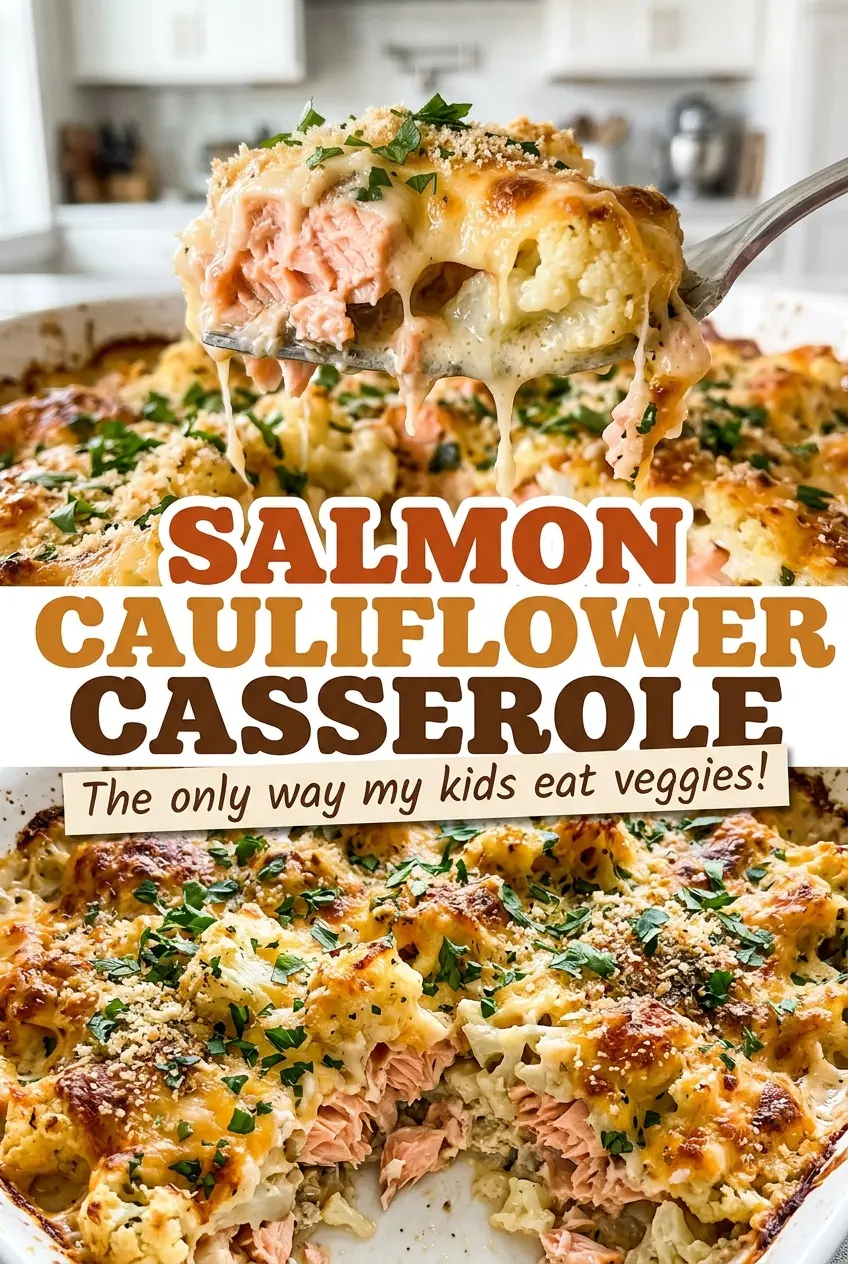
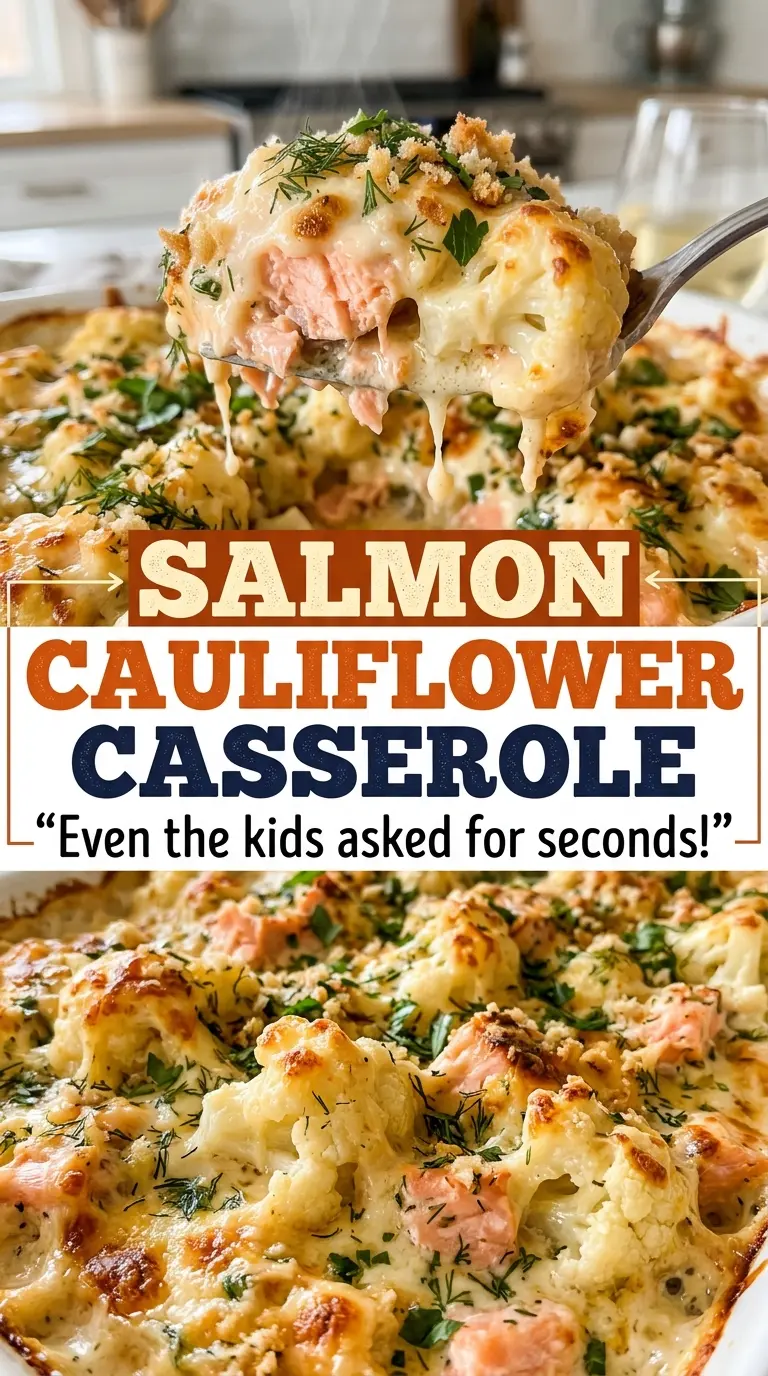
Save this Salmon Cauliflower Casserole for a cozy dinner with tender salmon, creamy cheddar sauce, and a crisp panko top.
Why the Cauliflower Goes In Before the Salmon
Cauliflower and salmon don’t need the same amount of oven time. The fish cooks through quickly, while raw cauliflower needs longer to turn tender. If both went into the dish raw, extending the bake for the vegetables would leave the salmon sitting in the oven too long. A brief boil gives the florets their head start, so the oven time can finish the fish and bring the sauce to a bubble without asking either ingredient to wait around.
That timing also gives you more control over the finished texture. The florets should be just tender after boiling, not soft enough to fall apart when you move them into the dish. They have another stretch in the oven, where they take on some of the cheddar sauce but still keep their shape. Drain them well before layering; excess water can thin the sauce and collect at the bottom instead of letting it cling to each piece.
What Sharp Cheddar and Panko Contribute to This Casserole
- Cauliflower — A fresh head gives you florets that hold their shape through both the quick boil and the bake. Cut them into similarly sized, bite-size pieces so they soften at the same pace. Broccoli is a workable swap, though it brings a greener flavor and a slightly different texture.
- Salmon — Skinless fillet with the pin bones removed keeps each serving easy to scoop and eat. Cut the fish into even pieces so they finish together. Steelhead trout is the closest swap; it has a similarly rich texture with a milder flavor.
- Whole milk — Whole milk gives the sauce enough body to coat the vegetables and fish. Two-percent milk works, but the sauce will be a little less rich. Avoid sweetened or flavored milk, which would throw off the savory sauce.
- Butter and flour — Together, these make the roux that thickens the milk before the cheese goes in. Use unsalted butter so the seasoning stays balanced. For a gluten-free version, use a cup-for-cup gluten-free flour blend in place of the all-purpose flour.
- Dijon mustard — Dijon gives the creamy sauce a gentle tang that keeps the cheddar from tasting flat. Whole-grain mustard is the closest swap if that’s what you have; its seeds will be visible in the sauce. Yellow mustard is sharper and less complex.
- Sharp cheddar — Sharpness gives the sauce a clear cheese flavor without relying on extra cheese. A standard grocery-store block works well; Monterey Jack melts smoothly if you prefer a milder sauce, but it won’t have the same tang.
- Panko — The larger, airy flakes give the top a crisp finish. Regular breadcrumbs can stand in, but the topping will be finer and denser. Toss the crumbs with melted butter so they toast evenly rather than staying dry in patches.
From Blanched Florets to a Golden Panko Lid
Give the Cauliflower a Short Boil
Heat the oven to 375°F and grease a 9×13-inch baking dish. Bring a large pot of water to a boil, add the cauliflower, and cook for 4 to 5 minutes, until just tender. Drain it well, then arrange the florets in the dish. Season the salmon with the salt and pepper, and scatter the pieces evenly over the cauliflower.
Thicken the Milk Before Adding Cheese
Melt the butter in a medium saucepan over medium heat, whisk in the flour, and cook for 1 minute. Gradually whisk in the milk, then bring the mixture to a gentle simmer. Cook for 4 to 6 minutes, whisking often, until the sauce is thick enough to coat the back of a spoon. Take the pan off the heat and stir in the Dijon, salt, pepper, and cheddar until the cheese melts.
Layer the Sauce and Buttery Panko
Pour the cheese sauce evenly over the salmon and cauliflower so the ingredients are covered across the dish. Stir the melted butter and panko together until the crumbs are evenly moistened. Scatter the mixture over the surface in an even layer; bare patches won’t brown as well as the covered areas.
Bake Until the Salmon Is Done, Then Rest
Bake for 20 to 25 minutes, until the sauce is bubbling and the topping is golden. Check the thickest salmon pieces with an instant-read thermometer; they should reach 145°F. Rest the casserole for 5 minutes before serving so the sauce settles around the pieces instead of running across the plate.
Two Smart Changes That Keep the Casserole Balanced
Make It Gluten-Free Without Losing the Crunch
Use a cup-for-cup gluten-free flour blend in place of the all-purpose flour, then choose gluten-free panko for the topping. The sauce may have a slightly different body depending on the blend, but the roux method still gives it a creamy base. Keep the other ingredients and bake cues the same.
Give the Sauce a Smoky Cheddar Edge
Swap the sharp cheddar for smoked cheddar to give the casserole a deeper, woodsy flavor. It still melts into the same sauce, but the finished dish tastes less tangy and more savory. Choose a smoked cheddar you enjoy on its own, since its flavor carries through the whole pan.
Storage and Reheating
- Refrigerator: Refrigerate leftovers within 2 hours and eat them within 3 days. The panko softens as it sits.
- Freezer: Freeze cooled portions in an airtight container for up to 2 months. Thaw overnight in the refrigerator; the sauce may separate slightly and the topping won’t stay crisp.
- Reheating: Warm covered in a 350°F oven until the center reaches 165°F. Uncover near the end if you’d like to dry the topping a little; avoid prolonged high-power microwaving, which can toughen the salmon.
Questions That Come Up While Making Salmon Cauliflower Casserole
Salmon Cauliflower Casserole
Ingredients
Equipment
Method
- Heat the oven to 375°F and grease a 9x13-inch baking dish.
- Bring a large pot of water to a boil, add the cauliflower, and cook for 4 to 5 minutes, until just tender; drain well.
- Arrange the cauliflower in the prepared dish.
- Season the salmon with 1/2 teaspoon salt and 1/4 teaspoon pepper.
- Scatter the salmon evenly over the cauliflower.
- Melt 3 tablespoons butter in a medium saucepan over medium heat, whisk in the flour, and cook for 1 minute.
- Gradually whisk in the milk, bring to a gentle simmer, and cook for 4 to 6 minutes, whisking often, until thickened enough to coat the back of a spoon.
- Remove the saucepan from the heat, then stir in the Dijon mustard, 1/2 teaspoon salt, 1/4 teaspoon pepper, and cheddar until the cheese melts.
- Pour the cheese sauce evenly over the salmon and cauliflower.
- Stir the melted butter and panko together, then scatter the mixture over the casserole.
- Bake for 20 to 25 minutes, until bubbling and golden and the thickest salmon pieces reach 145°F.
- Rest the casserole for 5 minutes before serving.