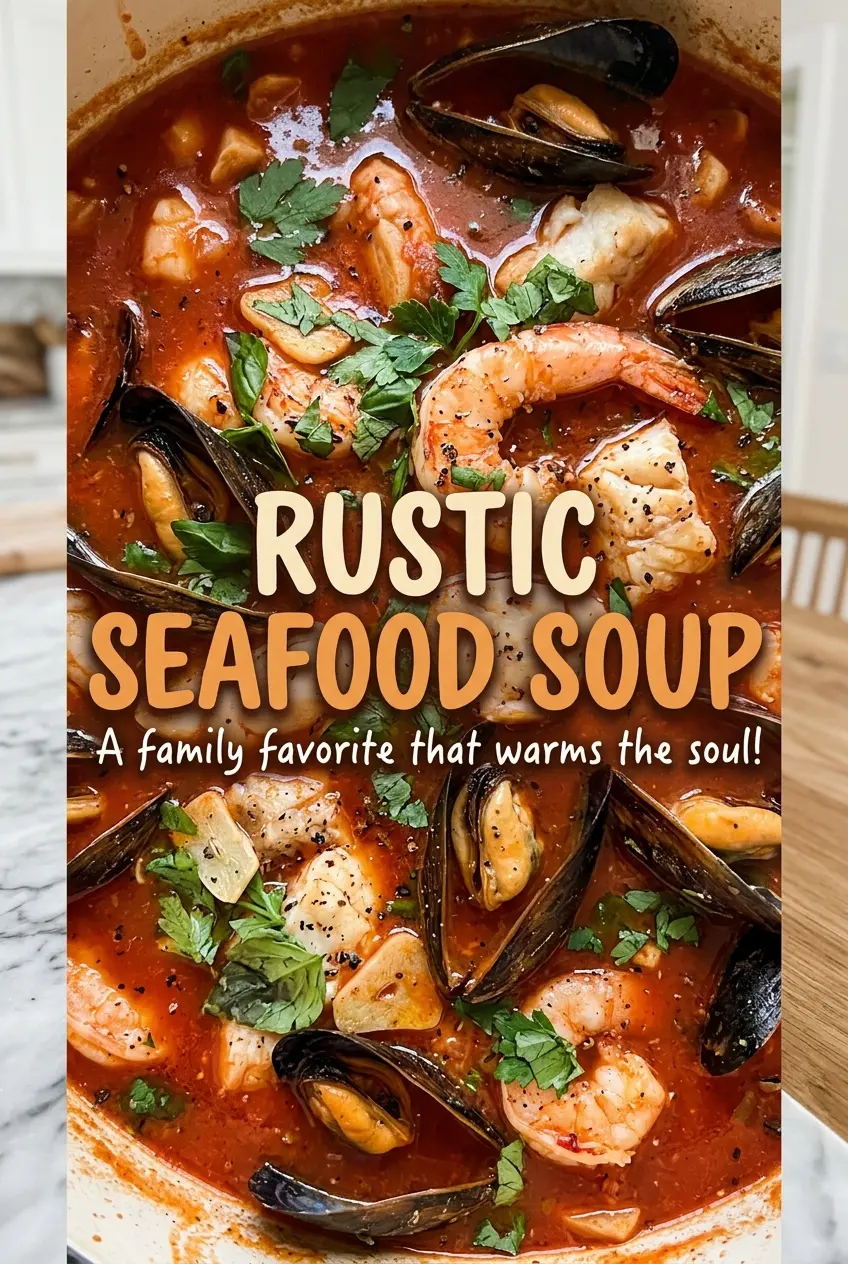
When the onion and fennel soften in the Dutch oven, their sweet, lightly anise-scented aroma starts to take the edge off the tomatoes before they even go in. That slow start is what gives this Rustic Seafood Soup a rounded broth instead of one that tastes like tomatoes poured over seafood. I like that the vegetables stay in the soup, too: they make each spoonful feel hearty without hiding the cod, shrimp, and clams.
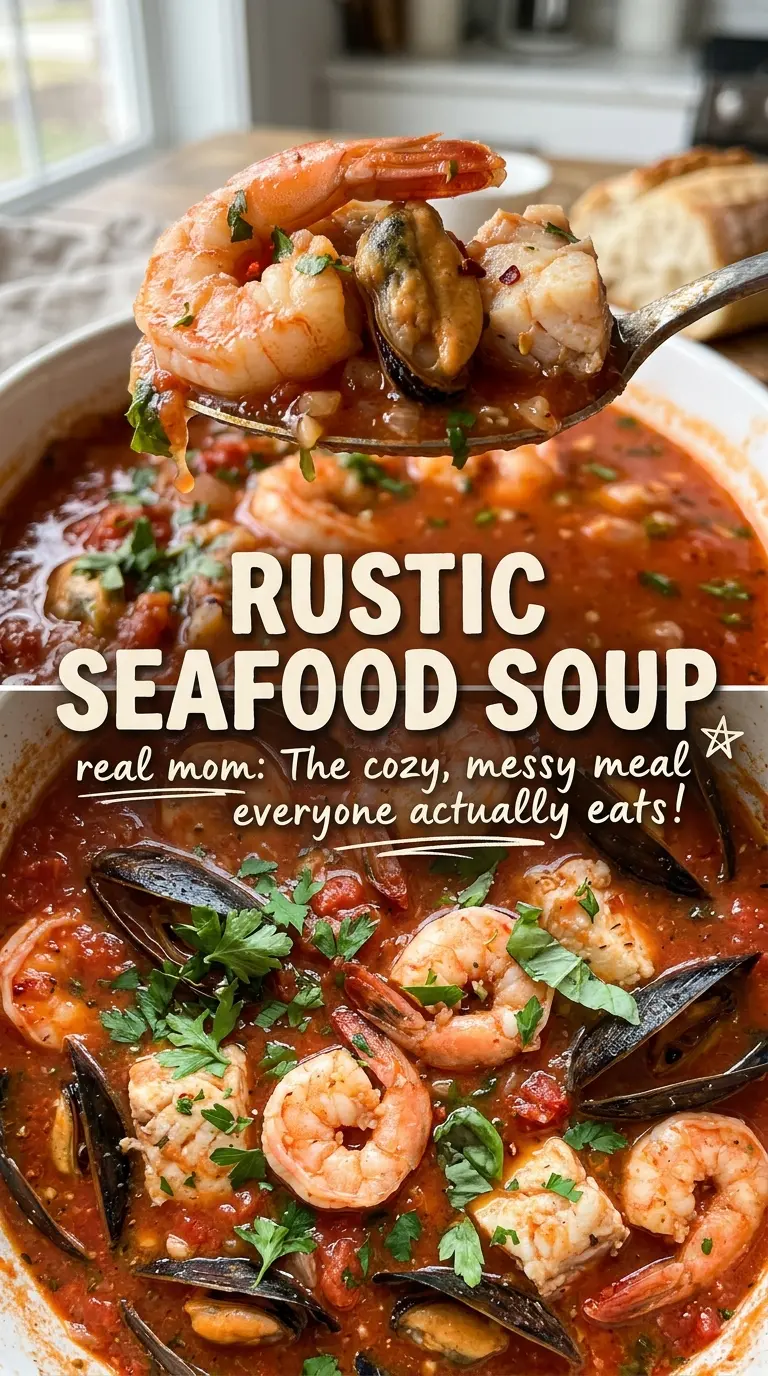
The seafood goes in near the end, after the tomato, stock, and clam juice have had time to simmer together. Cod needs a little head start, while shrimp and canned clams need only a few minutes in the hot broth. Keep the simmer gentle and the seafood stays tender, with the cod flaking into the rich, briny broth and the shrimp turning just opaque.
Kitchen Note
Drain the canned clams well before adding them. There’s already clam juice in the broth, and the extra liquid from the can can make the soup taste muddier and saltier than you want.
Save Rustic Seafood Soup for a night when you want a tomato-rich broth with tender cod, shrimp, and briny clams.
Fennel Is the Bridge Between the Tomato and the Seafood
Fennel can seem like an unusual addition if you’re used to a simple tomato-and-fish broth, but here it earns its place. Cooked with the onion and bell pepper, it softens and turns mellow; the licorice-like edge fades, leaving a gentle sweetness that sits comfortably between the tomatoes and the briny seafood. It doesn’t make the soup taste like a bowl of raw fennel.
That balance matters because the broth has several assertive ingredients: crushed tomatoes bring acidity, clam juice adds a salty, ocean-like note, and seafood stock provides the savory base. The softened vegetables give those flavors somewhere to land. Dice them into similar-sized pieces so they soften at about the same pace, and give them the full cooking time before adding the garlic and dried herbs. You’ll get a broth that tastes layered rather than sharp, with enough character to stand up to the fish.
What Each Ingredient Brings to This Tomato-and-Seafood Broth
- Fennel, onion, and red bell pepper — These vegetables make the aromatic base, not just extra bits in the bowl. A firm fennel bulb with fresh-looking fronds is a good sign of quality, though the fronds aren’t needed here. Cut the vegetables into even dice so one doesn’t turn mushy while another is still firm.
- Crushed tomatoes — Their thick texture gives the broth body and helps it cling to pieces of seafood. Canned tomatoes are a practical choice here; use a familiar brand with a flavor you like, since simmering concentrates their taste. Diced tomatoes won’t give quite the same smooth, cohesive broth.
- Seafood stock and clam juice — Together, they make the liquid taste distinctly coastal without relying on the canned clams alone. Low-sodium seafood stock leaves more room to control the seasoning, while clam juice adds a concentrated briny note. If the stock tastes especially salty, take that into account before adding any extra salt at the table.
- Cod, shrimp, and chopped clams — Cod gives the soup tender, flaky pieces; large shrimp add a firmer bite, and canned clams bring brininess throughout. Choose cod fillets that smell clean and mild, and thaw frozen seafood in the refrigerator before cooking. Pat thawed fish and shrimp dry so excess water doesn’t dilute the broth.
- Garlic, oregano, red pepper flakes, and parsley — Garlic and oregano deepen the tomato base, while the pepper flakes add a low, warm heat. Fresh parsley belongs at the end, where its clean, green flavor stays bright. Dried oregano is well suited to the simmering broth, so there’s no need to seek out fresh herbs for that part.
- Dry white wine — A dry wine gives the broth a little acidity and complexity as it reduces. Use a wine you’d be comfortable drinking; an inexpensive dry white works well, but a sweet wine can push the tomato broth in the wrong direction.
Build the Broth Before the Seafood Goes In
Soften the vegetables without browning them
Heat the olive oil in a 6-quart Dutch oven over medium heat, then add the diced onion, fennel, bell pepper, and kosher salt. Cook for 7 to 8 minutes, stirring occasionally, until the vegetables have softened. They should look glossy and relaxed, not browned at the edges. If they start catching on the bottom, lower the heat slightly; the goal is a soft, sweet base rather than a sear.
Wake up the garlic, herbs, and wine
Stir in the garlic, red pepper flakes, oregano, and black pepper, and cook for 30 seconds, just until fragrant. Garlic can turn bitter if it browns, so don’t leave it sitting in the hot oil. Pour in the dry white wine and let it simmer for 2 to 3 minutes, until it has reduced by about half. You’ll still see some liquid in the pot, but the sharp smell of raw wine should have eased.
Give the tomato broth time to come together
Add the crushed tomatoes, seafood stock, clam juice, and bay leaf. Bring the pot to a boil, then reduce the heat and simmer uncovered for 20 minutes. Keep the bubbles gentle rather than letting the broth boil hard; a steady simmer lets the flavors mingle without splashing tomato around the stove. The broth should look cohesive and smell savory, with the vegetables still visible.
Add the seafood in stages, then finish fresh
Lower the cod pieces into the gently simmering broth and cook for 3 minutes. Add the shrimp and drained chopped clams, then simmer for 3 to 4 minutes, until the shrimp are opaque and the cod reaches 145°F and flakes easily. Avoid stirring vigorously, which can break the cod into small pieces before it reaches the table. Remove the bay leaf, stir in the parsley, and serve.
Small Changes That Keep the Seafood Broth in Balance
Make the broth gluten-free
Replace the seafood stock with an equal amount of certified gluten-free fish stock, and choose gluten-free-labeled clam juice and tomatoes. The soup stays hearty, though the broth may taste a little less shellfish-forward depending on the fish stock you use.
Keep the soup mild
Leave out the red pepper flakes for a gentler bowl. The garlic, oregano, fennel, and briny seafood still give the broth plenty of character; you’ll just lose the faint warmth at the back of each spoonful.
Use seafood stock in place of clam juice
Replace the clam juice with an equal amount of seafood stock if you want a less pronounced clam flavor. The broth will be milder and a little less briny, while the canned clams still add seafood flavor to the finished soup.
Storage and Reheating
- Refrigerator: Store in an airtight container for up to 3 days. The seafood softens a little after chilling and reheating.
- Freezer: Freeze in airtight freezer-safe containers for up to 2 months. Thaw overnight in the refrigerator; the broth freezes well, though the seafood’s texture will be softer.
- Reheating: Warm slowly in a saucepan until the soup reaches 165°F throughout. Avoid a hard boil, which can make the shrimp and cod tough.
Questions That Come Up When the Seafood Goes Into the Pot
Rustic Seafood Soup
Ingredients
Equipment
Method
- Heat the olive oil in a 6-quart Dutch oven over medium heat, then add the onion, fennel, bell pepper, and salt and cook for 7 to 8 minutes, stirring occasionally, until softened.
- Stir in the garlic, red pepper flakes, oregano, and black pepper and cook for 30 seconds, until fragrant.
- Pour in the white wine and simmer for 2 to 3 minutes, until reduced by about half.
- Add the crushed tomatoes, seafood stock, clam juice, and bay leaf; bring to a boil.
- Reduce the heat and simmer uncovered for 20 minutes.
- Add the cod and simmer gently for 3 minutes.
- Add the shrimp and drained clams and simmer for 3 to 4 minutes, until the shrimp are opaque and the cod reaches 145°F and flakes easily.
- Remove the bay leaf, stir in the parsley, and serve.