When a knife slips into the thickest part of an acorn squash half, the flesh is tender, but the half still holds its shape. That’s the point I look for with this roasted acorn squash with brown sugar: soft enough to scoop, sturdy enough to lift from the pan. The squash’s natural sweetness gets a buttery brown-sugar coating, while a little salt and black pepper keep it from tasting like dessert.
I keep the halves cut-side up so the butter and sugar stay on the flesh instead of running into the cavity. The squash goes into a 400°F oven, and the timing lands between 40 and 50 minutes, depending on how quickly each half softens. Give the pan a five-minute rest before serving; the tender centers and glossy tops are worth the short wait.

Kitchen Note
Let the squash rest for the full five minutes before serving. The flesh is especially soft straight from the oven, and that pause makes the halves easier to move without breaking them.
Save this roasted acorn squash with brown sugar for a simple side with tender centers and a buttery, lightly sweet finish.
Why Acorn Squash Size Matters More Than a Darkened Surface
Two medium acorn squash, each about 1½ pounds, give you halves that roast in a similar window. A much smaller squash has less flesh to soften, while a larger one has thicker areas that take longer to become tender. Choosing squash close to that size keeps the 40-to-50-minute range useful instead of turning it into guesswork.
Color can be misleading with a brown-sugar topping. The sugar may look darker before the thickest part of the squash has softened, so judge doneness by the flesh rather than the surface alone. This is especially helpful when the halves aren’t identical; one side of the baking sheet or one squash may be ready before another.
At the store, look for squash that feels firm and heavy for its size, without soft or sunken spots. A little variation in shape is fine. What matters most here is that the halves have enough room on the pan to sit cut-side up and roast without being crowded together.
What the Butter and Brown Sugar Do on Acorn Squash
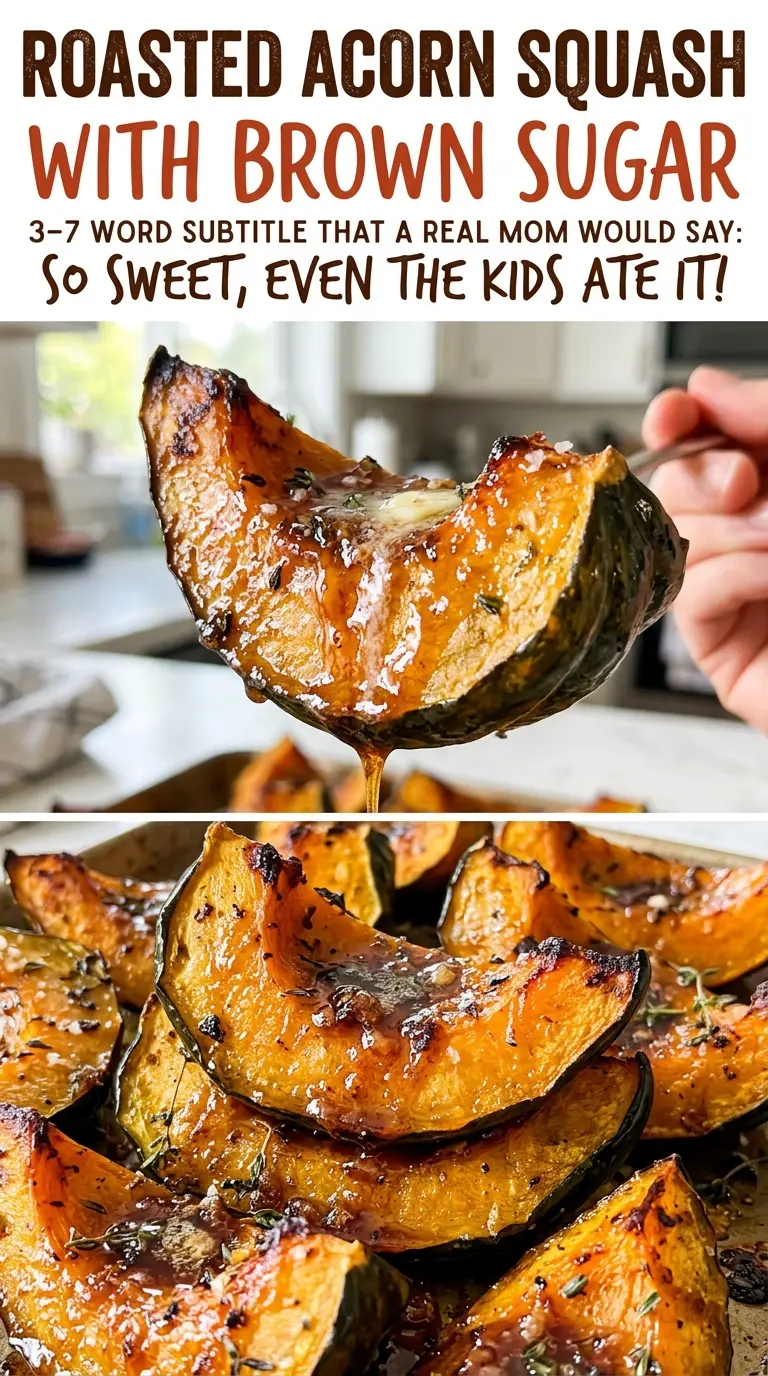
- Acorn squash — Its firm flesh softens in the oven while the ridged shell keeps each half together. Choose firm squash; there’s no need to pay extra for a particular variety or appearance.
- Unsalted butter — Melted butter carries the brown sugar and seasonings across the cut surface. A basic grocery-store butter works well here; unsalted keeps the seasoning level in the cook’s hands.
- Light brown sugar — The packed sugar gives the top a gentle sweetness and helps the cut surface take on a richer roasted finish. A fresh, soft package is easiest to stir into the butter; break up any hard clumps before brushing.
- Kosher salt and ground black pepper — Salt sharpens the squash’s sweetness, while pepper adds a mild savory edge. Use the specified ground pepper rather than large cracked pieces, which can dominate a bite.
These ingredients are doing different jobs, so I wouldn’t treat the brown sugar as a substitute for seasoning or the butter as a garnish to add at the table. Stirring them together first spreads the sweet, buttery coating across the exposed flesh in one pass.
From Halving to Tender Flesh: The Roasting Cues That Matter
Cut Lengthwise and Clear the Cavities
Heat the oven to 400°F and set out a rimmed baking sheet. Cut each squash in half lengthwise, then scoop out the seeds and stringy pulp until the cavity is clear. Work slowly through the tough shell rather than forcing the knife if it catches. Set all four halves cut-side up on the pan.
Stir the Coating Before Brushing
Stir the melted butter, packed light brown sugar, kosher salt, and ground black pepper together. Keep stirring until the sugar and seasonings are distributed through the butter rather than sitting in separate patches. Brush the mixture over the cut surfaces, including the edges around each cavity. An even coating gives every serving some of the sweet-and-savory mixture.
Roast Until a Knife Enters Easily
Roast for 40 to 50 minutes. Start checking the thickest part of the flesh with a knife; it should pierce easily when the squash is tender. If it still feels firm, return the pan to the oven and check again rather than judging by the color of the sugar. Let the squash rest for five minutes before serving.
How to Make This Squash Less Sweet or Dairy-Free
A Less-Sweet, Savory Finish
Leave out the brown sugar and brush the cut surfaces with the melted butter, salt, and pepper. The squash will taste more savory and less glazed, while keeping the same tender roasted flesh.
A Dairy-Free Version
Leave out the butter and sprinkle the brown sugar, salt, and pepper over the cut surfaces instead. The sugar won’t coat as evenly without butter, but the squash still roasts tender and keeps its lightly sweet finish.
Storage and Reheating
- Refrigerator: Cool leftovers and refrigerate them within two hours. Store covered for up to 3 to 4 days; the cut surfaces will soften in storage.
- Freezer: Cooked squash freezes best with the flesh scooped from the shell and sealed in an airtight container for up to 2 to 3 months. Thaw it in the refrigerator; the thawed flesh will be softer than freshly roasted squash.
- Reheating: Warm the squash in a covered baking dish at 350°F until it reaches 165°F. Avoid leaving it uncovered for a long stretch, which can dry the edges before the center is hot.
Questions That Come Up While Roasting Acorn Squash
Roasted Acorn Squash with Brown Sugar
Ingredients
Equipment
Method
- Heat the oven to 400°F and set out a rimmed baking sheet.
- Cut each squash in half lengthwise.
- Scoop out the seeds and stringy pulp.
- Arrange the squash halves cut-side up on the baking sheet.
- Stir together the melted butter, brown sugar, salt, and pepper.
- Brush the mixture over the cut surfaces of the squash.
- Roast for 40 to 50 minutes, until the flesh is tender when pierced with a knife.
- Rest for 5 minutes before serving.