The first beef cubes should give a sharp hiss when they hit the hot oil; if the pot goes quiet, they’re crowded. I brown them in batches so each piece gets a dark crust instead of turning gray in its own steam. That little bit of patience gives this red wine beef stew with potatoes and carrots a deeper, savory base.
The flour goes into the softened onion before the wine, so it has a minute to coat the aromatics and cook before the liquid arrives. Then the wine lifts the browned bits from the bottom of the Dutch oven, while the broth and a long, covered simmer turn the beef tender. Potatoes and carrots go in later, so they have time to soften without spending the whole afternoon in the pot. The finished stew has a rich broth, fork-tender beef, and vegetables that still hold their shape.

Kitchen Note
Pat the beef dry before it goes into the pot. Moisture on the surface slows browning, and those browned edges are worth taking the extra moment for.
Save this red wine beef stew for a slow-simmered dinner with tender chuck, potatoes, and carrots in a savory wine broth.
Why the Flour Goes In Before the Wine
A stew can taste rich and still have broth that feels thin or separate. Here, the flour is stirred through the onion mixture before any liquid is added. It coats the softened onion and tomato paste, then cooks briefly so the finished broth thickens evenly rather than tasting like raw flour.
Once the wine hits the pot, scrape the bottom as it bubbles and loosens the browned bits left by the beef. Those bits aren’t just stuck-on residue; they carry the concentrated flavor from browning, and the wine helps bring them into the broth. Adding the beef broth after that gives the flour time to disperse through the liquid, while the covered simmer lets the chuck soften without the pot reducing too quickly.
This order also makes the stew forgiving to stir. The sauce begins to come together before the beef returns, and the vegetables join only after the meat has had its long stretch of cooking. You get a broth that clings lightly to the beef and vegetables, not a paste-thick gravy.
What the Chuck, Wine, and Potatoes Each Bring
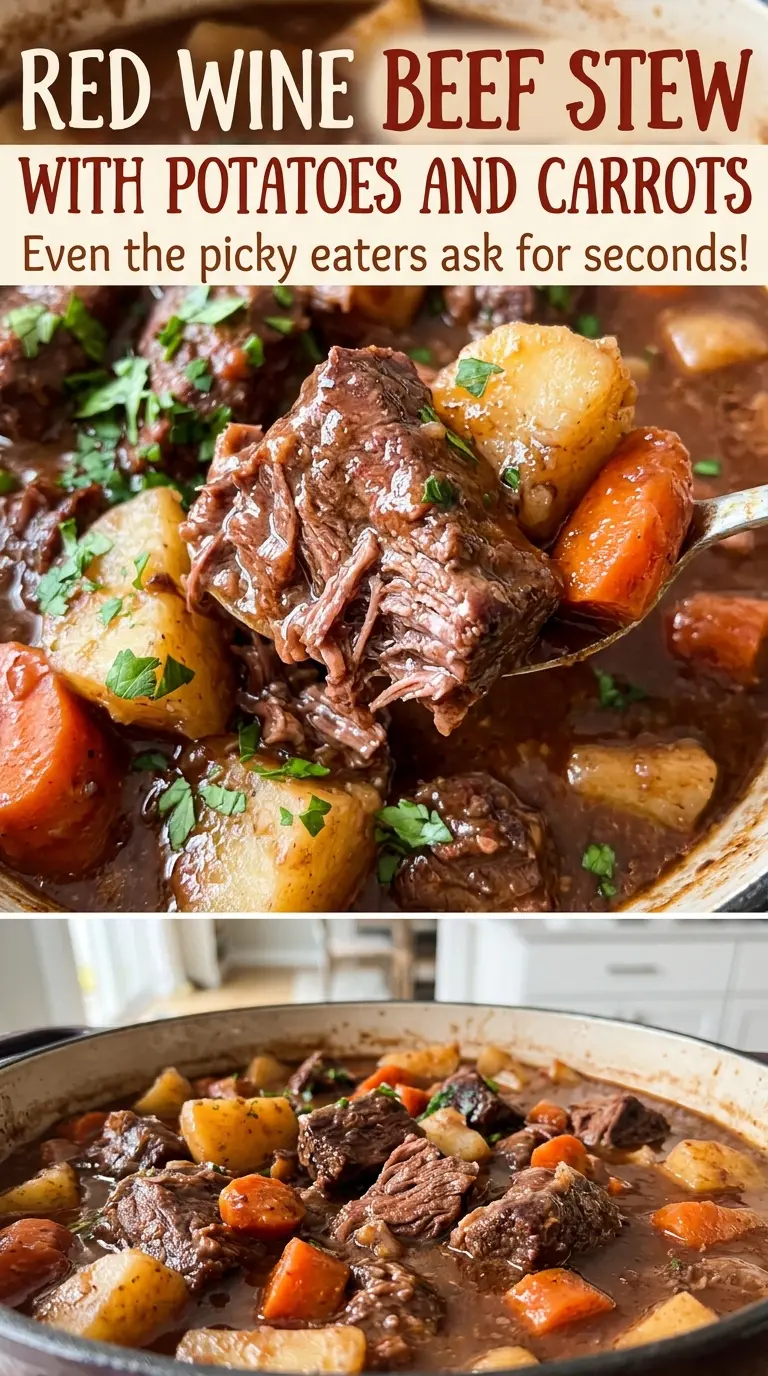
- Beef chuck — Its connective tissue softens during the long simmer, giving you tender pieces and a fuller-tasting broth. Keep the cubes close in size so they cook at a similar pace; a lean cut won’t give the same tender, succulent result.
- Dry red wine — Choose a red wine that isn’t sweet; it brings acidity and depth to the broth. It doesn’t need to be expensive, but skip a bottle you wouldn’t want to drink. The most useful no-alcohol swap is beef broth, though the stew will taste less bright.
- Yukon Gold potatoes — They turn creamy inside while staying intact when cut into substantial pieces. Red potatoes are a sound swap if you prefer a firmer, waxier bite; russets are more likely to break down in the simmer.
- Carrots and yellow onion — The onion softens into the base, while the carrots bring sweetness and a tender bite. Cut the carrots into even pieces so they finish together, and use a yellow onion for its mellow, savory flavor.
- Tomato paste and flour — Tomato paste adds concentrated savoriness, and flour gives the broth body. Gluten-free cooks can use a gluten-free 1:1 all-purpose flour blend in place of the regular flour; stir it into the onion mixture just as you would the original.
- Thyme and bay leaves — Dried thyme gives the broth an earthy note, and bay leaves add a gentle background aroma as the stew simmers. Remove the bay leaves before serving, since they’re there to infuse the liquid rather than be eaten.
Build the Stew in Stages, Not All at Once
Brown the Beef Without Crowding the Pot
Season the dried beef with salt and pepper, then heat the oil in a 6-quart Dutch oven over medium-high heat. Brown the cubes in batches for 2 to 3 minutes per side, transferring each batch to a plate as it develops a deep brown crust. If the beef releases liquid and starts steaming, give the pot more room by cooking fewer pieces at a time. Leave the browned bits on the bottom; they’ll become part of the broth.
Soften the Aromatics and Cook the Flour
Lower the heat to medium and cook the chopped onion for 5 minutes, stirring occasionally, until softened. Add the garlic and tomato paste, then cook for 1 minute, stirring so the paste darkens slightly without sticking. Sprinkle in the flour and stir for another minute to coat the onion mixture. If dry flour gathers in clumps, keep stirring until it’s incorporated before adding the wine.
Deglaze and Slowly Tenderize the Chuck
Pour in the dry red wine and scrape across the bottom of the pot to loosen the browned bits. Stir in the beef broth, thyme, and bay leaves, then return the beef and any juices from the plate. Bring the stew to a simmer, cover, and cook over low heat for 1 1/2 to 2 hours, stirring occasionally. Keep it at a gentle simmer rather than a rolling boil; the beef should be nearly fork-tender before the vegetables go in.
Add the Vegetables and Let the Pot Rest
Stir in the potatoes and carrots, cover the pot again, and simmer for 30 to 40 minutes. The vegetables should be tender when pierced, and the beef should yield easily to a fork. If the potatoes are still firm, give the stew more time within that cooking range rather than turning up the heat. Remove and discard the bay leaves, then let the stew rest for 5 minutes before serving.
Three Changes That Keep the Stew Comforting
Make It Gluten-Free
Replace the all-purpose flour with the same amount of a gluten-free 1:1 all-purpose flour blend. Stir it into the onion mixture and cook it for the same minute before adding the wine; the broth may have a slightly different, less silky texture depending on the blend.
Use Beef Broth Instead of Wine
For a stew without wine, replace the wine with an equal amount of beef broth. The result will be less tangy and less complex, but the beef, vegetables, and herbs still make a hearty stew.
Choose Red Potatoes for a Firmer Bite
Swap the Yukon Gold potatoes for the same weight of red potatoes, cut to the same size. Their waxier texture holds together well in the broth, though you’ll lose some of the soft, creamy interior Yukon Golds bring.
Storage and Reheating
- Refrigerator: Refrigerate in a covered container within 2 hours and use within 3 to 4 days. The potatoes will soften a little as they sit.
- Freezer: Freeze in airtight portions for up to 3 months. Thaw overnight in the refrigerator; the potatoes may be softer after thawing.
- Reheating: Warm gently in a saucepan over low heat, stirring occasionally, until the stew reaches 165°F. Avoid a hard boil, which can break up the vegetables and make the beef seem stringy.
The Questions That Come Up Before the First Simmer
Red Wine Beef Stew with Potatoes and Carrots
Ingredients
Equipment
Method
- Pat the beef dry with paper towels and season it with the salt and pepper.
- Heat the oil in a 6-quart Dutch oven over medium-high heat.
- Brown the beef in batches for 2 to 3 minutes per side, transferring each batch to a plate.
- Add the onion to the pot and cook over medium heat for 5 minutes, stirring occasionally, until softened.
- Add the garlic and tomato paste and cook for 1 minute.
- Sprinkle the flour over the onion mixture and stir for 1 minute.
- Pour in the red wine and scrape up any browned bits from the bottom of the pot.
- Stir in the beef broth, thyme, and bay leaves.
- Return the beef and any accumulated juices to the pot and bring to a simmer.
- Cover and simmer over low heat for 1 1/2 to 2 hours, stirring occasionally, until the beef is nearly fork-tender.
- Stir in the potatoes and carrots.
- Cover and simmer for 30 to 40 minutes, until the vegetables are tender and the beef is fork-tender.
- Remove and discard the bay leaves.
- Let the stew rest for 5 minutes before serving.