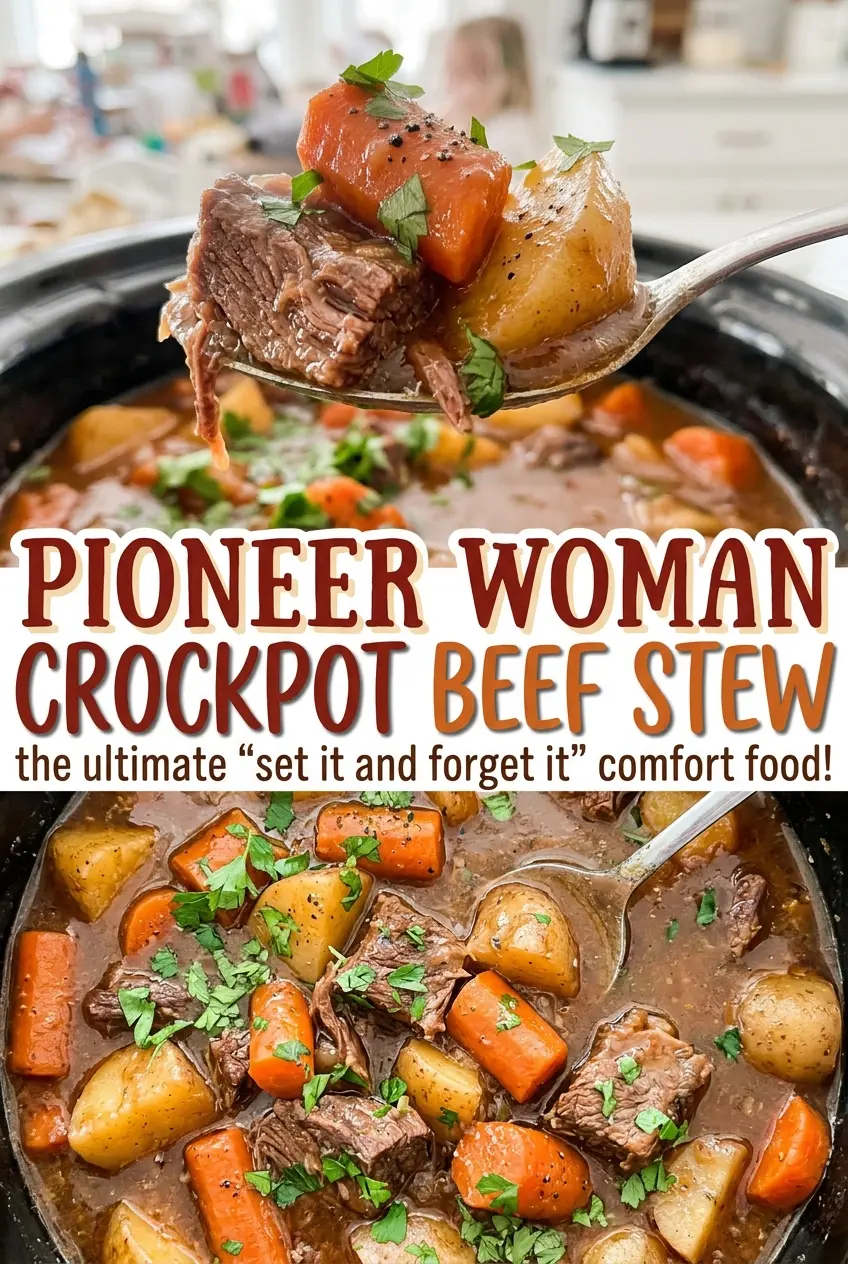
When the flour-coated beef hits a hot skillet, it should sizzle instead of quietly steaming; that sound tells me the pan is hot enough to brown the meat. I brown it in batches for this Pioneer Woman Crockpot Beef Stew, then let the slow cooker take over while the chuck softens beside Yukon Gold potatoes and carrots. It’s a full pot of supper without asking you to hover over it all afternoon.
Chuck is a good match for a long, gentle cook because it starts out firm and becomes fork-tender as it cooks. I cut it into even pieces so they cook at a similar pace, and I keep the vegetables in substantial chunks so they hold their shape beside the beef. The finished stew has tender pieces, soft-edged vegetables, and broth that coats the spoon.
Kitchen Note
Whisk the cornstarch and cold water until the slurry is completely smooth before it goes into the stew. Give it the full 15–20 minutes on HIGH; the broth thickens as it heats, and the finished texture is worth that last stretch.
Save this Pioneer Woman Crockpot Beef Stew for a cozy dinner with tender chuck, Yukon Gold potatoes, and thick, savory broth.
Why Chuck Turns Tender Only After the Slow Cooker Has Done Its Work
Chuck has enough connective tissue to make it a poor choice for a quick sear-and-serve dinner, but that same quality suits a long cook. Given time at a steady temperature, the firm pieces soften until a fork slips in easily. Leaner beef can cook through in the slow cooker, but it won’t give you the same forgiving, tender texture.
The size of the cubes matters, too. Pieces cut to about the same size finish at roughly the same time, while very small pieces are more likely to lose their shape during a long stretch in the cooker. I cut the chuck into 1 1/2-inch cubes and keep the potatoes similarly substantial. That balance leaves you with distinct bites of beef and vegetables instead of a pot where everything has melted into the broth.
What the Chuck, Potatoes, and Broth Each Bring to This Stew
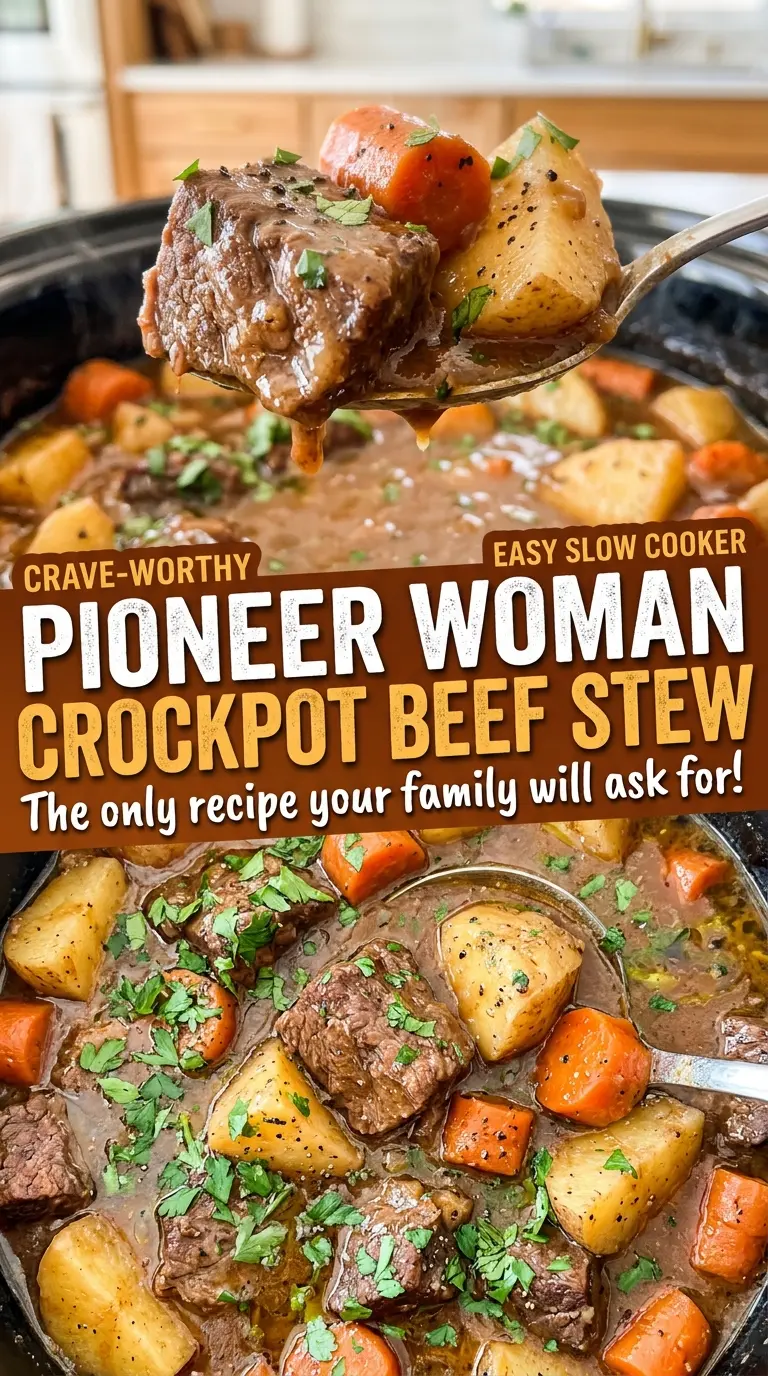
- Beef chuck — Look for chuck with visible marbling rather than a very lean piece; the fat and connective tissue help it stay tender through the long cook. Patting the cubes dry helps the flour cling and gives the skillet a better chance to brown them.
- Yukon Gold potatoes — Their creamy texture suits stew, and they hold up better than a delicate potato cut into small pieces. Keep the pieces evenly sized; there’s no need to peel them if you like the skin on.
- Carrots and yellow onion — These bring sweetness and a savory base as they cook. Fresh carrots cut into sturdy pieces hold their shape; the onion can be chopped without worrying about perfectly even edges.
- All-purpose flour — The flour coats the beef before browning and contributes body to the stew. A specialty flour isn’t needed; if you need a gluten-free version, see the adaptation below rather than assuming this ingredient is interchangeable.
- Beef broth, tomato paste, and Worcestershire sauce — Together they make a savory, rounded cooking liquid. Low-sodium broth gives you more control over the final saltiness, while tomato paste and Worcestershire add depth without making the stew taste strongly of tomato.
- Thyme, bay leaves, and black pepper — These season the broth as it cooks. Dried thyme is practical here, and whole bay leaves are easy to remove before serving; don’t leave them in the finished bowls.
Build the Beef Stew in the Skillet, Then Let the Cooker Finish It
Coat the Beef Evenly
Pat the chuck dry, then toss it with the flour, 1 teaspoon of the kosher salt, and the black pepper. Turn the pieces until the coating looks even, with no big pockets of loose flour. Dry surfaces help the coating stick instead of turning pasty. If flour collects at the bottom of the bowl, give the beef another toss before it goes into the skillet.
Brown in Batches Without Crowding the Pan
Heat the neutral oil in a large skillet over medium-high heat. Brown the beef in batches for about 6–8 minutes per batch, turning it so several sides develop a deep brown color. Leave space between pieces; a crowded skillet traps moisture and steams the meat instead of browning it. Transfer each batch to a 6-quart slow cooker as it’s ready.
Layer the Vegetables and Seasoned Broth
Add the potatoes, carrots, chopped onion, and minced garlic to the slow cooker with the beef. Whisk the beef broth with the tomato paste, Worcestershire sauce, dried thyme, and remaining 1/2 teaspoon of salt until the paste is dispersed. Pour the mixture over the beef and vegetables, then add the bay leaves. Check that the paste isn’t stuck in a lump at the bottom of the bowl before pouring.
Cook Until the Beef and Potatoes Give Easily
Cover and cook on LOW for 8–9 hours or HIGH for 4–5 hours. The beef should be fork-tender, and a fork should slide into the potatoes without finding a firm center. Keep the lid on while the stew cooks so the slow cooker can hold its heat. Remove the bay leaves before thickening.
Thicken the Broth at the Finish
Whisk the cornstarch with the cold water until smooth, then stir the slurry into the stew. Cover and cook on HIGH for 15–20 minutes, until the broth has thickened. The change is subtle at first, so check the broth near the end rather than expecting it to thicken the moment the slurry goes in. Stir gently before serving so the beef and vegetables stay in generous pieces.
Two Useful Ways to Adapt This Slow Cooker Stew
A Gluten-Free Coating
Replace the all-purpose flour with cornstarch for a light coating, shaking off any excess before browning. Keep the separate cornstarch-and-water slurry for the finish. Choose Worcestershire sauce labeled gluten-free as well; the stew will have a slightly different, less floury coating but still gets its thickened broth at the end.
A Rustic, Potato-Thickened Finish
For a less glossy broth, skip the cornstarch slurry and press a few cooked potato pieces against the side of the slow cooker, then stir them into the liquid. The starch from the potatoes gives the broth a softer, more rustic body, though it won’t thicken as evenly as the slurry.
Storage and Reheating
- Refrigerator: Store in a covered container for 3–4 days. The potatoes soften a little more as they sit, and the broth may thicken further.
- Freezer: Freeze in airtight containers for up to 2–3 months. The beef freezes well, though the potatoes may be softer after thawing; thaw overnight in the refrigerator.
- Reheating: Warm gently in a saucepan over medium-low heat, stirring now and then, until the stew reaches 165°F. Avoid a hard boil, which can break apart the potatoes.
Questions That Come Up When Making Crockpot Beef Stew
Pioneer Woman Crockpot Beef Stew
Ingredients
Equipment
Method
- Pat the beef dry.
- Toss the beef with the flour, 1 teaspoon of the salt, and the pepper until evenly coated.
- Heat the oil in a large skillet over medium-high heat and brown the beef in batches, turning to brown several sides, about 6–8 minutes per batch.
- Transfer each batch to a 6-quart slow cooker.
- Add the potatoes, carrots, onion, and garlic to the slow cooker.
- Whisk the broth with the tomato paste, Worcestershire sauce, thyme, and remaining 1/2 teaspoon salt.
- Pour the broth mixture over the beef and vegetables.
- Add the bay leaves.
- Cover and cook on LOW for 8–9 hours or HIGH for 4–5 hours, until the beef is fork-tender and the potatoes are tender.
- Remove the bay leaves.
- Whisk the cornstarch with the cold water until smooth.
- Stir the slurry into the stew.
- Cover and cook on HIGH for 15–20 minutes, until the broth has thickened.
- Serve.