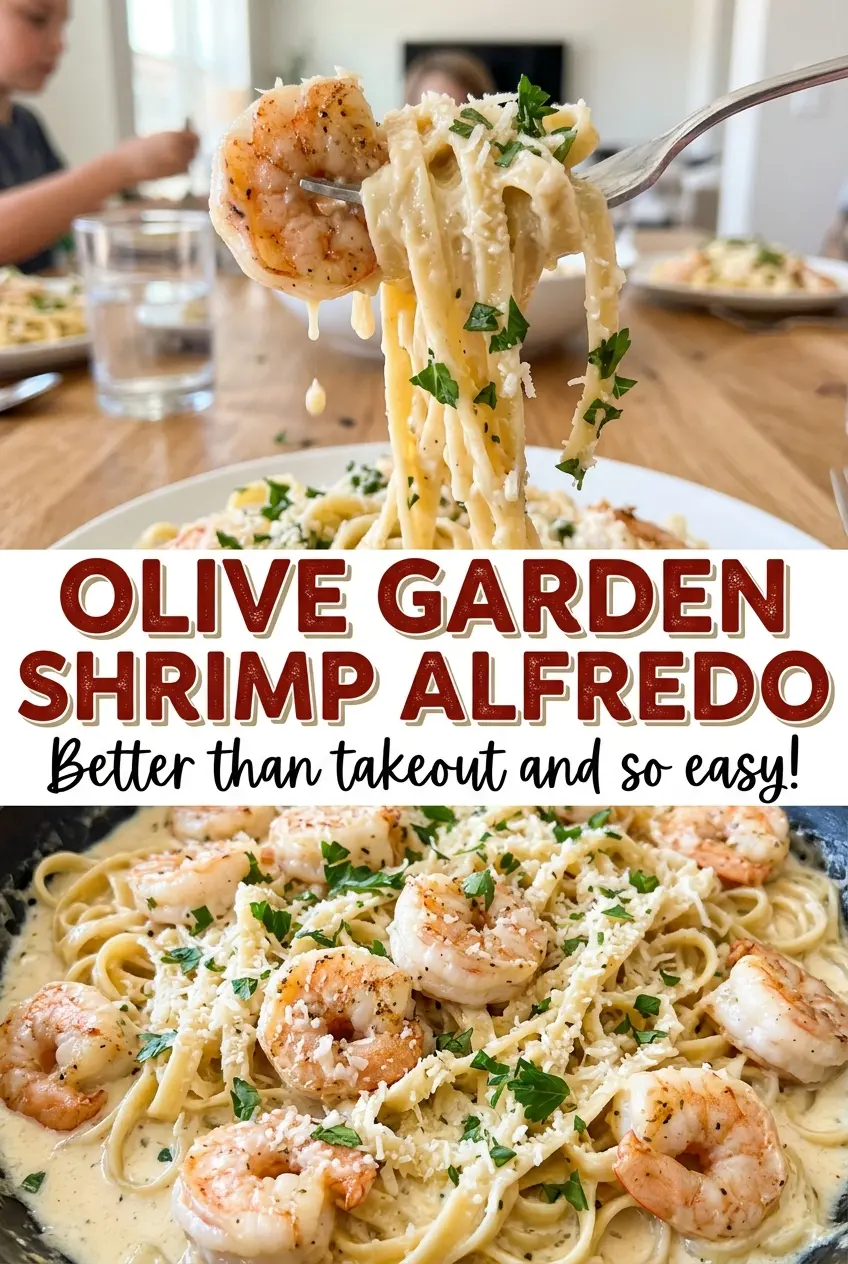
As the shrimp hit a hot skillet, the pasta is already bubbling away in the next pot. That overlap matters: by the time the fettuccine is drained, the shrimp can be resting and the Alfredo sauce nearly ready. It keeps Olive Garden Shrimp Alfredo from turning into a last-minute scramble, and it means the noodles meet the sauce while everything is still hot.
I like this version because it doesn’t ask the cream to do all the work. Finely grated Parmesan and Romano bring their own savory, salty depth, while the fettuccine gives the sauce plenty of surface to cling to. The shrimp stay tender when they’re cooked quickly, then go back into the pan just long enough to warm through. Every forkful comes together creamy, with a little bite from the cheese and sweet, juicy shrimp.
Kitchen Note
Pat the thawed shrimp dry before they go into the skillet. If they’re wet, they release moisture instead of searing cleanly, and the extra liquid can dilute the browned flavor.
Save Olive Garden Shrimp Alfredo for a night when you want creamy fettuccine with tender shrimp and a Parmesan-Romano sauce.
Why That Little Cup of Pasta Water Belongs in the Alfredo
Drained pasta water looks like something to pour down the sink, but it has a job here. As the fettuccine cooks, it releases starch into the water. That starch helps loosen the cream-and-cheese sauce without making it watery, so the coating can move around the noodles and settle back onto them as you toss.
Reserve the measured water before you drain the pasta; once it’s gone, there’s no getting that same starchy liquid back. It also gives the finished sauce a better texture than thinning it with plain water. The difference is subtle in the pan, then obvious on the plate: the sauce clings to the ribbons instead of pooling beneath them. Keep the water with the pasta while you finish the sauce, and stir it in before tossing everything together.
Why Parmesan and Romano Both Matter in This Alfredo
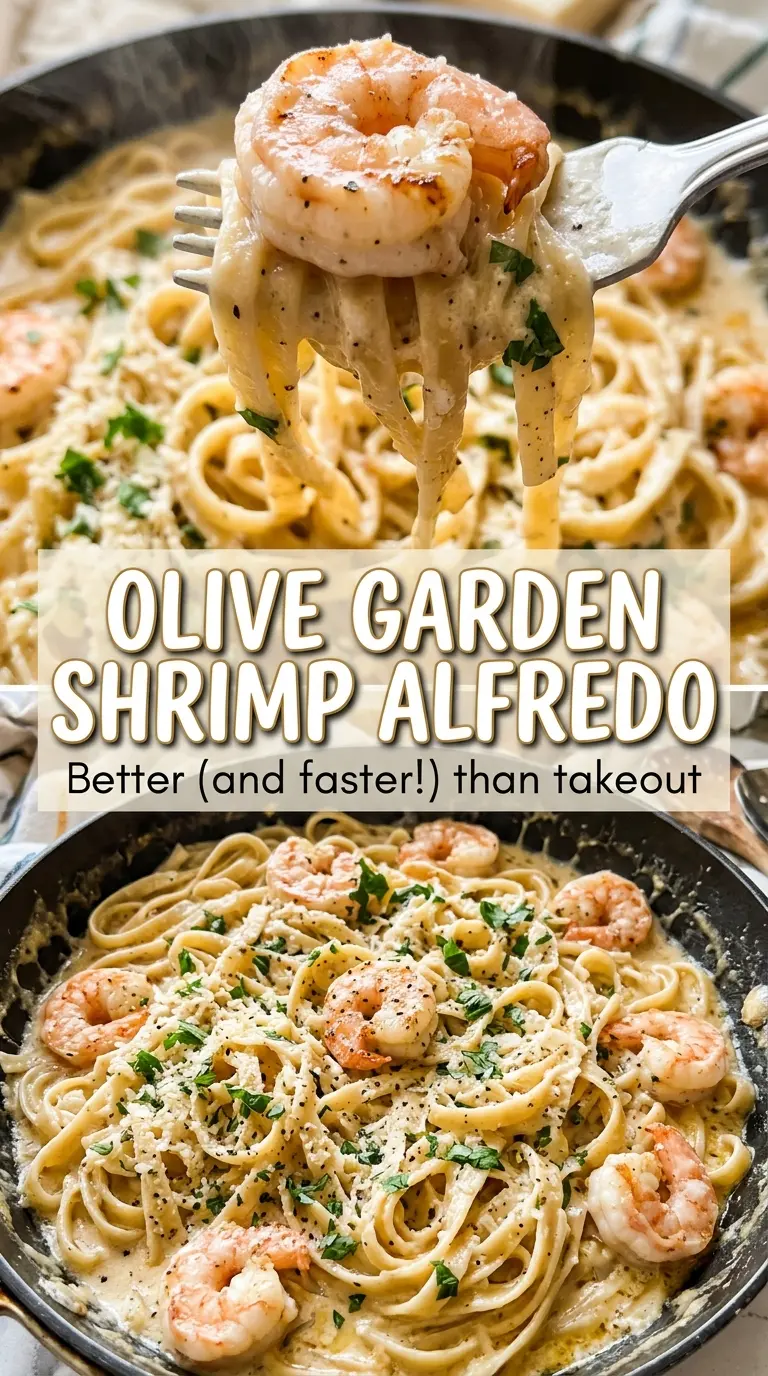
- Fettuccine — Its broad ribbons catch the creamy sauce, giving you a balanced bite of pasta and topping. Cook it to al dente rather than soft; it gets another brief toss with the sauce and shrimp at the end.
- Large shrimp — The 31/40 count gives you substantial pieces that are easy to sear without disappearing among the noodles. Frozen shrimp are fine when fully thawed; the important part is starting with raw shrimp so they cook quickly and stay tender.
- Heavy cream — The higher fat content gives the sauce body through a gentle simmer. I wouldn’t swap in milk or a lower-fat pourable dairy product; the sauce will be thinner and less forgiving as the cheese goes in.
- Parmesan and Romano — Parmesan brings a rounded, nutty savoriness, while Romano adds a sharper, saltier edge. Both should be finely grated so they melt into the cream. A very coarse shred is more likely to leave little pieces in the sauce, and the cheese is where a decent-quality block makes a noticeable difference.
- Unsalted butter and garlic — Butter gives the sauce a rich base, and minced garlic adds aroma without taking over the cheese. Unsalted butter keeps the seasoning easier to control; ordinary garlic cloves work well as long as they’re minced finely enough to cook in the short time in the pan.
The Timing That Keeps the Shrimp Tender and the Sauce Smooth
Get the Fettuccine Cooking First
Bring 4 quarts of water to a boil in a 6-quart pot, add the kosher salt, then cook the fettuccine according to the package directions until al dente. Before draining, reserve 1/4 cup of the cooking water. Drain the pasta, but don’t rinse it; rinsing washes away the surface starch that helps the sauce coat the noodles.
Sear the Shrimp in a Single Layer
While the pasta cooks, heat the olive oil in a 12-inch skillet over medium-high heat. Season the shrimp with kosher salt and black pepper, then lay them in one layer so they cook rather than steam. Cook for 1 to 2 minutes per side, watching for opaque flesh and a firm, springy texture; the center should reach 145°F. Transfer the shrimp to a plate as soon as they’re done.
Let the Cream Simmer, Not Boil
Reduce the skillet heat to medium-low and melt the butter. Add the minced garlic and cook for 30 seconds, just until fragrant; garlic can turn bitter if it browns. Pour in the heavy cream and gently simmer for 4 to 5 minutes, stirring occasionally. Keep the bubbles calm, because a hard boil can make a cream sauce harder to bring together.
Whisk in the Cheese Away from the Heat
Take the skillet off the heat before adding the finely grated Parmesan and Romano. Whisk in a handful at a time until each addition melts smoothly, rather than tipping all the cheese in at once. Stir in the reserved pasta water after the cheese has melted. If the sauce looks grainy, it may have been too hot when the cheese went in; moving the pan off the burner first gives the cheese a gentler landing.
Toss Until Every Ribbon Is Coated
Return the drained fettuccine to its pot and pour the sauce over it, tossing until the noodles are coated. Add the shrimp and any juices from the plate, then toss gently over low heat for about 1 minute, just until hot. Keep the toss gentle so the shrimp stay whole and the pasta doesn’t break. Serve while the sauce is glossy and the shrimp are warm.
Two Ways to Change the Plate Without Losing the Alfredo
A shrimp-free, meatless Alfredo
Leave out the shrimp for a meatless fettuccine Alfredo. If you’re cooking for someone who avoids animal rennet, use vegetarian-rennet Parmesan and Romano; the sauce will keep its familiar creamy, sharp-edged character without the seafood.
Make the sauce more Romano-forward
Shift some of the Parmesan toward Romano while keeping both cheeses in the sauce. The result is sharper and saltier, with less of Parmesan’s mellow nuttiness. Make a modest adjustment the first time, since Romano can quickly become the dominant taste.
Storage and Reheating
- Refrigerator: Refrigerate leftovers in an airtight container within 2 hours and use them within 3 days. The fettuccine will soften as it sits, and the sauce will thicken.
- Freezer: This dish can be frozen in an airtight container for up to 2 months, but the cream sauce may separate and the pasta and shrimp will lose some of their texture.
- Reheating: Warm leftovers gently in a covered skillet over low heat, stirring in a small splash of cream or reserved pasta water if the sauce is tight. Heat to 165°F; high heat can make the sauce greasy and the shrimp tough.
Questions That Come Up When Making Shrimp Alfredo
Olive Garden Shrimp Alfredo
Ingredients
Equipment
Method
- Bring 4 quarts of water to a boil.
- Add the tablespoon of kosher salt and fettuccine, and cook according to package directions until al dente.
- Reserve 1/4 cup pasta water, then drain the fettuccine.
- While the pasta cooks, heat the olive oil in a 12-inch skillet over medium-high heat.
- Season the shrimp with the 1/2 teaspoon salt and black pepper.
- Cook the shrimp in a single layer for 1 to 2 minutes per side, until opaque and 145°F.
- Transfer the shrimp to a plate.
- Reduce the skillet heat to medium-low and melt the butter.
- Add the garlic and cook for 30 seconds.
- Pour in the heavy cream and gently simmer for 4 to 5 minutes, stirring occasionally; do not let it boil.
- Remove the skillet from the heat and whisk in the Parmesan and Romano a handful at a time until smooth.
- Stir in the reserved pasta water.
- Return the drained fettuccine to the pot, pour over the sauce, and toss to coat.
- Add the shrimp and any accumulated juices, then toss gently over low heat for about 1 minute, until hot.