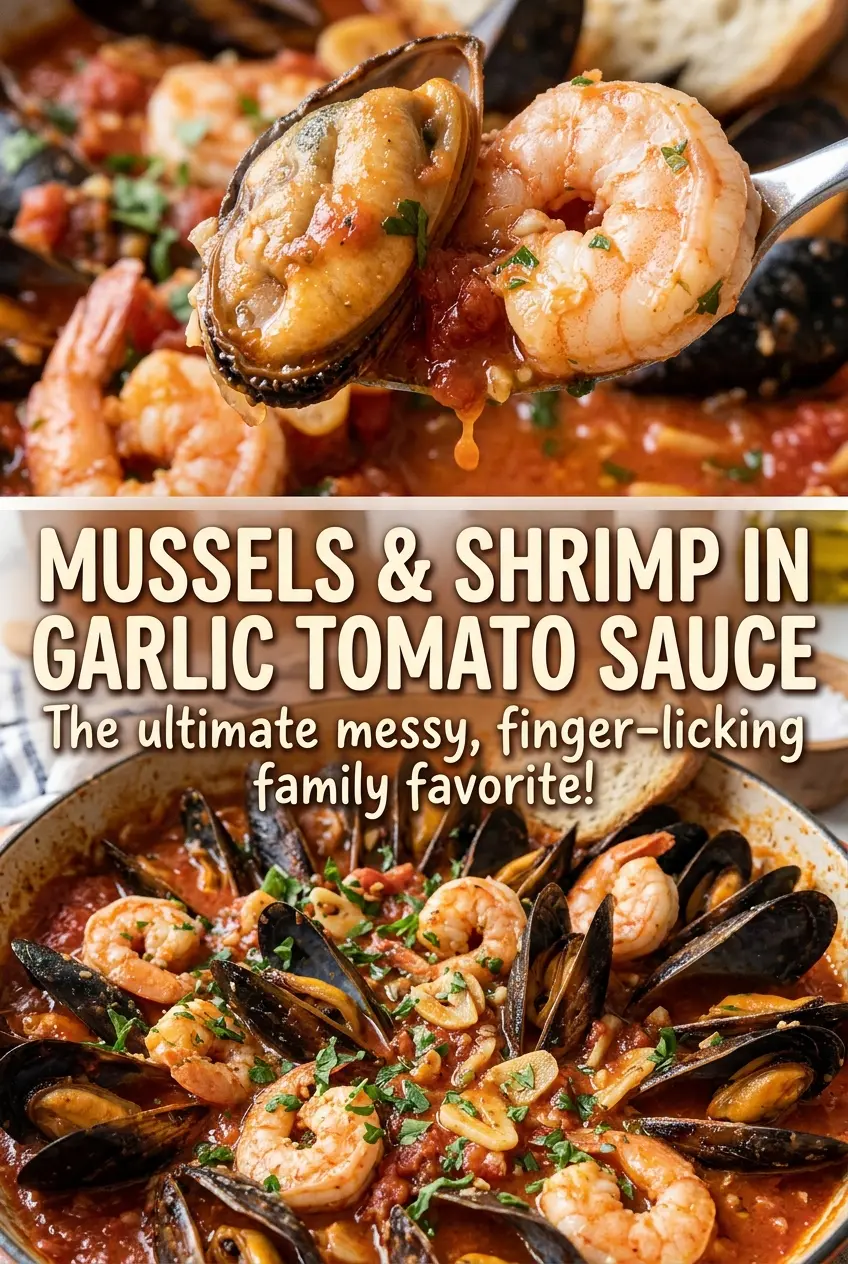
The first mussel shells start opening while the tomato sauce is still bubbling, and that’s when I resist adding the shrimp. Shrimp need less time than mussels, so cooking both together from the start leaves them waiting in the heat. In this pot, the shellfish go in stages: mussels first, shrimp only after the shells have opened. That timing is what makes Mussels and Shrimp in Garlic Tomato Sauce feel like a generous seafood dinner without turning the shrimp firm and dry.
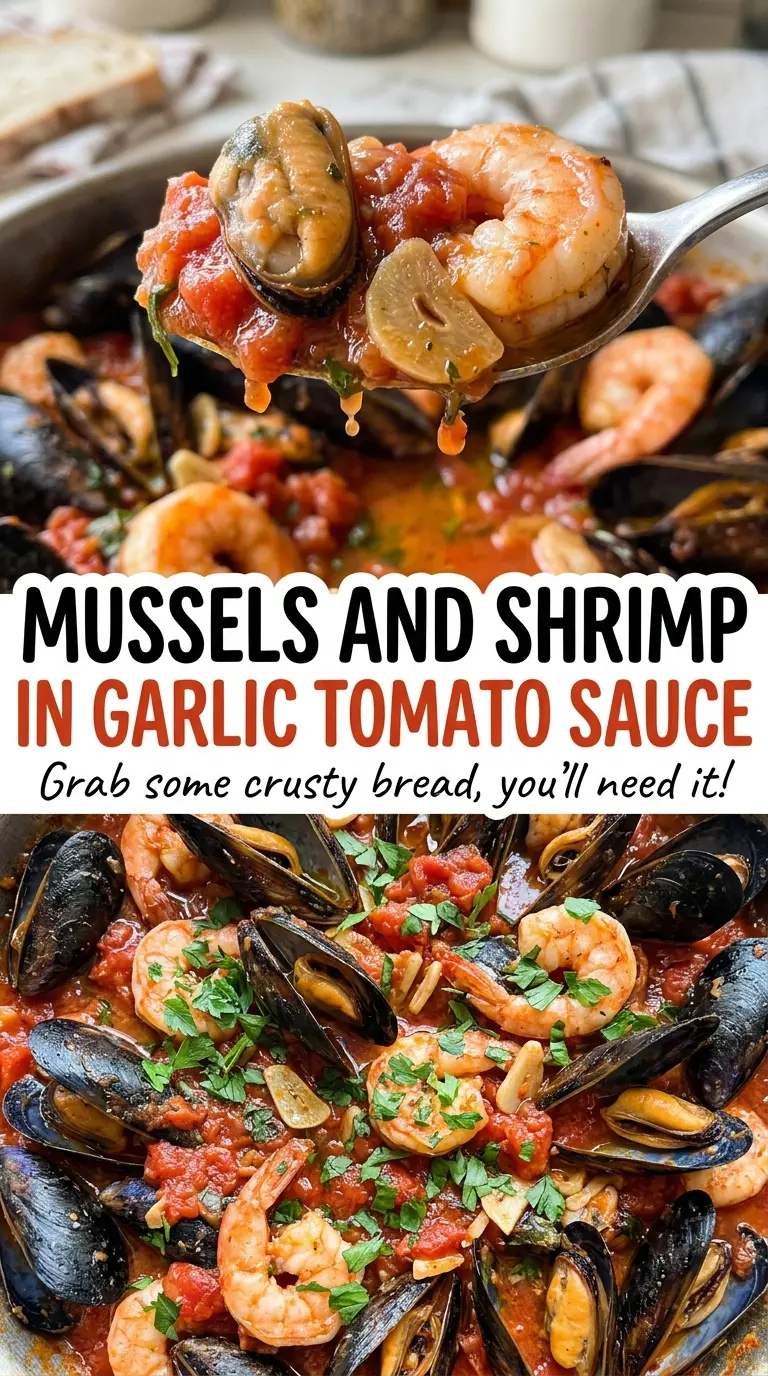
I build the sauce in a 6-quart Dutch oven, beginning with softened onion and garlic, then letting dry white wine simmer before the crushed tomatoes go in. The mussels open right in that tomato base, and their juices mingle with the sauce. Parsley and lemon go in after the heat is off, keeping the finish bright. The finished pot is glossy red, full of open shells and tender shrimp, with a little warmth from the pepper flakes.
Kitchen Note
Give the covered pot one shake during the mussels’ cooking time rather than lifting the lid repeatedly. It helps move the shells through the sauce while keeping the pot covered as they open.
Save this mussels and shrimp tomato sauce for a night when you want tender seafood, an easy garlic tomato base, and a pot that goes straight to the table.
Why the Mussels Go In Before the Shrimp
Mussels and shrimp don’t finish cooking on the same clock. The mussels need a covered stretch in the simmering sauce so their shells can open, while the shrimp only need a few minutes at the end. Putting them in together gives the shrimp the longer mussel-cooking window, which is how they end up firm instead of tender.
That order also gives you a useful visual cue. Once the mussels have opened, it’s time to stir in the shrimp; there’s no guesswork about whether the pot is ready for its final seafood. The sauce stays at a simmer during the first stage, then the covered pot holds in heat for the shorter shrimp cook. Turn off the burner before stirring in the parsley and lemon, so their fresh flavor finishes the sauce instead of cooking away.
This timing is especially helpful in a tomato sauce, which can keep bubbling for a while after the seafood looks ready. Resist leaving the pot covered out of habit once the shrimp are cooked. A short, deliberate finish protects their texture and keeps the sauce lively.
What Gives This Garlic Tomato Sauce Its Savory Depth
- Crushed tomatoes — Canned crushed tomatoes give the sauce a consistent, spoonable texture without needing to blend or break down larger pieces. A can from the regular grocery aisle works well here; the long-simmered sauce gets plenty of flavor from the onion, garlic, wine, and seafood.
- Dry white wine — The wine brings a little acidity and savory depth before the tomatoes go in. Choose a dry wine rather than a sweet one; there’s no need to use an expensive bottle, just one you’d be comfortable drinking.
- Mussels — Scrubbed, debearded mussels bring their briny character directly into the sauce as they open. Cleaning matters more than buying a particular brand, since grit or loose bits on the shells can spoil a spoonful of sauce.
- Large shrimp — Peeled and deveined shrimp make the last cooking stage quick and easy to judge. Large shrimp are a good fit for the short covered cook; smaller shrimp are more likely to turn firm before the mussels are ready.
- Garlic, parsley, and lemon — Fresh minced garlic turns fragrant quickly in the oil, so it needs only a brief cook before the liquid goes in. Chopped parsley and lemon juice are stirred in off the heat, where they give the tomato sauce a fresher finish.
Build the Sauce First, Then Cook the Seafood in Stages
Soften the onion before the garlic goes in
Heat the olive oil in a 6-quart Dutch oven over medium heat, then add the finely chopped onion. Stir occasionally for 4 to 5 minutes, until the onion has softened; it shouldn’t be browned or still crisp. Add the minced garlic and crushed red pepper flakes, and cook for 30 seconds. Keep stirring during that brief stretch so the garlic becomes fragrant without scorching.
Give the wine a short simmer
Pour in the dry white wine and let it simmer for 2 to 3 minutes. The liquid should bubble steadily rather than boil hard. Stir in the crushed tomatoes, kosher salt, and black pepper, then bring the sauce to a simmer. If the tomatoes are splattering, lower the heat enough to keep a steady, contained simmer before adding the mussels.
Cover the mussels until the shells open
Add the scrubbed, debearded mussels to the simmering sauce and cover the pot. Cook for 5 to 7 minutes, shaking the pot once during that time. Check for open shells before moving on; any mussels that remain closed are discarded. Keep the lid on between checks so the pot holds its heat.
Finish with shrimp, parsley, and lemon
Stir in the peeled and deveined shrimp, then cover the pot again. Cook for 3 to 4 minutes, until the shrimp are opaque and reach 145°F. Don’t leave them cooking while you prepare the garnish; the window is short. Turn off the heat, then stir in the chopped parsley and lemon juice.
Three Ways to Shift the Seafood and Heat
Make the sauce milder
Leave out the crushed red pepper flakes for a gentler tomato sauce. You’ll keep the garlic and seafood front and center without the warming heat.
Make it a mussel-only pot
Skip the shrimp and keep the mussels as the only seafood. The result is more focused on their briny flavor, with no second seafood cook to time.
Make a shrimp-only version
Leave out the mussels and cook the shrimp in the simmering tomato sauce for 3 to 4 minutes, until opaque and 145°F. Without mussels, you lose their briny juices, but the garlic and tomato base still gives the shrimp a savory sauce.
Storage and Reheating
- Refrigerator: Cool promptly, refrigerate in a covered container within 2 hours, and use within 3 to 4 days. The mussels and shrimp will firm up as they chill.
- Freezer: Freeze in an airtight container for up to 2 months for best quality. Thaw in the refrigerator; the seafood may be softer after freezing.
- Reheating: Warm gently in a covered saucepan over low heat, stirring carefully, until the leftovers reach 165°F. Avoid a hard boil, which can make the seafood tough.
Questions That Come Up When Cooking Mussels and Shrimp
Mussels and Shrimp in Garlic Tomato Sauce
Ingredients
Equipment
Method
- Heat the olive oil in a 6-quart Dutch oven over medium heat.
- Add the onion and cook for 4-5 minutes, stirring occasionally, until softened.
- Stir in the garlic and crushed red pepper flakes and cook for 30 seconds, until fragrant.
- Add the wine and simmer for 2-3 minutes.
- Stir in the crushed tomatoes, salt, and black pepper, and bring the sauce to a simmer.
- Add the mussels, discarding cracked shells or shells that do not close when tapped, and cover the pot.
- Cook for 5-7 minutes, shaking the pot once, until the shells open; discard any mussels that remain closed.
- Stir in the shrimp, cover, and cook for 3-4 minutes, until the shrimp are opaque and reach 145°F.
- Turn off the heat and stir in the parsley and lemon juice.