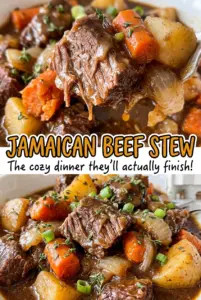
The beef starts to color, and the bottom of the Dutch oven gathers those dark, savory bits that make a stew taste like it simmered all afternoon. Once the broth goes in, they lift right into the pot. That’s the beginning of my Mulligan Stew: beef chuck, a tomato-and-beef-broth base, and vegetables added in stages so they don’t all cook to the same softness.
I brown the beef in batches, then let it simmer until it’s nearly fork-tender before adding the carrots and Yukon Gold potatoes. That timing matters more than rushing the pot; the beef needs its own stretch of gentle heat, while the vegetables need just enough time to turn tender without losing their shape. Frozen peas go in at the very end, and the finished stew is thick, savory, and full of tender beef and vegetables.
Kitchen Note
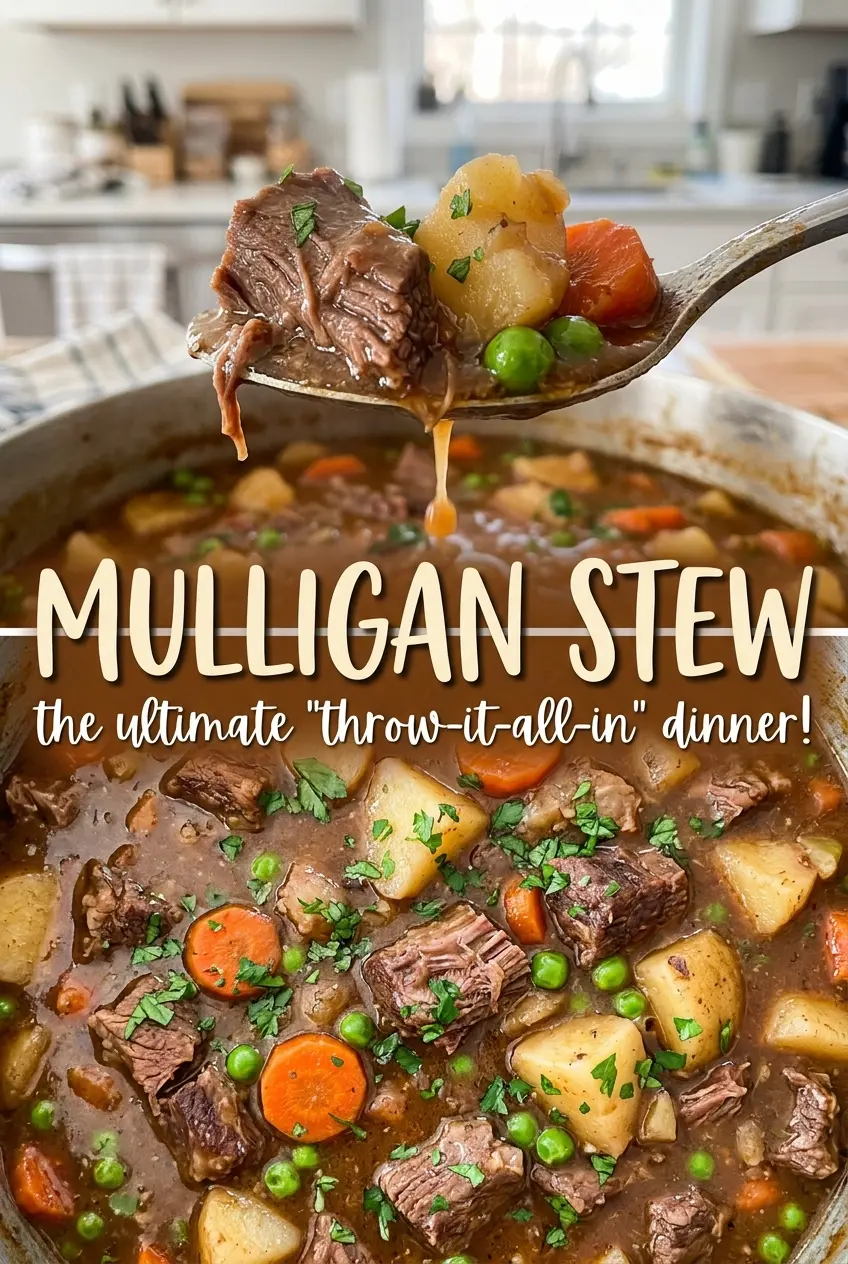
Brown the chuck in batches, giving each piece 2 to 3 minutes per side. If the pot is crowded, the meat releases moisture and steams instead of developing the deep color that gives the broth its savory foundation.
Save this Mulligan Stew for a cozy pot of fork-tender beef, potatoes, carrots, and a rich tomato-beef broth.
Why the Carrots Wait Until the Beef Is Nearly Tender
Beef chuck and root vegetables don’t reach their best texture on the same schedule. Chuck needs a long, gentle simmer to soften; carrots and potatoes need a shorter stretch so they turn tender but still hold their shape. Putting everything in at the beginning seems efficient, but by the time the beef is ready, the vegetables can be overly soft and the potatoes may start breaking apart into the broth.
In this stew, the first simmer is for the beef alone. I wait until it’s nearly fork-tender, then add the carrots and Yukon Gold potatoes for their own 25 to 30 minutes of cooking. That gives the beef time to become tender without asking the vegetables to endure the whole simmer. The peas need even less time, so they go in after the vegetables are cooked and warm through in the uncovered pot. Each addition has a job, and the order keeps the final bowl balanced: tender beef, vegetables with some shape, and peas that haven’t faded into the broth.
Keep the heat low once the stew reaches a boil. A steady, gentle simmer gives the meat time to soften without making the broth churn hard around the vegetables.
Chuck, Gold Potatoes, and the Ingredients That Shape the Broth
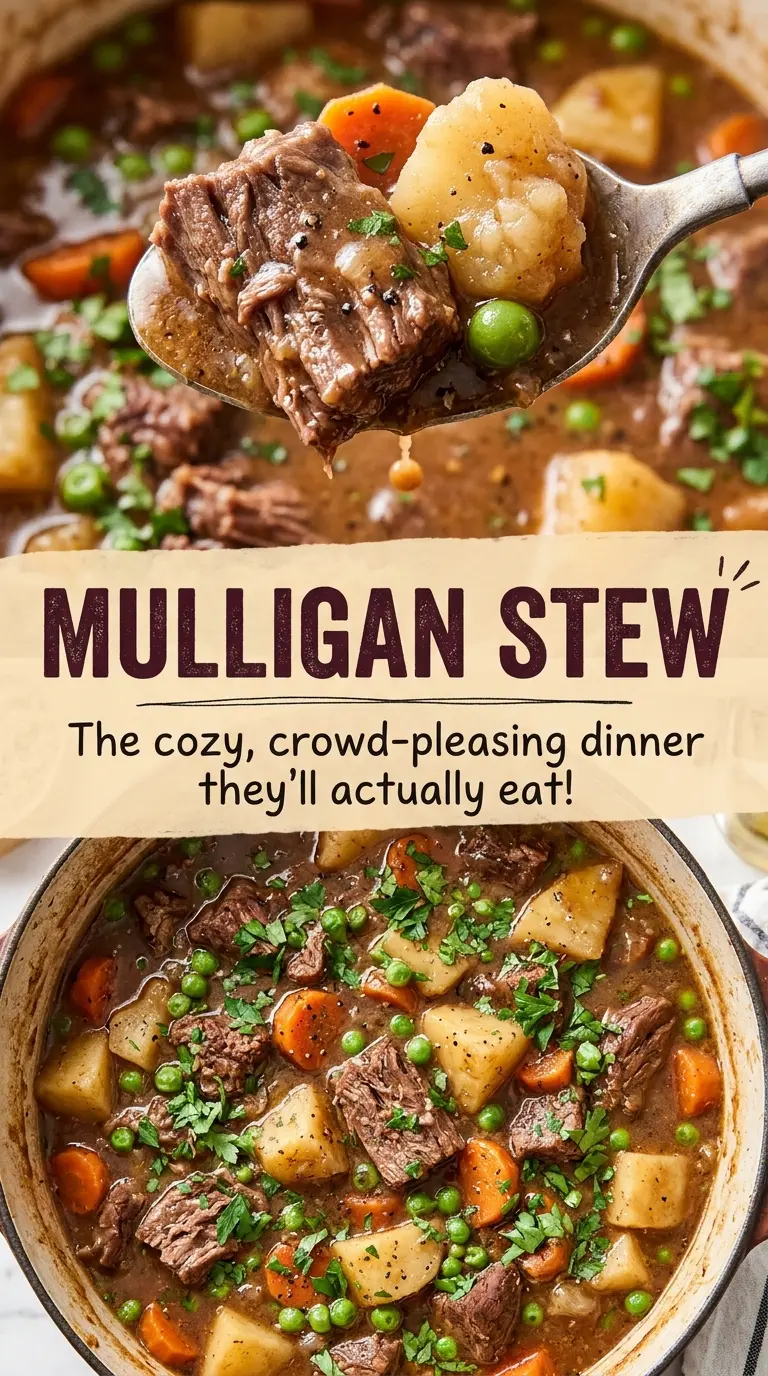
- Beef chuck — Chuck’s marbling and connective tissue suit a long simmer, turning tender as the stew cooks. Choose pieces cut to a similar size so they cook at a similar pace; pre-cut stew beef works best when it’s cut from chuck.
- Yukon Gold potatoes — Their creamy texture and ability to hold together make them a good fit for a stew with a long-cooked broth. Cut them into even pieces so they soften together. Russets are a possible swap, but they’re starchier and more likely to break down, making the broth cloudier and thicker.
- Low-sodium beef broth — It builds the liquid base while leaving room for the measured kosher salt and Worcestershire sauce. Low-sodium broth is the better choice here; a full-sodium broth can make the finished pot taste saltier than intended.
- Diced tomatoes and Worcestershire sauce — The tomatoes bring gentle acidity and body, while Worcestershire adds a savory depth that keeps the broth from tasting one-note. The canned tomatoes are convenient because their juices go right into the pot with them.
- All-purpose flour — Stirring it into the softened vegetables before adding broth gives the stew some body. Cook it for the full minute so it blends into the base instead of leaving a raw flour taste.
- Frozen peas — They add a sweet, fresh-tasting finish without needing a long cook. Keep them frozen until they go into the pot; the brief simmer is enough to heat them through.
The Long Simmer Comes Before the Vegetables
Brown the Chuck in Batches
Heat the vegetable oil in a 6-quart Dutch oven over medium-high heat, then season the beef with kosher salt and black pepper. Brown the pieces in batches for 2 to 3 minutes per side, transferring each batch to a plate as it colors. Let the pieces sit long enough to brown rather than constantly shifting them around. Keeping the batches manageable gives the beef contact with the hot pot and leaves those browned bits behind.
Soften the Aromatics and Build the Base
Add the chopped onion and celery to the pot and cook over medium heat for 5 minutes, stirring occasionally, until softened. Stir in the minced garlic and cook for 30 seconds; it should smell fragrant, not browned. Add the flour and cook for 1 minute, then gradually stir in the beef broth while scraping the bottom of the pot. Add the diced tomatoes, Worcestershire sauce, dried thyme, and bay leaf, then return the beef and any juices from the plate.
Give the Beef Its First Simmer
Bring the pot to a boil, then cover it and lower the heat to simmer gently. Cook for 1 1/4 to 1 1/2 hours, stirring occasionally, until the beef is nearly fork-tender. A hard boil makes the surface of the broth agitate; lower the heat if that happens. The meat doesn’t need to be completely tender yet, because it will keep cooking with the vegetables.
Add the Carrots and Potatoes
Stir in the peeled, 1-inch carrot pieces and the 1-inch Yukon Gold potato pieces, then cover the Dutch oven again. Simmer for 25 to 30 minutes, until the vegetables are tender and the beef is fork-tender. Check a potato with a fork near the end of the cooking time; it should go in easily, while the piece still holds its shape. Stir gently so the softened vegetables don’t break up as you check the pot.
Finish with Peas
Stir in the frozen peas and simmer uncovered for 3 to 5 minutes, just until they’re heated through. The uncovered finish lets you stir them in easily without keeping the stew covered longer than needed. Remove the bay leaf before serving. The stew is ready when the beef is fork-tender and the carrots and potatoes are soft all the way through.
Small Changes That Keep the Stew’s Character
Gluten-Free, with a Lighter Broth
For a gluten-free pot, leave out the all-purpose flour and use low-sodium beef broth labeled gluten-free. The stew will have a thinner broth and less of the body the flour gives it, but the beef and vegetables still make a hearty bowl.
A Pea-Free Pot
Leave out the frozen peas if you don’t care for them or need to avoid them. The stew will still have its full beef-and-vegetable base, just without the sweet pop of color at the end; no other change to the cooking time is needed.
Storage and Reheating
- Refrigerator: Store leftovers in a covered container for 3 to 4 days. The potatoes may soften more as they sit in the broth.
- Freezer: Freeze cooled stew in airtight containers for up to 3 months. Thaw it in the refrigerator before reheating; the potatoes may be a little softer after freezing.
- Reheating: Warm it gently in a covered saucepan, stirring occasionally, until it reaches 165°F. Avoid a hard boil, which can break up the potatoes and carrots.
Questions That Come Up While the Stew Sim simmers
Mulligan Stew
Ingredients
Equipment
Method
- Heat the oil in a 6-quart Dutch oven over medium-high heat.
- Season the beef with the salt and pepper.
- Brown the beef in batches for 2 to 3 minutes per side.
- Transfer the browned pieces to a plate.
- Add the onion and celery to the pot and cook over medium heat for 5 minutes, stirring occasionally, until softened.
- Add the garlic and cook for 30 seconds.
- Stir in the flour and cook for 1 minute.
- Gradually stir in the broth, scraping up browned bits from the bottom of the pot.
- Stir in the tomatoes, Worcestershire sauce, thyme, and bay leaf.
- Return the beef and any accumulated juices to the pot.
- Bring the stew to a boil.
- Cover and simmer over low heat for 1 1/4 to 1 1/2 hours, stirring occasionally, until the beef is nearly fork-tender.
- Stir in the carrots and potatoes.
- Cover and simmer for 25 to 30 minutes, until the vegetables are tender and the beef is fork-tender.
- Stir in the peas and simmer uncovered for 3 to 5 minutes, until heated through.
- Remove the bay leaf and serve.