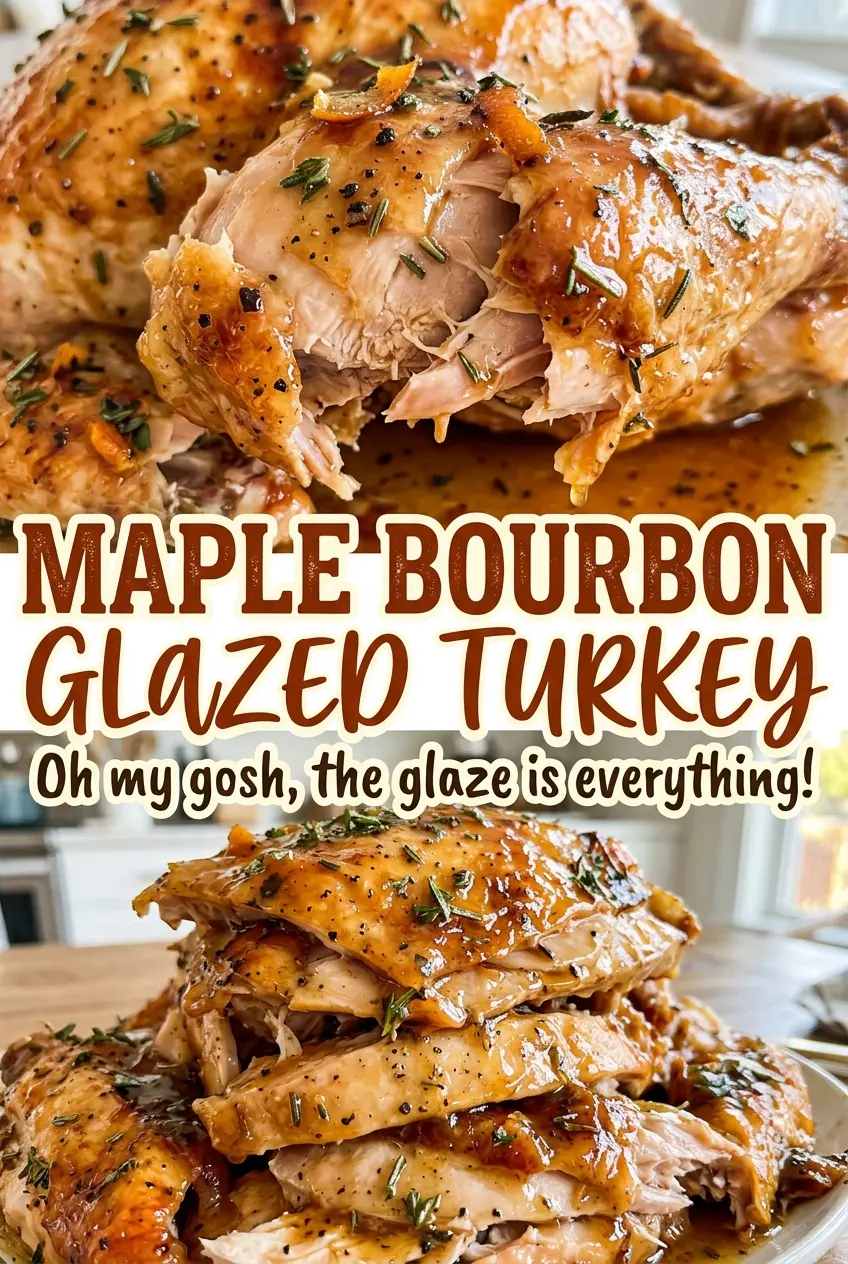
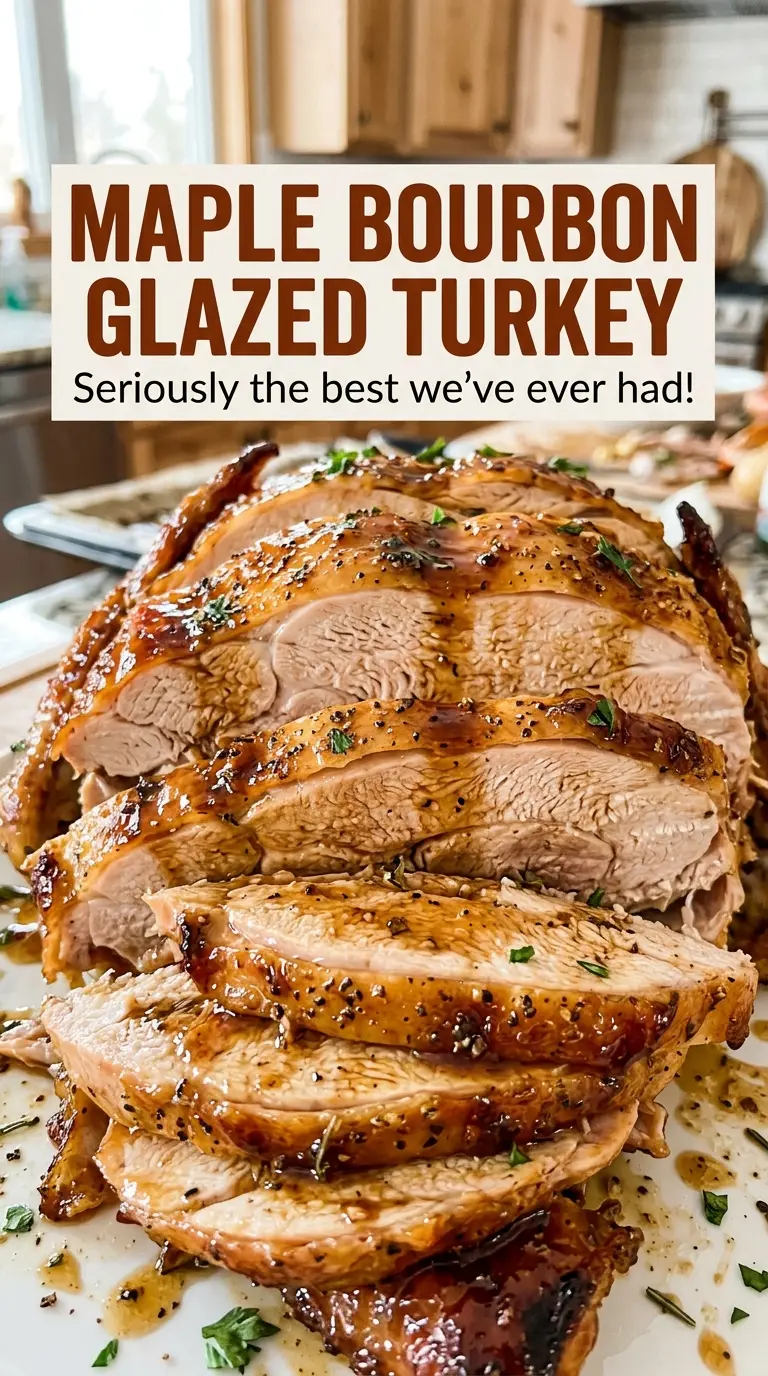
The maple syrup starts bubbling around the edge of the saucepan, and the bourbon smell sharpens before the glaze turns just thick enough to cling to a spoon. That shift is easy to miss if the burner is too high, so I keep it at a steady simmer and stir now and then. For this Maple Bourbon Glazed Turkey, that small saucepan moment sets up a glossy finish without asking the bird to sit under sweet glaze for its entire roast.
The turkey itself stays simply seasoned with kosher salt, pepper, and softened butter. Onion, lemon, and thyme go into the cavity, while low-sodium broth sits in the roasting pan below. I wait to brush on the maple glaze until the breast has already warmed through; the skin gets time to turn golden first, then the coating has a short stretch in the oven to set. The result is a bronzed bird with a lightly sweet, tangy crust and juicy slices beneath it.
Kitchen Note
The glaze should look lightly syrupy, not sticky like candy, when it comes off the heat. It clings to the brush more easily at that stage and thickens a little as it sits.
Save this Maple Bourbon Glazed Turkey for a centerpiece with a glossy maple finish and savory Dijon tang.
Why the Maple Glaze Waits Until the Turkey Is Nearly Roasted
Maple syrup brings plenty of sugar, and sugar darkens quickly against hot skin. If the glaze went on at the beginning, it would spend hours in the oven while the center of the turkey still needed to cook. I roast the bird without glaze first, then brush it once the thickest part of the breast reaches 145°F. That gives the maple-bourbon coating time to turn glossy and cling without leaving it exposed to the oven for the whole roast.
The glaze also has to work with a whole turkey’s uneven shape. The breast and thigh don’t always reach their finishing temperature together, so the breast reading alone doesn’t tell you the bird is ready. Keep checking both areas as the roast finishes; the coating can deepen while the thigh catches up. Dijon and cider vinegar pull the glaze away from candy-sweet, adding a savory edge and a little brightness that suits the rich turkey skin.
Pure Maple Syrup, Bourbon, and the Balance Behind This Glaze
- The turkey — Choose a fully thawed bird in the 12- to 14-pound range, with the giblets and neck removed. That size fits the roasting schedule and gives the breast and thigh room to cook at a manageable pace. Pat the skin dry before seasoning so the softened butter can spread over it instead of sliding across damp skin.
- Pure maple syrup — Pure syrup brings a clean maple flavor and the right body for a brush-on glaze; pancake syrup doesn’t taste or reduce the same way. Honey can stand in measure-for-measure if needed, but it makes the glaze more floral and can darken more quickly.
- Bourbon — An everyday bourbon is plenty here; its warm oak and caramel notes are meant to support the maple, not dominate it. There’s no need to use a special-occasion bottle, since simmering softens the sharp alcohol aroma.
- Dijon and apple cider vinegar — Dijon gives the glaze a mustardy backbone, while vinegar cuts through the syrup’s sweetness. Smooth prepared mustard can replace Dijon in the same amount for a milder, less complex tang; white wine vinegar can replace the cider vinegar measure-for-measure.
- Unsalted butter — Softened butter spreads in a thin layer across the skin and helps the salt and pepper stay put. Unsalted keeps the seasoning predictable; for a dairy-free version, use a block-style dairy-free butter in the same amount.
- Onion, lemon, and thyme — These cavity aromatics add a gentle savory and citrus fragrance as the turkey roasts. Quarter the onion and lemon so they fit easily inside; an orange and rosemary make a warmer, more herbal alternative.
- Low-sodium chicken broth — The broth goes around the turkey in the roasting pan, not over the skin, and keeps the pan from starting dry. Low-sodium broth leaves the turkey’s measured seasoning in control; low-sodium vegetable broth is a useful alternative.
Roast the Turkey in Two Phases So the Glaze Stays Glossy
Set the Bird Up for Even Roasting
Heat the oven to 325°F and position a rack in the lower third. Set a rack inside a 16×13-inch roasting pan so the turkey sits above the broth rather than resting in it. Pat the fully thawed turkey dry, place it breast side up, and rub the kosher salt and black pepper over the skin. Spread the softened butter across the outside in an even layer, including around the legs and wings.
Add the Cavity Aromatics and Pan Broth
Put the quartered onion, lemon, and thyme sprigs inside the cavity without packing them tightly. Pour the low-sodium chicken broth into the roasting pan around the turkey, taking care not to wash the butter off the skin. The broth belongs in the pan beneath the rack, where it can collect the turkey juices as the bird roasts.
Simmer the Maple-Bourbon Glaze
Combine the maple syrup, bourbon, Dijon mustard, and apple cider vinegar in a small saucepan. Bring the mixture to a simmer over medium heat, then cook it for 8 to 10 minutes, stirring occasionally. It’s ready when it has reduced slightly and looks lightly syrupy rather than watery. Keep the heat at a simmer; a hard boil can make the edges reduce faster than the center.
Roast Before Brushing on the Glaze
Roast the turkey at 325°F for 2 1/2 hours, then check the thickest part of the breast with a thermometer. If it hasn’t reached 145°F, return the turkey to the oven and check again every 15 minutes. Keep the thermometer away from bone for a useful reading. Waiting for this temperature checkpoint before glazing gives the skin time to roast before the maple coating goes on.
Finish the Roast and Let the Turkey Rest
When the breast reaches 145°F, brush the glaze over the turkey and roast for 15 minutes. After that, check the thickest part of the breast and the innermost part of the thigh, away from bone, every 15 minutes until both reach 165°F. Total roasting time is usually 3 to 3 3/4 hours, though the thermometer matters more than the clock. Transfer the turkey to a cutting board, tent it loosely with foil, and let it rest for 30 minutes before carving.
Easy Changes That Keep the Turkey’s Timing Intact
Make the Turkey Dairy-Free
Replace the softened butter with the same amount of block-style dairy-free butter. It spreads over the skin in the same way, though the browning may vary a little by brand. The maple-bourbon glaze is already dairy-free, so no other change is needed.
Swap Bourbon for Apple Cider
Use an equal amount of unsweetened apple cider in place of the bourbon. The glaze will have a fruitier, gentler flavor without bourbon’s warm oak notes; simmer until it reaches the same lightly syrupy texture before brushing it on.
Give the Cavity Aromatics a Rounder Flavor
Use one orange and four sprigs of rosemary in place of the lemon and thyme. The orange is less tart, and rosemary brings a woodsy aroma that pairs naturally with the maple glaze. Keep the onion in the cavity as written.
Storage and Reheating
- Refrigerator: Carve leftover turkey and refrigerate it within 2 hours in a covered container. Use it within 3 to 4 days; the skin will soften once chilled.
- Freezer: Freeze carved portions in a freezer-safe airtight container for up to 2 to 6 months for best quality. Thaw overnight in the refrigerator before reheating.
- Reheating: Warm covered turkey in a 325°F oven or in the microwave until steaming hot throughout. Keep it covered so the lean breast meat doesn’t dry out; reheating uncovered can leave the edges tough before the center is hot.
Questions That Come Up While the Turkey Roasts
Maple Bourbon Glazed Turkey
Ingredients
Equipment
Method
- Heat the oven to 325°F and set a rack in the lower third.
- Set a rack inside a 16x13-inch roasting pan.
- Pat the fully thawed turkey dry and place it breast side up on the pan rack.
- Rub the kosher salt and black pepper over the turkey.
- Rub the softened unsalted butter over the skin.
- Put the quartered yellow onion, quartered lemon, and fresh thyme sprigs in the cavity.
- Pour the low-sodium chicken broth into the roasting pan around the turkey.
- Combine the pure maple syrup, bourbon, Dijon mustard, and apple cider vinegar in a small saucepan.
- Bring to a simmer over medium heat and cook for 8 to 10 minutes, stirring occasionally, until lightly syrupy.
- Roast at 325°F for 2 1/2 hours, then check the temperature in the thickest part of the breast.
- If the breast has not reached 145°F, continue roasting and check every 15 minutes.
- When the breast reaches 145°F, brush the glaze over the turkey.
- Roast for 15 minutes, then check the thickest part of the breast and the innermost part of the thigh, away from bone, every 15 minutes, until both reach 165°F; total roasting time is usually 3 to 3 3/4 hours.
- Transfer the turkey to a cutting board, tent loosely with foil, and rest for 30 minutes before carving.