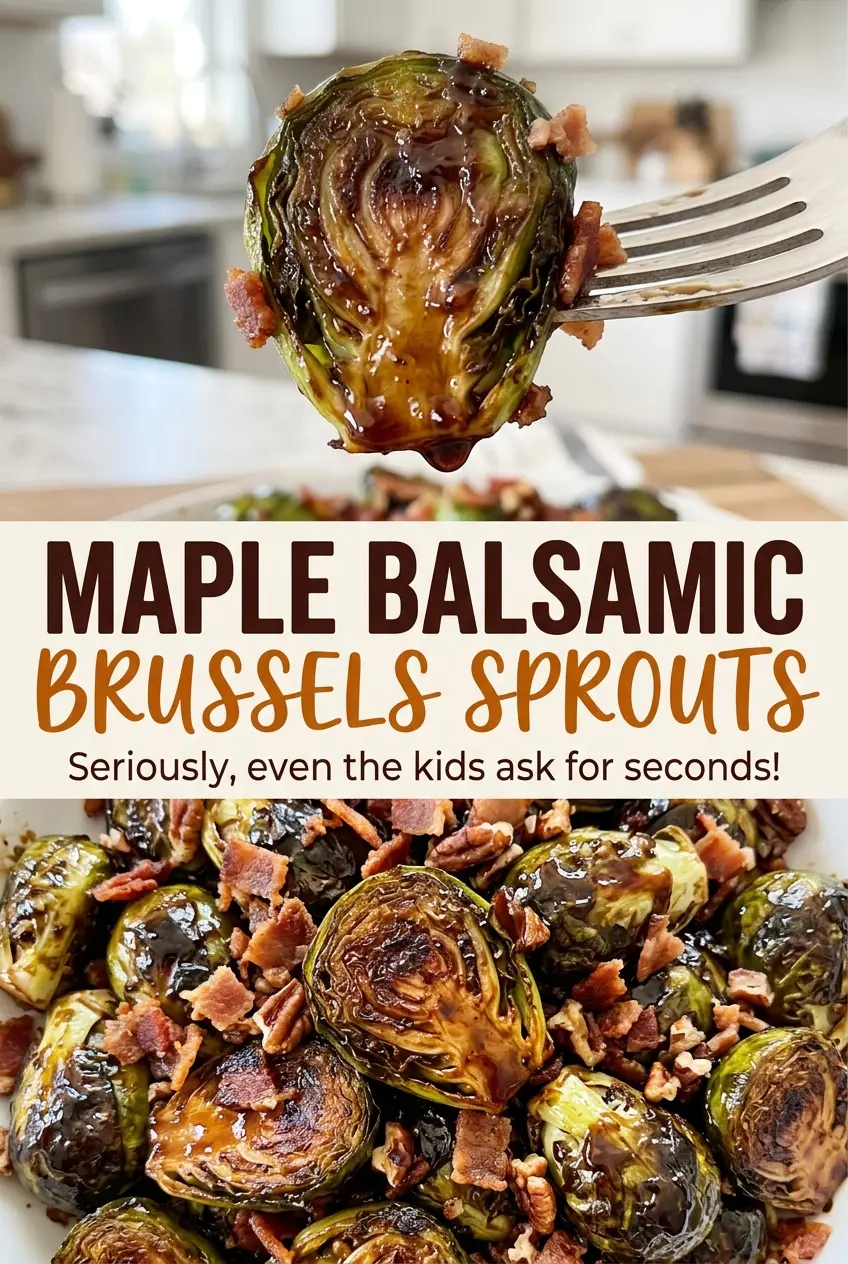
The cut sides of Brussels sprouts tell you a lot: when they’re spread against a hot pan, they brown instead of steaming in their own moisture. That’s the difference between tender sprouts with browned edges and a batch that turns soft before it develops much color. For Maple Balsamic Brussels Sprouts, I keep the seasoning simple and let the oven do that work.
The sweet-tart finish goes on after roasting, not before. Balsamic vinegar and pure maple syrup coat the hot sprouts without spending the whole roasting time in the oven, where the maple could darken too much. You get tender centers, caramelized cut faces, and just enough glossy glaze to bring the flavors together.
Kitchen Note
Whisk the balsamic vinegar and maple syrup together just before the sprouts come out of the oven. A quick whisk brings them together, so the maple doesn’t settle at the bottom of the bowl while you’re getting the hot sprouts ready.
Save these Maple Balsamic Brussels Sprouts for a side with browned edges and a sweet-tart maple glaze.
Why the Cut Side Needs Direct Contact With the Pan
Brussels sprouts release moisture as they roast. If the halves are piled together, that moisture lingers between them and the sprouts soften before their surfaces brown. Spreading them out gives the moisture room to escape, while setting each half cut side down puts the broad, flat surface in contact with the hot baking sheet.
That contact is what builds the deep brown face and the slightly sweet, roasted flavor that balances the balsamic finish. Parchment keeps the sprouts from sticking, but it doesn’t replace the need for space; use a large rimmed baking sheet and arrange the halves in one layer. If a few halves touch at their rounded sides, that’s fine. What you want to avoid is stacking them or turning every cut face upward, away from the pan.
What the Sprouts, Oil, and Glaze Each Bring
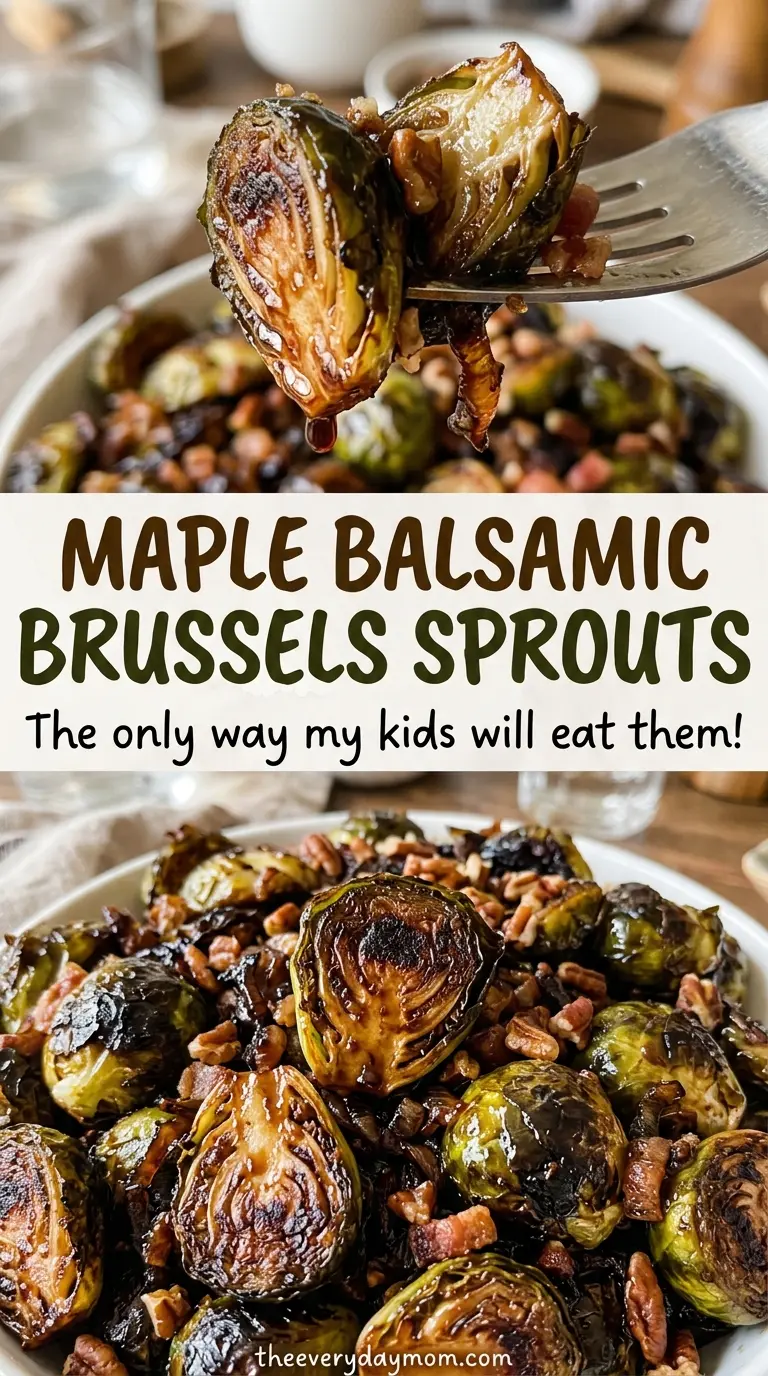
- Brussels sprouts — Choose firm sprouts that feel compact, without a lot of loose or yellowing leaves. Trim and halve them so the cut surfaces can brown and the centers become tender in the same roasting window. If the sprouts vary a lot in size, the smallest halves will soften before the largest ones.
- Olive oil — The oil helps the salt and pepper cling and keeps the cut faces from drying out as they roast. A standard olive oil is a good fit here; there’s no need to use a pricey finishing oil because the sprouts go into the oven coated in it.
- Kosher salt and black pepper — They season the sprouts before roasting, so the savory base is already there before the glaze goes on. Kosher salt crystals can vary in size from brand to brand, so distribute it evenly through the toss rather than letting it collect in one spot.
- Balsamic vinegar — Its acidity cuts through the sprouts’ earthy, roasted flavor and keeps the finish from tasting one-note sweet. A bottle you already enjoy using is plenty; a special aged vinegar isn’t necessary for this quick glaze.
- Pure maple syrup — Maple gives the balsamic a rounded sweetness and helps the coating cling to the hot sprouts. Use pure maple syrup for its clean maple flavor; pancake syrup won’t give the same result.
Roasting and Glazing Without Losing the Browned Edges
Coat and Arrange the Halves
Heat the oven to 425°F and line a large rimmed baking sheet with parchment paper. Toss the trimmed, halved sprouts with the olive oil, kosher salt, and black pepper until the surfaces look lightly coated. Arrange them cut side down in a single layer. If the pan looks crowded, give the halves more room rather than piling them up.
Roast Until Browned and Fork-Tender
Roast for 20 to 25 minutes, until the cut faces are browned and a fork pierces the thickest part without much resistance. Check a larger half rather than judging by the smallest sprouts on the pan. The edges may look deeply colored before the centers are ready, so use the fork as your tenderness check. Pull the pan when both the color and texture are where you want them.
Whisk the Glaze and Toss While Hot
While the sprouts roast, whisk the balsamic vinegar and maple syrup together in a large bowl. Add the hot Brussels sprouts and toss until the glaze coats them. Use a large enough bowl to turn the sprouts without crushing the browned edges. Serve them once they’re evenly coated, while the surfaces are still warm and glossy.
Two Simple Ways to Adjust the Sweet-Tart Finish
A Lower-Sugar, Balsamic-Forward Finish
Leave out the maple syrup and toss the roasted sprouts with the balsamic vinegar alone. The result is sharper and less glossy, with less added sugar; the roasted sprouts still bring plenty of savory depth.
A Milder Roast Without the Vinegar
Skip the balsamic vinegar and toss the roasted sprouts with the maple syrup on its own. The finish will taste sweeter and less tangy, so this is a good adjustment if you prefer the roasted vegetable flavor to stay in front.
Storage and Reheating
- Refrigerator: Store leftovers in an airtight container for 3 to 4 days. The sprouts will soften, and the cut faces won’t stay as crisp.
- Freezer: They can be frozen in an airtight container for up to 2 months, though thawed sprouts will be softer and less browned.
- Reheating: Warm them in the microwave in short bursts until steaming hot. They’ll soften further, so avoid reheating longer than needed in hopes of bringing back the roasted edges.
Questions That Come Up With Maple Balsamic Brussels Sprouts
Maple Balsamic Brussels Sprouts
Ingredients
Equipment
Method
- Heat the oven to 425°F.
- Line a large rimmed baking sheet with parchment paper.
- Toss the Brussels sprouts with the olive oil, kosher salt, and black pepper.
- Spread the Brussels sprouts cut side down on the baking sheet.
- Roast for 20 to 25 minutes, until browned and tender when pierced with a fork.
- Whisk the balsamic vinegar and maple syrup in a large bowl.
- Add the hot Brussels sprouts and toss to coat.