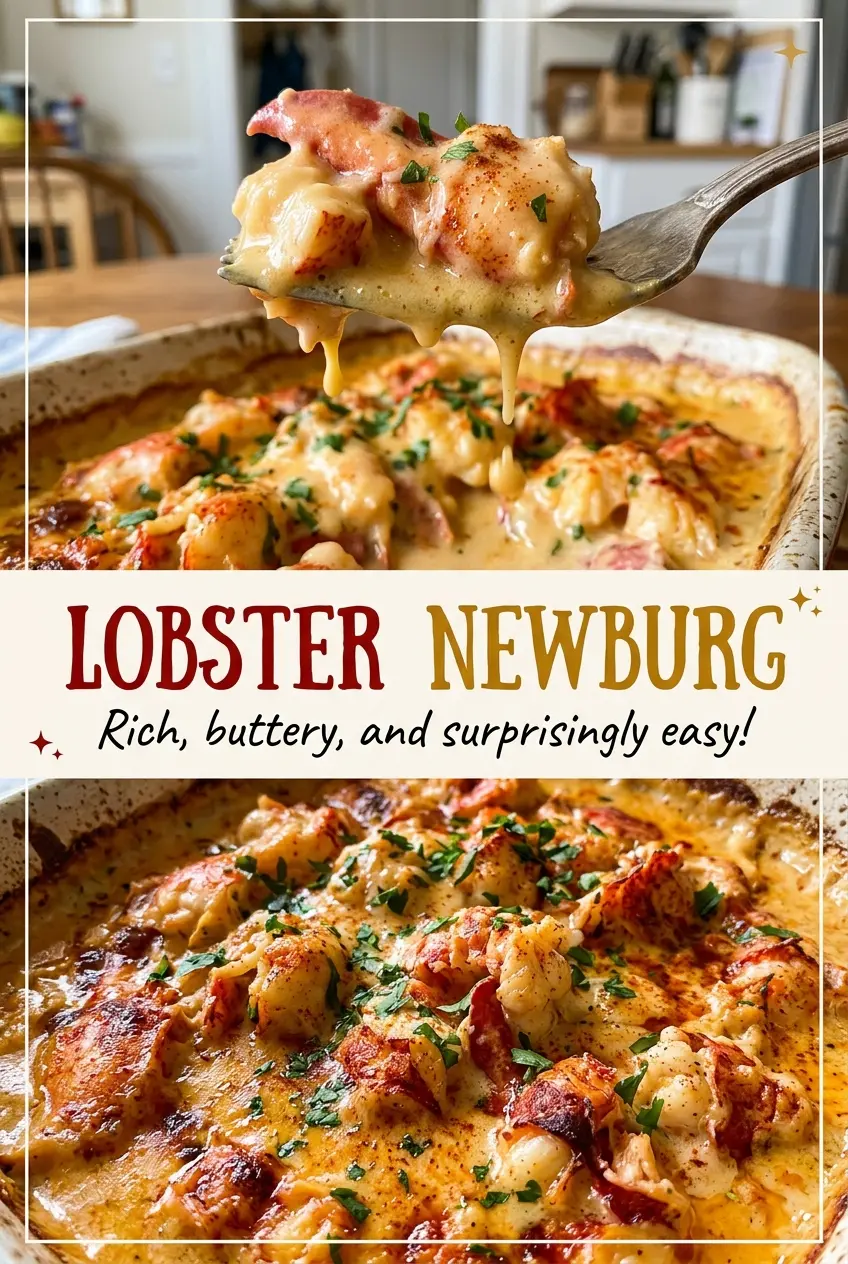
The shallot softens in butter, then the sherry and cognac bubble down until the sharp edge of the alcohol gives way to a deeper, rounder aroma. That little stretch at the stove is what makes this Lobster Newburg taste composed rather than like cream poured over lobster. I keep the heat moderate and watch the liquid closely; it should reduce by about half, not disappear.
The sauce is rich, but it shouldn’t feel heavy or pasty. Egg yolks thicken the cream into a smooth coating, and the cooked lobster only needs a brief warm-through at the end. I like the contrast of that tender lobster and spoonable sauce against a slice of golden white toast.
This is the sort of dish where a few minutes of attention matter more than a long ingredient list. Keep the heat gentle once the yolks go in, and the sauce stays glossy enough to gather around every piece of lobster.
Kitchen Note
Toast the bread near the end, so it’s still crisp when the Newburg goes on top. Golden toast gives the creamy sauce something sturdy to rest on; bread left waiting too long softens quickly.
Save this Lobster Newburg for a dinner that calls for tender lobster in a silky sherry-and-cognac sauce over golden toast.
Why the Sherry and Cognac Go In Before the Cream
Those spirits aren’t just there to make the sauce taste boozy. Simmering them with the softened shallot reduces the liquid by about half and concentrates their aroma before the cream joins the pan. Add the cream too early and you lose that clear, rounded sherry-and-cognac note beneath the richness.
Use a steady simmer and keep an eye on the volume rather than waiting for the pan to look dry. The liquid should noticeably recede, while the shallot remains soft and the bottom of the saucepan stays moist. You’re building a flavorful base, not browning the shallot or making a sticky glaze.
That order also lets the cream heat gently without needing a hard boil. When it’s steaming, it’s ready for the yolk mixture; boiling can make a cream sauce harder to control once the eggs are added. The finished sauce should taste rounded, with the lobster still unmistakably at the center.
What Gives Newburg Its Silky Sauce—and What the Toast Adds

- Cooked lobster — Since it only warms briefly in the sauce, start with tender cooked meat you’d be happy to eat on its own. Cut it into even pieces so they heat at the same pace; if using frozen cooked lobster, thaw it fully and drain it well before cutting.
- Heavy cream and egg yolks — The cream provides the sauce’s richness, while the yolks thicken it without flour. Heavy cream is the right choice here; a thinner dairy product won’t give the same lush body and is less forgiving when heated.
- Dry sherry and cognac or brandy — Dry sherry keeps the base from turning sweet, and cognac adds a warm, aromatic note. Brandy is the direct alternative. Use a drinkable dry sherry rather than sweet sherry, which would pull the sauce in a different direction.
- Shallot, cayenne, and nutmeg — Finely chopped shallot softens quickly into the butter and gives the sauce a gentle savory base. Cayenne adds quiet warmth rather than a chili-forward taste; freshly grated nutmeg brings a fragrant finish.
- White bread — Toasted white bread catches the sauce without competing with the lobster. A straightforward loaf works well; the important part is getting the slices golden enough to hold their shape under the topping.
- Unsalted butter — It gives the shallot a mellow start and lets the salt level stay under your control. There’s no need to seek out a specialty butter; a fresh, standard unsalted butter is right for this sauce.
The Slow, Gentle Heat That Keeps the Egg-Yolk Sauce Smooth
Soften the Shallot and Reduce the Spirits
Melt the butter in a 2-quart saucepan over medium-low heat, then stir in the finely chopped shallot. Cook for 2–3 minutes, until it’s softened but not browned. Add the sherry and cognac or brandy and simmer for 2–3 minutes, until the liquid has reduced by about half. If the pan looks nearly dry, lower the heat; the base should reduce, not scorch.
Warm the Cream Without Boiling It
Stir the heavy cream into the reduced mixture and heat it until steaming, about 2–3 minutes. Look for wisps of steam rising from the surface, not rolling bubbles around the edge. Keep the pan below a boil, because the yolks will be added next and need gentle heat to thicken smoothly.
Temper the Yolks and Thicken the Sauce
In a small bowl, whisk the egg yolks with the salt, cayenne, and nutmeg. Slowly whisk about 1/2 cup of the hot cream mixture into the yolks, adding it gradually while you keep whisking. Pour the warmed yolk mixture back into the saucepan and cook over low heat, stirring constantly, for about 2–4 minutes. Stop when the sauce coats the back of a spoon and reaches 160°F; don’t let it boil.
Warm the Lobster and Spoon It Over Toast
Fold the lobster pieces into the thickened sauce and cook gently for 1–2 minutes, just until heated through. Stir with a light hand so the pieces stay intact, and keep the sauce below a boil. Toast the white bread for 2–4 minutes, until golden. Set a slice on each plate and spoon the lobster Newburg over it.
Small Changes That Suit Your Table Without Losing the Newburg Feel
Use Brandy Instead of Cognac
Brandy works in the same place as cognac and keeps the sauce’s warm spirit note. The finished Newburg will be a little different in aroma depending on the bottle, but the method stays the same.
Leave Out the Cayenne for a Milder Sauce
Omit the cayenne if you want the sherry, cream, and lobster to lead without a peppery finish. The sauce will lose its gentle background warmth, but the nutmeg still gives it a fragrant edge.
Turn the Toast Into Smaller Pieces
Cut the white bread into smaller pieces after toasting and spoon the Newburg over them for an easier-to-share presentation. Smaller pieces give you more crisp edges, though they soften faster once the sauce is on top.
Storage and Reheating
- Refrigerator: Store in an airtight container and eat within 3 days. The sauce firms as it chills, and the lobster may feel a little less tender after reheating.
- Freezer: Freezing isn’t recommended; the cream-and-yolk sauce can separate, and the lobster can turn tough when thawed.
- Reheating: Warm gently in a saucepan over low heat, stirring often, until leftovers reach 165°F. Don’t let the sauce boil, or its texture may turn grainy.
Questions That Come Up When Making Lobster Newburg
Lobster Newburg
Ingredients
Equipment
Method
- In a 2-quart saucepan, melt the butter over medium-low heat. Add the shallot and cook, stirring, until softened, 2–3 minutes.
- Add the sherry and cognac and simmer until the liquid is reduced by about half, 2–3 minutes.
- Stir in the cream and heat until steaming, about 2–3 minutes; do not let it boil.
- In a small bowl, whisk the egg yolks with the salt, cayenne, and nutmeg. Slowly whisk about 1/2 cup of the hot cream mixture into the yolks.
- Pour the yolk mixture into the saucepan and cook over low heat, stirring constantly, until the sauce thickens enough to coat a spoon and reaches 160°F, about 2–4 minutes.
- Fold in the lobster and cook gently until heated through, 1–2 minutes; do not let the sauce boil.
- Toast the bread until golden, 2–4 minutes.
- Place a slice of toast on each plate and spoon the lobster Newburg over it.