When a turkey’s skin starts turning golden, the thickest part can still need plenty of time in the oven. I keep a loose sheet of foil nearby so the skin doesn’t get too dark while the meat finishes roasting. This juicy roast turkey is sized for a fully thawed 12- to 14-pound natural bird, with softened herb butter rubbed over the outside and beneath the breast skin.
Soft butter is easier to mix with the thyme, rosemary, salt, and pepper, and it spreads more evenly than cold butter. Getting some of that mixture under the breast skin brings the herbs close to the meat instead of leaving all the seasoning on the surface. Onion, lemon, and garlic go into the cavity for a fragrant roast.
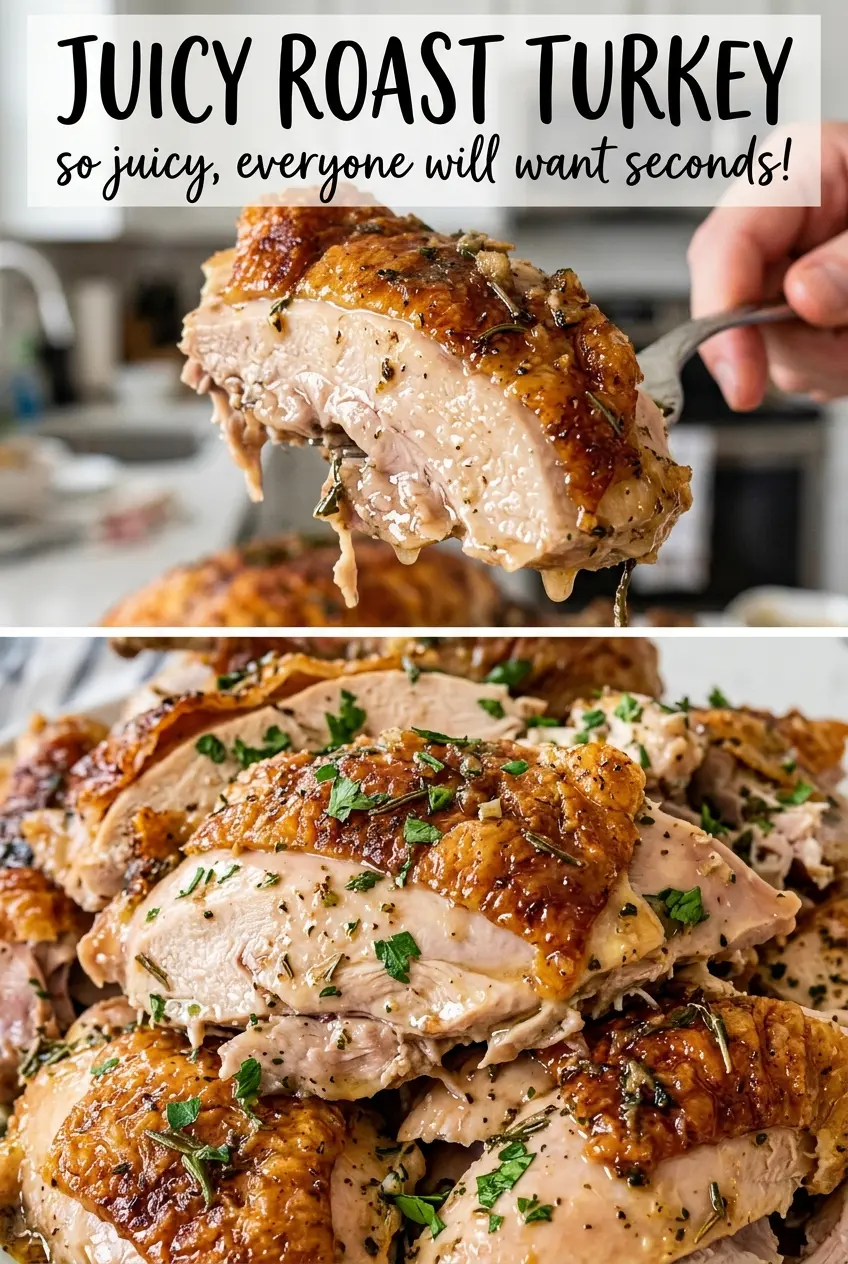
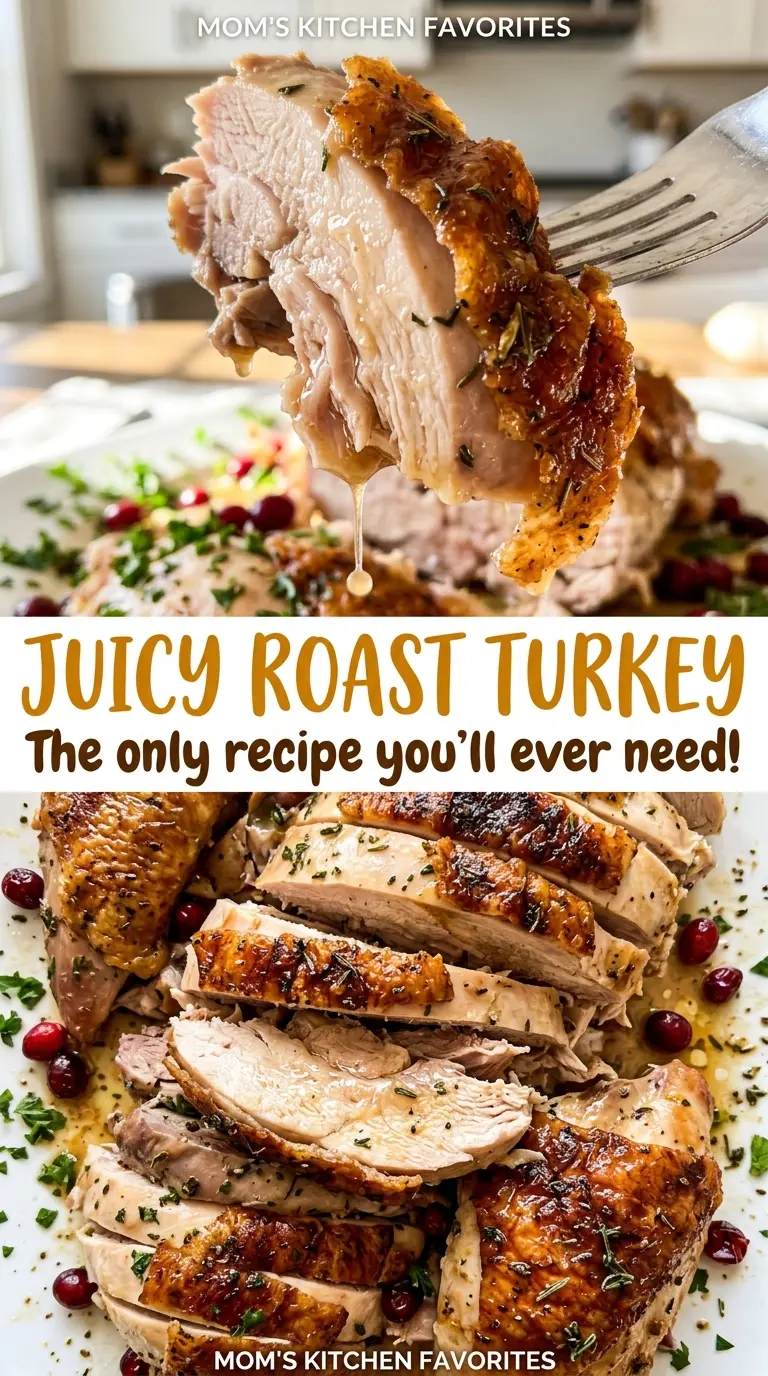
After the turkey rests, the skin is deeply colored and the carved meat carries the savory scent of the herbs, with lemon and garlic tucked inside the bird.
Kitchen Note
Pat the turkey until the skin feels dry, not slick with moisture. A careful blot now makes it easier to spread the softened butter in an even layer.
Save this juicy roast turkey for a holiday table or any meal that calls for herb-buttered slices and golden skin.
Why a Partly Frozen Turkey Won’t Follow This Roasting Window
The roasting time here assumes the turkey is fully thawed before it goes into the oven. An icy patch in the cavity or deep in the bird changes how heat moves through it: the outside keeps roasting while the colder section catches up. Adding time based on guesswork can leave the breast exposed to heat longer than it needs.
Use the listed time as a guide for a fully thawed bird in the stated weight range, not as a guarantee that every turkey will finish at the same minute. Size and shape vary, and a thermometer gives you a more useful answer than skin color. Check the thickest part of the breast and the innermost part of the thigh without touching bone; both spots need to reach the recipe’s doneness temperature. Starting with a fully thawed turkey gives that check a fair chance of matching the roasting window.
What the Herb Butter and Cavity Aromatics Bring to the Bird
- Natural whole turkey — Choose a bird in the stated size range and thaw it completely. A natural turkey is the starting point for the seasoning balance here.
- Unsalted butter — Softened butter blends easily with the seasonings and spreads over the skin and under the breast skin. Unsalted butter also lets the fine salt in the mixture do the seasoning.
- Fresh thyme and rosemary — Fresh chopped herbs give the butter a fragrant, green aroma. Pick herbs with lively leaves rather than wilted or browned sprigs; chopping them shortly before mixing keeps their scent vivid.
- Fine salt and ground black pepper — Fine salt mixes through the butter evenly, while ground pepper adds a mild savory bite. Unsalted butter keeps the salt level easier to control.
- Onion, lemon, and garlic — Quarter the onion and lemon, and halve the garlic head crosswise before placing them in the cavity. These aromatics perfume the inside of the turkey as it roasts; they aren’t a bread stuffing.
From a Dry Surface to a Rested Roast Turkey
Set Up the Oven and Prepare the Bird
Position an oven rack in the lower third and preheat the oven to 325°F. Set a rack inside a 16-by-13-inch roasting pan. Remove the neck and giblets from both cavities, then pat the turkey very dry and tuck the wing tips behind its back.
Spread the Seasoned Butter
Stir the softened butter with the fine salt, black pepper, chopped thyme, and chopped rosemary until the herbs are distributed throughout. Rub the mixture over the turkey, then gently work some beneath the breast skin. If the butter clumps in one spot, spread it with your fingers so the layer is even rather than leaving a thick patch.
Add the Aromatics and Set the Turkey in the Pan
Place the quartered onion and lemon and the halved garlic head in the cavity. Set the turkey breast-side up on the roasting rack. Keep it centered on the rack so it sits securely in the pan.
Roast, Check, and Rest
Roast at 325°F for 3 to 3¾ hours. If the skin browns too quickly, tent the turkey loosely with foil; don’t wrap it tightly. Check the thickest part of the breast and the innermost part of the thigh with a thermometer, taking care not to touch bone, and roast until both read 165°F. Transfer the turkey to a cutting board and let it rest for 30 minutes before carving.
Three Small Changes to the Herb and Cavity Flavor
A Thyme-Only Herb Butter
Leave the rosemary out of the butter and keep the thyme. The flavor will be lighter and more gently herbal, without rosemary’s woodsy aroma.
A Rosemary-Forward Roast
Skip the thyme and use the rosemary in the butter. Its piney, savory aroma will stand out more clearly against the mild turkey meat.
A Less Citrus-Scented Cavity
Leave out the lemon and keep the onion and garlic in the cavity. The turkey will have a more savory aroma, with less bright citrus fragrance.
Storage and Reheating
- Refrigerator: Refrigerate leftover turkey within 2 hours and use it within 3 to 4 days. Store carved meat in a covered, airtight container; it will lose some moisture as it sits.
- Freezer: Freeze carved meat in airtight freezer-safe packaging for 2 to 6 months for best quality. Thaw it in the refrigerator before reheating.
- Reheating: Cover slices and warm them in the microwave in short bursts until steaming hot throughout. Long, uncovered reheating dries the meat.
Questions That Come Up While the Turkey Roasts
Juicy Roast Turkey
Ingredients
Equipment
Method
- Position an oven rack in the lower third of the oven.
- Preheat the oven to 325°F.
- Set a rack in a 16x13-inch roasting pan.
- Remove the neck and giblets from the turkey cavities, then discard or reserve them for another use.
- Pat the turkey very dry with paper towels.
- Tuck the wing tips behind the back.
- Mix the softened butter, salt, pepper, thyme, and rosemary.
- Rub the butter mixture over the turkey and under the breast skin.
- Put the onion, lemon, and garlic in the cavity.
- Set the turkey breast-side up on the roasting rack.
- Roast at 325°F for 3 to 3 3/4 hours, tenting loosely with foil if the skin browns too quickly, until a thermometer reads 165°F in the thickest part of the breast and the innermost part of the thigh without touching bone.
- Transfer the turkey to a cutting board.
- Rest for 30 minutes before carving.