When the beef hits the hot oil, you want a steady sizzle, not a pot full of gray cubes steaming in their own moisture. I dry the chuck well and brown it in batches before anything else goes into the Dutch oven; those dark bits left behind become part of the gravy. Keeping the cubes close to the same 1 1/2-inch size helps them cook at a similar pace. That patience gives Irish beef stew its deep, roasty base without needing a long list of extras.
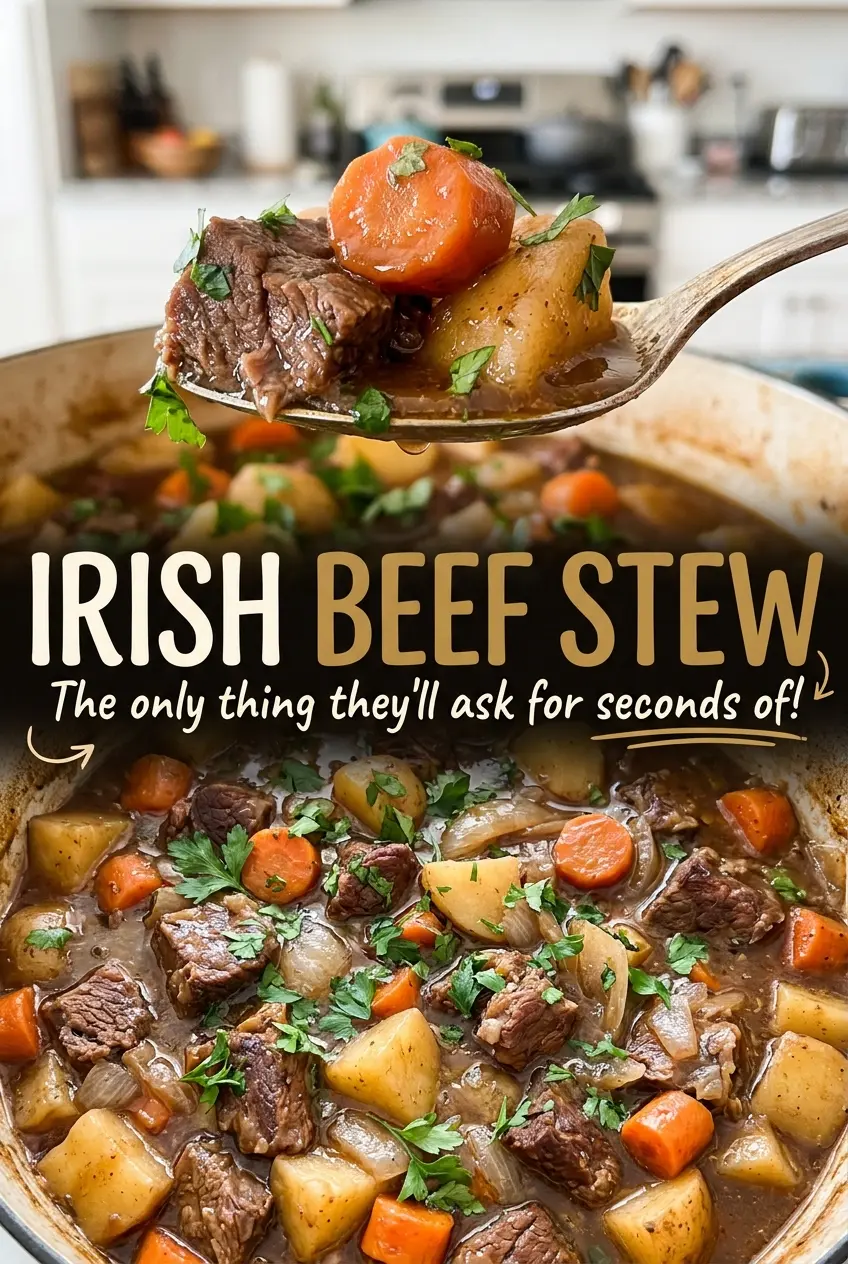
The stout and beef broth simmer with the browned beef until the chuck is nearly fork-tender, then the carrots and Yukon Gold potatoes go in for the shorter finish. The beef gets the time it needs, while the vegetables keep enough shape to make each spoonful feel like stew instead of mash. The finished broth is dark and savory, and the beef yields easily when pressed with a fork.
Kitchen Note
Don’t crowd the pot while browning the beef. Working in batches gives the cubes room to color on several sides instead of steaming together.
Save this Irish beef stew for a cozy dinner — stout-rich gravy, tender chuck, and potatoes that hold their shape.
Why a Gentle Simmer Makes Chuck Tender Instead of Tough
A rolling boil can look productive, but it isn’t what this pot needs. Chuck has connective tissue that softens gradually as it cooks; keeping the liquid at a gentle simmer gives that process time without beating the meat around. If the surface is churning hard, the beef can tighten and the broth gets less clear.
With the lid on and the heat low, look for occasional small bubbles around the edges rather than a constant boil. Adjust the burner as needed to hold that quiet simmer through the long braise. The vegetables go in only after the beef is nearly tender, so they don’t spend the full cooking time in the pot and turn soft before the meat is ready.
What the Stout, Chuck, and Potatoes Bring to the Pot

- Beef chuck — Its marbling and connective tissue suit a long, moist cook, giving the stew tender pieces and a fuller broth. Choose chuck with some visible marbling; you don’t need a premium steakhouse cut. If you need a swap, boneless short rib cut into similar cubes works, though it usually costs more and makes a richer stew.
- Stout — Stout contributes roasted, malty depth that plain broth can’t quite reproduce. A standard grocery-store stout is fine; an expensive craft bottle isn’t necessary. The flavor varies by brand, so choose one you enjoy drinking rather than an especially bitter, heavily roasted beer.
- All-purpose flour — Stirring the flour with the onion and garlic before adding liquid helps it disperse into the gravy instead of leaving dry pockets. Regular all-purpose flour is the right inexpensive choice here. For a gluten-free pot, use a cup-for-cup gluten-free flour blend; the substitution is explained below.
- Yukon Gold potatoes — Their creamy centers and relatively sturdy texture suit the final simmer. Red potatoes are the closest easy swap and keep their shape well when cut to the same size. Avoid cutting them into small dice, which cook through faster and are more likely to break up.
- Carrots and beef broth — Ordinary fresh carrots and standard beef broth work well; save specialty purchases for another dish. Cut the carrots evenly so they soften at about the same pace. The broth supplies the savory base, while the browned beef and stout bring the deeper notes.
The Order That Builds a Dark Gravy and Tender Beef
Brown the Chuck in Batches
Pat the beef dry with paper towels, season it with kosher salt and black pepper, and heat the vegetable oil in a 6-quart Dutch oven over medium-high heat. Brown the beef in batches, turning it so several sides color, about 8–10 minutes total per batch. Transfer each batch to a plate as it browns. A browned surface is the cue to move on; pale, wet-looking cubes need more contact with the pot.
Soften the Onion and Cook the Flour
Add the chopped onion and cook over medium heat, stirring occasionally, until softened, 5–7 minutes. It should look glossy and pliable rather than browned at the edges. Stir in the minced garlic and flour, then cook for 1 minute while stirring constantly. Keep the flour moving so it cooks evenly and doesn’t catch on the bottom of the pot.
Deglaze and Start the Braise
Gradually stir in the stout and beef broth, scraping up the browned bits from the bottom as the liquid loosens them. Add the dried thyme, bay leaves, and browned beef along with any juices on the plate. Bring the pot to a gentle simmer, then cover it and cook over low heat for 1 1/2–2 hours, adjusting the heat as needed. The beef should be nearly fork-tender before the vegetables go in.
Finish with the Carrots and Potatoes
Stir in the carrots and Yukon Gold potatoes, cover the pot again, and simmer for 30–40 minutes. Check that the vegetables are tender and the beef gives easily to a fork before serving. If the vegetables are ready but a piece of beef still feels firm, use tenderness as your guide rather than rushing the pot with high heat. Remove the bay leaves before ladling.
Three Useful Ways to Adapt This Irish Beef Stew
A Gluten-Free Version
Use a cup-for-cup gluten-free flour blend in place of the all-purpose flour, and replace the stout with the same volume of beef broth. Choose broth labeled gluten-free. The stew stays hearty and savory, though it loses the stout’s roasted malt character.
A Red Wine Braise
Replace the stout with an equal volume of dry red wine. The gravy becomes more wine-forward and less malty, with a sharper edge that suits the beef. Keep the rest of the ingredients and method unchanged.
Swap in Red Potatoes
Use red potatoes instead of Yukon Gold, keeping the pieces about the same size. They hold their shape well through the simmer and have a slightly firmer, less buttery bite. The timing stays the same; check for tenderness before serving.
Storage and Reheating
- Refrigerator: Store covered in an airtight container for 3–4 days. The potatoes may soften a little as they sit.
- Freezer: Freeze in airtight, freezer-safe containers for up to 2–3 months. The stew freezes well, though potatoes can turn a little grainy after thawing; thaw overnight in the refrigerator.
- Reheating: Warm gently on the stovetop, stirring occasionally, until the center reaches 165°F. Avoid a hard boil, which can make the beef seem firmer and break up the potatoes.
Questions That Come Up While the Stew Simmer
Irish Beef Stew
Ingredients
Equipment
Method
- Pat the beef dry with paper towels and season it with the salt and pepper.
- Heat the oil in a 6-quart Dutch oven over medium-high heat, then brown the beef in batches, turning to brown several sides, about 8–10 minutes total per batch; transfer each batch to a plate.
- Add the onion to the pot and cook over medium heat, stirring occasionally, until softened, 5–7 minutes.
- Stir in the garlic and flour and cook for 1 minute, stirring constantly.
- Gradually stir in the stout and beef broth, scraping up the browned bits from the pot, then add the thyme, bay leaves, and browned beef with any accumulated juices.
- Bring the stew to a gentle simmer, cover, and cook over low heat until the beef is nearly fork-tender, 1 1/2–2 hours; adjust the heat as needed to maintain a gentle simmer.
- Stir in the carrots and potatoes, cover, and simmer until the vegetables are tender and the beef is fork-tender, 30–40 minutes; remove the bay leaves before serving.