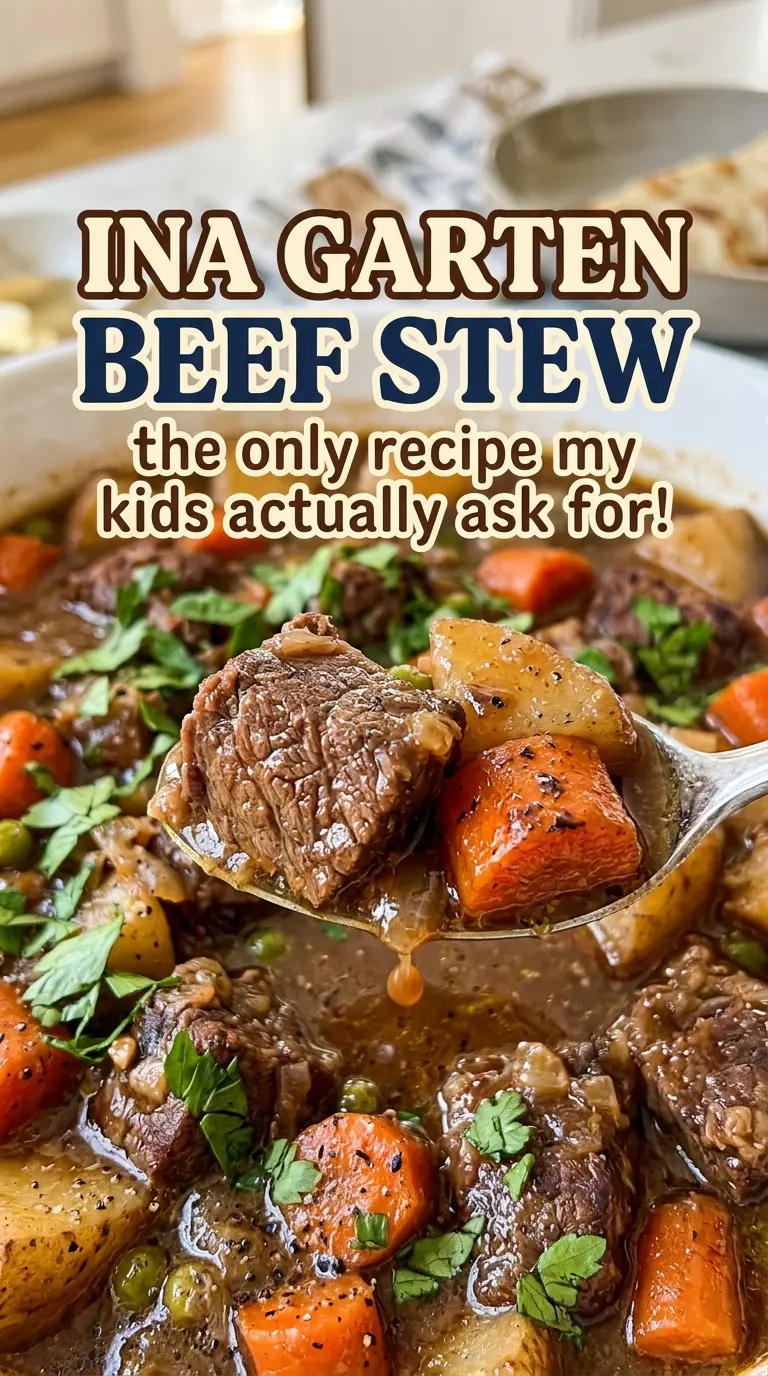
The beef should sizzle when it hits the Dutch oven, not quietly steam. I brown it in batches so those flour-coated edges turn deep golden before the vegetables go in. That first bit of color gives Ina Garten beef stew its hearty, savory base, while the long oven braise turns chuck tender enough to pull apart with a fork.
The overnight wine marinade gives the beef time to take on a little of the wine’s flavor, and the same reserved wine goes into the pot for braising. I like how the carrots and potatoes cook right alongside the beef, so the stew comes out as a full meal in one pot. A handful of frozen peas goes in at the end, keeping its color and sweetness against the rich broth.

Kitchen Note
When you lift the beef out of its overnight marinade, save the wine for the braise. Discard the smashed garlic and bay leaves, but don’t pour away the liquid that’s carried their flavor.
Save Ina Garten beef stew for a cozy dinner later: wine-braised chuck, tender vegetables, and peas stirred in at the finish.
Why These Beef Cubes Need to Stay Bigger Than Bite-Size
Cutting the chuck into 1 1/2-inch cubes isn’t just about making the bowl look generous. The stew spends hours in the oven, and larger, evenly sized pieces have enough substance to become fork-tender without disappearing into the broth. Smaller cubes expose more surface area to that long braise; they can turn dry or begin breaking apart before the vegetables are ready.
Uniformity matters as much as size. If one piece is twice as large as the next, the smaller one may soften much sooner, leaving you with a mix of textures. Aim for pieces close to the same size when you cut the chuck, then let the covered pot do its slow work. When the beef yields easily to a fork, it’s ready to eat; it shouldn’t need to be chopped up at the table.
The Ingredients That Build This Stew’s Deep, Savory Base
- Beef chuck — Chuck has enough marbling and connective tissue for a long braise, which is what gives the finished beef its tender, substantial bite. A neatly trimmed supermarket chuck roast works well; leave the fine marbling in place rather than trimming the meat lean.
- Dry red wine — The wine flavors the beef overnight and becomes part of the braising liquid. Choose a dry red rather than a sweet one; an affordable bottle is fine, so there’s no need to use a special-occasion wine.
- All-purpose flour — The seasoned dredge helps the beef brown and gives the braising liquid body. For a gluten-free version, a cup-for-cup gluten-free all-purpose flour blend is the most practical swap; the coating may be a little different, but the stew still gets its flour dredge.
- Garlic, bay leaves, and rosemary — The smashed garlic and bay leaves flavor the marinade, while minced garlic cooks with the vegetables and the rosemary goes into the covered braise. Keep the smashed and minced garlic separate during prep so the cloves meant for the pot don’t end up in the discard pile.
- Carrots and potatoes — Cut the carrots into the listed large chunks and halve or quarter the small potatoes so both can hold their shape through the oven braise. Yukon Gold potatoes work in place of small potatoes; cut them into pieces of a similar size for an even texture.
- Sun-dried tomatoes and Worcestershire sauce — Oil-packed sun-dried tomatoes bring concentrated tomato flavor, so drain them before slicing. Worcestershire adds a savory, slightly tangy note; the standard version is fine here.
- Frozen peas — They go in after the oven braise, which keeps them from cooking down into the stew. Frozen peas are convenient and work well straight from the freezer.
From Overnight Marinade to Fork-Tender Beef
Let the Wine Flavor the Beef
Put the beef in a large bowl with the bottle of red wine, the smashed garlic, and the bay leaves. Cover the bowl and refrigerate it overnight. When you’re ready to cook, lift out the beef and discard the garlic and bay leaves, keeping the wine for the pot.
Dredge and Brown in Batches
Heat the oven to 300°F, then whisk the flour with 1 tablespoon of kosher salt and 1 tablespoon of black pepper in a shallow dish. Dredge the beef, shaking off excess flour so it coats the cubes without clumping. Heat 2 tablespoons of olive oil in a 7-quart Dutch oven over medium heat and brown the beef in batches, adding more oil as needed. Transfer each batch to a plate once browned.
Soften the Vegetables in the Dutch Oven
Add the remaining olive oil, then stir in the onions, carrots, potatoes, and minced garlic. Cook over medium heat for 10 minutes, stirring occasionally. The vegetables should begin to soften, but they don’t need to be fully cooked before the oven braise. Keep the browned beef on its plate while they cook.
Braise Until Tender, Then Add the Peas
Return the beef to the pot and add the reserved wine, chicken broth, rosemary, sun-dried tomatoes, Worcestershire sauce, and the remaining salt and pepper. Bring the mixture to a simmer, cover the pot, and bake for 2 to 2 1/2 hours, stirring once, until the beef is fork-tender. Remove the rosemary, stir in the frozen peas, and simmer uncovered on the stovetop for 5 minutes, until the peas are hot.
Simple Ways to Adapt the Stew Without Losing Its Character
Make the Flour Dredge Gluten-Free
Replace the all-purpose flour with the same volume of cup-for-cup gluten-free all-purpose flour blend. The coating may brown a little differently, but it still gives the beef a light dredge and helps the broth develop body.
Use Yukon Gold Potatoes
Swap in the same amount of Yukon Gold potatoes for the small potatoes, cutting them into similarly sized pieces. Their buttery texture fits the rich broth, though they may soften a little more at the edges during the long braise.
Leave Out the Peas
For a more savory, less sweet finish, omit the frozen peas. The stew will still have its carrots and potatoes, but you’ll miss the fresh green color and little bursts of sweetness they bring.
Storage and Reheating
- Refrigerator: Store in a covered container for 3 to 4 days. The potatoes soften a bit as they sit in the broth.
- Freezer: Freeze in airtight portions for up to 3 months. The beef holds up well, though the potatoes may be softer after thawing.
- Reheating: Warm gently in a saucepan, stirring now and then, until the stew reaches 165°F. Avoid a hard boil, which can break up the potatoes.
Questions That Come Up While Making This Beef Stew
Ina Garten Beef Stew
Ingredients
Equipment
Method
- Place the beef in a large bowl with the wine, 3 smashed garlic cloves, and bay leaves, cover, and refrigerate overnight.
- Preheat the oven to 300°F.
- Lift the beef from the marinade and discard the smashed garlic and bay leaves, reserving the wine.
- Whisk the flour with 1 tablespoon of the salt and 1 tablespoon of the pepper in a shallow dish, then dredge the beef in the mixture and shake off the excess.
- Heat 2 tablespoons of the oil in a 7-quart Dutch oven over medium heat and brown the beef in batches, adding more oil as needed; transfer the browned beef to a plate.
- Add the remaining oil to the pot, then add the onions, carrots, potatoes, and 3 minced garlic cloves and cook over medium heat for 10 minutes, stirring occasionally.
- Return the beef to the pot and add the reserved wine, chicken broth, rosemary, sun-dried tomatoes, Worcestershire sauce, and remaining salt and pepper; bring to a simmer, cover, and bake for 2 to 2 1/2 hours, stirring once, until the beef is fork-tender.
- Remove the rosemary, stir in the frozen peas, and simmer uncovered on the stovetop for 5 minutes, until the peas are hot.