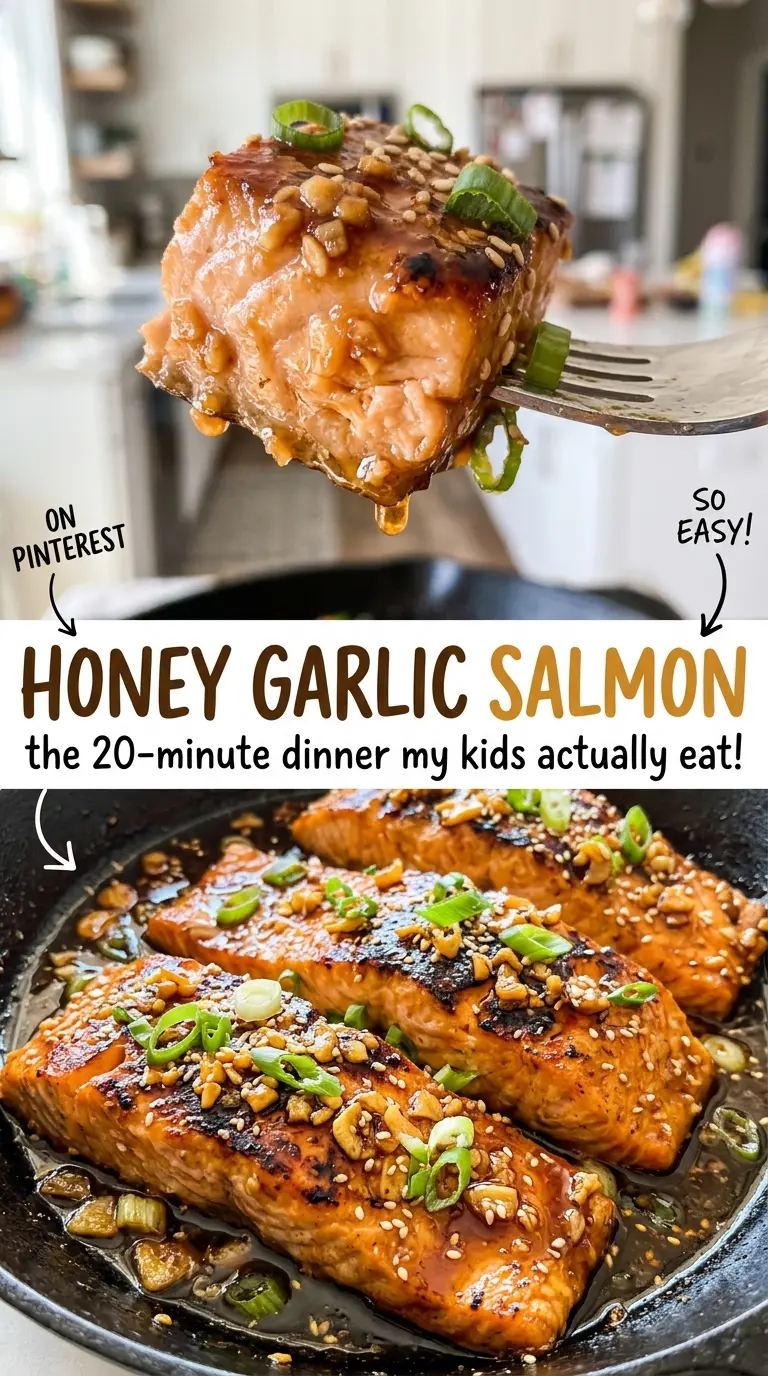
When the salmon hits the hot skillet, the skin should start sizzling right away; that first sear is what gives you a crisp bottom before the sticky glaze goes anywhere near the pan. I learned not to rush that part. Honey can go from glossy to scorched in a hurry, so these honey garlic salmon fillets cook first, then get coated in the sauce at a gentler temperature.
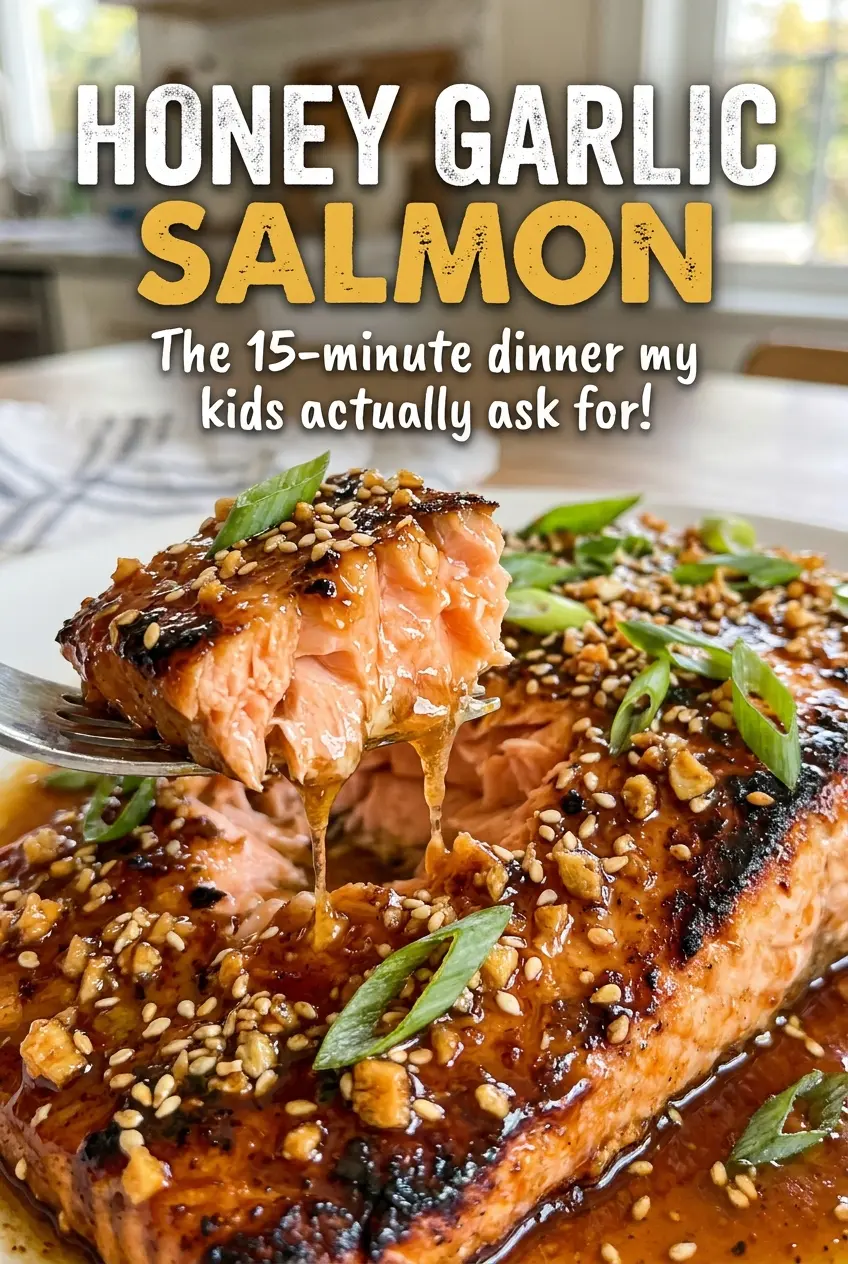
The glaze takes a minute to whisk together, and the rest is a quick skillet dinner with a clear visual cue for when to turn the fish: the flesh turns opaque about two-thirds of the way up the sides. I spoon the honey, soy, garlic, and lemon over the fillets at the end, so the sweet-savory sauce clings without masking the salmon. You get crisp skin, tender centers, and a bright, garlicky glaze in every bite.
Kitchen Note
Wait for the flesh to turn opaque about two-thirds of the way up the sides before flipping. That cue gives the skin time to crisp without leaving the center to cook through before the glaze goes on.
Save this Honey Garlic Salmon for a fast skillet dinner with crisp skin and a glossy honey-soy glaze.
Why the Honey Glaze Goes Into the Pan After the Salmon
Honey gives this sauce its shine and body, but it also browns quickly in a hot skillet. If it cooks while the salmon is searing over medium-high heat, the garlic can turn bitter before the fish is ready. Cooking the salmon on its own first lets the skin crisp in the oil without asking the glaze to withstand that same high heat.
Once the fish is on a plate, the skillet still holds a little oil and the flavor left behind by the salmon. Lowering the heat to medium-low gives the honey and soy time to simmer together while you stir. The sauce should look a little thicker after a few minutes, not dark or sticky at the bottom of the pan. That brief simmer also softens the raw edge of the minced garlic, while lemon juice keeps the sweetness in check.
Keep the glaze moving as it simmers, especially around the edges of the skillet. If you see it darkening fast or sticking, the pan is too hot; lower the heat before returning the fish. Spoon the sauce over the fillets only at the end, when it can coat the salmon instead of burning onto the skillet.
How Honey, Soy, and Lemon Shape This Salmon Glaze
- Honey — It sweetens and thickens the glaze, helping it cling to the fish. A standard honey works well here; a strongly flavored variety will bring its own floral notes. Keep the heat gentle once it reaches the pan, since honey can darken quickly.
- Low-sodium soy sauce — It brings salt and savory depth without making the glaze as salty as regular soy sauce could. The low-sodium version is worth choosing because the sauce reduces slightly in the skillet. For a gluten-free adaptation, use certified gluten-free tamari in the same amount; it tastes a little rounder but still gives the glaze its savory backbone.
- Garlic and lemon juice — Minced fresh garlic gives the sauce a more pronounced flavor than a mild garlic powder swap would, and the lemon juice cuts through the honey. Mince the garlic finely so it distributes through the glaze instead of landing in large, sharp pieces. Fresh-squeezed lemon juice has a brighter taste, though bottled lemon juice works in the same amount.
- Skin-on salmon fillets — The skin protects the underside of the fish as it sears and gives you the crisp contrast that makes this skillet method work. Choose evenly sized fillets when possible so they finish at a similar pace. Patting the fish dry before it goes into the pan helps the surface sear instead of releasing moisture.
- Olive oil, kosher salt, and black pepper — The oil helps the skin make contact with the hot skillet, while salt and pepper season the flesh simply enough to let the glaze stand out. Freshly ground pepper gives a sharper bite, but pre-ground black pepper is fine for this dish. Season the flesh side, as the skin is already the part you want to keep dry for searing.
From Crisp Skin to a Glaze That Coats the Fish
Whisk the Glaze Before You Start
Stir the honey, low-sodium soy sauce, minced garlic, and lemon juice together in a small bowl until the honey loosens and the mixture looks even. Have it ready before you heat the skillet, since the salmon cooks quickly and you won’t want to stop and measure ingredients later. The garlic will settle as the mixture rests, so give the glaze another quick stir just before it goes into the pan.
Dry and Season the Salmon
Pat each fillet dry, then season the flesh side with kosher salt and black pepper. Drying the fish removes surface moisture that would otherwise interfere with a good sear. Keep the fillets close by so they can go straight into the skillet once the olive oil is hot. If the fish is damp, pat it again rather than letting it sit in a puddle on the plate.
Sear Skin-Side Down
Heat the olive oil in a 12-inch skillet over medium-high heat, then place the salmon skin-side down. Cook for 5–6 minutes, watching for the skin to become crisp and the flesh to turn opaque about two-thirds of the way up the sides. Turn the fillets and cook for 1 minute, then transfer them to a plate. If the skin is still pale and soft, give it a little more time before turning instead of trying to force it loose.
Simmer, Glaze, and Finish
Reduce the skillet heat to medium-low and pour in the glaze. Simmer for 2–3 minutes, stirring, until it has thickened slightly; the sauce should coat a spoon lightly rather than look syrupy or scorched. Return the salmon to the skillet and spoon the glaze over each fillet. Cook for 1–3 minutes, until the thickest part of every fillet reaches 145°F.
Two Practical Ways to Adapt Honey Garlic Salmon
Make the Glaze Gluten-Free
Replace the low-sodium soy sauce with the same amount of certified gluten-free tamari. The glaze will stay savory and balanced, with a slightly rounder, deeper taste. The salmon and cooking method stay the same.
Make It Less Sweet
Use 1/4 cup honey instead of 1/3 cup, leaving the other glaze ingredients unchanged. The sauce will be less sticky and taste more savory, though it won’t have quite the same glossy sweetness. Keep the simmer gentle and stop when it thickens slightly.
Storage and Reheating
- Refrigerator: Store cooked salmon in an airtight container for 3–4 days. The skin will soften in storage, and the glaze will thicken as it chills.
- Freezer: It freezes well for about 2–3 months. Cool the fillets, wrap them tightly or place them in a freezer-safe airtight container, and thaw in the refrigerator before reheating.
- Reheating: Warm the salmon covered in a 300°F oven until it reaches 165°F in the center, or microwave it at reduced power in short bursts. Avoid high heat; it can dry out the fish and make the honey glaze scorch.
Questions That Come Up While Cooking Honey Garlic Salmon
Honey Garlic Salmon
Ingredients
Equipment
Method
- Whisk the honey, soy sauce, garlic, and lemon juice together in a small bowl.
- Pat the salmon dry and season the flesh side with the salt and pepper.
- Heat the olive oil in a 12-inch skillet over medium-high heat. Add the salmon skin-side down and cook for 5–6 minutes, until the skin is crisp and the flesh is opaque about two-thirds of the way up the sides.
- Turn the salmon and cook for 1 minute, then transfer it to a plate.
- Reduce the heat to medium-low and pour the glaze into the skillet; simmer for 2–3 minutes, stirring, until slightly thickened.
- Return the salmon to the skillet and spoon the glaze over it; cook for 1–3 minutes, until the thickest part of each fillet reaches 145°F.