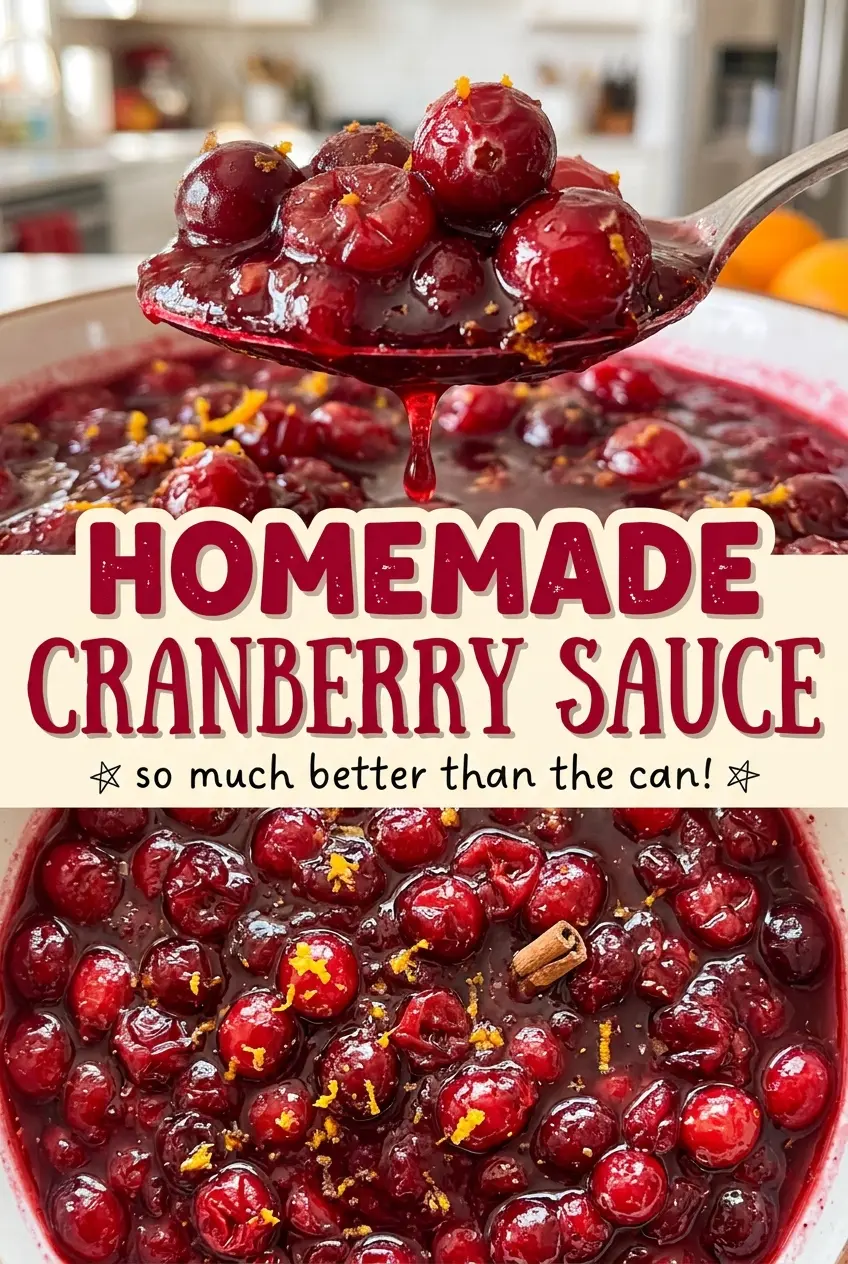
The cranberries start popping one by one, then the saucepan fills with a steady, soft bubbling sound. By the time most of them have burst, the berries and syrup have turned into a glossy, deep-red sauce. That’s the moment I look for when I make Homemade Cranberry Sauce: thick enough to cling to a spoon, with a few whole berries left for texture.
Finely grated orange zest goes in with the cranberries, so its fragrant oils mingle with the tart fruit as it cooks. It adds a clear citrus note without bringing in extra liquid. After a rest in the refrigerator, the sauce is cool, spoonable, and bright enough to stand on its own beside a savory meal.
Kitchen Note
I stir the sugar, water, and salt until the sugar has dissolved before the cranberries go in. It gives the berries a smooth syrup to cook in, rather than leaving crystals at the bottom of the pan.
Save this Homemade Cranberry Sauce for a bright, tart-sweet side with soft berries and a fresh orange aroma.
Why Cranberry Sauce Thickens After It Leaves the Heat
A pot of cranberry sauce doesn’t need flour or cornstarch to become spoonable. Cranberries contain natural pectin, and as the fruit cooks and softens, that pectin helps the liquid thicken. The berries also release their juices as their skins split, building a sauce from the fruit itself rather than from a separate thickener.
The finished sauce will still look looser while it’s hot than it will after chilling. Cooling gives the pectin time to settle into a softer gel, so the sauce holds its shape on a spoon without turning stiff. That change is useful to keep in mind when you’re judging the texture: hot sauce should look glossy and fluid, not like a firm jelly. Once chilled, it will be thicker and easier to serve in neat spoonfuls, while still keeping some of the berry texture.
What Fresh Cranberries and Orange Zest Bring to the Pot
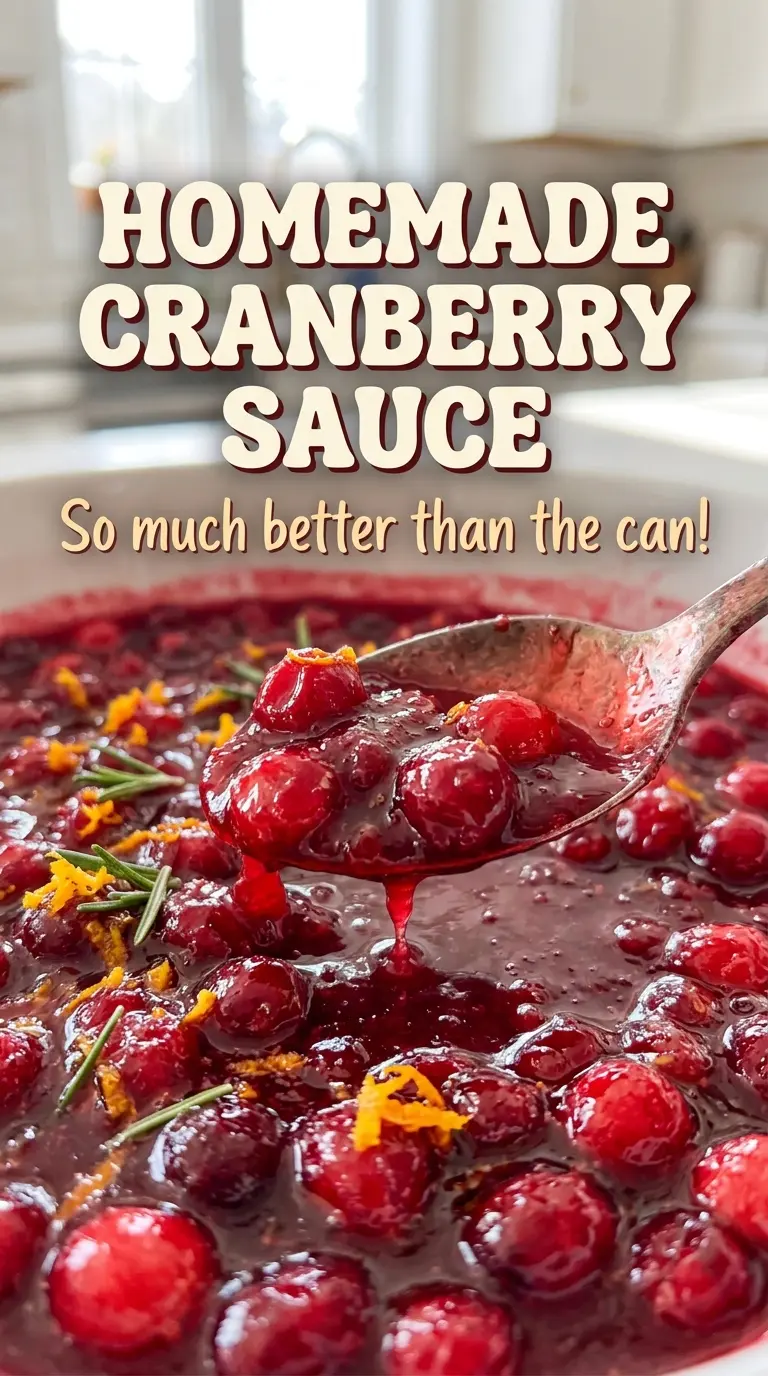
- Fresh cranberries — Firm berries cook into a sauce with a mix of tender fruit and burst skins. Rinse them and pick out any that feel soft or look damaged; starting with sound berries helps the batch cook more evenly. Dried cranberries won’t give you the same whole-berry sauce.
- Granulated sugar — It balances the cranberries’ sharpness and dissolves cleanly into the water. Keep it granulated for the familiar clean sweetness; a different sweetener can change both the flavor and how the sauce sets.
- Finely grated orange zest — The colored outer peel supplies concentrated orange aroma without adding juice to the saucepan. Grate it finely so it disperses through the sauce, and avoid the white pith, which can taste bitter. Orange juice isn’t a direct swap because it adds liquid without bringing the same concentrated zest aroma.
Building the Sauce in Four Clear Stages
Sort the Berries Before They Hit the Pan
Rinse the cranberries and look them over as you go, discarding any that are soft or damaged. Firm berries hold their shape until they soften and burst during the simmer. This quick check keeps an unpleasant, mushy berry from slipping into the finished sauce. Let the rinsed fruit drain while you start the syrup.
Dissolve the Sugar in a Small Saucepan
Combine the sugar, water, and salt in a 2-quart saucepan. Set it over medium heat and stir as the mixture comes to a boil. Watch for the moment the liquid looks clear and no sugar crystals remain on the bottom. Add the fruit only after the sugar has dissolved.
Simmer Until Most Berries Burst
Add the cranberries and finely grated orange zest to the boiling syrup. Simmer for 10 to 12 minutes, stirring occasionally so the fruit cooks evenly. You’ll hear berries pop and see the liquid deepen in color as the sauce thickens. Stop when most berries have burst and the mixture looks glossy, rather than waiting for every berry to disappear.
Cool, Then Chill Until Spoonable
Take the saucepan off the heat and let the sauce cool for 30 minutes. Transfer it to a serving bowl, then refrigerate it for at least 2 hours before serving. The sauce continues to firm as it cools, so don’t try to judge its final consistency while it’s still hot. After chilling, it should be easy to scoop and hold gently on a spoon.
Small Changes for a Less-Sweet or More Citrus-Forward Sauce
A Sharper, Lower-Sugar Batch
Use a little less granulated sugar for a tarter sauce that lets the cranberries lead. The tradeoff is a sharper flavor and a softer set, so reduce the sugar modestly rather than leaving it out altogether.
A Brighter Orange Finish
Add a little more finely grated orange zest for a more noticeable citrus aroma. The sauce will taste more orange-forward, but too much zest can make the finish bitter, so keep the increase restrained.
A Smaller Batch
Scale every ingredient down in the same proportion when you want less sauce. Use a smaller saucepan so the syrup and fruit still sit together in a compact layer, and rely on the burst-berry and thickened-sauce cues rather than assuming the original timing will be exact.
Make-Ahead and Serving
- Refrigerator: Keep the sauce covered and refrigerated for up to 1 week. It will become firmer as it chills.
- Freezer: It freezes well for up to 2 months in an airtight freezer-safe container. Thaw it in the refrigerator before serving; the texture may be a little softer after thawing.
- Serving: Serve it chilled from the bowl. Give it a gentle stir if the surface looks slightly firmer than the center.
Questions That Come Up When Making Cranberry Sauce
Homemade Cranberry Sauce
Ingredients
Equipment
Method
- Rinse the cranberries and discard any that are soft or damaged.
- In a 2-quart saucepan, combine the sugar, water, and salt; bring to a boil over medium heat, stirring until the sugar dissolves.
- Add the cranberries and orange zest.
- Simmer for 10 to 12 minutes, stirring occasionally, until most of the berries have burst and the sauce has thickened.
- Remove the pan from the heat and let the sauce cool for 30 minutes.
- Transfer the sauce to a serving bowl and refrigerate for at least 2 hours before serving.