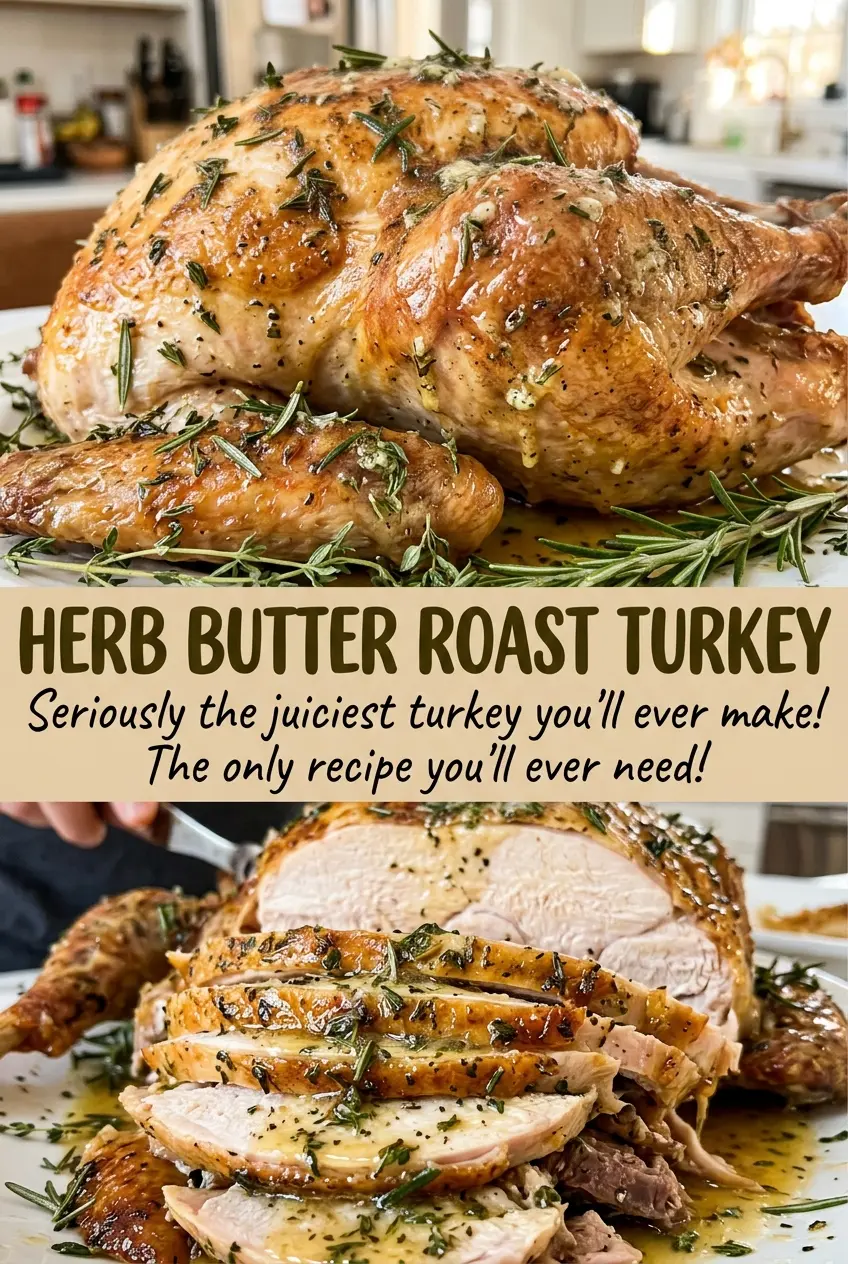
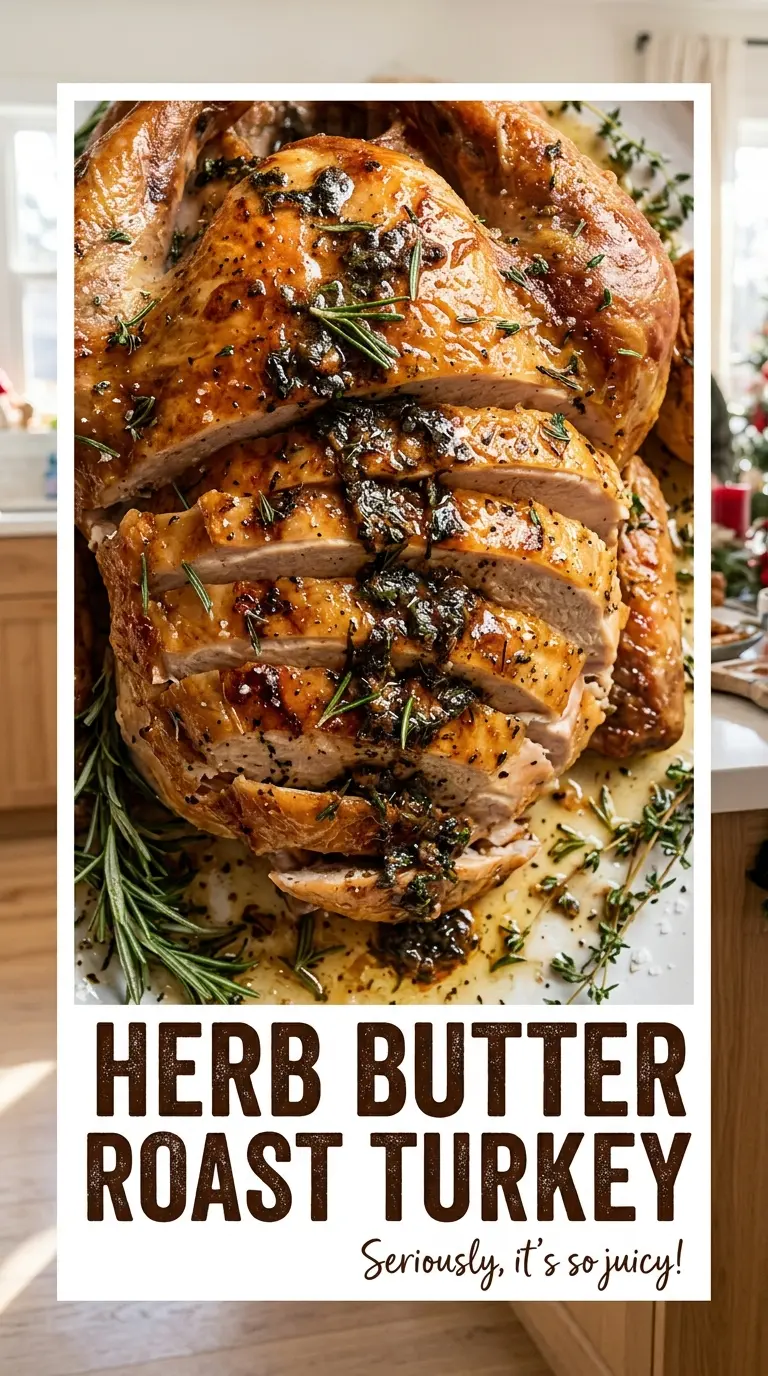
As the herb butter warms in the oven, its garlic and fresh herbs begin to perfume the kitchen before the turkey is anywhere near the table. The skin turns golden while the butter melts across the breast and thighs, and the lemon and onion tucked inside add a gentle aroma without turning the cavity into stuffing. This herb butter roast turkey makes 12 servings and keeps the ingredient list straightforward.
I use a fully thawed bird and give the softened butter a moment to blend evenly with the chopped herbs, garlic, salt, and pepper. That simple mixture brings seasoning to both the skin and the meat beneath it, while roasting the turkey uncovered lets the outside brown. A foil tent is there if the breast colors faster than the rest of the bird. The result is tender turkey with a fragrant herb-butter coating and crisp, browned skin.
Kitchen Note
Keep the onion and lemon loose inside the cavity rather than packing them in. They should sit comfortably without forcing the turkey open.
Save this herb butter roast turkey for a holiday table or any meal where golden skin and fresh-herb flavor belong at the center.
Why Herb Butter Belongs Under the Turkey Skin, Not Just on Top
Butter rubbed only over the outside seasons the skin, but it has little direct contact with the breast and thigh meat. Carefully loosening the skin gives you a pocket for some of the herb butter, so that parsley, thyme, sage, and garlic sit closer to the meat as the turkey roasts. The rest still goes over the exterior, where it helps carry the herbs across the skin.
Work slowly with your fingers and stop if the skin starts to pull tightly. The goal isn’t to detach it; it’s to make enough room to spread the butter without tearing. Use about half beneath the skin, then rub the remainder over the outside. This two-layer approach gives the turkey seasoning in more than one place, instead of asking the surface coating to do all the work. It also makes the softened butter easier to distribute: it can be spread beneath the skin in small portions rather than pushed around as one large lump.
Unsalted butter gives you control over the salt already mixed into the herb butter. Fresh herbs bring distinct flecks of green and a clean aroma, while the garlic rounds out their sharper notes. Keep the mixture soft enough to spread, but not melted; melted butter runs off the skin before you can coat it evenly.
Fresh Herbs, Soft Butter, and the Aromatics That Shape the Roast
- Unsalted butter — It carries the chopped herbs and makes them easy to spread across the turkey. Choose butter that’s genuinely softened so it blends without lumps; unsalted butter also keeps the seasoning predictable. For a dairy-free adaptation, use softened, stick-style dairy-free butter in its place. The herb mixture will still spread, though its richness depends on the brand.
- Parsley, thyme, and sage — The combination gives the butter a fresh, savory aroma, with sage bringing the most assertive note. Fresh leaves matter here because they distribute as visible green flecks and taste brighter than dried herbs. Chop the parsley and sage finely, and strip the thyme leaves from their stems before mixing.
- Garlic — Minced garlic disperses through the butter more evenly than a whole clove would. Mince it finely so no large pieces interrupt the coating or collect in one spot on the skin.
- Yellow onion and lemon — These aromatics scent the cavity as the bird roasts. Quarter them as listed; their job here is to add aroma, not to become a packed filling. A yellow onion and a fresh lemon are fine choices; there’s no need to seek out specialty produce.
How to Get the Herb Butter Under the Skin and the Roast Evenly Browned
Dry the Turkey and Add the Aromatics
Heat the oven to 325°F with a rack in the lower third. Remove the neck and giblets, then pat the fully thawed turkey dry with paper towels; damp skin won’t take the butter coating as evenly. Put the quartered onion and lemon loosely in the cavity. Don’t force them into a tight fit.
Mix a Spreadable Herb Butter
Stir the softened butter with the parsley, thyme, sage, minced garlic, kosher salt, and black pepper in a medium bowl. Keep mixing until the herbs and seasoning look evenly distributed rather than sitting in separate patches. If the butter feels hard and breaks apart, let it soften a little longer before applying it. You want a cohesive mixture that spreads without running.
Season Beneath and Over the Skin
Carefully loosen the skin over the breast and thighs, taking your time so it stays intact. Spread about half the herb butter underneath, then rub the remaining butter over the outside of the turkey. Tie the legs loosely with kitchen twine; a tight tie can pull the legs together more than needed. Set the bird breast-side up on a rack in a 16×13-inch roasting pan.
Roast Until the Thermometer Gives a Clear Reading
Roast uncovered at 325°F for 3 to 3 3/4 hours. If the breast browns too quickly, tent it loosely with foil rather than covering the entire turkey. Check the thickest part of the breast and the innermost part of the thigh with a thermometer, keeping the tip away from bone; both spots should read at least 165°F. Transfer the turkey to a carving board, tent it loosely with foil, and let it rest for 30 minutes before carving.
Two Useful Ways to Adapt the Herb Butter Roast
Make It Dairy-Free
Use softened, stick-style dairy-free butter instead of dairy butter, keeping the same amount. A tub-style spread may be too soft to stay in place under the skin. The roast will still carry the herbs and garlic, though the buttery flavor and browning can vary by product.
Dial Back the Sage
For a milder, greener herb flavor, use less sage and let the parsley and thyme lead the butter. The roast keeps its fresh-herb character, but loses some of sage’s earthy, savory edge. Keep the butter spreadable so the adjusted herb mixture still coats the turkey easily.
Storage and Reheating
- Refrigerator: Refrigerate carved leftovers within 2 hours and use them within 3 to 4 days. The skin softens once chilled, while the meat stays tender if it’s stored covered.
- Freezer: Freeze carved turkey in airtight portions for 2 to 6 months for best quality. Smaller portions thaw and reheat more evenly than one large frozen piece.
- Reheating: Reheat slices covered in the oven or microwave until hot throughout; bring leftovers to 165°F. Avoid prolonged, uncovered heating, which dries the lean breast meat.
Questions That Come Up Before This Turkey Goes in the Oven
Herb Butter Roast Turkey
Ingredients
Equipment
Method
- Heat the oven to 325°F with a rack in the lower third.
- Remove the neck and giblets from the turkey.
- Pat the turkey dry with paper towels.
- Fill the turkey cavity loosely with the onion and lemon quarters.
- Stir together the butter, parsley, thyme, sage, garlic, salt, and pepper in a medium bowl.
- Carefully loosen the skin over the breast and thighs.
- Spread about half the herb butter under the skin and rub the rest over the outside.
- Tie the legs loosely with kitchen twine.
- Set the turkey breast-side up on a rack in a 16x13-inch roasting pan.
- Roast uncovered at 325°F for 3 to 3 3/4 hours, tenting the breast loosely with foil if it browns too quickly, until a thermometer reads at least 165°F in the thickest part of the breast and the innermost part of the thigh without touching bone.
- Transfer the turkey to a carving board and tent loosely with foil.
- Rest for 30 minutes before carving.