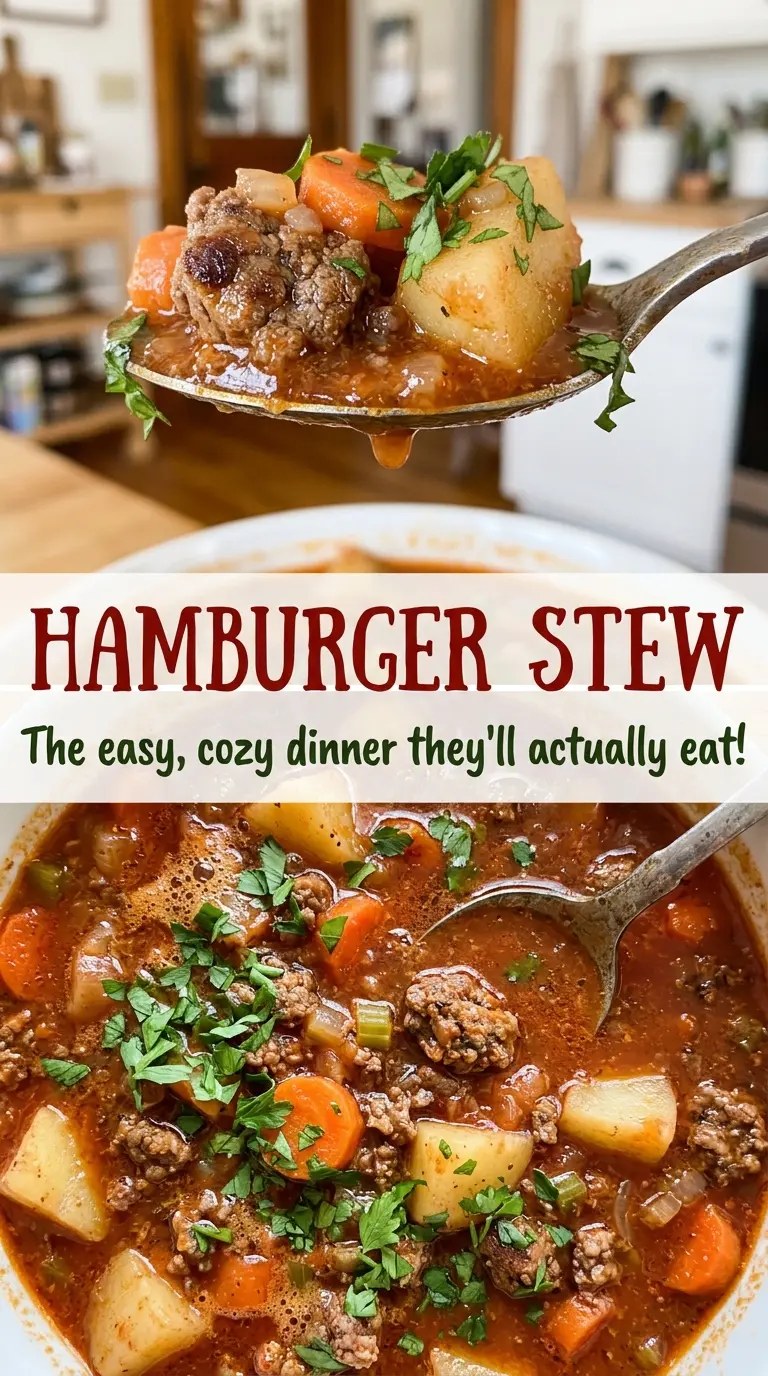
When the beef and onion hit the Dutch oven, the onion softens right alongside the meat, and the bottom of the pot starts collecting all those savory browned bits. That’s the start of a comforting hamburger stew, with tender vegetables and a broth that’s hearty without turning into a heavy gravy. I like that everything cooks in one pot, and the ingredients are familiar enough to make this a practical dinner rather than a special project.
The order matters more than it looks. I coat the beef and vegetables with flour before adding the broth and tomatoes, then give that coating a minute to cook. It helps the liquid turn into a stew-like broth instead of a thin soup. Yukon Gold potatoes make a good fit here, too: they soften into the broth but keep their shape through the simmer. The finished bowl has tender potatoes and carrots, savory beef, and peas stirred in right at the end.

Kitchen Note
Stir in the frozen peas only after the potatoes and carrots are tender. A few minutes in the uncovered stew warms them through without giving them the long simmer that can make peas dull and soft.
Save this hamburger stew for a cozy dinner: tender potatoes and carrots simmer with savory beef, and frozen peas go in at the finish.
Why This Stew Needs a Flour-Coated Base, Not a Last-Minute Thickener
A watery stew usually needs more than an extra sprinkle of flour at the table. Here, the flour gets mixed directly with the beef and vegetables before any liquid goes into the pot. That gives it a chance to coat the ingredients evenly, which is much easier than trying to chase flour lumps through a pot of hot broth.
Cooking that coating for a minute also matters. Raw flour can leave a pasty taste, while a brief cook in the pot takes the edge off before the broth, tomatoes, and Worcestershire sauce loosen everything. Once the stew reaches a simmer, the flour has already been distributed through the base, so the broth thickens as the potatoes and carrots cook.
Keep the simmer gentle after bringing the pot to a boil. A rolling boil isn’t needed to thicken the stew, and it can knock the potato chunks around as they soften. The goal is a broth that lightly clings to the vegetables, with chunks still intact when you ladle it out.
What the Beef, Potatoes, and Broth Bring to the Pot
- Ground beef — The 85% lean beef gives the stew a meaty, savory base without leaving as much excess fat as a fattier grind. Store-brand beef works well; break it into small pieces as it cooks so you don’t end up with a few oversized clumps.
- Yukon Gold potatoes — These potatoes turn tender while holding together better than a floury potato would in a covered simmer. Cut the chunks close to 1 inch so they cook at a similar pace to the carrots.
- Carrots, celery, and onion — Together they build the stew’s vegetable base. Slice the carrots and celery evenly, and dice the onion so the pieces soften alongside the beef rather than staying firm.
- All-purpose flour — Flour thickens the broth as the stew simmers. It doesn’t need to be a premium brand; an ordinary all-purpose flour is right for this job.
- Beef broth, diced tomatoes, and Worcestershire sauce — Beef broth supplies the main savory liquid, while the undrained tomatoes bring their juices into the pot. Worcestershire adds a tangy, savory note that keeps the broth from tasting one-dimensional. A familiar grocery-store brand is fine.
- Frozen peas — Frozen peas are convenient and hold their shape when added near the end. Keep them frozen until it’s time to stir them into the stew.
- Garlic, dried thyme, and bay leaf — These season the pot without taking over the beef and vegetables. Mince the garlic before you start cooking; it goes into the hot pot briefly, so there’s no time to prep it later.
The Stovetop Stages That Give the Stew Its Texture
Brown the Beef with the Onion
Set a 6-quart Dutch oven over medium-high heat and cook the ground beef with the diced onion for 7 to 9 minutes. Break up the beef as it browns; small pieces make each spoonful easier to eat. The beef should reach 160°F, and the onion should be softened before you move on. Drain off excess fat so the finished broth doesn’t carry a greasy layer.
Soften the Vegetables Before Adding Garlic
Add the sliced carrots and celery and cook for 4 to 5 minutes, stirring occasionally. They should just begin to soften; they’ll finish cooking in the broth. Stir in the minced garlic and cook for 30 seconds, watching closely so it doesn’t brown or scorch against the bottom of the pot.
Coat Everything Before the Liquid Goes In
Stir in the flour, kosher salt, black pepper, and dried thyme until the beef and vegetables are evenly coated. Cook for 1 minute, stirring so the flour doesn’t sit in a dry patch on the bottom. Add the potato chunks, beef broth, undrained diced tomatoes, Worcestershire sauce, and bay leaf, then bring the pot to a boil.
Simmer Until the Carrots and Potatoes Yield
Once the liquid boils, reduce the heat to maintain a gentle simmer, cover the Dutch oven, and cook for 20 to 25 minutes. Check a potato and a carrot with a fork: both should be tender all the way through, with the potato still holding its shape. If the vegetables resist the fork, keep the covered pot at a gentle simmer until they’re ready.
Finish with Peas and Remove the Bay Leaf
Stir in the frozen peas and simmer uncovered for 3 to 5 minutes, until they’re heated through. The uncovered finish lets you stir the peas through without trapping extra steam under the lid. Find and discard the bay leaf before serving; it has flavored the broth but isn’t meant to be eaten.
Three Useful Ways to Adapt Hamburger Stew
Make It Gluten-Free
Replace the all-purpose flour with the same amount of a gluten-free 1:1 baking flour blend. Stir it in with the seasonings and cook it for the same minute before adding the liquid. The broth should still thicken, though the exact texture depends on the blend.
Use Ground Turkey for a Lighter Stew
Swap in the same amount of ground turkey for the ground beef. It makes the stew milder and leaner, so the broth won’t have quite the same deep beef flavor; cook the turkey to 165°F before adding the other vegetables.
Trade the Yukon Golds for Sweet Potatoes
Use the same weight of sweet potatoes, cut into 1-inch chunks. They bring a sweeter, softer note to the stew, so start checking them for tenderness before the full simmer time is up; sweet potatoes can soften faster than Yukon Golds.
Storage and Reheating
- Refrigerator: Store in a covered container for 3 to 4 days. The potatoes will absorb some broth as the stew sits, so it will be thicker when cold.
- Freezer: Freeze in airtight containers for up to 3 months. Potatoes can turn a little softer after thawing, but the stew remains suitable for reheating.
- Reheating: Warm on the stovetop over medium-low heat, stirring occasionally, until it reaches 165°F. Heat it gently rather than letting it boil hard, which can break up the softened potatoes.
Questions That Come Up While Making Hamburger Stew
Hamburger Stew
Ingredients
Equipment
Method
- In a 6-quart Dutch oven over medium-high heat, cook the ground beef and onion for 7 to 9 minutes, breaking up the beef, until the beef reaches 160°F and the onion is softened.
- Drain excess fat.
- Add the carrots and celery and cook for 4 to 5 minutes, stirring occasionally, until they begin to soften.
- Stir in the garlic and cook for 30 seconds.
- Stir in the flour, salt, pepper, and thyme until the vegetables and beef are evenly coated, and cook for 1 minute.
- Add the potatoes, beef broth, diced tomatoes, Worcestershire sauce, and bay leaf, and bring to a boil.
- Reduce the heat to maintain a gentle simmer, cover, and cook for 20 to 25 minutes, until the potatoes and carrots are fork-tender.
- Stir in the frozen peas and simmer uncovered for 3 to 5 minutes, until the peas are heated through.
- Remove and discard the bay leaf before serving.