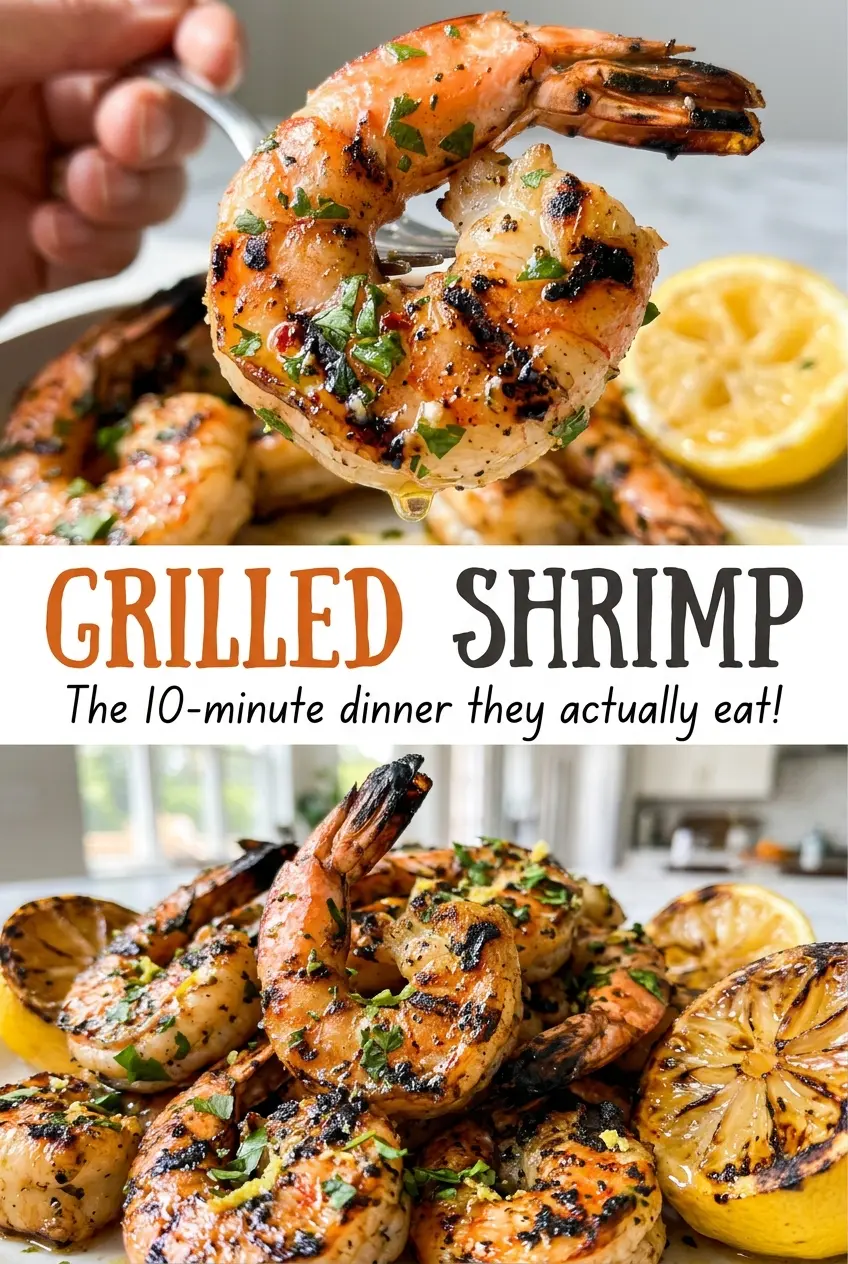
The first side of shrimp can look barely marked, then a minute later the edges turn opaque and the surface picks up those little spots of char. Shrimp cook fast enough that there isn’t much time to correct a crowded skewer or a grill that isn’t ready, so I like having everything threaded and seasoned before the heat goes on. These grilled shrimp are coated in lemon, garlic, and paprika, then cooked over a hot grill until they’re tender with a lightly charred edge.
The coating is deliberately simple, and the two oils in the ingredient list aren’t interchangeable: olive oil goes around the shrimp with the seasonings, while vegetable oil is for the grill grates. Keeping those jobs separate gives the shrimp a light coating without putting the more flavorful oil on the hot grate. The finished shrimp are bright from the lemon, savory from the garlic, and ready to serve hot.
Kitchen Note
If you’re using wooden skewers, soak them for the full 30 minutes before threading the shrimp. It gives the wood time to take up water before it goes over the hot grill.
Save these grilled shrimp for a quick cookout meal, with lemon, garlic, and a lightly charred finish.
Why the Shrimp and Grill Grates Get Different Oils
There are two separate oil jobs here, and keeping them separate makes the grilling simpler. Olive oil belongs in the bowl with the lemon juice and seasonings. It coats the shrimp, helping the garlic, paprika, salt, and pepper cling instead of settling at the bottom of the bowl. Vegetable oil is used later, after the grill grates are clean, to lightly oil the cooking surface.
That distinction matters because the shrimp are only on the grill for a few minutes per side. You want the seasoning to travel with them, not stay behind on the grate. At the same time, a lightly oiled grate helps the shrimp release when you turn them instead of tearing at the surface. Don’t pour the vegetable oil into the marinade or use the olive oil to oil the grill; each is placed where it does its job best. This small split in the method keeps the shrimp coated and the grill ready for a clean turn.
What the Shrimp, Lemon, and Garlic Bring to the Grill
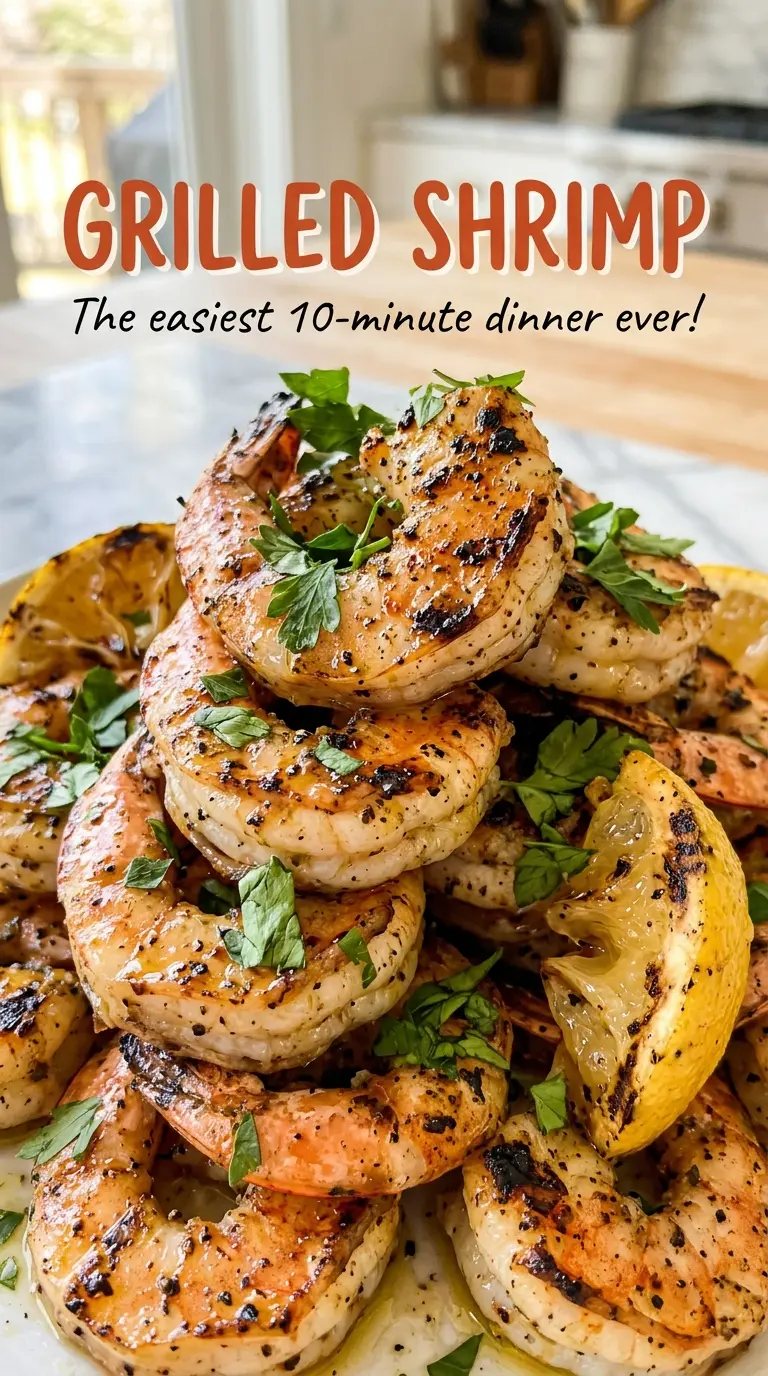
- Large shrimp: The 21-to-25-per-pound size gives you substantial shrimp that are easy to thread and turn. Buy them peeled and deveined to keep the prep focused on skewering and seasoning. Leaving the tails on gives you a convenient handle at the table.
- Lemon juice: Lemon adds a clear, tangy note that cuts through the olive oil and garlic. Freshly squeezed juice has a brighter taste, though bottled lemon juice works when that’s what you have.
- Garlic: Minced garlic spreads through the coating instead of leaving large pieces on the shrimp. Mince it finely so the flavor is distributed in each bite.
- Paprika: Regular paprika brings a mild, warm pepper flavor without taking over the lemon and garlic. If your paprika has been open for a long time and smells flat, a fresher jar will taste more distinct.
- Kosher salt and black pepper: These season the shrimp directly, rather than relying on a sauce after grilling. Freshly ground black pepper has a sharper aroma, but pre-ground pepper is perfectly usable here.
From the Skewers to the Last Turn
Thread the Shrimp With Room Between Them
If you’re using wooden skewers, soak four in water for 30 minutes. Thread the shrimp onto the skewers and leave a little space between each one instead of pressing them tightly together. That space lets the heat reach the sides of each shrimp. Keeping the tails on also makes the shrimp easier to handle as you thread them.
Give the Seasoning a Short Rest
Stir the olive oil, lemon juice, minced garlic, paprika, kosher salt, and black pepper together in a medium bowl. Add the shrimp and toss until they’re coated all over. Let them marinate for 15 minutes, which gives the seasoning a chance to cling without leaving the shrimp sitting in lemon for an extended stretch. Keep the bowl close by so the shrimp are ready when the grill is hot.
Heat and Oil the Grill
Bring a gas or charcoal grill to medium-high, about 400°F to 450°F. Clean the grill grates first; leftover bits can stick to the shrimp and interfere with their light char. Lightly oil the clean grates with the vegetable oil. The grill should be hot before the skewers go on, rather than warming up with the shrimp already cooking.
Grill Just Until Opaque
Set the skewers on the grill and cook the shrimp for 2 to 3 minutes per side. Turn them once the first side is lightly charred and the shrimp begin to look opaque around the edges. Check the thickest shrimp with an instant-read thermometer and take them off the heat when it reaches 145°F. The shrimp should look opaque throughout, with a little color from the grill rather than a dry, tightly curled shape.
Three Flavor Changes for Lemon-Garlic Grilled Shrimp
Use Smoked Paprika for a Deeper Grill Flavor
Replace the regular paprika with the same amount of smoked paprika. It adds a smoky note that leans into the char from the grill, while the lemon still keeps the shrimp tasting bright.
Trade Lemon Juice for Lime
Use the same amount of lime juice in place of the lemon juice. Lime makes the citrus taste a little sharper and more fragrant, while the garlic and paprika remain the savory backbone.
Make a Garlic-Free Batch
Leave out the minced garlic if you’re avoiding it. The shrimp will taste less savory and aromatic, but the lemon, paprika, salt, and pepper still make a complete seasoning for the grill.
Storage and Reheating
- Refrigerator: Store cooked shrimp in a covered container and refrigerate within 2 hours. They’ll keep for 3 to 4 days; expect the texture to be less tender after chilling.
- Freezer: Freeze cooked shrimp in an airtight freezer-safe container for up to 2 to 3 months for best quality. Thaw them in the refrigerator before reheating.
- Reheating: Warm gently in a covered skillet over low heat, just until the shrimp reach 165°F. Avoid prolonged heat, which makes shrimp tough and rubbery.
Questions That Come Up Before the Shrimp Hit the Grill
Grilled Shrimp
Ingredients
Equipment
Method
- If using wooden skewers, soak 4 skewers in water for 30 minutes.
- Thread the shrimp onto the skewers, leaving a little space between each shrimp.
- In a medium bowl, stir together the olive oil, lemon juice, garlic, paprika, salt, and black pepper.
- Add the shrimp and toss to coat; marinate for 15 minutes.
- Heat a gas or charcoal grill to medium-high, about 400°F to 450°F.
- Clean the grill grates and lightly oil them with the vegetable oil.
- Grill the shrimp for 2 to 3 minutes per side, until opaque and lightly charred and the thickest shrimp reach 145°F.
- Serve hot.