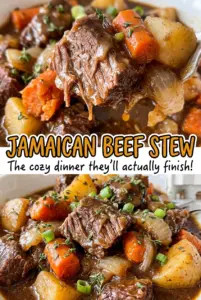
Beef cubes should give a sharp hiss when they hit the hot Dutch oven; if the pot is crowded, that sound turns watery and the edges stay gray. For this German beef stew with carrots and potatoes, I brown the chuck in batches, then let the onion and spices pick up the browned bits left behind. That first layer gives the broth a deeper, more savory start than simply simmering everything together.
Dry red wine goes in after the tomato paste, paprika, caraway, and marjoram have warmed in the pot. Scraping up the browned bits and reducing the wine before adding broth keeps its flavor rounded rather than sharp. By the time the stew is ready, the chuck is fork-tender, the carrots are soft without falling apart, and the Yukon Gold potatoes have soaked up the rich broth.

Kitchen Note
Cut the carrots into 1-inch pieces and the potatoes into 1 1/2-inch pieces before the long simmer begins. The slightly larger potato pieces help both vegetables finish tender at the same time.
Save this German beef stew with carrots and potatoes for a cozy supper—tender chuck, a wine-rounded broth, and vegetables that hold their shape.
Caraway and Marjoram Keep This Beef Stew From Tasting Like Pot Roast
Caraway is the detail that gives this pot its particular character. Its lightly earthy, almost anise-like edge can seem strong on its own, but a long simmer softens it into the beef and broth. Marjoram adds a gentler herbal note, while sweet paprika brings warmth without making the stew hot. Together, they make a different kind of comfort from a pot flavored only with onion and bay.
These spices work best as a quiet background, not a seasoning layer that takes over every bite. Tomato paste gives the base a deeper savory note, and the dry red wine brings a little acidity to balance the richness of the chuck. The result should taste rounded and hearty, with the caraway noticeable if you look for it but never sharp or overwhelming. If you usually make beef stew with a more familiar herb combination, this small pairing is what makes this version feel distinct.
What the Beef, Wine, and Potatoes Bring to the Pot
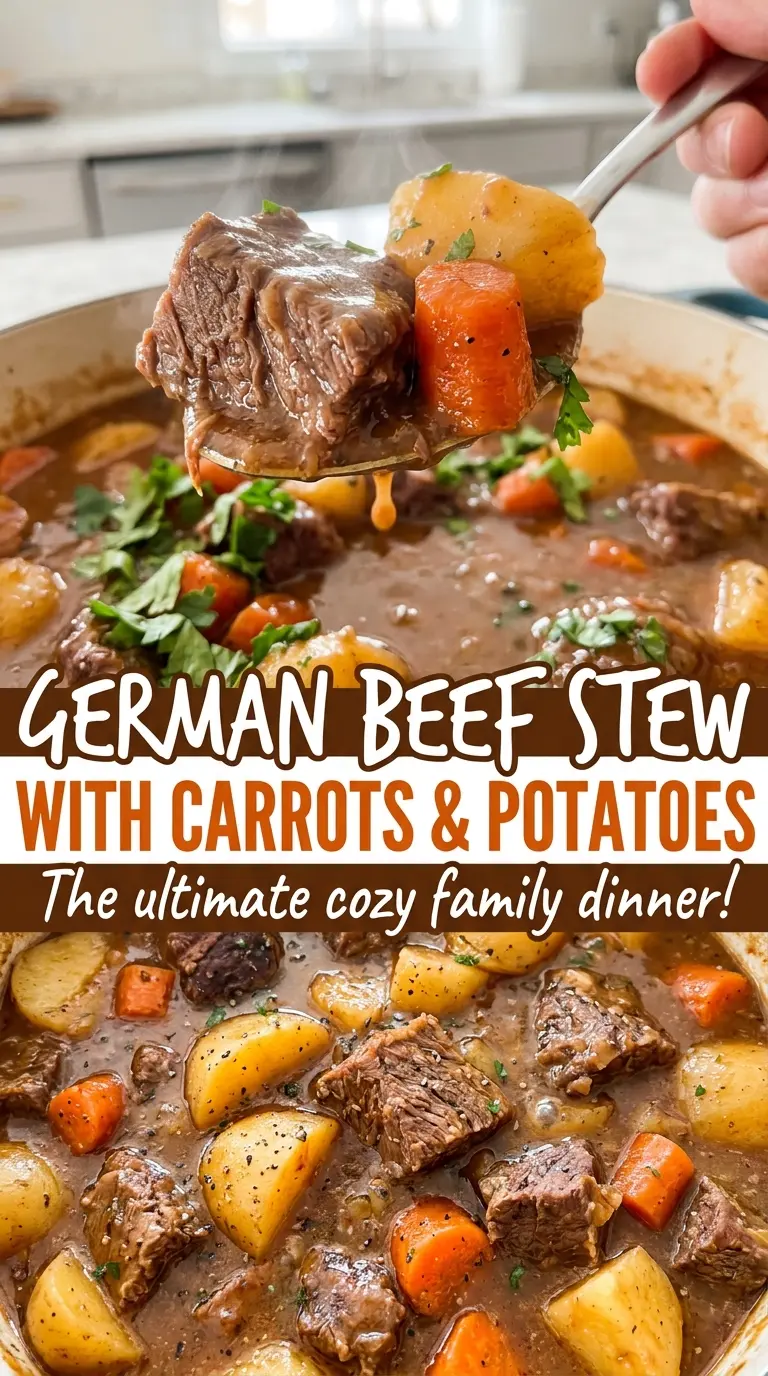
- Beef chuck — Its connective tissue softens during the covered simmer, giving the stew its tender pieces and body. Choose chuck with some visible marbling; a lean cut won’t become as silky. If chuck isn’t available, another well-marbled braising cut can work, though the timing may vary.
- Dry red wine — A dry, reasonably priced bottle is all you need; a sweet wine can push the broth in the wrong direction. For a version without wine, replace it with beef broth as described below, knowing the result will be less bright.
- Yukon Gold potatoes — They turn creamy at the edges while holding their shape in the stew. Red potatoes are the closest swap; use the same amount and cut them to the same size. Avoid very small pieces, which soften sooner.
- Caraway, marjoram, and paprika — Fresh dried spices have a clearer aroma than jars that have been open for years, but there’s no need to buy a premium brand. If you don’t have caraway, leave it out for a milder stew rather than trying to replace its distinct flavor with a larger amount of another spice.
- All-purpose flour — It helps the broth cling to the meat and vegetables. Regular all-purpose flour is fine here; if you need a gluten-free version, omit it and use gluten-free beef broth, with a thinner broth as the tradeoff.
Building the Stew in Layers Before the Long Simmer
Brown the Chuck in Uncrowded Batches
Pat the beef dry and season it with the salt and pepper. Heat the vegetable oil in a 6-quart Dutch oven over medium-high heat, then brown the beef in three batches, turning it to color several sides for about 6 minutes per batch. Give the pieces room instead of crowding them; packed beef releases moisture and steams before it can brown. Transfer each batch to a plate as it finishes.
Soften the Onion and Coat the Aromatics
Lower the heat to medium and add the chopped onion, stirring occasionally for about 5 minutes until softened. Stir in the garlic, tomato paste, paprika, caraway seeds, and marjoram, and cook for 1 minute. Sprinkle in the flour and stir until no dry flour remains. Scrape around the bottom as you stir so the tomato paste and spices don’t catch on the pot.
Reduce the Wine Before Adding Broth
Pour in the dry red wine and scrape up the browned bits from the bottom of the Dutch oven. Let it simmer until reduced by about half, which takes 3 to 5 minutes. The wine should smell less raw and the liquid level should visibly drop. Stir in the beef broth and bay leaf, then return the beef and any juices from the plate to the pot.
Let the Chuck Get Tender Before the Vegetables Go In
Bring the stew to a simmer, cover the pot, and cook over low heat until the beef is beginning to turn tender, about 1 1/2 to 2 hours. Keep the heat low enough for a quiet simmer rather than a rolling boil. Stir in the carrots and potatoes, cover again, and simmer for 25 to 35 minutes. The vegetables are ready when tender, and the beef should be fork-tender.
Two Useful Ways to Adapt This Beef Stew
Make It Gluten-Free
Leave out the all-purpose flour and use gluten-free beef broth. The stew will still be hearty, but its broth will be looser and less gravy-like because the flour is what thickens it.
Skip the Red Wine
Use 1 cup of beef broth in place of the wine, simmering it until reduced by about half before adding the remaining broth. You’ll keep the savory base, though the finished stew will have less of the wine’s gentle acidity.
Storage and Reheating
- Refrigerator: Store in a covered container for 3 to 4 days. The potatoes will soften a little as they sit in the broth.
- Freezer: Freeze in an airtight container for up to 3 months. The potatoes may be softer after thawing, but the stew still reheats well.
- Reheating: Warm gently on the stovetop, stirring now and then, until the stew reaches 165°F throughout. Avoid a hard boil, which can break up the vegetables.
Questions That Come Up While the Stew Simmer
German Beef Stew with Carrots and Potatoes
Ingredients
Equipment
Method
- Pat the beef dry and season it with the salt and pepper.
- Heat the oil in a 6-quart Dutch oven over medium-high heat, then brown the beef in 3 batches, turning to brown several sides, about 6 minutes per batch; transfer each batch to a plate.
- Add the onion to the pot and cook over medium heat, stirring occasionally, until softened, about 5 minutes.
- Stir in the garlic, tomato paste, paprika, caraway seeds, and marjoram and cook for 1 minute, then sprinkle in the flour and stir until no dry flour remains.
- Pour in the wine and scrape up the browned bits; simmer until reduced by about half, 3 to 5 minutes.
- Stir in the beef broth and bay leaf, then return the beef and any juices to the pot.
- Bring the stew to a simmer, cover, and cook over low heat until the beef is beginning to turn tender, about 1 1/2 to 2 hours.
- Stir in the carrots and potatoes, cover, and simmer until the vegetables are tender and the beef is fork-tender, 25 to 35 minutes.