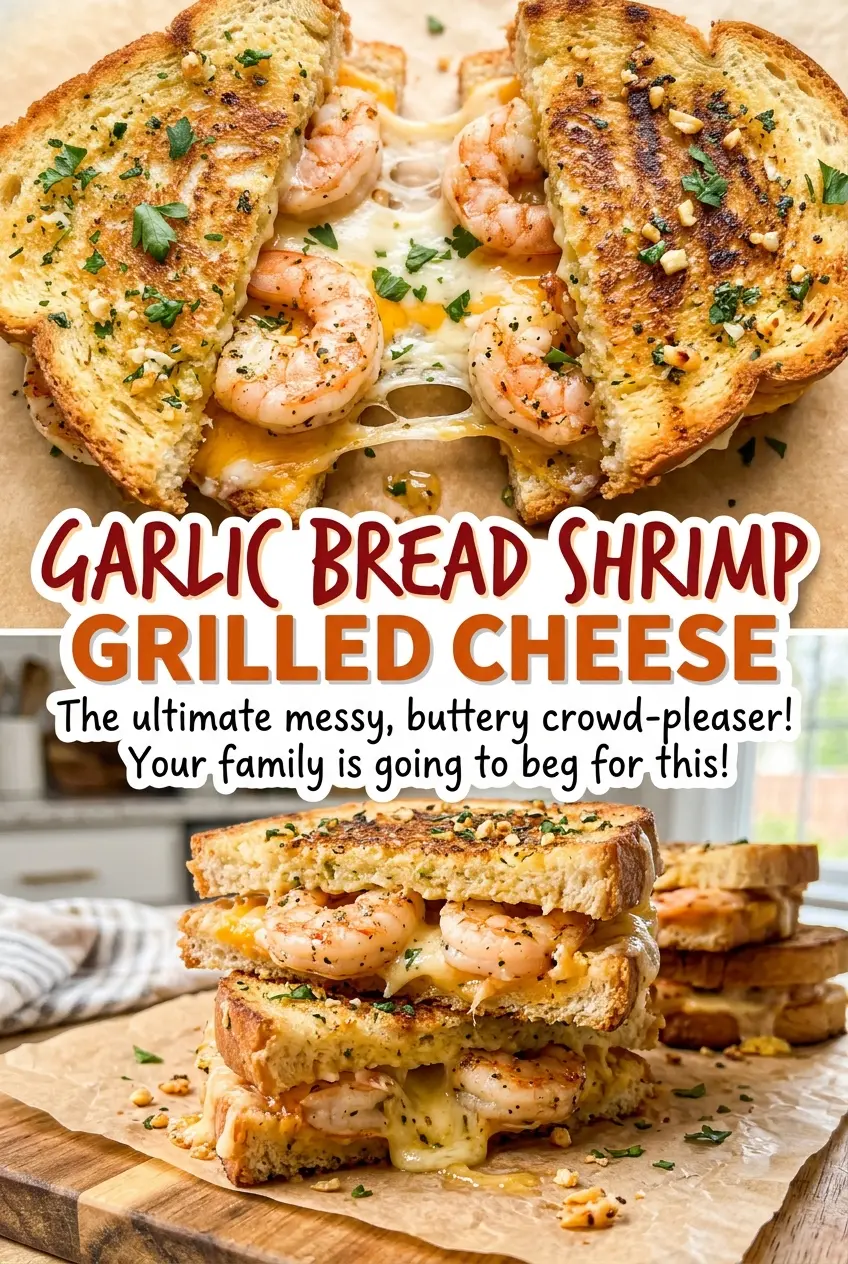
The first side should sizzle softly as the garlic butter hits the skillet, turning the sourdough golden before the cheese has a chance to run out. I learned that this sandwich needs a little patience: heat that’s too high browns the bread before the mozzarella melts. Garlic Bread Shrimp Grilled Cheese gets its rich, buttery crust and tender shrimp by cooking each part at the pace it needs.
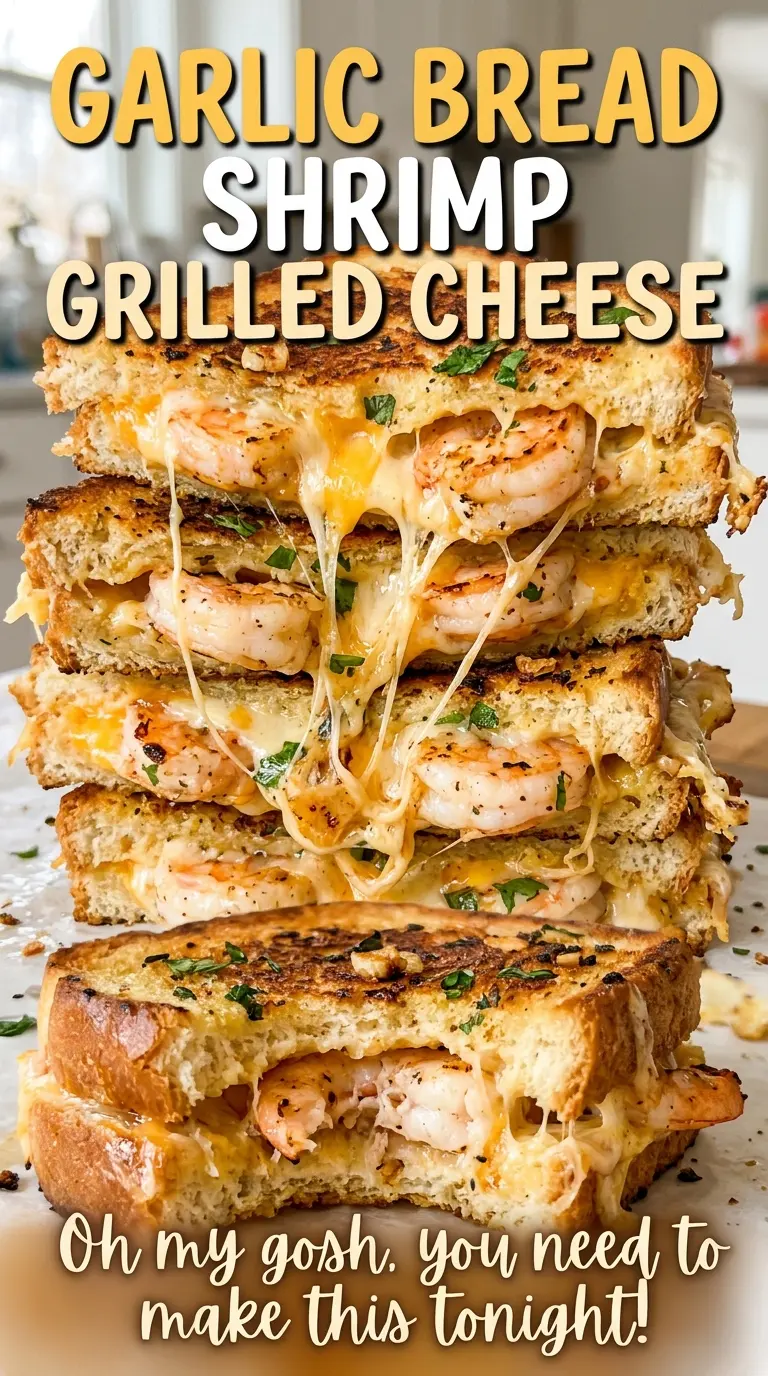
I cook the shrimp first, chop it into bite-size pieces, then tuck it between layers of mozzarella and sharp cheddar. That gives you shrimp in every bite without having to keep large pieces from sliding out when you flip the sandwich. The parsley-flecked garlic butter goes on the outside of the bread, where it makes a crisp, savory crust around the melted cheese.
Kitchen Note
The butter should be soft enough to spread in a thin, even layer, but not melted. Melted butter soaks into the bread instead of coating it, and you lose that crisp, evenly browned surface.
Save this Garlic Bread Shrimp Grilled Cheese for the crisp garlic-butter sourdough, tender shrimp, and gooey two-cheese center.
Why the Shrimp Goes in Cooked, Not Raw
A grilled cheese cooks long enough to toast the bread and melt the cheese, but that’s not the right window for raw shrimp. By the time the center of a large piece of shrimp cooks through, the bread can be too dark and the cheese may already be escaping into the skillet. Cooking the shrimp on its own lets you control its doneness before the sandwich ever goes together.
There’s another practical reason to prepare the shrimp separately: moisture. Shrimp releases liquid as it cooks, and a wet filling can leave the inside of the bread steamy instead of crisp. Chopping the cooked shrimp into small pieces helps it sit evenly between the cheese, while the cheese on both sides holds the filling in place. You get a more reliable flip and a little shrimp in each bite, instead of one big piece sliding toward the edge.
The Low-Moisture Mozzarella Does More Than Stretch
- Low-moisture mozzarella — It gives the filling its stretchy melt without adding the excess water that fresh mozzarella can release. A block you shred yourself melts smoothly; pre-shredded works, though its coating can make the melt a little less seamless. Monterey Jack is a useful substitute if you can’t find mozzarella, but expect a softer, less stretchy center.
- Sharp cheddar — This brings a more pronounced savory bite than mozzarella alone, so the filling doesn’t taste flat against the buttery bread. Mild cheddar works if that’s what you have, but the cheese flavor will be gentler. Shred it finely so it melts at roughly the same pace as the mozzarella.
- Sourdough bread — A sturdy sourdough slice holds the shrimp and cheese without collapsing, and its tang balances the rich butter. Choose bread with an even, medium-thick crumb rather than a very airy loaf with oversized holes. A sturdy country-style loaf can stand in, though you’ll lose some of sourdough’s tang.
- Medium shrimp — Medium shrimp are easy to chop into pieces that distribute through a sandwich without overwhelming each bite. Frozen shrimp are fine once thawed completely and patted dry. Choose peeled and deveined shrimp to keep prep simple and avoid having to remove shells after cooking.
- Fresh garlic and parsley — Fresh minced garlic gives the butter a clean, sharp aroma, and chopped parsley adds a fresh note. If fresh parsley isn’t available, dried parsley can work at about one-third the amount, though it won’t taste as bright. Mince the garlic finely so larger pieces don’t scorch against the skillet.
- Unsalted butter and olive oil — Unsalted butter lets the garlic spread evenly over the bread, while the olive oil is used to cook the shrimp. A neutral cooking oil can replace the olive oil without changing the sandwich much. Keep the butter unsalted so the shrimp seasoning stays balanced.
From a Quick Shrimp Sear to a Crisp Garlic-Butter Crust
Cook the Shrimp Without Crowding the Pan
Pat the shrimp dry, then toss it with the kosher salt and black pepper. Heat the olive oil in a 12-inch skillet over medium-high heat, add the shrimp in a single layer, and cook for 3 to 4 minutes, turning once. Look for opaque flesh and check that the thickest part reaches 145°F; shrimp left in the pan after that point can turn firm and rubbery. Transfer it to a cutting board, chop it into bite-size pieces, and carefully wipe the skillet clean.
Mix the Garlic Butter and Build the Filling
Stir the softened butter, minced garlic, and chopped parsley together in a small bowl. Mix the mozzarella and cheddar in a separate bowl so both cheeses are spread throughout the filling. Butter one side of each bread slice, then set four slices buttered-side down. Divide half the cheese among them, add the chopped shrimp, and finish with the remaining cheese before closing with the other slices, buttered-side up.
Toast Slowly Until the Cheese Catches Up
Cook two sandwiches at a time in the cleaned skillet over medium-low heat for 3 to 4 minutes per side. The bread should turn golden brown while the cheese melts through the center; if the outside darkens before the filling softens, lower the heat. Flip carefully so the shrimp stays between the cheese layers. Repeat with the remaining sandwiches, then serve while the crust is crisp and the cheese is still molten.
How to Change the Bread, Cheese, or Herb Without Losing the Crunch
Use pepper Jack for a little heat
Replace the sharp cheddar with the same amount of shredded pepper Jack. It melts well with mozzarella and adds a gentle peppery kick; the cheese will taste less sharp and more rounded than the cheddar version.
Make it gluten-free with sturdy bread
Use gluten-free sourdough or another sturdy gluten-free loaf in place of the regular sourdough, keeping the slices similar in thickness. Gluten-free bread can brown more quickly and may be more delicate when flipped, so handle the sandwiches gently. You’ll still get the garlic-butter crust, with a different crumb and less chew.
Make a dairy-free version
Use plant-based butter and dairy-free mozzarella and cheddar-style shreds in place of the dairy products. Choose shreds labeled for melting; some dairy-free cheeses soften without becoming stretchy, so the center may be less gooey. The shrimp remains seafood, so this is dairy-free but not vegan.
Storage and Reheating
- Refrigerator: Keep leftover sandwiches in an airtight container for 3 to 4 days. The bread will soften in the refrigerator, even though the filling stays tasty.
- Freezer: I don’t recommend freezing assembled sandwiches; the bread tends to thaw soft and the shrimp can lose its tender texture.
- Reheating: Warm a sandwich in a skillet over low heat, turning once, until the center reaches 165°F. High heat can scorch the bread before the cold filling is hot.
Questions That Come Up Before the First Flip
Garlic Bread Shrimp Grilled Cheese
Ingredients
Equipment
Method
- Pat the shrimp dry.
- Toss the shrimp with the salt and pepper.
- Heat the olive oil in a 12-inch skillet over medium-high heat, add the shrimp in a single layer, and cook for 3 to 4 minutes, turning once, until opaque and 145°F in the thickest part.
- Transfer the shrimp to a cutting board and chop into bite-size pieces.
- Carefully wipe the skillet clean.
- Stir the softened butter, garlic, and parsley together in a small bowl.
- Mix the mozzarella and cheddar together.
- Spread the garlic butter on one side of each bread slice.
- Place four bread slices buttered-side down and divide half the cheese among them; top with the shrimp and the remaining cheese, then close with the other bread slices, buttered-side up.
- Cook two sandwiches at a time in the skillet over medium-low heat for 3 to 4 minutes per side, until the bread is golden brown and the cheese is melted; repeat with the remaining sandwiches.