The beef browns in little craggy bits, and the skillet smells richer than you might expect from a stew that’s headed for the slow cooker. That quick start is what keeps Crock Pot Shipwreck Stew from tasting like everything was simply simmered together. I break the beef into small pieces as it cooks, then drain the excess fat before it joins the potatoes, onion, and beans.
The tomato base comes together in a bowl before it goes into the slow cooker, so it pours evenly over the layers instead of leaving pockets of condensed soup behind. After that, the long, gentle cook does the work: the potatoes soften, the beans warm through, and the beef takes on the savory tomato broth. This makes six generous servings, with enough substance for a full dinner and a thick, spoonable finish.
Kitchen Note
Drain and rinse the kidney beans well, but leave the pork and beans with their sauce. They’re two different cans doing two different jobs: one adds beans without extra canning liquid, while the other brings its own seasoned sauce.
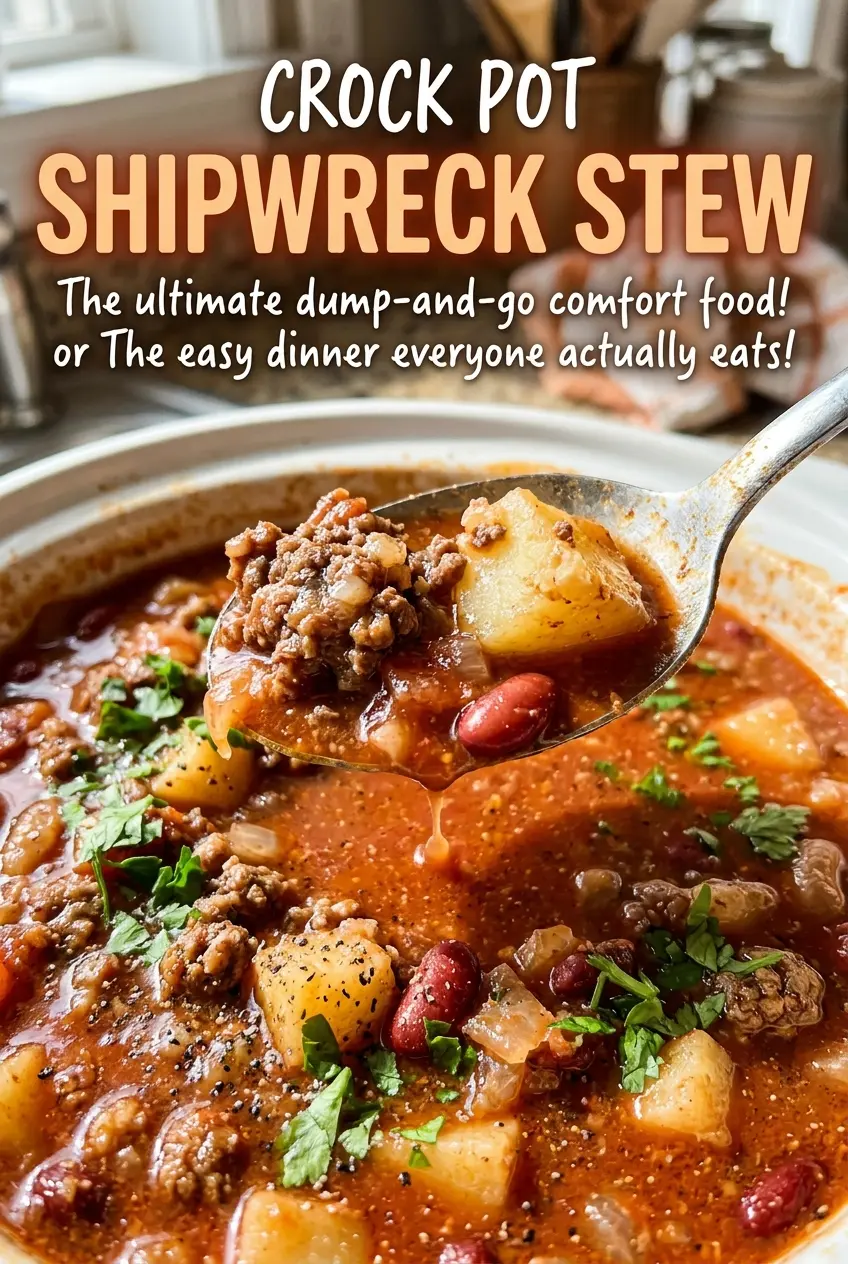
Save Crock Pot Shipwreck Stew for a hands-off dinner with browned beef, tender potatoes, and two kinds of beans in a thick tomato broth.
Why Slow-Cooker Shipwreck Stew Starts With a Skillet
Ground beef cooked directly in a slow cooker won’t develop the browned edges you get from a hot skillet. It can also settle into larger, softer clumps instead of staying in small pieces throughout the stew. Browning first gives the beef a head start on flavor and lets you control its texture before it’s surrounded by liquid.
That skillet step also gives you a chance to drain excess fat before it reaches the slow cooker. Fat left in the pot can make a tomato-based broth feel oily, especially after several hours of cooking. Once the beef is browned and drained, the slow cooker has a cleaner, meatier base to work with. The rest of the cooking is gentle, so this short burst of heat is where the stew gets its most noticeable savory depth.
A 12-inch skillet gives the beef room to brown rather than steam in a crowded layer. Break it up as it cooks, and let the pieces take on color before you move them to the slow cooker. You’re not trying to crisp every crumb; you want browned patches mixed through the beef.
What the Beans, Potatoes, and Tomato Base Bring to the Pot
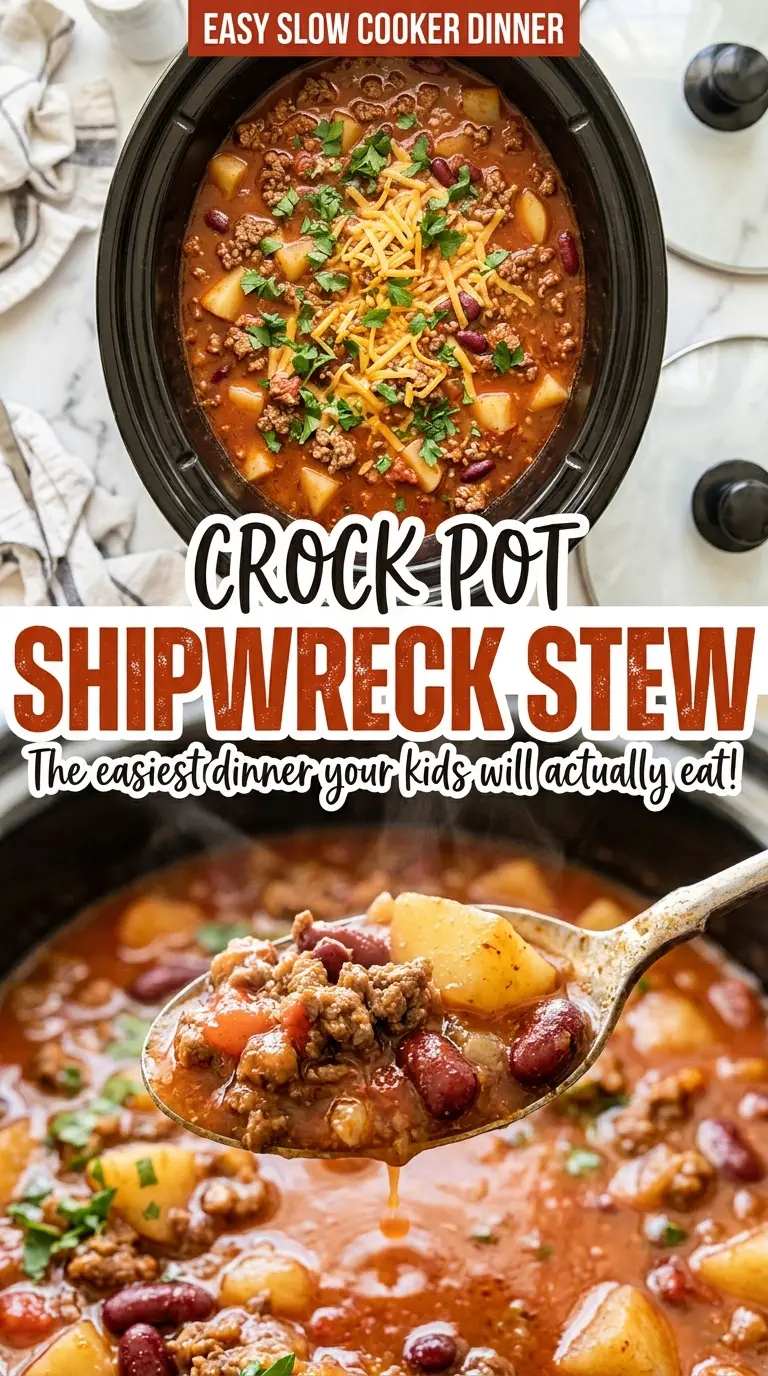
- Russet potatoes — Their starchy texture softens into a hearty bite and helps the stew feel substantial. Choose firm potatoes without green patches or sprouts, and cut them into even 1/2-inch cubes so they cook at roughly the same pace. Yukon gold potatoes can stand in at the same weight and cube size; they hold a firmer, less fluffy texture.
- Ground beef — The 85% lean beef brings enough richness for a full-flavored broth without leaving the stew as greasy as a fattier grind. Store-brand beef is fine here because it’s browned and simmered with the other ingredients. If you only have 90% lean, it works in the same amount, though the finished stew will taste a little leaner.
- Kidney beans and pork and beans — The kidney beans add a firm, meaty bite, while pork and beans contribute tender beans in a seasoned tomato sauce. Pinto beans can replace the kidney beans if that’s what you have; use a drained and rinsed can in the same place. Keep the pork and beans separate from that swap because their sauce is part of the stew’s seasoning and liquid.
- Condensed tomato soup and diced tomatoes — The soup gives the broth body, while diced tomatoes bring juicy pieces and a fresher tomato texture. Store-brand cans work well. Plain tomato sauce isn’t a direct replacement for condensed soup; it’s thinner and won’t give the same consistency.
- Yellow onion and beef broth — The onion softens into the stew and adds sweetness without needing to brown separately. White onion can replace yellow onion in the same size, with a slightly sharper taste. Regular store-brand beef broth is a good fit; its savory flavor ties the tomato and beef together.
Brown the Beef, Layer the Ingredients, and Let the Potatoes Turn Tender
Brown the Beef in a Wide Skillet
Heat the vegetable oil in a 12-inch skillet over medium-high heat. Add the ground beef and break it into small pieces as it cooks for 6 to 8 minutes, until browned and at 160°F. If the pan is crowded, give the beef time to make contact with the skillet instead of stirring it constantly. Drain the excess fat before transferring the beef to the slow cooker.
Build the Layers in the Slow Cooker
Set the potatoes and chopped onion in the bottom of a 6-quart slow cooker. Add the browned beef, drained and rinsed kidney beans, and pork and beans on top. Keeping the ingredients in these layers makes assembly quick and leaves the sauce easy to pour across the full surface. Use a slow cooker large enough to hold everything without packing it above its usual fill line.
Mix and Pour the Tomato Sauce
In a bowl, stir together the condensed tomato soup, diced tomatoes with their juices, beef broth, salt, and black pepper. Keep stirring until the soup is blended through and no thick lumps remain. Pour the mixture evenly over the ingredients in the slow cooker, aiming for coverage across the surface rather than one concentrated pool in the middle.
Cook Until the Potatoes Give Easily
Cover and cook on LOW for 7 to 8 hours or on HIGH for 4 to 5 hours. The potatoes are ready when a fork slides into a cube easily; if the center still feels firm, the stew needs more time. Slow cookers can vary, so use the fork test along with the time range. Stir gently before serving to bring the beef, beans, and tomato broth together without crushing the potatoes.
Simple Swaps That Keep the Stew’s Character
Swap Kidney Beans for Pinto Beans
Use a drained and rinsed 15-ounce can of pinto beans in place of the kidney beans. Pinto beans are softer and creamier, so the finished stew has a less firm bean bite. Keep the pork and beans in the pot; their seasoned sauce adds something the pinto beans don’t.
Choose Lower-Sodium Canned Goods
For a less salty pot, use lower-sodium beef broth and no-salt-added kidney beans where available, while keeping the listed salt and the other ingredients unchanged. The stew will still get plenty of savory flavor from the beef, tomato soup, and pork and beans, but this swap won’t remove all of the sodium in those canned ingredients.
Use Yukon Gold Potatoes for a Firmer Bite
Replace the russets with the same weight of Yukon gold potatoes, cut into the same 1/2-inch cubes. They have a waxier texture and hold their shape more firmly, so the stew feels a little less thick from the potatoes. Cook until the cubes are fork-tender rather than relying on appearance alone.
Storage and Reheating
- Refrigerator: Store cooled leftovers in a covered container for 3 to 4 days. The potatoes will soften a little more as they sit in the broth.
- Freezer: Freeze in airtight, freezer-safe containers for up to 2 to 3 months. The stew is safe to freeze, though potatoes may turn softer or slightly grainy after thawing.
- Reheating: Warm gently in a saucepan over medium-low heat, stirring now and then, or microwave covered in short intervals and stir between them. Heat leftovers to 165°F throughout; high heat can break the potatoes apart before the middle is hot.
Questions That Come Up Before the Slow Cooker Goes On
Crock Pot Shipwreck Stew
Ingredients
Equipment
Method
- Heat the oil in a 12-inch skillet over medium-high heat.
- Add the ground beef and cook for 6 to 8 minutes, breaking it into small pieces, until browned and it reaches 160°F.
- Drain excess fat.
- Put the potatoes and onion in a 6-quart slow cooker, then top with the beef, kidney beans, and pork and beans.
- Stir together the tomato soup, diced tomatoes and their juices, beef broth, salt, and pepper.
- Pour the tomato mixture evenly over the ingredients in the slow cooker.
- Cover and cook on LOW for 7 to 8 hours or HIGH for 4 to 5 hours, until the potatoes are fork-tender.
- Stir gently before serving.