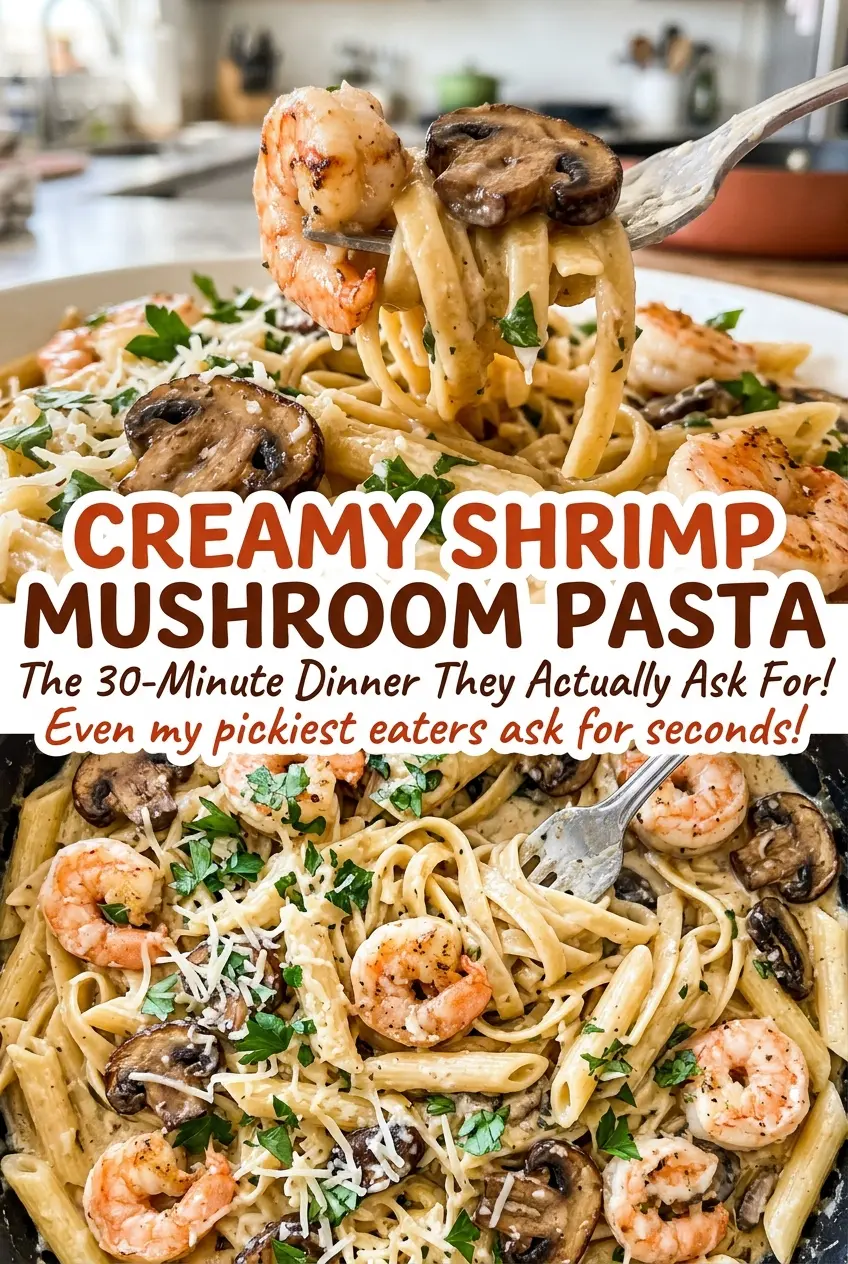
The mushrooms soften first, then their edges turn brown and the skillet smells deeply savory. That’s the moment this creamy shrimp mushroom pasta starts to come together. I used to rush the mushrooms and end up with pale, watery slices; letting them cook until tender and browned gives the sauce a much better base.
The shrimp cook separately from the cream sauce, which keeps them from sitting in the pan while the sauce simmers. Then I toss the linguine with Parmesan and a little reserved pasta water before returning the shrimp to the skillet. The finished sauce clings to each strand instead of pooling underneath, with tender shrimp and mushrooms tucked through every bite.
Kitchen Note
Set a cup beside the colander before you drain the linguine. That small pour of pasta water is easy to lose in the sink, and it helps the finished sauce cling to the strands.
Save this creamy shrimp mushroom pasta for a night when you want Parmesan-coated linguine, browned mushrooms, and tender shrimp in one skillet.
Why the Shrimp Comes Out Before the Cream Sauce Simmer
Shrimp cook quickly, while the sauce needs a few minutes on the stove to thicken. If they stay in the skillet for that whole stretch, they keep cooking even though you’ve already taken them off the direct heat. The result can be firm, curled shrimp instead of the tender pieces you want in a creamy pasta.
Cooking the shrimp first and transferring them to a plate gives the cream time to reduce without asking the seafood to wait in the pan. Once the Parmesan has melted and the linguine is coated, the shrimp go back in just long enough to warm through. That short finish keeps the sauce-building stage focused on the sauce, not on trying to time two different ingredients at once.
This also makes the order easier to manage. You can watch the shrimp closely, build the sauce in the same skillet, and bring everything together at the end. The browned mushroom bits stay right where they are, adding savory depth to the cream.
What Each Ingredient Brings to This Creamy Shrimp Mushroom Pasta
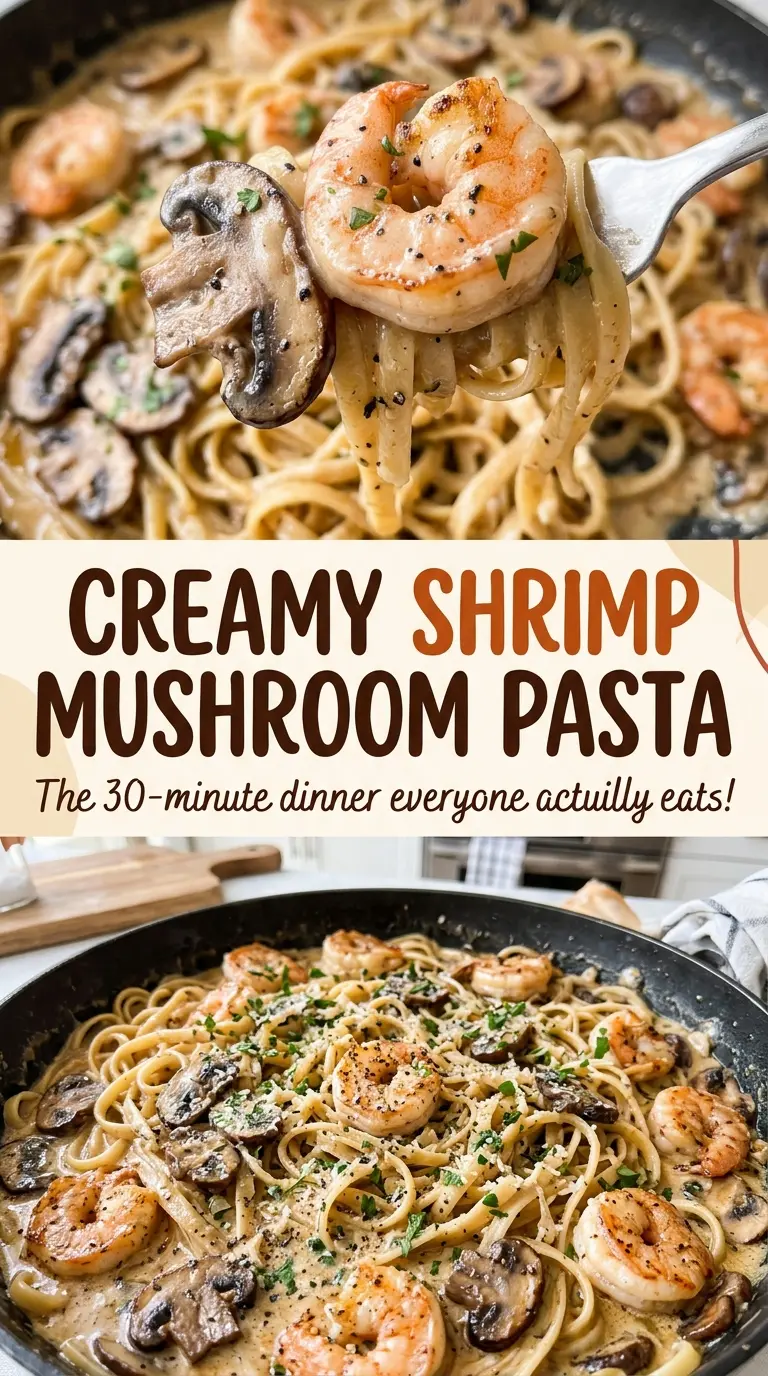
- Linguine — The long, flat strands catch the cream sauce and Parmesan well. Fettuccine is a close substitute; cook it according to its package directions and reserve pasta water before draining.
- Cremini mushrooms — They bring an earthy flavor and hold their shape as they brown. White button mushrooms work if that’s what you have, though they taste milder. Slice them evenly so they cook at a similar pace.
- Shrimp — Large shrimp give you substantial bites without overwhelming the pasta. Frozen raw shrimp work once fully thawed and drained; peeled and deveined shrimp save prep time. Freshly peeled shrimp are fine, too.
- Heavy cream — Its richness gives the sauce body as it simmers. I stick with heavy cream here; half-and-half makes a thinner sauce and is more likely to lose its smooth texture as it cooks.
- Parmesan — Finely grated cheese melts into the sauce more evenly than coarse shreds. A wedge that you grate yourself is a good choice, though pre-grated Parmesan is convenient; avoid large shreds, which take longer to melt smoothly.
- Chicken broth — Broth adds savory depth without making the sauce as rich as more cream would. A standard carton works well, and vegetable broth is an easy swap if you want to avoid chicken broth.
- Garlic and olive oil — Freshly minced garlic gives the sauce a brighter aroma, but jarred minced garlic works when convenience matters. Use an everyday olive oil for sautéing; there’s no need to bring out a special finishing oil.
The Skillet Sequence That Keeps the Shrimp Tender
Cook the Linguine and Save the Starchy Water
Bring a large pot of water to a boil, stir in the kosher salt, and cook the linguine according to the package directions until al dente. Before draining, reserve the pasta water; then drain the noodles. Don’t cook the pasta until soft, since it will be tossed again in the skillet with the sauce.
Brown the Mushrooms Before Adding Garlic
Heat the olive oil in a 12-inch skillet over medium-high heat, add the sliced mushrooms, and cook for 5–7 minutes, stirring occasionally. They’re ready when tender and browned rather than pale and wet. Stir in the minced garlic and cook for 30 seconds, just until fragrant. Garlic can turn bitter if it browns, so have the shrimp ready to add next.
Cook the Shrimp, Then Give It a Short Rest
Season the shrimp with kosher salt and black pepper, then add them to the skillet. Cook for 1–2 minutes per side, until opaque and 145°F in the thickest part. Transfer them to a plate as soon as they reach that point. Letting them sit in the skillet while you build the sauce is the easiest way to overcook them.
Simmer the Cream, Melt the Parmesan, and Toss
Pour the chicken broth and heavy cream into the skillet and simmer over medium-low heat for 3–4 minutes, stirring, until slightly thickened. Stir in the Parmesan until melted, then add the linguine and reserved pasta water. Toss until the strands are coated, checking that the sauce reaches between the noodles rather than gathering at the bottom of the skillet. Return the shrimp and toss for about 1 minute, until heated through.
Three Easy Ways to Adapt the Pasta Without Losing Its Creamy Feel
Make It Gluten-Free
Swap the linguine for gluten-free linguine and cook it according to its package directions. Gluten-free pasta can have a softer texture, so drain it when it’s al dente and toss it gently with the sauce instead of stirring vigorously.
Use Shiitake Mushrooms for a Deeper, Woodsy Note
Replace the cremini mushrooms with sliced shiitakes, trimming away any tough stems. Their flavor is more pronounced, so the pasta tastes earthier and a little less mellow. Cook them until browned and tender before adding the garlic.
Give the Sauce a Gentle Kick
Stir red pepper flakes into the skillet with the garlic for a little warmth throughout the sauce. Add them sparingly at first; their heat builds as the sauce simmers, and the cream softens the sharp edge without hiding it.
Storage and Reheating
- Refrigerator: Refrigerate leftovers within 2 hours and use them within 3 days. The linguine will absorb some sauce as it sits.
- Freezer: You can freeze the pasta in an airtight container for up to 2 months, but the cream sauce may separate and the shrimp may soften after thawing. Thaw it overnight in the refrigerator.
- Reheating: Warm it gently in a covered skillet over low heat with a splash of water, stirring until it reaches 165°F throughout. Avoid a hard boil, which can make the shrimp tough and the sauce greasy.
Questions I Get Asked About Creamy Shrimp Mushroom Pasta
Creamy Shrimp Mushroom Pasta
Ingredients
Equipment
Method
- Bring a large pot of water to a boil.
- Stir in the 1 tablespoon kosher salt.
- Cook the linguine according to the package directions until al dente.
- Reserve 1/4 cup pasta water and drain the pasta.
- Heat the olive oil in a 12-inch skillet over medium-high heat.
- Add the mushrooms and cook for 5–7 minutes, stirring occasionally, until browned and tender.
- Stir in the garlic and cook for 30 seconds.
- Season the shrimp with the 1/2 teaspoon kosher salt and 1/4 teaspoon black pepper.
- Add the shrimp to the skillet.
- Cook the shrimp for 1–2 minutes per side, until opaque and 145°F in the thickest part.
- Transfer the shrimp to a plate.
- Pour the chicken broth and heavy cream into the skillet and simmer over medium-low heat for 3–4 minutes, stirring, until slightly thickened.
- Stir in the Parmesan until melted.
- Add the linguine and reserved pasta water and toss until the pasta is coated.
- Return the shrimp to the skillet and toss for about 1 minute, until heated through.