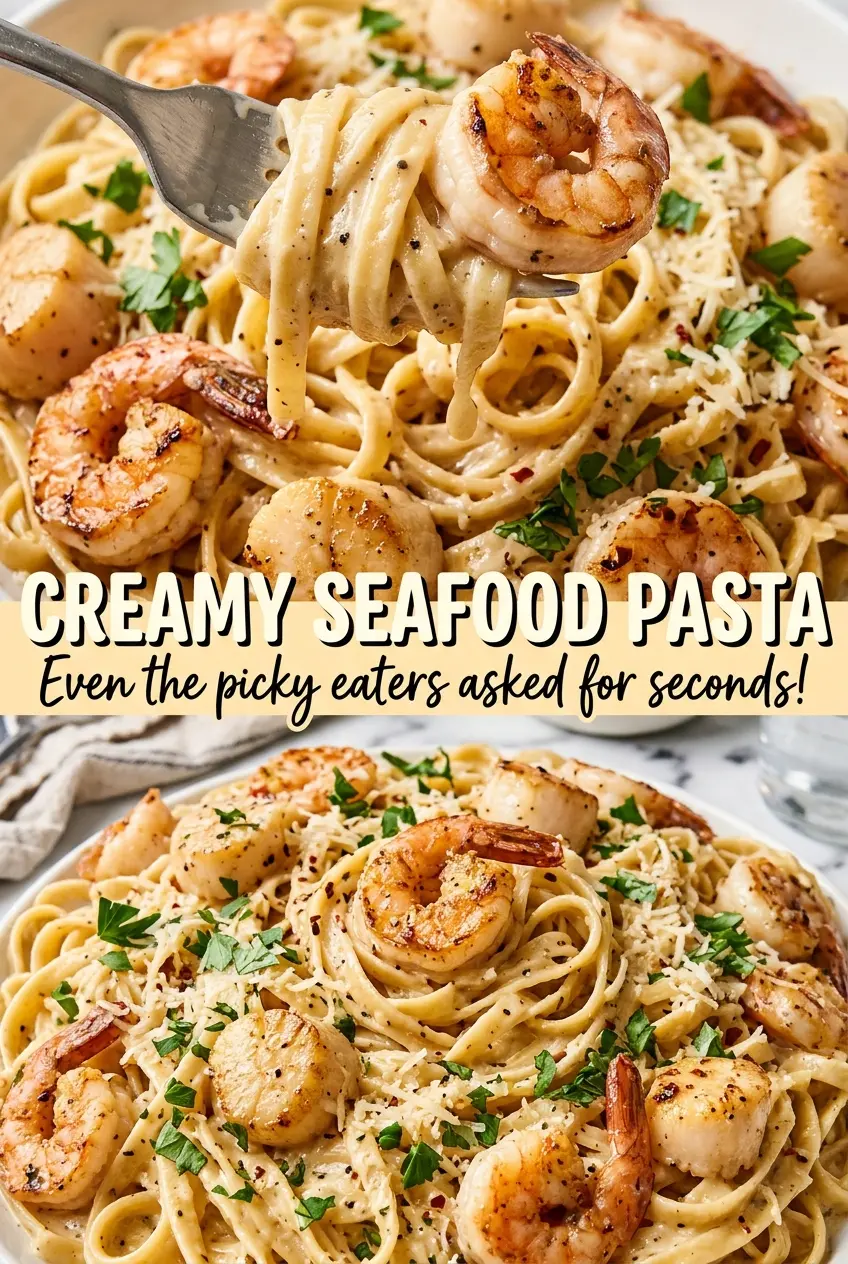
The scallops hit the hot skillet with a clean, sharp sizzle, and their edges turn golden before the centers are done. Shrimp take less time, which is why I sear them separately instead of trying to cook every piece of seafood in one pass. In this creamy seafood pasta, that bit of order keeps the shrimp tender while the scallops get a browned surface, and both end up tucked into a silky Parmesan sauce.
I cook the linguine just to al dente, then use the same skillet for the garlic, wine, and cream. The browned bits left behind by the seafood add depth to the sauce. Heavy cream gives it enough body to coat the strands, while lemon juice stirred in at the end cuts through the richness. Every forkful has glossy linguine, tender shrimp, and a sweet, browned scallop.
Kitchen Note
Pat the scallops until their surfaces look matte, not slick. If they go into the skillet damp, they’ll steam before their sides have a chance to brown.
Save this creamy seafood pasta for a dinner with golden scallops, tender shrimp, and a smooth Parmesan sauce.
Why the Parmesan Goes In After the Cream Has Thickened
This sauce isn’t built by dumping everything into the skillet at once. Wine gets a short simmer on its own, which lets its sharper aroma settle and gives the garlic-butter base a moment to reduce. Cream comes next and simmers until slightly thickened; that gives the Parmesan a richer base to melt into, instead of asking the cheese to thicken a thin liquid.
The lemon waits until the very end. Its acidity tastes fresher when it isn’t simmered alongside the cream, and it keeps the finished sauce from reading as all richness. Parsley goes in with it, so the green flecks stay bright. This order matters more than adding extra cheese or turning up the heat. A hard boil can make cream sauce feel heavy and may leave the cheese less smooth; a gentle simmer and patient stirring give the linguine a glossy coating. Because Parmesan is salty and lemon is sharp, adding both at the finish lets their separate contributions come through.
What the Cream, Wine, and Seafood Bring to This Sauce
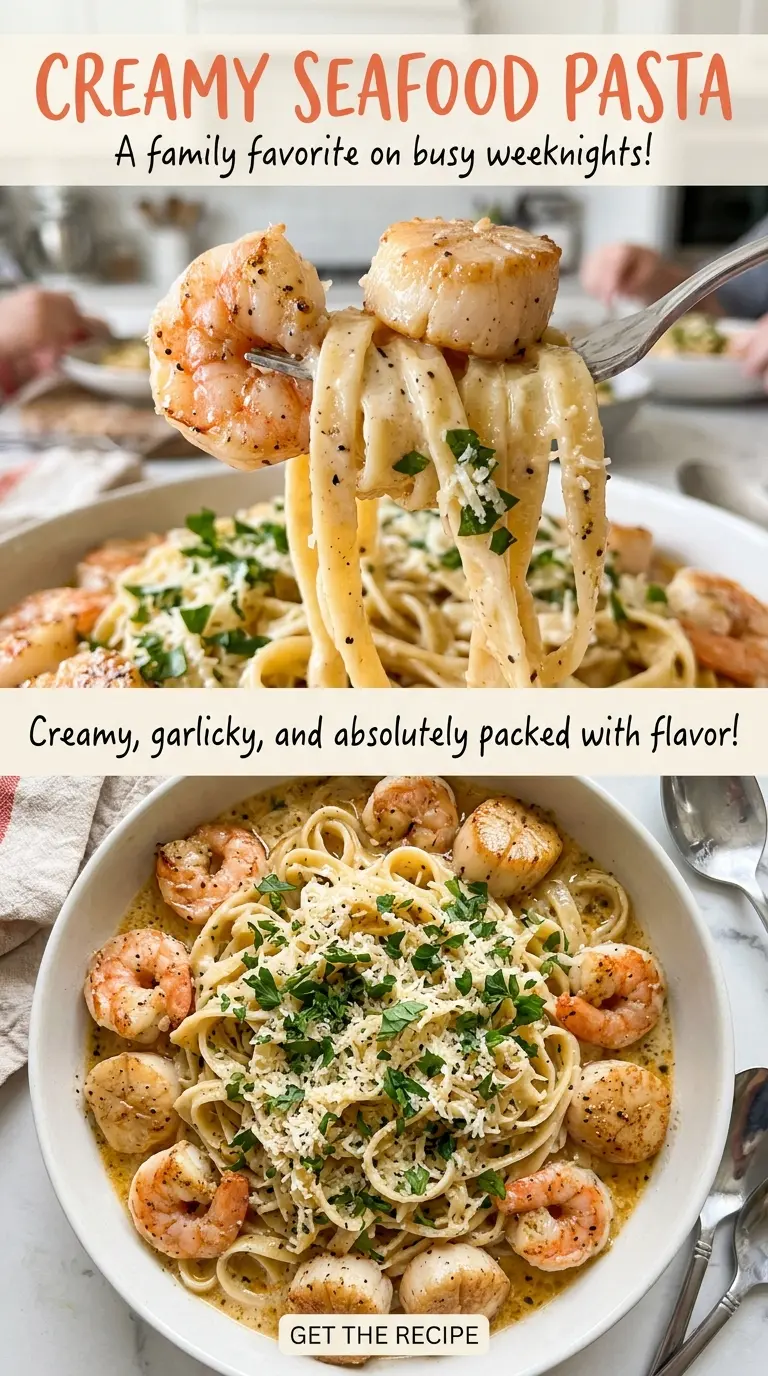
- Linguine — Its long strands give the creamy sauce plenty of surface to cling to. Spaghetti is a reasonable stand-in if that’s what you have; cook it to al dente using its package timing.
- Shrimp and sea scallops — Large shrimp and sea scallops give the dish two distinct textures: a firm, springy bite from the shrimp and a tender, sweet center from the scallops. Dry sea scallops brown well, and removing the small side muscles keeps their texture pleasant.
- Heavy cream — This is what gives the sauce body and helps it coat the pasta. Half-and-half isn’t an equal swap; its lower fat content makes the finished sauce thinner and less rich.
- Dry white wine — A dry wine adds a little acidity and loosens the browned bits in the skillet. An inexpensive dry white works; save sweet wine for another use because it can make the sauce taste sweeter than intended.
- Parmesan — The cheese adds savory depth and melts into the warm cream. Grate it finely so it incorporates smoothly; a coarse grate takes longer to melt.
- Lemon juice and parsley — Lemon brightens the rich sauce, while fresh parsley gives the finish a clean, herbal note. Fresh parsley makes the clearest difference here; dried parsley won’t bring the same fresh lift.
The Four Stovetop Stages That Keep the Seafood Tender
Cook the Linguine to Al Dente
Bring a large pot of water to a boil, add the kosher salt, and cook the linguine according to the package directions, usually 9–11 minutes. Start checking near the early end of that range so the strands still have a slight bite. Drain the pasta once it reaches al dente. Have it ready to toss with the sauce rather than letting it sit while you cook the seafood.
Sear the Scallops, Then the Shrimp
Season the patted-dry seafood with kosher salt and black pepper. Heat the olive oil in a 12-inch skillet over medium-high heat, then sear the scallops for 2–3 minutes per side until browned and 145°F in the center. Move them to a plate, then cook the shrimp in batches for 1–2 minutes per side, until opaque and 145°F in the thickest part. If the skillet is crowded, the seafood won’t brown as cleanly, so keep those shrimp batches small enough to leave space around each piece.
Build the Garlic, Wine, and Cream Sauce
Reduce the heat to medium and melt the butter in the same skillet. Add the minced garlic and cook for 30 seconds, just until fragrant; garlic can turn bitter if it darkens. Pour in the wine and let it simmer for 2–3 minutes. Stir in the heavy cream and simmer gently for 3–5 minutes, until it has thickened slightly, then stir in the Parmesan until melted and smooth.
Coat the Pasta and Warm the Seafood
Add the drained linguine and toss until the strands are coated. Fold the seafood back in gently and heat for 1–2 minutes, just until warmed through. Stir in the lemon juice and chopped parsley at the finish. Serve while the sauce is glossy and the seafood is warm.
Three Useful Swaps Without Losing the Creamy Sauce
Make It Gluten-Free with Gluten-Free Linguine
Swap in gluten-free linguine and cook it according to its package directions, stopping when it is al dente. The seafood and sauce stay the same, though gluten-free strands can be more delicate when tossed, so fold them through gently.
Use a Short Pasta Shape
Swap the linguine for a short shape such as penne or rigatoni, cooking it to al dente according to the package. The sauce settles into the pasta’s ridges and openings, giving each bite a slightly different balance of creamy pasta and seafood.
Make It Shrimp-Only
Leave out the scallops and keep the shrimp as the only seafood. The pasta still has a creamy, savory sauce, but the result is less sweet and has a more consistent, springy seafood texture.
Storage and Reheating
- Refrigerator: Refrigerate leftovers in an airtight container within 2 hours and eat them within 3–4 days. The linguine absorbs some sauce as it sits, so leftovers won’t be quite as silky.
- Freezer: I don’t recommend freezing the assembled pasta. Cream sauce can separate after thawing, and the seafood’s texture suffers.
- Reheating: Cover and microwave at medium power in short intervals, stirring between them, until the leftovers reach 165°F. Avoid heating them on high for a long stretch, which can make the seafood rubbery.
Questions That Come Up When Cooking Creamy Seafood Pasta
Creamy Seafood Pasta
Ingredients
Equipment
Method
- Bring a large pot of water to a boil, add the kosher salt and linguine.
- Cook according to the package directions until al dente, usually 9–11 minutes.
- Drain the pasta.
- Pat the shrimp and scallops dry, then season them with the salt and black pepper.
- Heat the olive oil in a 12-inch skillet over medium-high heat.
- Sear the scallops for 2–3 minutes per side, until browned and 145°F in the center, then transfer to a plate.
- Cook the shrimp in batches for 1–2 minutes per side, until opaque and 145°F in the thickest part, and transfer to the plate.
- Reduce the heat to medium and melt the butter in the skillet.
- Add the garlic and cook for 30 seconds.
- Pour in the wine and simmer for 2–3 minutes.
- Stir in the heavy cream and simmer gently for 3–5 minutes, until slightly thickened.
- Stir in the Parmesan until melted and smooth.
- Add the linguine and toss to coat.
- Gently fold in the seafood and heat for 1–2 minutes, just until warmed through.
- Stir in the lemon juice and parsley and serve.