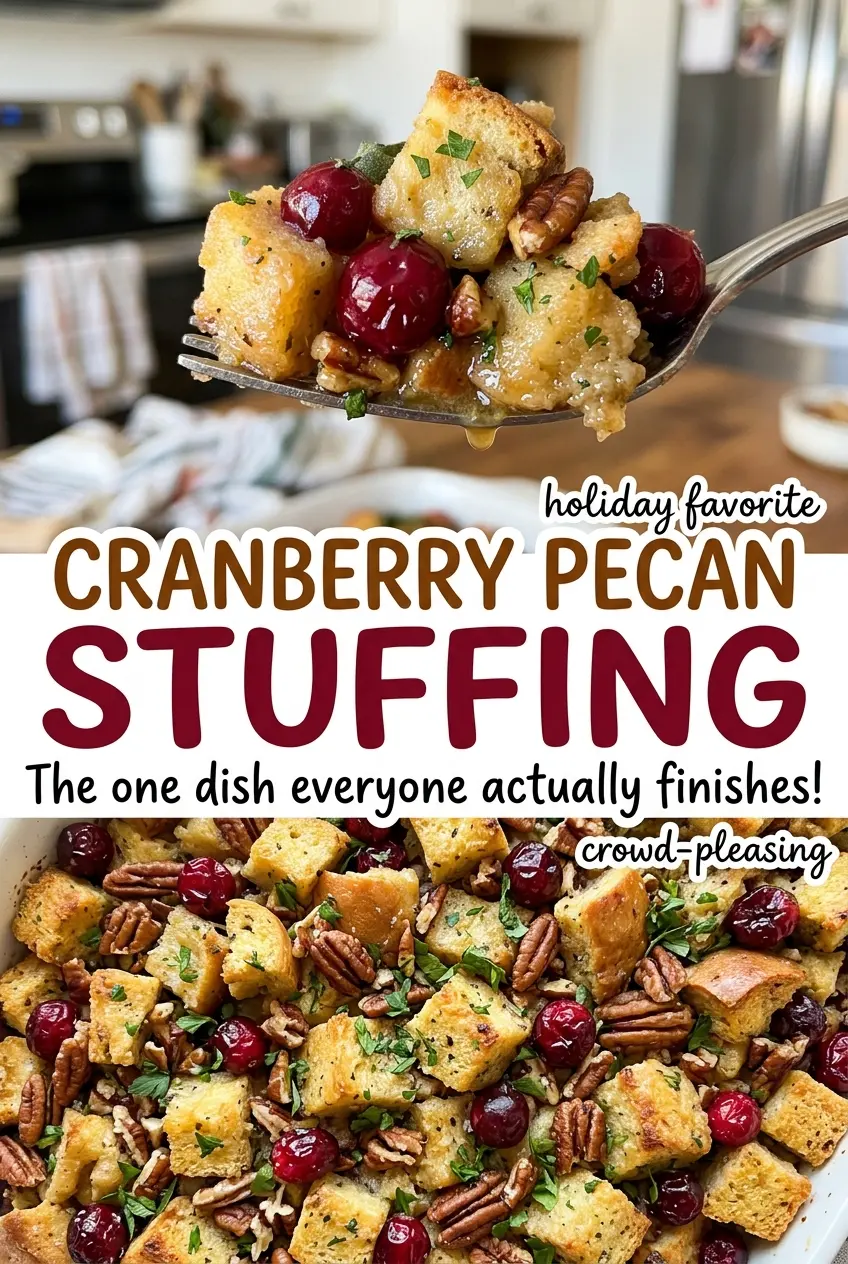
The top of the dish comes out golden, but underneath, the bread stays tender and easy to scoop. That contrast is what I want from cranberry pecan stuffing. Dried cranberries bring little tart-sweet bites through the savory bread, while pecans add a welcome crunch. It’s a familiar side dish with enough texture to hold its own on the plate.
I build the flavor in a skillet first, softening the onion and celery in butter before stirring in the dried herbs. Then everything gets tossed together with broth and a beaten egg, which helps the pieces hold together as the stuffing bakes. The result is full of sage and thyme, with a crisp top and a moist center—not a pan of soggy bread.
Kitchen Note
Whisk the egg into the broth before it touches the bread. Pouring that evenly blended liquid over the bowl helps the cubes get binder throughout, rather than leaving a few eggy patches in the finished dish.
Save this cranberry pecan stuffing for its golden top, tart cranberry bites, and buttery sage flavor.
Why the Bread Needs to Be Crisp Before It Meets the Broth
Fresh bread and dried bread behave differently in a pan of stuffing. Soft cubes start absorbing liquid as soon as the broth hits them, and their centers can collapse before the egg has time to set. Dry, crisp cubes take up the liquid more gradually, giving you a little more control over the final texture. That’s what keeps this casserole moist without turning the bottom into a dense, gummy layer.
The goal isn’t to toast the bread until it’s deeply browned. It should feel dry and crisp through the middle, with no soft spots hiding inside a cube. The broth and vegetables bring moisture back during baking, so the bread doesn’t stay crunchy throughout; instead, it softens while holding its shape. A sturdy loaf helps, but drying it thoroughly is what gives the finished stuffing its distinct tender center and intact pieces.
What the Bread, Broth, and Egg Each Bring to the Pan
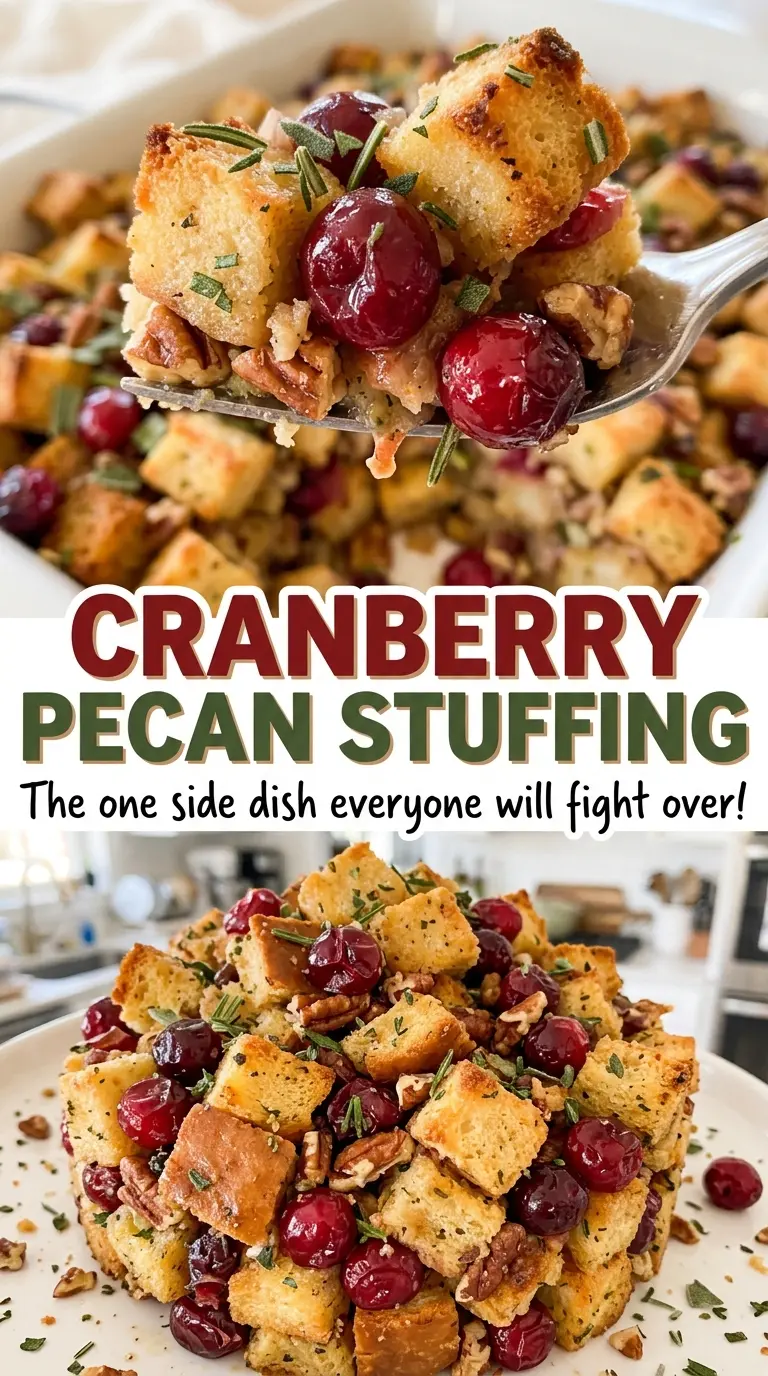
- Crusty bread — A loaf with a firm crumb gives the cubes enough structure to take on broth without falling apart. A basic bakery loaf is fine; it doesn’t need to be an artisan sourdough. Cut the cubes evenly so they dry at a similar rate, and use day-old crusty bread if that’s what you have.
- Low-sodium chicken broth — The broth moistens the bread and carries the flavor of the vegetables and herbs through the dish. Low-sodium broth leaves room for the measured kosher salt to do its job; broth brands vary, so starting with a low-sodium one makes the seasoning easier to control.
- Egg — The lightly beaten egg helps the moistened bread hold together once baked. It’s doing more than adding richness, so leaving it out changes the texture and makes the stuffing looser.
- Dried cranberries and pecans — Dried fruit gives you concentrated sweetness without adding the extra liquid that fresh fruit would bring. Chopped pecans add a nutty bite that contrasts with the soft bread; buy them already chopped if you like, and check that they smell fresh rather than stale.
- Butter, onion, celery, and dried herbs — Butter carries the aromatic flavor as the diced vegetables soften, while rubbed sage and thyme make the stuffing taste savory and familiar. Standard grocery-store dried herbs work well here; if a jar smells dusty instead of fragrant, it’s past its best.
Build the Stuffing in Five Stages, from Dry Cubes to Golden Top
Dry the Bread Without Browning It Too Far
Heat the oven to 300°F and spread the bread cubes in a single layer across two rimmed baking sheets. Bake for 30–40 minutes, tossing once halfway through, until the cubes feel dry and crisp. Keep an eye on the texture near the end rather than waiting for a deep toasted color. Let the cubes cool before mixing them with the other ingredients.
Soften the Vegetables in Butter
Grease a 9×13-inch baking dish with nonstick cooking spray, then increase the oven temperature to 375°F. Melt the butter in a 12-inch skillet over medium heat and add the diced onion and celery. Cook for 8–10 minutes, stirring occasionally, until the vegetables have softened; if they’re still firm, give them a little longer before moving on. They should be tender, not browned and crisp.
Coat the Bread with Herbs, Fruit, and Nuts
Stir the sage, thyme, kosher salt, and black pepper into the softened vegetables, then cook for 30 seconds. That short time warms the dried herbs and brings their aroma forward without letting them scorch. Transfer the skillet mixture to a large bowl with the bread cubes, dried cranberries, and chopped pecans. Toss until the seasonings and mix-ins are spread through the bread.
Moisten Every Cube Evenly
Whisk the chicken broth and lightly beaten egg together, then pour the mixture over the bread. Toss gently but thoroughly so the liquid reaches the cubes throughout the bowl. You’re looking for evenly moistened bread, not a puddle of broth in the bottom. If some cubes are still dry, keep tossing to distribute the liquid already in the bowl.
Bake Covered, Then Uncover for Color
Transfer the mixture to the prepared baking dish and cover it tightly with foil. Bake at 375°F for 25 minutes, then remove the foil and bake for another 15–20 minutes, until the top is golden and the center reaches 160°F. If the top is golden but the center hasn’t reached temperature, keep baking and check again. Rest the dish for 10 minutes before serving so it settles and scoops more neatly.
Three Swaps That Change the Stuffing Without Losing Its Character
Make It Vegetarian with Vegetable Broth
Replace the chicken broth with the same amount of low-sodium vegetable broth. The stuffing keeps its savory, moist texture, though the broth may give it a slightly lighter, less poultry-forward flavor.
Use a Sturdy Gluten-Free Loaf
Swap in a 16-ounce crusty gluten-free loaf and cut it into the same-size cubes. Dry the cubes until crisp before mixing; a hearty loaf will hold up better than soft sandwich-style gluten-free bread, though the baked texture may be a little more crumbly.
Trade the Pecans for Walnuts
Use the same amount of chopped walnuts in place of the pecans. They keep the nutty crunch but bring a slightly more earthy, assertive flavor to each bite.
Storage and Reheating
- Refrigerator: Refrigerate leftovers within 2 hours, covered, and keep them for 3–4 days. The bread softens as it sits, especially on the bottom.
- Freezer: Cool the baked stuffing, wrap it airtight, and freeze for up to 2 months. Thaw it in the refrigerator before reheating for more even warming.
- Reheating: Cover the dish and warm it in a 350°F oven until the center reaches 165°F; uncover near the end if you want to crisp the top again. Reheating uncovered the whole time can dry the edges before the middle is hot.
Questions I Get About Cranberry Pecan Stuffing
Cranberry Pecan Stuffing
Ingredients
Equipment
Method
- Heat the oven to 300°F and arrange the bread cubes in a single layer on two rimmed baking sheets.
- Bake for 30–40 minutes, tossing once halfway through, until the cubes are dry and crisp; let cool.
- Grease a 9x13-inch baking dish with nonstick cooking spray.
- Increase the oven temperature to 375°F.
- Melt the butter in a 12-inch skillet over medium heat.
- Add the onion and celery, and cook for 8–10 minutes until softened.
- Stir in the sage, thyme, salt, and pepper, then cook for 30 seconds.
- Transfer the mixture to a large bowl with the bread cubes, cranberries, and pecans, then toss to combine.
- Whisk the chicken broth and egg together.
- Pour the broth and egg over the bread mixture, then toss until evenly moistened.
- Transfer the mixture to the prepared baking dish and cover tightly with foil.
- Bake for 25 minutes.
- Uncover and bake for 15–20 minutes, until the top is golden and the center reaches 160°F.
- Rest for 10 minutes before serving.