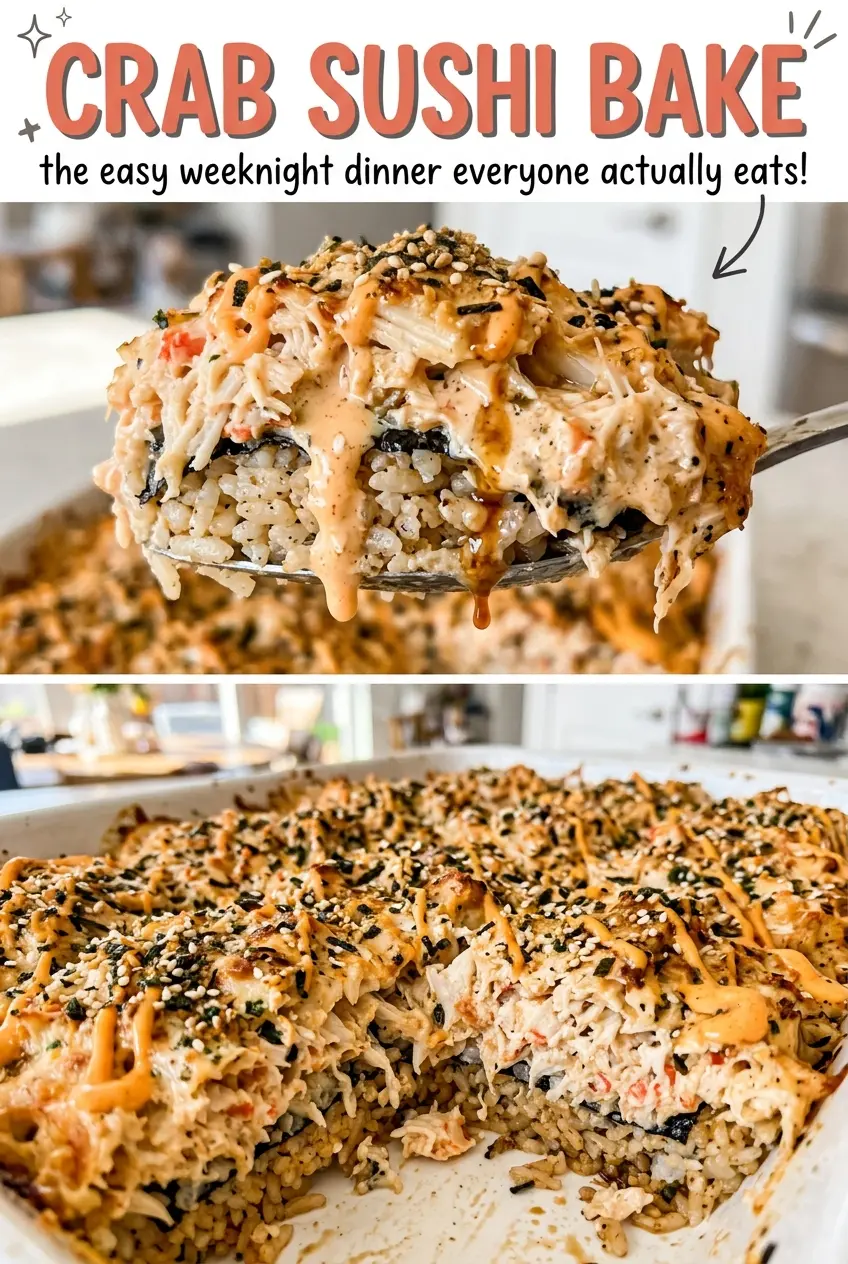
At the table, a warm scoop of seasoned rice and creamy crab tucked into a roasted seaweed sheet makes a bite that’s easy to assemble and satisfying without rolling a single piece of sushi. This Crab Sushi Bake layers the familiar flavors of sushi rice, imitation crab, green onion, and furikake in an 8×8-inch dish, then goes into the oven until the topping is hot.
I like how the rice gives each scoop a sturdy base while the crab mixture stays soft and creamy on top. The seaweed sheets are the finishing touch: break off a piece, spoon on a little bake, and fold it around the filling. It’s a relaxed way to bring those sushi-inspired flavors to the table, with no special equipment beyond a saucepan and baking dish.
Kitchen Note
Spoon the bake onto the seaweed right before each bite. The roasted sheets stay crisp, instead of softening under the warm filling while they sit on a platter.
Save this Crab Sushi Bake for an easy sushi-inspired meal with seasoned rice, creamy crab, and crisp seaweed scoops.
Why the Rice Gets Seasoned After It Leaves the Heat
The rice vinegar, sugar, and salt go into the rice after it has cooked and rested. That order matters: the rice cooks in plain water, so the grains can absorb the water evenly instead of simmering in an acidic, sweet mixture. Once they’re tender, the seasoning can coat the warm grains without changing how they cook.
Stir the vinegar, sugar, and salt together until the crystals dissolve, then fold the mixture through the rice gently. A hard stir breaks up the short grains and can turn a cohesive base into a pasty one. Folding keeps the grains recognizable while spreading the seasoning across the dish. The result is a rice layer that tastes balanced on its own and gives the creamy crab topping a bright, lightly tangy contrast.
Japanese short-grain rice is also a deliberate choice here. Its cling helps the pressed layer hold together when you spoon it onto a seaweed sheet, so you get a manageable bite rather than loose rice falling away.
The Rice and Crab Ingredients That Make This Bake Hold Together

- Japanese short-grain rice — Its tender, clingy texture helps the base stay together under the crab topping. Rinsing it until the water runs mostly clear removes excess surface starch; drain it well before cooking so the measured water isn’t diluted.
- Unseasoned rice vinegar — This gives the rice its bright, clean tang while leaving the sugar and salt levels in your control. Using unseasoned vinegar matters because the rice is seasoned separately; seasoned vinegar already contains added seasoning.
- Sugar and kosher salt — They round out the vinegar and bring the rice into balance with the creamy, mildly spicy topping. Dissolve both completely in the vinegar before it goes into the rice, so the seasoning doesn’t collect in a few spots.
- Cream cheese and mayonnaise — Softened cream cheese blends smoothly with mayonnaise, which loosens the mixture enough to spread over the rice. The brand of mayonnaise isn’t critical; the cream cheese should be soft enough to stir without leaving firm lumps.
- Sriracha — It brings heat and a little tang to the crab mixture. Its spice level varies by brand, so the finished topping’s warmth can vary slightly even when you use the same amount.
- Imitation crab meat — Shredding it before folding it in gives the topping an even texture and makes it easier to spread. Separate the strands into bite-size pieces rather than leaving large clumps.
- Green onions — Their mild onion flavor cuts through the richness of the topping. Slice them thinly so they distribute throughout the crab mixture instead of making a few bites taste sharply oniony.
- Furikake and roasted seaweed snack sheets — Furikake seasons the rice layer, while the roasted sheets give you a crisp, hand-held way to eat the warm bake. Both add their own savory character, so they’re worth keeping in the dish rather than treating them as decoration.
From Covered Rice to Bubbling Crab: The Stages That Matter
Rinse, Drain, and Cook the Rice
Rinse the rice in a fine-mesh strainer under cold water until the water runs mostly clear, then drain it well. Combine it with the water in a 3-quart saucepan and bring it to a boil over medium-high heat. Cover, lower the heat, and simmer for 15 minutes; lifting the lid lets steam escape, so keep it closed. Remove the pan from the heat and let the rice stand, still covered, for 10 minutes.
Season the Warm Grains
While the rice stands, stir the rice vinegar, sugar, and kosher salt until the sugar and salt dissolve. Add that mixture to the cooked rice and fold gently until it’s distributed. Don’t beat or mash the rice as you stir; the grains should stay distinct even as they cling together. You’re aiming for evenly seasoned rice, not a smooth paste.
Mix a Smooth Crab Topping
Stir the softened cream cheese, mayonnaise, and sriracha together until the mixture is smooth. If the cream cheese is still firm, it will leave lumps that are difficult to work out once the crab is added. Fold in the shredded imitation crab and thinly sliced green onions, stopping when they’re evenly coated. This keeps the crab strands intact instead of crushing them into the creamy base.
Layer and Bake Until Hot
Heat the oven to 400°F and grease an 8×8-inch baking dish with the neutral oil. Press the rice into an even layer, sprinkle the furikake over it, and spread the crab mixture across the top. Bake for 20 to 25 minutes, until the topping is hot through and bubbling at the edges. Let the dish rest for 5 minutes before serving so it’s easier to spoon.
Serve in Seaweed Scoops
Set out the roasted seaweed snack sheets while the bake is warm. Spoon a portion of rice and crab onto a sheet, then fold or hold the seaweed around the filling to eat it. Keep the sheets separate from the bake until serving; they’re meant to provide a crisp contrast, not become another soft layer.
Two Small Changes That Give the Bake a Different Finish
Leave Out the Sriracha for a Milder Topping
For a less spicy bake, leave the sriracha out of the cream cheese and mayonnaise mixture. The topping will still be creamy and savory, but it won’t have the same warm chile kick.
Save Some Green Onion for the Finish
Slice the same two green onions, but fold only part into the crab mixture and scatter the rest over the bake after it comes out of the oven. The fresh onion on top gives each serving a brighter bite while keeping the ingredient list unchanged.
Storage and Reheating
- Refrigerator: Refrigerate leftovers within 2 hours and eat them within 3 to 4 days. The rice firms up as it chills.
- Freezer: Freezing isn’t a good fit; the rice can dry out and the creamy topping may lose its smooth texture after thawing.
- Reheating: Reheat a portion in the microwave or warm the covered baking dish in a 325°F oven until the center reaches 165°F. Keep the seaweed sheets separate; reheating them with the bake makes them soft.
Questions That Come Up When Making Crab Sushi Bake
Crab Sushi Bake
Ingredients
Equipment
Method
- Rinse the rice in a fine-mesh strainer under cold water until the water runs mostly clear, then drain well.
- Combine the rice and water in a 3-quart saucepan and bring to a boil over medium-high heat.
- Cover, reduce the heat to low, and simmer for 15 minutes.
- Remove from the heat and let stand, covered, for 10 minutes.
- Stir the rice vinegar, sugar, and kosher salt together until the sugar and salt dissolve.
- Gently fold the vinegar mixture into the cooked rice.
- Stir the cream cheese, mayonnaise, and sriracha together until smooth.
- Fold in the shredded imitation crab and green onions.
- Preheat the oven to 400°F.
- Grease an 8x8-inch baking dish with the neutral oil.
- Press the rice evenly into the baking dish and sprinkle with the furikake.
- Spread the crab mixture evenly over the top.
- Bake for 20 to 25 minutes, until hot through and bubbling at the edges.
- Rest for 5 minutes.
- Serve warm with the seaweed sheets, spooning portions of the bake onto the sheets.